Category Archives: Gaudiya Vaishnav Biographies

Vasudeva Datta Thakur

vraje sthitau gayakau yau
madhukantha-madhuvratau
mukunda-vasudevau tau
dattau gauranga-gayakau
 
In Vraja there were two singers named Madhukantha and Madhuvrata. They appeared in Chaitanya lila as Mukunda and Vasudeva Datta, who were singers in the society of Lord Chaitanya Mahaprabhu.
(Gaura-ganoddesha-dipika 140)
 
Sri Vasudeva Datta was born in the Chittagong district of modern Bangla Desh, in the village of Chanhara, which is under the jurisdiction of the police station named Patiya. This village is situated ten kosas, or about twenty miles, from the village of Mekhala where Pundarika Vidyanidhi made his home. Mahaprabhu’s associate Mukunda Datta was Vasudeva Datta’s brother.
 
In the book Prema-vilasa, it is said that Vasudeva was the older of the two and that they were born in an Ambashtha family:
 
In the district of Chittagong, there is a village named Cakrashala where lives a respectable family of Ambashtha physicians named Datta. Two great devotees named Mukunda Datta and Vasudeva Datta were born into this family. Both Vasudeva the older and Mukunda the younger came to Nabadwip to live.
 
Vasudeva Datta Thakur had a beautiful voice and was also well versed in the Sangita-shastra. He was one of the chief associates of Mahaprabhu, participating in sankirtan in the home of Srivasa and the streets of Nabadwip. Mahaprabhu enjoyed his association because of his Vaishnava qualities.
 
Vasudeva Datta is a respected servant of the Lord. A thousand tongues are insufficient to sing his glories.
(Chaitanya Charitamrita 1.10.41)
 
Mahaprabhu said, “Even though Mukunda has been my companion since childhood, I get even more pleasure when I see you.”
(Chaitanya Charitamrita 2.11.138)
 
Vasudeva had a particularly close friendship with Srivasa Pandit and Shivananda Sena.He lived near Kumarahatta and Kanchra Para, which were the homes of these two great associates of the Lord. Vasudeva was very generous by nature. Never thinking of himself, he spent his money liberally for others. Mahaprabhu saw this and asked Shivananda Sena to become his sarkhel and supervise his affairs.
 
Vasudeva’s Compassion
 
Vasudeva was so distressed by the suffering of the living beings that he was ready to accept their sins and suffer in hell, and he prayed emotionally to Mahaprabhu for such a boon:
 
“My Lord! You have appeared in this world to save it, so please accept my prayer. You are omnipotent and all-merciful, so if you agree to fulfill my request, it can be easily done. When I see the suffering of the world, my heart is torn apart. So I ask you, Lord, give their sins to me. I will take their sins and suffer in hell on their behalf, but please deliver them from their material disease.”
(Chaitanya Charitamrita 2.15.160-163)
 
He wished to take the sins of every single living being and suffer in hell in their place so that they could be liberated.
(Chaitanya Charitamrita 1.10.42)
 
When Mahaprabhu heard this emotional plea on behalf of the living beings of the world, he said to Vasudeva:
 
“You have desired the liberation of all the living beings in the entire universe, so it will be. They will saved without having to suffer the consequences of their sins. Krishna is not incapable of doing it, he has all powers, so why should he make you suffer for their sins? Those whose welfare you desire will all become Vaishnavas, and Krishna removes the sins of all those who are Vaishnava.”
(Chaitanya Charitamrita 2.15.167-169)
 
Srila Bhaktisiddhanta Saraswati Goswami Thakur writes in his Anubhashya to the Chaitanya Charitamrita: “In the Western world, Christians believe that only their guru, Jesus Christ, appeared in this world out of a desire to suffer on behalf of the people of the world by accepting their sins. But here we see that amongst Mahaprabhu’s associates, Vasudeva Datta Thakur, like Hari Das Thakur, showed a compassion millions of times greater and more generous, as he was willing to suffer in the place of all creatures in the universe. By so doing, he taught the world the unlimited nature of the Vaishnava’s selfless love.”
 
Raghunatha Das Goswami’s diksha guru, Yadunandana Acharya, was blessed by Vasudeva Datta. The author of Chaitanya Bhagavat, Vrindavan Das Thakur, was born in Mamgachi in Modadrumadvipa, one mile from the Purvasthali station on the Howrah-Katwa line of the Eastern Railway. Vasudeva Datta consecrated the worship of the Madana Gopal deity that is still being worshiped at this site.
 
We can see just how dear Vasudeva Datta was to Mahaprabhu by the Lord’s statements made when he was visiting Srivasa Pandit’s house in Kumarahatta :
 
Gaurachandra repeated again and again, “This body of mine belongs to Vasudeva. If he wants to sell me, I allow myself to be sold; I will not do otherwise. I announce this truth to all of you. If someone has even come into the briefest contact with Vasudeva Datta, he will be protected by Krishna. Listen all you Vaishnavas! I tell you the truth: this body of mine belongs to Vasudeva alone.”
(Chaitanya Bhagavat 3.5.27-30)
 
[Excerpted from "Sri Chaitanya: His Life & Associates" by Srila Bhakti Ballabh Tirtha Maharaj]

Uddhava Das

Uddhava Das is an avesha incarnation of the Moon-god.
(Gaura-ganoddesha-dipika 192)
 
In the Chaitanya Charitamrita (1.12.83), it is said that Uddhava Das is a branch of Gadadhara Pandit Goswami. As such, he is mentioned by Yadunatha Das in the Shakha-nirnayamrita (35):
 
ati-dinajane purna-prema-vitta-pradayakam
shrimad-uddhava-dasakhyam vande’ham guna-shalinam
 
I venerate the highly virtuous Uddhava Das, who gave the wealth of love to those who were most fallen.
 
When Rupa Goswami was old and living in Vrindavan, he was desperate to see the deity, but unable to go to Govardhana because of his advanced years. At this time, Gopal came to stay in Mathura at the house of Vitthalanatha, the youngest son of Vallabhacharya, ostensibly out of fear of possible attacks by the Muslim iconoclasts. Rupa Goswami thus had the opportunity to see Madhavendra Puri’s deity. Uddhava Das was amongst the devotees who stayed with Rupa at Vitthaladeva’s house for an entire month on this occasion.
(Chaitanya Charitamrita 2.18.51, Bhakti-ratnakara 5.1333)
 
Uddhava Das lived in Vrindavan. When Srinivas Acharya and Raghava Goswami were touring Vraja dham, they came to his cottage. He greeted them with enthusiastic hospitality. Uddhava Das was amongst the devotees who gathered to wish Srinivas Acharya, Narottama Das Thakur and Shyamananda Prabhu as they set off for Bengal with the books which had been given to them by Jiva Goswami.
(Bhakti-ratnakara 6.514)
 
According to the Gaudiya Vaishnava Abhidhana, there are at least two devotees named Uddhava Das. One was a follower of Sanatan Goswami who worshiped in Vraja on the banks of Pavana Sarovara; another was an initiated disciple of Radhamohana Thakur who wrote many songs about Radha-Krishna lila. He lived in Murshidabad district in the village of Öeïagram. His real name was Krishnakanta Majumdar.
 
[Excerpted from "Sri Chaitanya: His Life & Associates" by Srila Bhakti Ballabh Tirtha Maharaj]

Kholavecha Shridhara – Biogrphy

khola-becataya khyatah panditah shridharo dvijah
asid vraje hasya-karo yo namna kusumasavah 
   (Gaura-ganoddesha-dipika 133) 
Shridhara Pandit

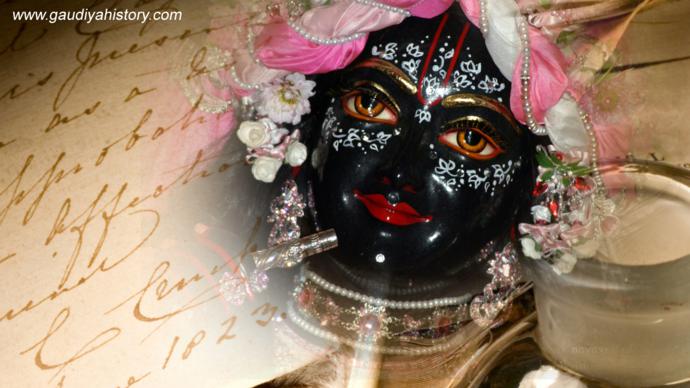
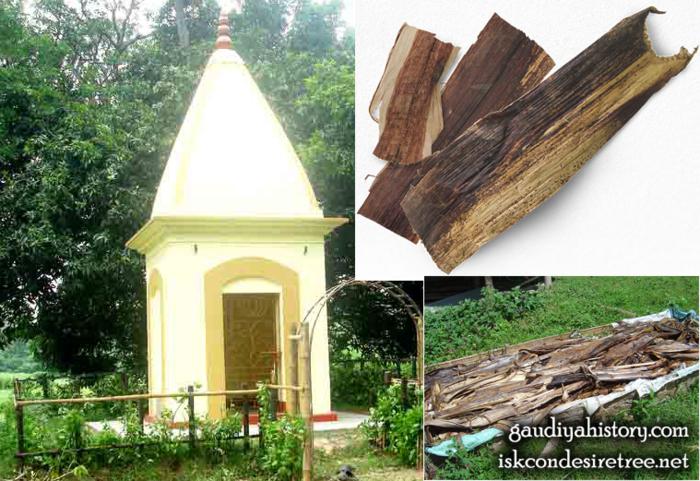
Shridhara Pandit was a resident of Navadwip. Navadwip is composed of nine islands, of which the central island is known as Antardwipa. He used to live at the northern extremity of Mayapur and to the southeast of the Chand Kazi’s samadhi, in the place that now goes by the name of Shridhara Angan. During his lifetime, it was a banana orchard...(In the wallpaper: Shridhara Pandit's home, Shri Mayapur dham, banana barks).

 
   One of the twelve Gopals in Krishna lila was named Kusumasava. He appeared in Gaura-lila as Shridhara Pandit, who was given the nickname khola-becha, “bark-seller.”
 
   Shridhara Pandit was a resident of Navadwip. Navadwip is composed of nine islands, of which the central island is known as Antardwipa. He used to live at the northern extremity of Mayapur and to the southeast of the Chand Kazi’s samadhi, in the place that now goes by the name of Shridhara Angan. During his lifetime, it was a banana orchard, which nowadays is no longer the case, at least not to our mortal eyes. During this incarnation, Shridhara played the role of a poor Brahmin who made his living selling the produce of his banana garden. In order to keep the memory of Shridhara Pandit alive, the founder of the world-wide Chaitanya and Gaudiya Maths, Nitya-lila-pravishta Om Vishnupada Shrila Bhaktisiddhanta Saraswati Goswami Prabhupada, discovered and revealed this site of Chaitanya Mahaprabhu’s pastimes. Deity worship was established there and it continued until after Shrila Bhaktisiddhanta Saraswati Goswami Thakur’s disappearance. Now, because of problems with local people, the place is once again losing its beauty. Even so, during the Navadwip parikrama, Devotees still pay their obeisances at that spot to the memory of Shridhara Pandit. 
 
   Shrila Bhaktivinoda Thakur has written as follows in his Nabadvipa-dhama-mahatmya: “Shridhara Pandit’s home comes after the weavers’ neighborhood. Gauranga Mahaprabhu ended the kirtan there.” Nityananda Prabhu says the following to Jiva Goswami:
 
   “Out of His mercy, Mahaprabhu Gauranga Hari would end the kirtan here so that the Devotees could rest. It is therefore known as vishrama-sthana, or the Lord’s place of rest. So let us also repose a while here at the house of Shridhara Pandit.” (Navadwip-dhama-mahatmya)
 
   According to this same book, there was previously a large tank near Shridhara’s banana orchard, but this too is no longer visible.
 
Shridhara’s Poverty
 
   Material wealth and prosperity are not the truest signs of the Lord’s mercy on someone. Those who worship the gods and goddesses are generally seen to prosper materially, but one who is rich in the wealth of devotion to the Lord is the one who has truly benefited from his mercy. Mahaprabhu gave this teaching to His associates through Shridhara Pandit: a Devotee of Vishnu is free from attachments to material possessions and enjoyments.
 
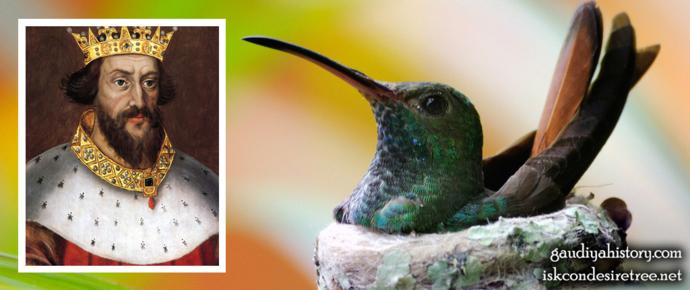
   One day, the Lord went to Shridhara’s place and asked him why he was so poor. He was worshiping the husband of the goddess of fortune, Lakshmi, and yet he never had enough money for food or clothing, and his house was dilapidated. On the other hand, those who worshiped the bloodthirsty Kali always seemed to have an abundance of material wealth. Shridhara answered that a bird who made its nest in the trees and wandered from place to place to find food was passing the time of day in the same way as a king in his palace who enjoyed the best objects of gratification. There was no difference of degree or amount of pleasure experienced by the two. The Lord then said to Shridhara: “Externally, though you appear to be poor, you are actually the true rich man. I will shortly reveal to the entire foolish world that the Devotee is qualified to possess the greatest wealth, indeed they are the owners of all things.” 
Shridhara Pandit

...a bird who made its nest in the trees and wandered from place to place to find food was passing the time of day in the same way as a king in his palace who enjoyed the best objects of gratification. There was no difference of degree or amount of pleasure experienced by the two. (In the wallpaper: The king Henry I, a bird in the nest).

 
   Generally we call that person poor or unfortunate who is deprived of wealth, possessions and a home. One who has these things is called rich or fortunate. People try to accumulate wealth in order to find happiness, and not the opposite. This happiness is the real wealth, not the external possessions, etc. Shri Krishna is the personification of happiness. Thus in actual fact, the difference between wealth and poverty: the one who has love for Krishna is rich; one who does not is poor. By way of example, during Krishna’s lila, Vidura played the part of a poor man, but one who was rich in love for Krishna. On the other hand, Duryodhana possessed unlimited riches but had no love for Krishna, and thus was truly poor. The Supreme Lord used Kholabecha Shridhara to show the world who was truly wealthy and fortunate. The Lord is conquered by loving devotion alone, and by nothing else.
 
bhaktyaham ekaya grahyah shraddayatma priyah satam
bhaktih punati man-nishtha shvapakan api sambhavat
 
   Being very dear to the saintly, I am only attained through devotion and unflinching faith. Devotion fixed on Me purifies even a dog-eater from all faults due to low birth and circumstances such as poverty. (Shrimad Bhagavatam 11.14.21)
 
patram pushpam phalam toyam yo me bhaktya prayacchati
tad aham bhakty-upahritam ashnami prayatatmanah
 
   I accept whatever anyone offers Me with devotion, whether it be a leaf, a flower, a fruit or water, because of his pure consciousness. (Bhagavad-gita 6.29)
 
   The Lord accepts whatever is given to Him with devotion and eats it, but does not accept that which is given by a non-Devotee. He would not accept the invitation to eat the finest, most expensive foods with Duryodhana in order to take a humble meal prepared for him by Vidura and his wife.
 
The Lord Steals Shridhara’s Goods
 
   The Supreme Lord Chaitanya Mahaprabhu showed the amazing pastime of hungrily taking Shridhara’s foodstuffs without even being invited to do so. While the Lord was engaged in His student pastimes, Shridhara used to make his living by selling banana flowers (mocja) and the core of the banana plant (thoria). He would spend half of whatever little money he made in this way on worshiping the Ganges, the other half on his own necessities. Like Yudhisthira, he was a great Devotee of the truth and would always tell the real price of an item he would sell. Everyone in Navadwip knew this and so would not haggle with him. But Mahaprabhu would come to Shridhara and give him only half the amount that he was asking for his bananas, banana flowers or thoria and then start to walk away with them. Every day, the two of them would pull back and forth on a bunch of bananas or something else, arguing for an hour or more over the price that was to be paid.
 
   Every day they would argue for an hour and a half; then Mahaprabhu would leave half the asked price and walk away with the goods. Shridhara would always tell the truth and give the real price of each item, but the Lord would still only give him half of the amount he asked for and then take it. Shridhara would jump up and grab the item, trying to take it back, even pushing and shoving the Lord. (Chaitanya Bhagavat 2.9.163-5)
 
   Even though He argued with Shridhara, when He saw that he did not become angry, He would take all the goods that he was selling. Even though this is the way that it looks from a superficial point of view, the fact of the matter is that when Shridhara saw the beautiful form of the Lord, he allowed Him to get away with stealing his goods without getting angry. At the sight of the Lord’s beauty, he would become enchanted and immersed in an ocean of joy. While arguing with him, Mahaprabhu would call him names in great satisfaction, sometimes subtly hinting at His own divine identity:
 
   “Every day you buy things to offer to the Ganga. Why don’t you just give something to Me without charging anything? Don’t you know that I am the father of the Ganga that you worship. I am telling you the truth about this!” (Chaitanya Bhagavat 2.9.178-9)
 
   They finally came to a settlement and Shridhara agreed to daily give Mahaprabhu some bananas or other items from the banana tree for free. From then on, the Lord would daily eat with great satisfaction from the little bowls made of banana bark that had been given to him by Shridhara.
 
   The Lord said, “Alright, alright. There is no necessity for anything else.” And from that day on, He ate with great contentment on banana leaves given Him by Shridhara. The Lord thus eats anything that the Devotee offers Him, but He rejects even rich items given Him by a non-Devotee. (Chaitanya Bhagavat 2.9.184-6)
 
Shridhara Blessed at the Maha-prakasha
 
   On that eventful night when the Lord sat on the altar in Shrivasa’s home and revealed His divine form to His Devotees for 21 hours, showing them all the different incarnations of Vishnu, one after the other, He told them to bring Shridhara there also. Shridhara would regularly stay up the whole night chanting the Holy Names and calling out to the Lord. This was a source of happiness to the Devotees, but the non-Devotees would complain that he was keeping them awake with his noise and they would regularly criticize and rebuke him. As the Devotees were going to his house on the Lord’s order, they could hear him chanting loudly from a considerable distance prior to arriving.
 
   When he came to Shrivasa Angan, Shridhara beheld the glorious divine form of the Lord and fell to the ground in a faint. He was brought back to consciousness by the Lord’s voice and then, with the power that was given him through the Lord’s mercy, began to recite hymns of glorification. Satisfied with Shridhara’s hymns of praise, Mahaprabhu wished to give him the eight mystic powers as a benediction, but Shridhara refused, saying that he only wanted service to the Lord’s lotus feet.
 
   Lord Vishvambhara repeatedly urged Shridhara to ask for a boon. Finally Shridhara said, “Lord, if You must give me something, then I ask for this. May that Brahmin who used to pinch my banana leaves and bark be my Lord, lifetime after lifetime. May that Brahmin who used to argue with me be my master, and I serve His lotus feet.” (Chaitanya Bhagavat 2.9.223-5) 
Shridhara Pandit

“Lord, if You must give me something, then I ask for this. May that Brahmin who used to pinch my banana leaves and bark be my Lord, lifetime after lifetime. May that Brahmin who used to argue with me be my master, and I serve His lotus feet.” (Chaitanya Bhagavat 2.9.223-5) (In the wallpaper: in the right Lord Shri Chaitanya, ISKCON Chennai, banana leaf, again Lord Chaitanya).

 
   Who can recognize all these servants of the Lord who want neither wealth, nor followers, nor even scholarship. Of what use are learning, wealth, beauty, fame or high birth? All of these things simply increase one’s pride and are ultimately valueless. A millionaire may try for millions of years to achieve what Shridhara did, simply by selling bananas and banana products, and still not be able to do so. (Chaitanya Bhagavat 2.9.233-5)
 
   Shrila Bhaktisiddhanta Saraswati Goswami Thakur comments on these verses as follows: “Through empirical knowledge or external analysis, no one can recognize the true character of a Devotee. It should not be thought that the ability to collect great amounts of money is a function of devotion, nor that someone who is able to accumulate a great number of followers is a better Vaishnava than someone who cannot. Furthermore, if someone is a great religious scholar, this does not mean that he is a Devotee of the Lord. A servant of Shri Chaitanya might have very little money, may show no signs of having a great number of followers, and may have no talent for argument or debate, and ordinary people are unable to understand why he is indifferent to these externals. These Devotees consider service to Shri Chaitanya to be something more valuable than the accumulation of wealth, followers or learning. Thus, there is no possibility of the depth of their wisdom, their glories and their superiority being perceived by the general public.”
 
   Who is capable of recognizing a Devotee? He may possess all perfections, but we see only his poverty. The seller of banana products, Shridhara Pandit, is a living example of this. He disregarded the eight mystic perfections in order to simply accept devotion as a benediction. However much misery you see in a Devotee’s life, you should know that in fact he is enjoying divine pleasure in devotional service. Those who are absorbed in sense gratification and intoxicated by learning or wealth can never recognize a Vaishnava. (Chaitanya Bhagavat 2.9.238-41)
 
Mahaprabhu Drinks from Shridhara’s Waterpot
 
   When Mahaprabhu was leading the sankirtan party after having delivered Chand Kazi, He returned through the quarter of the conch shell merchants and that of the weavers to arrive finally at Shridhara Pandit’s house. He then took a long drink of water from Shridhara’s old, beaten iron water pot. When Shridhara saw Mahaprabhu do this, he was mortified and fell unconscious.
 
   Mahaprabhu’s action was meant to teach us that by drinking a Devotee’s water, we can attain devotion. He wanted to show that the water from a Devotee’s water jug, even though it is old and rusty, is still like nectar to the Supreme Lord Himself. By way of contrast, He ignores the proud non-Devotee’s water, even when offered in a jeweled goblet.
 
   When the Lord saw Shridhara’s tumbledown shack of a home from a distance, He laughed quietly from the inner joy He felt. He led the company of Devotees along the path to Shridhara’s hut, where He spotted an iron water pot full of holes. There was still a little water in it, and the Lord drank it thirstily. The Lord is bhakta-vatsala, ever affectionate toward His Devotees, and this act overwhelmed Him with feelings of love. Tears poured from His eyes like the currents of the Ganga, and a wonderful kirtan began in Shridhara’s courtyard in which all the Devotees led by Nityananda and Advaita Prabhus were crying. Ah, when I think of the great joy they all experienced on that day here at Shridhara’s house, my heart is torn. (Bhakti-ratnakara 12.3136-41)
 
   The Lord drank water from Shridhara’s iron water pot and He fulfilled the desires of every single Devotee. (Chaitanya Charitamrita 1.17.70)
 
   On the very day before He took sannyas, Mahaprabhu happily accepted a gift of a gourd from Shridhara. Sachi Mata cooked the gourd with milk, making one of the Lord’s favorite preparations.
 
   The pious Shridhara came to see the Lord carrying a gourd (lau). When Gaurasundara saw the gift He laughed and asked, “Where did you get it?” But He knew that He would be leaving the next day and would not be able to eat it then. But He did not want to see the gift go unused and so He determined to have it prepared that very day. (Chaitanya Bhagavat 2.28.33-6)
 
   After taking sannyas, Mahaprabhu wandered in the land of Rarha for three days in a intoxicated state of love for Krishna until Nityananda tricked Him to coming to Shantipur to Advaita Acharya’s house. When the Lord met Sachi Mata and the other Navadwip Devotees, He also met with Shridhara. Shridhara came every year to Puri to meet with the Lord at the time of the Rathayatra.
 
   [Excerpted from “Shri Chaitanya: His Life & Associates” by Shrila Bhakti Ballabh Tirtha Maharaj] 
Shridhara Pandit

I accept whatever anyone offers Me with devotion, whether it be a leaf, a flower, a fruit or water, because of his pure consciousness. (Bhagavad-gita 6.29) (In the wallpaper: Shri Gopinath, ISKCON Chowpatty, Mumbai, the girl offering flowers).

Shikhi Mahiti

   Shikhi Mahiti was an Orissan, considered to be one of Mahaprabhu’s most intimate associates and one of His personal branches, who lived in Purushottam Kshetra. He was a servant of the Jagannath Deity with the title of likhanadhikari (Chaitanya Charitamrita 2.10.42). Shrila Bhaktivinoda Thakur explains that this was a Temple secretarial position, mainly responsible for publishing the annual ephemerus known as Matala Panji.
 
ragalekha kalakelyau radha-dasyau pura sthitau
te jneye shikhi-mahati tat-svasa madhavi kramat
 
   Shikhi Mahiti and his sister Madhavi Devi were previously Ragalekha and Kalakeli, two of Shrimati Radharani’s servants. (Gaura-ganoddesha-dipika 189)
 
   Shikhi Mahiti was a great soul, noted for his great compassion and his pure heart. Besides his highly qualified sister Madhavi, he had a brother named Murari Mahanta or Mahanti, who also had strong faith in Mahaprabhu. Their devotion to Him was spontaneous and unwavering. They never forgot Mahaprabhu for even a moment and the Lord also poured down unlimited affection on them.
 
   Lord, this is Murari Mahati, the brother of Shikhi Mahiti’s brother. He knows nothing other than Your lotus feet. (Chaitanya Charitamrita 2.10.44)
 
   Murari and Madhavi became Mahaprabhu’s Devotees before their older brother. However, much as they tried to persuade him, they were not able to convince him that the Moon of Vrindavan had become incarnate in Shri Gaurasundara. In his Anubhashya, Shrila Bhaktisiddhanta Saraswati Goswami Thakur has described how Shikhi Mahiti finally came to receive Chaitanya Mahaprabhu’s mercy. The following is a summary of his account, which is based on Kavi Karnapura’s Chaitanya-charita Mahakavya (13.89-109): One day, after his younger brother and sister had spent some time trying to convince him of Mahaprabhu’s divinity, Shikhi Mahiti dozed off. Towards the end of the night, he had a dream in which he saw his brother and sister looking upon the feet of Lord Gaurasundara and telling him to wake up. Startled, Shikhi Mahiti opened his eyes and saw that his siblings were indeed before him. The wonderful dream had inspired ecstatic symptoms in him and his eyes were filled with tears. He ecstatically embraced his brother and sister who asked him what was the reason for his joy. Shikhi Mahiti saw their wonder and in order to put their minds at ease said to them: 
Sikhi Mahiti

"...In my dream I saw Mahaprabhu taking darshan of Lord Jagannath in the Temple, and as He was doing so, He entered into the body of Jagannath and then came out again. He did this over and over and I can still see the Lord doing it. Am I still dreaming? The Lord of unlimited compassion, Gaurasundara, called me by name and then embraced me with His long arms of unblemished beauty." In the wallpaper: Lord Jagannath, and His Temple, Puri, Lord Shri Krishna Chaitanya in the front center, ISKCON Chennai).

 
   "I have just had the most wonderful dream. Listen to me. Today, I have finally become a believer in the glories of the son of Sachi, Shri Gauranga. In my dream I saw Mahaprabhu taking darshan of Lord Jagannath in the Temple, and as He was doing so, He entered into the body of Jagannath and then came out again. He did this over and over and I can still see the Lord doing it. Am I still dreaming? The Lord of unlimited compassion, Gaurasundara, called me by name and then embraced me with His long arms of unblemished beauty." As he recalled his dream, Shikhi Mahiti became overwhelmed by devotional ecstasy, whereupon Murari and Madhavi asked him to accompany them to the Temple to behold Lord Jagannath. As they entered the Temple, they saw Mahaprabhu standing at the Jagamohana gazing upon the Deity. They started to cry tears of joy and Shikhi Mahiti saw his dream come to life before him. Then Lord Gaurasundara embraced him, saying, "You are Murari’s brother." At the Lord’s touch, Shikhi Mahiti fell into an ocean of ecstasy and from that time on, he forgot everything else but the Lord’s service. 
 
   Krishnadas Kaviraj Goswami’s Chaitanya Charitamrita, Vrindavan Das Thakur’s Chaitanya Bhagavat and Narahari’s Bhakti-ratnakara all describe the extent to which Shikhi Mahiti was dear to Shri Chaitanya Mahaprabhu:
 
   The Lord joyfully met Svarupa Damodar and then Shikhi Mahiti and Bhavananda Raya. Chaitanya Charitamrita 2.1.130)
 
   All the Devotees joyfully came forward to meet the Lord, and He gave them an embrace of love to each one of them. Amongst the Devotees who were there, were Kashi Mishra, Ramananda Raya, Pradyumna Mishra, Sarvabhauma Bhattacharya, Vaninatha, Shikhi Mahiti and others. (Chaitanya Charitamrita 2.16.253-4)
 
   Shikhi Mahiti is mentioned as being present at the meeting of the Bengali Devotees with those of Puri in Chaitanya Bhagavat, 3.8.60.
 
   Shikhi Mahiti and others said that it was time to go and take darshan of Jagannath Deva. (Bhakti-ratnakara 8.237)
 
   Shikhi Mahiti was one of Mahaprabhu’s three and a half most intimate Devotees.
 
   The Lord accepted Shikhi Mahiti’s sister as one of Radha’s friends. In the entire world, there were only three and a half Devotees who were so worthy. They were Svarupa Damodar Goswami, Ramananda Raya and Shikhi Mahiti. His sister was the half person. (Chaitanya Charitamrita 3.2.105-6)
 
   [Excerpted from “Shri Chaitanya: His Life & Associates” by Shrila Bhakti Ballabh Tirtha Maharaj]

Shuklambara Brahmachari

Shuklambara Brahmachari

Shuklambar Brahmachari was previously one of the wives of the sacrificing Brahmins in Vraja. Mahaprabhu begged food from him and ate it. Some people say that he was one of the sacrificing Brahmins. (Gaura-ganoddesha-dipika 191) (In the wallpaper: Wives of brahmins and Krishna along with His friends, kheer).

   Shuklambar Brahmachari is counted among the branches of Chaitanya Mahaprabhu. He was a resident of Navadwip town, manifesting the pastimes of a poor Brahmin who begged for a living. Nevertheless, he had an abiding affection for the Lord. Though to an ordinary conditioned soul he appeared to be a poverty-stricken mendicant, to transcendental eyes he was rich because of his love for Mahaprabhu.
 
shuklambaro brahmacari purasid yajnapatnika
prarthayitva yad-annam shri-gaurango bhuktavan prabhuh
kecid ahur brahmacari yajïika-brahmanah pura
 
   Shuklambar Brahmachari was previously one of the wives of the sacrificing Brahmins in Vraja. Mahaprabhu begged food from him and ate it. Some people say that he was one of the sacrificing Brahmins. (Gaura-ganoddesha-dipika 191)
 
   Shuklambar Brahmachari, a poor mendicant
 
prema-dhana vina vyartha daridra jivana
dasa kari betana more deha prema-dhana
 
   Without the wealth of love of God, my life is poverty-stricken and worthless. Make me your servant and pay me with the wealth of love. (Chaitanya Charitamrita 3.20.37)
 
   Shrila Bhaktisiddhanta Saraswati Goswami Thakur paraphrases Mahaprabhu’s speech to Shuklambar Brahmachari in his Gaudiya-bhashya to the Chaitanya Bhagavat: “You are My poor servant lifetime after lifetime. You have no desire to enter into this world to become the head of a household. Rather, you remain a bachelor and beg from house to house, making an offering to Me of whatever you amass in this way. Your vow of celibacy is unbreakable. You are free of the mundane egoism that is prominent in householders and retired householders. You are thus factually fixed in the highest state of spiritual life, the highest stage of the renounced order. You are a de facto sannyasi, a completely surrendered carrier of the triple staff because you have successfully engaged every action of your body, mind and speech in My service. I pray constantly for your offerings for you have no interest in enjoying anything which has not been offered to Me. It is for this reason that I have made a show of My power and taken everything away from you, making you poor.” (2. 16.123)
 
   Shuklambar Brahmachari was very fortunate, for the Lord snatched his food from him and ate it Himself. (Chaitanya Charitamrita 1.10.38)
 
Mahaprabhu in Shuklambar’s House
 
   When Mahaprabhu returned from Gaya, He first met with the Devotees in Shuklambar Brahmachari’s house. Shriman Pandit then left along the banks of the Ganges, going to Shuklambar Brahmachari’s house [where the Lord had announced He would meet with the Devotees that night. Having heard Shriman make this announcement] Gadadhara Pandit quickly followed Him there. He hid in Shuklambar’s house thinking that he would eavesdrop, as Mahaprabhu would surely discuss some Krishna-related topics. All the loving Devotees of the Lord, such as Sadashiva, Murari, Shriman and Shuklambar, gathered there when suddenly Vishvambhara appeared on the scene. (Chaitanya Bhagavat 2.1.78-82)
 
   Shrila Gadadhara Pandit Goswami, Sadashiva, Murari, Shrivasa Pandit, Shriman Pandit and others all witnessed the Lord’s ecstatic transformations in Shuklambar’s house.
 
The Lord Snatches Rice from Shuklambar’s Begging Bag
 
   Shuklambar Brahmachari kept body and soul together by offering and eating the foodstuffs which he daily accumulated by begging. Since he was constantly absorbed in the joys of chanting the names of the Lord and remembering His qualities and pastimes, he never suffered from his poverty. Ignorant people thought he was just an ordinary beggar. No one can recognize Mahaprabhu’s servants unless he gets the Lord’s mercy. 
 
   One day, Mahaprabhu was sitting alone in a devotional trance when Shuklambar Brahmachari happened by, his begging bag flung over his shoulder. When he saw the Lord, he started to dance ecstatically. The Lord was pleased to see the depth of Shuklambar’s feeling and He began to glorify him. He then plucked a handful of the dry rice from his bag and began to chew it. Shuklambar Brahmachari was troubled to see the Lord eating the uncleaned and broken fragments of low-quality rice and felt that he was committing an offense. The Lord calmed him and said that He always ate His Devotee’s food with great enthusiasm, but that He had no interest whatsoever in the finest foods of the non-devotee. The Devotees were delighted to see the Lord’s mercy on Shuklambar Brahmachari, who was then given a blessing by the Lord. 
Shuklambara Brahmachari

The Lord calmed him and said that He always ate His Devotee’s food with great enthusiasm, but that He had no interest whatsoever in the finest foods of the non-devotee. (In the wallpaper: Shri Vijaya Gauranga, ISKCON Hungary, Budapesht, rice).

 
   The Lord said, “Listen, Shuklambar Brahmachari. I reside permanently in your heart. Whenever you eat, I eat. When you go on your begging rounds, I accompany you. I have descended to distribute love of Godhead and you are My servant, lifetime after lifetime. I hereby bestow upon you prema bhakti, which is My very soul.” When the Devotees heard the Lord’s blessing, the Devotees made a joyful noise, shouting “Jaya, jaya!” (Chaitanya Bhagavat 2.16.133-8)
 
   The Lord was sitting here on this altar of Vishnu, absorbed in the sound of the Holy Name, when Shuklambar Brahmachari passed by on his begging rounds. Mahaprabhu lovingly put His hand on Shuklambar’s begging bag and took a handful of unwashed rice, calling him Sudama. Shuklambar Brahmachari made repeated humble comments and danced in the kirtan with the bag still on his shoulder. The Lord and His Devotees felt the intensity of their emotions increase as they watched Shuklambar’s ecstatic transformations. This is one of the pastimes of the Lord in the house of Shrivasa Pandit, after which he went through the town back to his own house. (Bhakti-ratnakara 12.2754-8)
 
The Lord Eats at Shuklambar’s House
 
   In the Chaitanya Bhagavat, it is also said that Mahaprabhu ate cooked food in the house of Shuklambar Brahmachari, being attracted by his love. When the Lord announced to Shuklambar that He wished to eat at his house, the brahmachari felt nervous because he was afraid that he was unable to provide suitable fare for the Lord with his begged rice. However, the Lord repeatedly told him that this was indeed His desire, and so Shuklambar went to the other Devotees to ask their advice. The Devotees suggested that he cook without touching the food and that this would be satisfactory.
 
   On the day of the invitation, Shuklambar bathed and dressed. He then lit the stove and put water to boil. Then, without touching the rice, he poured it into the water along with the spathe of the plantain tree (thori), all the while emotionally chanting the names, “Jaya Krishna Gopal, Govinda, Vanamali!”. At that moment, Lakshmi Devi blessed the food cooked by the Devotee by glancing at it. When Mahaprabhu came to Shuklambar’s house with His associates, He offered the rice and vegetables to Vishnu by His own hand. When it came time to eat it, He praised its flavor, saying “In my entire life, I have never eaten anything so delicious.” Once again the Devotees cried at the sight of the Lord’s merciful attitude to Shuklambar.
 
   When the Devotees saw the majestic blessings of the Lord to Shuklambar Brahmachari, they all began to cry. The Lord continued to eat joyfully, greatly relishing its taste. May all the rich millionaire non-devotees observe the mercy received by the beggar Shuklambar. No one can attain the Lord’s mercy through wealth, high birth or scholarship. The scriptures repeatedly tell us that the Lord is only attracted by the taste of devotion. (Chaitanya Bhagavat 2.26.28-31)
 
   Shrila Bhaktisiddhanta Saraswati Goswami Thakur comments on this in his Gaudiya-bhashya: “Vishnu is the Lord of the Sacrifice who only eats that which is offered by Brahma in sacrifice. Shuklambar Brahmachari gathered rice by begging from a variety of households. This rice is often parboiled rather than sun-dried rice. Householder Brahmins thus normally consider it contaminated and refuse to accept it. However, Vaishnavas hold that rice received from begging is superior to any other rice because it has been obtained by the mercy of the Lord. Though superficially this rice appears to be contaminated by the touch of non-devotees and offering it is thus a deviation from the usual rules and regulations, in Mahaprabhu’s path, the purity of a Devotee’s heart is the most important ingredient in Maha Prasad. One should not think that a millionaire is the only person who can offer foods which are suitable for the Lord. Shuklambar was poverty-stricken, but the Lord was satisfied with the food that he had gathered through begging. The sinful and devotionally-challenged cannot understand this at all.”
 
   Shuklambar Brahmachari, whose rice had been eaten by Lord Gaurasundara, joyfully returned to his home. (Chaitanya Bhagavat 3.8.23)
 
   One day, the Lord asked Shuklambar to cook lunch for Him. This is the street that the Devotees took to go to his house. What can I say? The Lord ate Shuklambar’s cooking and a wonderful pastime took place there. (Bhakti-ratnakara 12.3467-8)
 
   [Excerpted from “Shri Chaitanya: His Life & Associates” by Shrila Bhakti Ballabh Tirtha Maharaj] 
Shuklambara Brahmachari

"...This rice is often parboiled rather than sun-dried rice. Householder Brahmins thus normally consider it contaminated and refuse to accept it. However, Vaishnavas hold that rice received from begging is superior to any other rice because it has been obtained by the mercy of the Lord. Though superficially this rice appears to be contaminated by the touch of non-devotees and offering it is thus a deviation from the usual rules and regulations, in Mahaprabhu’s path, the purity of a Devotee’s heart is the most important ingredient in Maha Prasad. One should not think that a millionaire is the only person who can offer foods which are suitable for the Lord. Shuklambar was poverty-stricken, but the Lord was satisfied with the food that he had gathered through begging. The sinful and devotionally-challenged cannot understand this at all.” (In the wallpaper: rice on banana leaf, the lotus feet of Vijaya Gauranga, ISKCON Hungary, Budapesht).

Sanoriya Vipra

   Krishnadas Kaviraj Goswami tells about Mahaprabhu’s meetings with the Sanoriya Brahmin in the seventeenth and eighteenth chapters of the Madhya-lila. Nothing is known about this Brahmin’s family background — even his name is unknown. What we are concerned with here is the teachings which are to be found through his example.
 
Mahaprabhu Meets the Sanoriya Brahmin 
 
Sanoriya Vipra

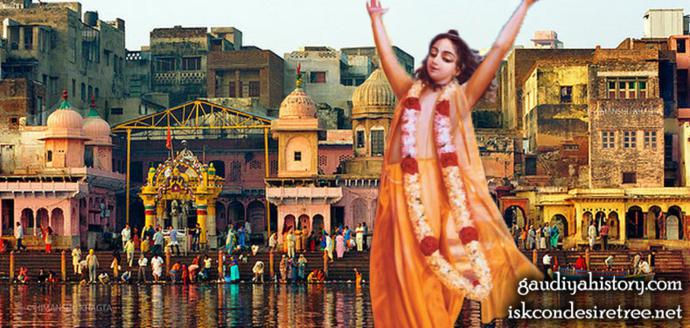
When Mahaprabhu arrived in Mathura after passing through Kashi and Prayag, He first came to the Vishrama Ghat in Mathura where He bathed. Then He visited Krishna’s birthplace and the Deity of Adi Keshava, dancing before Him in ecstatic love. Other visitors to the Temple were amazed and charmed by the Lord’s ecstatic dancing. (In the wallpaper: Lord Chaitanya at Vishram Ghat, Mathura, Uttar Pradesh).

   When Mahaprabhu arrived in Mathura after passing through Kashi and Prayag, He first came to the Vishrama Ghat in Mathura where He bathed. Then He visited Krishna’s birthplace and the Deity of Adi Keshava, dancing before Him in ecstatic love. Other visitors to the Temple were amazed and charmed by the Lord’s ecstatic dancing. At the same time, a certain Brahmin fell at the Lord’s feet and then started to dance with Him, joining the Lord in His trance of divine love. They embraced each other and then raised their arms and told everyone to sing the Holy Names of Hari and Krishna and a great tumult arose within the Adi Keshava Temple. When the kirtan finished, Mahaprabhu took the Brahmin aside and asked him,
 
   "You are a sincere and respectable elderly Brahmin. Tell me where you got this wealth of love for Krishna." (Chaitanya Charitamrita 2.17.155)
 
   In reply, the Brahmin said, "While travelling throughout India, Madhavendra Puripada came to Mathura. He blessed me by setting foot in my humble abode. He initiated me by giving me the mantra and further blessed me by accepting food which I had cooked. He discovered the Gopal Deity which is still being worshiped to this day by Govardhana."
 
   As soon as He learned of the elderly Brahmin’s relationship to Madhavendra Puri, the Lord fell at his feet. The Brahmin became afraid at this action of the Lord and himself touched the Lord’s feet. To teach that the spiritual master’s godbrothers are worshipable by the disciple, the Lord said, "You are My guru, and I am practically your disciple. It is not fitting for a guru to pay obeisances to a disciple." (Chaitanya Charitamrita 2.17.170)
 
   The Brahmin was astonished by the Lord’s humility and said, "You are a sannyasi; it is not proper for a sannyasi to pay obeisances to a fallen person like myself." But the Brahmin had also determined from the Lord’s ecstatic symptoms that He too had some relationship to Madhavendra Puri. He asked the Lord’s travelling companion, Balabhadra Bhattacharya the name of the Lord’s guru. Upon learning that his guess had been correct, he was overjoyed. The Brahmin then invited the Lord to his house and the Lord accepted, giving him the opportunity to personally render Him various kinds of service. 
 
The Lord Accepts the Brahmin’s Invitation
 
   When it was time, the Brahmin asked Balabhadra Bhattacharya to cook the Lord’s lunch, but Mahaprabhu Himself intervened. He said, "Puri Gosai ate your cooking, so you should cook for Me, too. This is what I have learned from his example."
 
   The Lord’s host belonged to the Sanoriya community of Brahmins. According to Shrila Bhaktivinoda Thakur, members of the business community (vaishyas) in the west of India are divided into several castes: Agrawalas, Kanwars, Sanwars, etc. Of these, the Agrawalas are considered to be very pure, while the two other groups are considered fallen as a result of their own karma. Those Brahmins who perform the ritual activities for the gold and jewellery merchants (Kanwars and Sanwars) are known as Sanoriya Brahmins. Normally, because of these low caste associations, they are considered to be fallen as a caste. Sannyasis thus refuse to accept food in their homes.
 
   Shrila Bhaktisiddhanta Saraswati Goswami Thakur adds to this the following analysis based on pure devotion. "The Sanoriya Brahmin was a pure Devotee, and although even drinking water from his hand was prohibited due to his caste status, he nevertheless was fixed in the daiva-varnashrama system and the Absolute Truth, both of which favor pure devotion. Those who judged Devotees in terms of their mundane caste status (the adaiva-varnashrama) or who cast aspersions on Maha Prasad were unhesitatingly identified as wicked fools by the Lord."
 
   Though sannyasis generally do not accept food from members of the Sanoriya caste, Madhavendra Puri did not hesitate to do so. Judging this Brahmin to have the qualities of a Vaishnava, Puripada gave him initiation and then ate in his house. The Sanoriya Brahmin himself was simply taking consideration of the Lord’s reputation, which would be subject to criticism if he ignored caste rules. The Lord explained that since there may be some difference opinion between the various scriptures and the seers, the best course of action was to follow the example set by those saintly persons who establish the principles of religion. Finally, the Brahmin could understand the desire of the Lord and he cooked for Him himself.
 
Saving the Lord’s Companions from Danger
 
   As the Lord traveled from Puri to Mathura, His absorption in ecstatic love increased a hundredfold over that which He experienced in Puri. Upon arriving in Mathura, it increased a thousandfold, and when He went through the twelve forests of Vraja, it increased a hundred-thousandfold. Before leaving Nilachala, Ramananda Raya and Svarupa Damodar Goswami had arranged for two people to accompany Him, Balabhadra Bhattacharya and another Brahmin servant.
 
   While He was wandering through the twelve forests, a Rajaputa Krishna Das, was attracted by the Lord and joined Him and His companions. When the Lord came to Akrura Ghat He jumped into the Yamuna in a transport of ecstasy and remained submerged for a long period of time. Krishna Das became afraid that the Lord had drowned and started to cry out for help. Balabhadra Bhattacharya heard his shouts and immediately went into the water to pull the Lord out. 
Sanoriya Vipra

When the Lord came to Akrura Ghat He jumped into the Yamuna in a transport of ecstasy and remained submerged for a long period of time. Krishna Das became afraid that the Lord had drowned and started to cry out for help. Balabhadra Bhattacharya heard his shouts and immediately went into the water to pull the Lord out. (In the wallpaper: Shri Chaitanya Mahaprabhu, Akrur ghat, Yamuna, Shri Vrindavan dham).

 
   Balabhadra was anxious about the Lord’s great distraction in divine ecstasy and so he discussed with Madhavendra Puri’s disciple, the Sanoriya Brahmin, about what could be done to protect Him. After some discussion, they decided that it was not wise to allow the Lord to stay any longer in Vrindavan. Rather, by telling Him of the full-moon bath at the end of the month of Magh, known also as Makara-sankranti, they should incite Him to go to Soro-kshetra on the banks of the Ganges, whence they could go on to Prayag. Since the Sanoriya Brahmin was the godbrother of the Lord’s guru, He was not able to refuse him when he made the suggestion to leave Vraja.
 
   Though the Lord’s body left the boundaries of Vrindavan, His consciousness remained fixed in love for Krishna, and His ecstatic trance remained unbroken. As He tired from walking, the Lord sat down underneath a tree. Nearby, a herd of cows was grazing which reminded Him of Krishna’s Vrindavan lila. All of a sudden, a cowherd began to play His flute causing Mahaprabhu to faint in an ecstasy of love. The Lord fell to the ground, His breathing stopped and foam accumulated around His mouth. At this very moment, the Muslim soldier Bijali Khan was passing by with a troop of ten cavalrymen. On seeing the Lord’s condition, Bijali Khan immediately became suspicious that foul play was afoot. He thought that the four men accompanying the Lord had poisoned Him with datura in order to steal gold he had in his possession.
 
   The Pathan immediately made prisoners of the Lord’s four companions with the intention of killing them. The two Bengali Brahmins began to tremble in fear; the two others, however, were fearless and able to think on their feet. The Sanoriya Brahmin tried to explain to the Pathan by saying: "I am a Brahmin from Mathura and I know hundreds of people in the Emperor’s court. This sannyasi is my guru and He happens to have an illness which makes Him faint from time to time. Go ahead and tie us up and wait for a few minutes. My guru will soon regain consciousness and you will be able to hear the truth from Him."
 
   Bijali Khan listened to the Sanoriya Brahmin speak fearlessly and began to doubt his understanding of the situation. He replied, "I can recognize from your speech that you are from Mathura, but these two people are foreigners. They are also trembling, so they must be guilty of something."
 
   The Rajaput a Krishna Das sensed that the situation was becoming more dangerous and said brazenly, trying to frighten the Pathan, "I live in the neighboring village. I have two hundred soldiers with a hundred cannons. I only have to shout and they will come here and take your horses and equipment. I think that you must be the real highwaymen and not these two Bengalis."
 
   The Muslim cavalrymen were cast into doubt by the Rajaputa’s fearless words. Meanwhile, the Lord came back to consciousness and in a transport of ecstasy, loudly cried out the names "Hari! Hari!" and began to dance. The Pathan soldiers were overcome by fear when they heard the Lord bellow and saw His ecstatic dancing. They immediately liberated their four prisoners so that the Lord did not see His Devotees tied up. The Muslims were attracted by the Lord’s physical beauty and spiritual mood and they asked Him the question which had been troubling them: were these four people robbers who had drugged Him in order to steal His possessions?
 
   The Lord answered, "I am a sannyasi and I live by begging. I have no wealth. These four men are My followers. I sometimes suffer from epilepsy and fall unconscious as a result. These four companions mercifully stay with Me when this happens to protect Me and take care of Me."
 
Onward to Prayag
 
   Upon His arrival at Sorokshetra, Mahaprabhu took His bath in the Ganges and then desired to set off for Prayag along the banks of the holy river. He turned to the Sanoriya Brahmin and the Rajaputa Krishna Das, "You have taken such trouble to come all this way from Mathura just to show us the way. I do not wish you to trouble yourselves any further. Please go back now."
 
   The two Vrajavasis answered, "We don’t know when we will have the good fortune of your company again. There is a great likelihood of danger on the highways of this country which is dominated by non-Hindus. Balabhadra Bhattacharya does not know the local language. We think that these are good reasons for us to accompany You as far as Prayag."
 
   The Lord laughed slightly and agreed.
 
   [Excerpted from “Shri Chaitanya: His Life & Associates” by Shrila Bhakti Ballabh Tirtha Maharaj]

Sadashiva Pandit

   Sadashiva Pandit is considered a Chaitanya branch of the tree of divine love. He was a resident of Navadwip who participated in the beginnings of the sankirtan movement. When Nityananda Prabhu first arrived in Navadwip, he stayed in his house.
 
   Sadashiva Pandit placed all his hopes at the Lord’s feet. His house was Nityananda Prabhu’s first residence in Navadwip. (Chaitanya Charitamrita 1.10.34) 
Sadashiva Pandit

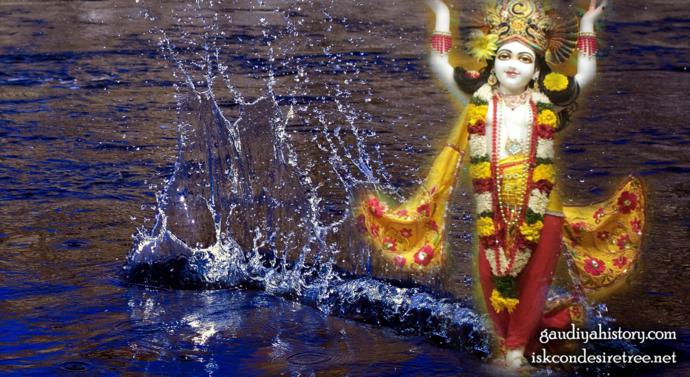
He was also one of the Lord’s companions when He engaged in water sports in the Ganges. (In the wallpaper: Shri Krishna Chaitanya, ISKCON Chennai).

 
   Sadashiva Pandit, in whose home Nityananda had previously been domiciled, also went [with the party of Devotees to Jagannath Puri]. (Chaitanya Bhagavat 3.8.19)
 
   In Vrindavan Das Thakur’s Chaitanya Bhagavat, Sadashiva Pandit’s name is included in the list of Devotees who were present in the kirtan in the house of Shrivasa Pandit, along with Gopinath, Jagadisha, Shriman, Shridhara, Vakreshvara, Shrigarbha and Shuklambar. (Chaitanya Bhagavat 2.8.115)
 
   He was also one of the Lord’s companions when He engaged in water sports in the Ganges. He was also one of the first to witness the Lord’s displays of ecstatic love after He returned from Gaya. Mahaprabhu also told him to be present in Shuklambar’s house where He publicly announced the transformation that had taken place.
 
   [The Lord said,] “You [Shriman Pandit] and Sadashiva Pandit should also come tomorrow to Shuklambar’s house. (Chaitanya Bhagavat 2.1.40)
 
   Sadashiva, Murari, Shriman and Shuklambar, and all the Lord’s other devoted followers assembled there. (Chaitanya Bhagavat 2.1.81)
 
   On the same occasion, the Lord Himself revealed to the world how dearly He considered Sadashiva by unveiling His secret pain to him.
 
   “I will reveal all My sadness to you [Shriman Pandit], Sadashiva and Murari Gupta. (Chaitanya Bhagavat 2.1.70)
 
   When Mahaprabhu decided to put on a performance of Vraja lila in the house of Chandrashekhara Acharya, He gave the responsibility for costumes and makeup to Sadashiva and Buddhimanta Khan. Sadashiva was ecstatic to receive this order from the Lord.
 
   The Lord called Buddhimanta Khan and Sadashiva and told them to go immediately to arrange for the actors’ costumes. (Chaitanya Bhagavat 2.18.7)
 
   Overjoyed, Buddhimanta and Sadashiva immediately went home to fulfill the duties given them by the Lord. (Chaitanya Bhagavat 2.18.14)
 
   Here [at the house of Chandrashekhara Acharya], Buddhimanta Khan and Sadashiva Pandit made all kinds of costume arrangements to help Lord Gauranga put on a performance as Lakshmi, so that the entire universe will become intoxicated by the singing of the Holy Names. (Bhakti-ratnakara 12.2903-4)
 
   [Excerpted from “Shri Chaitanya: His Life & Associates” by Shrila Bhakti Ballabh Tirtha Maharaj] 
Sadashiva Pandit

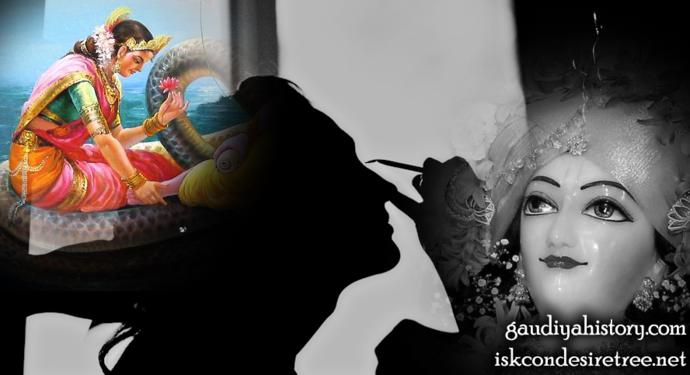
When Mahaprabhu decided to put on a performance of Vraja lila in the house of Chandrashekhara Acharya, He gave the responsibility for costumes and makeup to Sadashiva and Buddhimanta Khan. Sadashiva was ecstatic to receive this order from the Lord. (In the wallpaper: In the right below Shri Vijaya Gauranga, ISKCON Hungary, New Vraja Dham, Shrimati Lakshmi Devi and in the background image artist putting make up to an actress).

Ranga Puri

   There Mahaprabhu met Shri Ranga Puri and ended the sufferings of Rama Das. (Chaitanya Charitamrita 2.1.113)
 
   During His travels through South India, Mahaprabhu came to the town Pandharpur on the banks of the Bhima River. Pandharpur is the home of the Vitthaladeva Deity in the Sholapur district of Maharashtra. It is also well-known as the home of the famous Maharashtrian Vaishnava saint Tukarama who lived there in the 15th century of the Shaka era. 
Ranga Puri

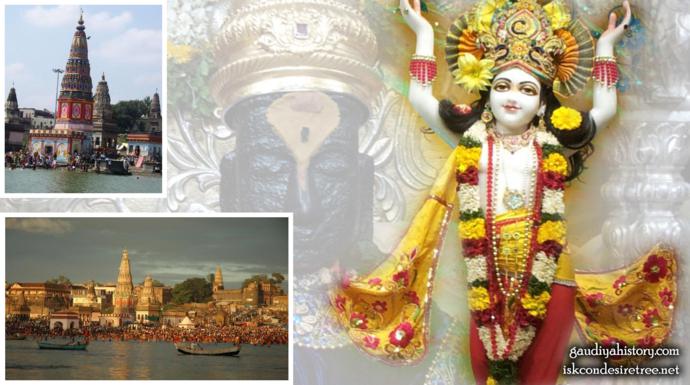
During His travels through South India, Mahaprabhu came to the town Pandharpur on the banks of the Bhima River. Pandharpur is the home of the Vitthaladeva Deity in the Sholapur district of Maharashtra. (In the wallpaper: Shri Krishna Chaitanya, ISKCON Chennai, images of Pandarpur Temples and in the background image there is Lord Panduranga).

 
   In Pandharpur, Mahaprabhu was invited by a certain Brahmin to his home where was lavishly fed. While there, He heard that Madhavendra Puri’s disciple, Shri Ranga Puri, was staying nearby in another Brahmin’s house. Mahaprabhu immediately went there to meet him. He prostrated Himself before His guru’s godbrother and was immediately inspired by a mood of ecstatic love. Shri Ranga Puri was also impressed by the sight of Mahaprabhu’s ecstatic symptoms and guessed that the Lord must have some relation to the spirit of devotion promulgated by his own spiritual master, without which they would be impossible. He lifted the Lord up and embraced Him and the two of them began to cry in devotional ecstasy.
 
   From there Shri Chaitanya Mahaprabhu went to Pandharpur, where He joyfully saw the Temple of Vitthala Thakur. A Brahmin saw the Lord chanting and dancing in ecstatic love, was very much pleased and invited Him to his home for lunch. The Brahmin offered Mahaprabhu food with great respect and love. After finishing His lunch, the Lord received auspicious news: Shri Ranga Puri, one of the disciples of Shri Madhavendra Puri, was residing at the home of another Brahmin in Pandharpur. The Lord immediately went to that Brahmin’s home and, upon entering, saw Shri Ranga Puri. As soon as Mahaprabhu saw him, He was immediately overwhelmed with ecstatic love and prostrated Himself in obeisance. All the symptoms of ecstatic transformation were visible: tears, jubilation, trembling and perspiration. (Chaitanya Charitamrita 2.9.282-7)
 
   Upon learning that Mahaprabhu was Ishvara Puripada’s disciple, Shri Ranga Puri was filled with great affection for Him. Just by touching each other, they were both flooded with ecstatic feelings. They passed seven days together in discussions of Krishna conscious topics. Shri Ranga Puri was overjoyed to hear that the Lord’s birthplace was in Navadwip. He told the Lord that he had previously been to Navadwip with his spiritual master and that they had eaten at Jagannath Mishra’s house. He recalled that Jagannath’s wife Sachi had fed them a delicious banana flower curry. She had served the sannyasis as though they were her own sons and as if the Mother of the Universe had become incarnate in her. Shri Ranga Puri continued to tell Mahaprabhu that Sachi and Jagannath had a worthy son who took sannyas, taking on the name Shankararanya, but who had died there in Pandharpur. 
Ranga Puri

...He told the Lord that he had previously been to Navadwip with his spiritual master and that they had eaten at Jagannath Mishra’s house. He recalled that Jagannath’s wife Sachi had fed them a delicious banana flower curry. She had served the sannyasis as though they were her own sons and as if the Mother of the Universe had become incarnate in her. Shri Ranga Puri continued to tell Mahaprabhu that Sachi and Jagannath had a worthy son who took sannyas, taking on the name Shankararanya, but who had died there in Pandharpur. (In the wallpaper: Jagannath Mishra and Sachi Mata along with baby Nimai in her hands, Yoga Pith, Shri Mayapur Dham, Prasadam in the background image).

 
   Upon hearing all this, Mahaprabhu was overcome with feelings of separation and He let Shri Ranga Puri know that Shankararanya had been His very own brother and that Jagannath and Sachi were His father and mother. After they finished their conversation, Shri Ranga Puri went on to Dwaraka while the Lord continued on Krishnavenva River.
 
   Madhavendra Puri is pure devotional sentiment personified. Simply by remembering his name, one can achieve all perfections. All of his disciples such as Ishvara Puri and Shri Ranga Puri were similarly intoxicated with the moods of sacred rapture. (Bhakti-ratnakara 5.2272-3)
 
   Some people say that Shri Ranga Puri later came to Jagannath Puri to join the Lord and spend the remainder of his life in His association.
 
   [Excerpted from “Shri Chaitanya: His Life & Associates” by Shrila Bhakti Ballabh Tirtha Maharaj]

Ramachandra Puri

Ramachandra Puri

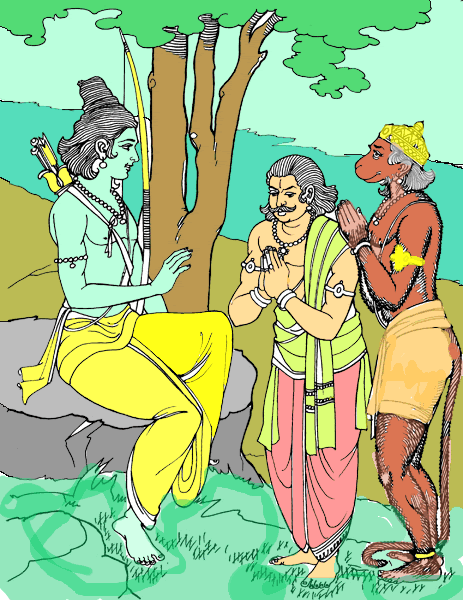
Ramachandra’s dear Devotee, Vibhishana, took birth as Ramachandra Puri. Radharani’s mother-in-law, Jatila, also entered into him for certain special purposes. On account of him, Mahaprabhu reduced his food consumption. (Gaura-ganoddesha-dipika 92-3) (In the image: from left to right Lord Shri Rama, Vibhishana, Monkey Soldier).

   vibhishano yah prag asid ramacandra-puri smritah
uvacato gaura harir naitad ramasya karanam
jatila radhika-shvashruh karyato ‘vishad eva tam
ato mahaprabhur bhiksha-sankocaditato ‘karot
 
   Ramachandra’s dear Devotee, Vibhishana, took birth as Ramachandra Puri. Radharani’s mother-in-law, Jatila, also entered into him for certain special purposes. On account of him, Mahaprabhu reduced his food consumption. (Gaura-ganoddesha-dipika 92-3)
 
tam vande krishna-caitanyam ramacandra-puri-bhayat
laukikaharatah svam yo bhikshannam samakocayat
 
   I offer my prayers to Shri Krishna Chaitanya who out of fear of Ramachandra Puri reduced his eating in the eyes of the world. (Chaitanya-charitamrita 3.8.1)
 
Ramachandra Puri as Counter-Example
 
   Before discussing the character of Ramachandra Puri, we must remember that the lessons of his life are taught as counter-examples. Anyone who seeks the perfection of his own life should bear in mind that the following lessons are to be learned from his actions:
 
   (1) Faultfinding, especially finding fault in Vishnu and the Vaishnavas, is extremely detrimental to one’s spiritual advancement. A devotional practitioner should look at his own faults rather than at others’. By correcting his own faults, he will be able to make some advancement. Anyone who sincerely seeks to achieve pure devotional service should always remember the following verse from Mahaprabhu’s teachings to Rupa Goswami:
 
yadi vaishnava aparadha uthe hati mata
uparie va chinde tara shukhi jaya pata
 
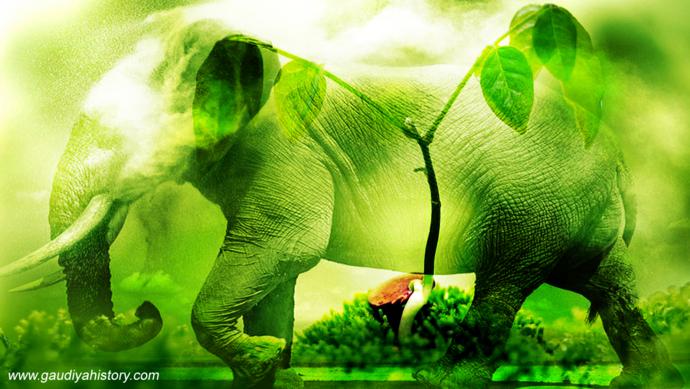
   If the maddened elephant of Vaishnava-aparadha enters the devotional garden, the creeper of bhakti will be uprooted and all its leaves will dry up. (Chaitanya-charitamrita 2.19.156) 
Ramachandra Puri

If the maddened elephant of Vaishnava-aparadha enters the devotional garden, the creeper of bhakti will be uprooted and all its leaves will dry up. (Chaitanya-charitamrita 2.19.156) (In the wallpaper: Mad elephant, a small tree).

 
   (2) All the disciples who take initiation from the same guru are not to be considered equal. Though superficially all may have taken shelter of the spiritual master and received the mantra from him, they cannot all be considered true or sincere disciples. The spiritual master rewards the disciple who dedicates himself to affectionate service of the master; such a disciple is furthermore able to recognize the mercy of his spiritual master. A disciple seeking his own perfection will bear in mind that of the sixty-four limbs of devotional service, one of the most important is vishrambhena guroh seva, the service of the spiritual master in reverence and respect. The sincere disciple recognizes that the spiritual master’s instructions are beneficial both for himself and for others.
 
   (3) To show disrespect to one’s spiritual master and to other Vaishnavas has a pernicious effect on one’s spiritual life. One should remember that the Lord cannot tolerate the transgression of the rules of etiquette. (Chaitanya-charitamrita 3.4.166). Due to whatever misfortune, some conditioned souls come under the influence of the illusory energy and are so bewildered by a pride in their own knowledge or self-worth that they arrogantly try to correct or to instruct the Vaishnava or the guru.
 
   (4) Those who want to increase in devotion should associate with and serve other Devotees who are affectionate and who have similar spiritual goals. The tendency to serve Vishnu and the Vaishnavas is increased by associating with those who possess this tendency in greater quantities.
 
   (5) Because of his relation to the guru, the guru’s godbrother is as worshipable as the guru himself. One must always show him the proper respect. Even if one thinks that his instructions are not correct, one should still maintain the outer decorum and not use direct critical speech with him. Mahaprabhu taught this kind of behavior by His own actions.
 
gorara ami, gorara ami mukhe balile nahi cale
gorara acara gorara vicara la+ile phala phale
 
   Just to repeat 'I belong to Gaura, I belong to Gaura' is not in itself sufficient. One has to follow the practice and the teachings given by Gaura if one wishes to achieve the promised results. (Bhaktivinoda Thakur).
 
Ramachandra Criticizes Jagadananda Pandit
 
   Ramachandra Puri’s family background and birthplace are unknown. It is well known that he took initiation from Madhavendra Puri. Krishnadas Kaviraj Goswami has related the story of his relationship to his guru and to Mahaprabhu in the Antya-lila of Chaitanya-charitamrita. Because he was Madhavendra Puri’s initiated disciple, both the Lord and Paramananda Puri showed him respect. Nevertheless, despite his relationship to the distinguished master, Ramachandra Puri associated closely with those who followed the path of dry knowledge and was attracted to doctrines opposed to those of pure devotional service.
 
   One day, Jagadananda Pandit saw the Lord, Paramananda and Ramachandra paying obeisances to each other, embracing each other and engaging in conversation. He decided to invite the three of them to eat a meal together. He arranged for copious amounts of Jagannath Prasad to be brought for them and fed them very well. When they had finished, Ramachandra Puri himself told Jagadananda to sit down and take Prasad. He took special care of him, personally serving him with the Lord’s remnants. After Jagadananda had finished eating, however, he criticized Mahaprabhu’s followers saying:
 
   I had heard that Chaitanya’s followers were big eaters. Now I have seen with my own eyes that this is true. To feed a sannyasi excessively leads to the destruction of religious principles. A renunciate who eats this much will find that his vows will dissipate. (*Chaitanya-charitamrita 3.8.15-16)
 
How Ramachandra Became a Fault Finder
 
   This propensity to find fault with others, to criticize and to give instructions in dry philosophy was the result of offenses Ramachandra Puri had committed at the feet of his spiritual master. When Madhavendra Puri was on his death bed in Remuna, he was in the depth of separation from Krishna and was crying in the mood of Radha after Krishna’s departure for Mathura. He kept repeating the verse,
 
ayi dinadayardra natha he, mathuranatha kadavalokyase
hridayam tvad-aloka-kataram dayita bhramyati kim karomy aham
 
   "O Lord, whose heart softens at seeing the condition of the unfortunate! Oh lord of Mathura, when will I see You? My heart is filled with pain from not seeing You, oh my love, and is confused. What can I do?" 
Ramachandra Puri

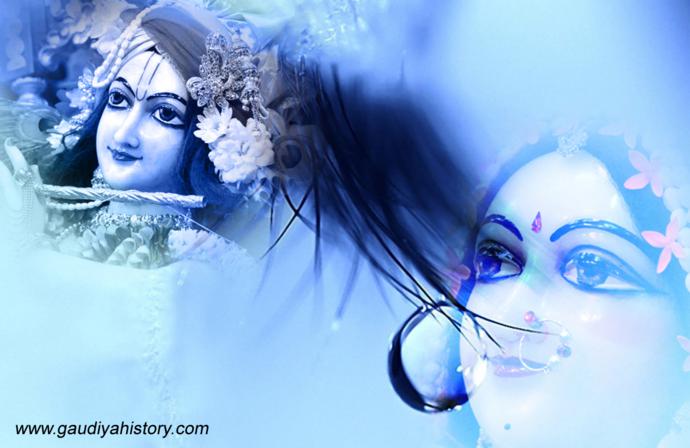
"O Lord, whose heart softens at seeing the condition of the unfortunate! Oh lord of Mathura, when will I see You? My heart is filled with pain from not seeing You, oh my love, and is confused. What can I do?" (In the wallpaper: Shri Shri Radha Gopinath, ISKCON Chowpatty, Mumbai).

 
   Both Ishvara Puri and Ramachandra Puri were present at this time. Ramachandra had no understanding of his spiritual master’s mood and treating him like an ordinary human being, arrogantly began to give him instruction. He said, “Remember that you are completely full of the bliss of Brahman. Why are you crying like this despite being knowledgeable of your own Brahma-nature?”
 
   When Madhavendra Puri heard these words so full of ignorance and effrontery, he became angry and began to rebuke Ramachandra, saying,
 
   "Get away from me, you most sinful rascal! I am dying from the distress of not having received Krishna’s mercy, of not having attained Mathura, and you come to add to my misery! Don’t show your face to me again, go wherever you like! If I see you while I am dying I will take a lower birth. I am dying from the distress of not having attained Krishna and this lowly fool is teaching me about Brahman." (Chaitanya-charitamrita 3.8.22-5)
 
   As a result of his offenses, Madhavendra Puri withdrew his blessings from Ramachandra Puri who thenceforth started to develop material desires. He became a dry philosopher without any interest in Krishna. Not only that but he became critical of everyone, exclusively devoting himself to faultfinding.
 
   In this connection, Shrila Bhaktisiddhanta Saraswati Goswami Thakur has written, "Even though Ramachandra Puri saw his own guru suffering of separation from Krishna, he was incapable of recognizing the transcendental nature of this transport of emotions. He judged his guru to be an ordinary man and took his mood to be material, the result of some material insufficiency. As a result he tried to explain to him the value of experiencing the oneness of Brahman. Madhavendra Puri reacted to his disciple’s stupidity and disregard for his instructions and thus stopped wishing for his well-being. He abandoned him and drove him away."
 
   On the other hand, Ishvara Puri not only adhered to his guru’s teaching but served him physically and thus received his mercy, so becoming immersed in love of Krishna.
 
   "Ishvara Puri received his spiritual master’s mercy, while Ramachandra Puri received his enmity. For the edification of the world, these two served as examples of the guru’s blessings and his punishment." (Chaitanya-chritamrita 2.8.32)
 
Ramachandra Puri Finds Fault with the Lord Himself
 
   Deprived of his spiritual master’s blessings, Ramachandra Puri sought out sannyasis to find out what their activities were, how much they ate, etc., all for the sake of discovering their faults. Mahaprabhu had the habit of taking lunch on the invitation of His various Devotees. If anyone was unable for whatever reason to invite the Lord to his house for a meal, he would give a donation of money to buy Jagannath Prasad. The customary amount at that time was four panas or strings (320) of cowries.
 
   Unable to appreciate the Lord’s glories and thinking of Him as an ordinary man, Ramachandra Puri concerned himself with gathering all sorts of information about His lodgings, His habits, how much He ate and slept and His comings and goings. He was interested only in finding faults and finally he found one. He criticized those in the renounced order for eating sweetmeats, saying that it made it difficult to control the senses. Though his only goal was to find fault with the Lord, Ramachandra Puri nevertheless he came regularly to see Him. When they met, the Lord would offer him respectful obeisances, considering him a godbrother of Hs spiritual master.
 
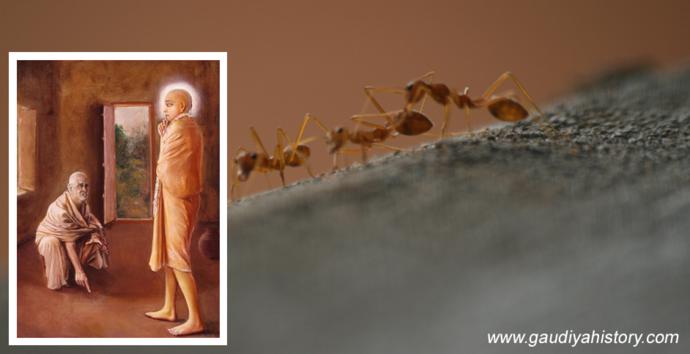
   One day Ramachandra Puri came in the morning to Mahaprabhu’s residence. Seeing many ants in the Lord’s room, he began to criticize Him, saying, "Last night there was molasses made from sugar cane in here. This is why there are so many ants. Alas, how sad to see such an attachment to sense gratification amongst those in the renounced order of life!" After saying this, he got up and left.
 
   Though ants quite naturally roam about everywhere, Mahaprabhu became apprehensive as a result of his accusations. He called Govinda and instructed him to reduce His daily consumption of Prasad to one-fourth of a pot and five gandas worth of vegetables. He warned him that if Govinda brought Him more than this amount, He would leave Puri. 
Ramachandra Puri

One day Ramachandra Puri came in the morning to Mahaprabhu’s residence. Seeing many ants in the Lord’s room, he began to criticize Him, saying, "Last night there was molasses made from sugar cane in here. This is why there are so many ants. Alas, how sad to see such an attachment to sense gratification amongst those in the renounced order of life!" After saying this, he got up and left. Though ants quite naturally roam about everywhere, Mahaprabhu became apprehensive as a result of his accusations. He called Govinda and instructed him to reduce His daily consumption of Prasad to one-fourth of a pot and five gandas worth of vegetables. He warned him that if Govinda brought Him more than this amount, He would leave Puri. (In the wallpaper: Lord Shri Chaitanya in the right, Ramachandra Puri in the left, ants).

 
   When the Devotees heard about Mahaprabhu’s reduction in Prasad consumption, they were thunderstruck. They condemned Ramachandra Puri and themselves stopped eating. When Ramachandra Puri heard that Mahaprabhu and His Devotees had all reduced the amount of food they were taking, he went to see Him and impudently said:
 
   "A sannyasi is not supposed to gratify his senses. He should fill his belly with the bare minimum. I see that You have become thin. Indeed, I have heard that You have cut your eating in half. But this kind of dry renunciation is not the religion of a sannyasi, either. A sannyasi eats as much as is necessary to maintain his body, but without engaging in sense gratification. By so doing, he becomes perfect in the discipline of knowledge."
 
natyashnato 'pi yogo 'sti na caikantam anashnatah
na cati-svapna-shilasya jagrato naiva carjuna
 
yuktahara-viharasya yukta-ceshtasya karmasu
yukta-svapnavabodhasya yogo bhavati duhkha-ha
 
   "O Arjuna, yoga practice is impossible for anyone who overeats, under-eats, oversleeps, or under-sleeps. For a person who eats, relaxes and exerts himself in all duties in a regulated way, and who keeps regular hours in proper measure, the practice of yoga brings about the end of all worldly suffering." (Bhagavad-gita 6.16-17)
 
   Mahaprabhu continued to show Ramachandra Puri the same respect as before, however, and humbly submitted, "I am just like an ignorant boy and it is My great fortune that you treat Me like your disciple and instruct Me. I will do My best to follow your instructions." Hearing this, Ramachandra Puri got up and left.
 
Paramananda Puri Tries to Intercede
 
   In the meantime, Paramananda Puri heard that all the Devotees of Shri Chaitanya Mahaprabhu were eating only half as much as usual. He and some other Devotees approached the Lord with great humility and submission and said, "Ramachandra Puri is by nature a slanderer. It is not wise to give up eating on his say-so. It is his wont to make someone eat far more than he wants. Then he reproaches that person for overeating. Two kinds of activity, though rejected in the revealed scriptures, constitute the substance of his daily affairs:
 
para-svabhava-karmani na prashamsen na garhayet
vishvam ekatmakam pashyan prakritya purushena ca
 
   "One should neither praise nor criticize the activities of others which result from their nature, because everything in the universe is a combination of the material nature and the living souls, and is thus one sole entity. (SB 11.28.1)
 
"Of the two rules, Ramachandra Puri obeys the first by abandoning praise, but although he knows that the second is more prominent, he neglects it by criticizing others."
 
   Shrila Bhaktisiddhanta Saraswati Goswami Thakur comments on this verse by saying, "The above-mentioned verse from Shrimad Bhagavatam gives two injunctions. The first, called purva-vidhi, is that one should not praise, and the second, para-vidhi, is that one should not criticize. It is generally said that the rule which is given later takes precedence over previously given injunctions. From this we can understand that to praise someone is not so dangerous, while one should avoid calumny. Here, however, Ramachandra Puri observed the injunction to avoid praising others, but did not observe the prohibition against criticism. Thus he neglected the para-vidhi but strictly observed the purva-vidhi. This verse thus has an ironical meaning."
 
   Paramananda Puri continued: "Ramachandra Puri does not praise even a person who has hundreds of good qualities; he rather finds some way of calling these qualities a fault. You should not give up eating properly because of his criticism; You should rather accept invitations as before."
 
   Mahaprabhu replied, "There is no reason to get angry at Ramachandra Puri. A sannyasi should not be lusty after the pleasures of the tongue, but only eat in order to keep body and soul together."
 
   When the Devotees continued to press the Lord to abandon His new principle, He would not do so. Finally, He responded to their request by accepting half of the original amount of Prasad (rather than a quarter as He was then doing). Thus the cost for the food needed to invite Him was fixed at two panas of cowries (160 conch shells), and that food would be taken by two men and sometimes three.
 
   Krishnadas Kaviraj Goswami writes:
 
   "When a Brahmin at whose home an invitation could not be accepted invited the Lord, he would pay two panas of conch shells to purchase the Prasad. When a Brahmin at whose home an invitation could be accepted invited him, the Brahmin would purchase part of the Prasad and cook the rest at home. (Chaitanya-charitamrita 3.8.89-90)
 
Ramachandra Leaves Puri
 
   If Gadadhara Pandit, Bhagavan Acharya or Sarvabhauma Bhattacharya invited the Lord on a day when He had already been invited to dine by someone else, He would break His previous engagement. Then He would eat as much as they served Him.
 
   Mahaprabhu sometimes treated Ramachandra Puri according to worldly etiquette, and sometimes He would ignorer him as though he were of no more significance than straw. All the Lord’s activities are auspicious and beautiful, in all times and circumstances.
 
   "Sometimes the Lord acted almost like a servant to Ramachandra Puri. At other times, He treated him like straw. The Lord’s activities are beyond human comprehension. Whatever He does, to whomever, is always enchanting." (Chaitanya-charitamrita 3.8.94-5)
 
   Ramachandra Puri stayed in Jagannath Puri for a short while longer before leaving to visit various holy places of pilgrimage. When he left, the Devotees felt extremely happy, as if a great load of stones had suddenly fallen from their heads to the ground. Mahaprabhu once again began to accept invitations as before and the Devotees were able to serve Him without hindrance.
 
   Thus, if one commits an offense to one’s spiritual master, that offense eventually arrives at the feet of the Supreme Personality of Godhead Himself.
 
   "This is the result of being rejected by one’s spiritual master. Eventually, the offense reaches as far as the Supreme Personality of Godhead. Even though the Lord did not consider the offenses of Ramachandra Puri, considering him to be a senior, he instructed through His behavior about the result of offending the spiritual master." (Chaitanya-charitamrita 3.8.99-100)
 
Mahaprabhu Stays with Ramachandra Puri in Benares
 
   Vrindavan Das Thakur has also written that Mahaprabhu hid in the house of Ramachandra Puri while in Benares.
 
   Mahaprabhu remained hidden for two months in Ramachandra Puri’s matha. (Chaitanya Bhagavat 2.19.105)
 
   Shrila Bhaktisiddhanta Saraswati Goswami Thakur writes in his Gaudiya-bhashya, "Gaurasundara stayed in the house of Chandrashekhara while in Benares. Chandrashekhara was a shudra of the vaidya caste. Vrindavan Das Thakur says that He stayed with Ramachandra Puri, who is known as a pretentious disciple of Madhavendra Puri who had a strong preference for the Mayavada philosophy. He told people in Benares that He was staying with Ramachandra Puri while in fact He preferred to spend His time with Devotees. Ramachandra Puri was a sannyasi in one of the ten Shankarite orders, therefore Mahaprabhu stayed with him to avoid criticism from the non-devotees."
 
   [Excerpted from “Shri Chaitanya: His Life & Associates” by Shrila Bhakti Ballabh Tirtha Maharaj] 
Ramachandra Puri

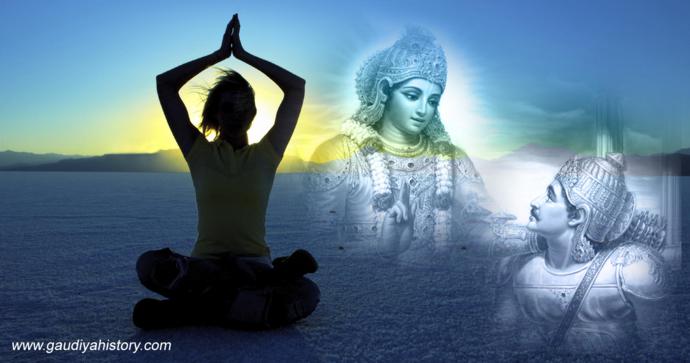
"O Arjuna, yoga practice is impossible for anyone who overeats, under-eats, oversleeps, or under-sleeps. For a person who eats, relaxes and exerts himself in all duties in a regulated way, and who keeps regular hours in proper measure, the practice of yoga brings about the end of all worldly suffering." (Bhagavad-gita 6.16-17) (In the wallpaper: from right to left Arjuna, Shri Krishna, a yogi).
Raghupati Upadhyaya

   Shri Raghupati Upadhyaya was a Brahmin who originated from the region of Mithila. He was born in Tirhut, in the Sitamari subdivision of Darbhanga district in Bihar state. Tirhut or Tiruhita, was also the name for a kingdom which included the four modern districts of Darbhanga, Sitamarhi, Muzaffarpur and Champaran in northwestern Bihar. Paramananda Puri also came from Tirhut.
 
   When Mahaprabhu heard Raghupati Upadhyaya’s verses, he became overwhelmed with feelings of ecstatic love. Shrila Rupa Goswami later included several of these verses in his Padyavali. Krishnadas Kaviraj Goswami has recounted the meeting of Raghupati with the Lord in his Chaitanya Charitamrita. Madhya-lila, 19. This meeting took place when Mahaprabhu was in Prayag and had gone to visit Vallabhacharya in Ariail. [See vol. II, Chapter 3, on Rupa Goswami.] 
Raghupati Upadhyaya

Let those afraid of material existence worship the Vedas and Upanishads, the smritis and puranas, or the Mahabharata, as they wish. I, on the other hand, shall simply worship Maharaj Nanda, in whose courtyard plays the Supreme Truth. (Padyavali, 126) (In the image: Shri Gopal, His parents Nanda Maharaja and Yashoda Maharani).

 
   At that time Raghupati Upadhyaya arrived there. He was from Tiruhita district, a learned scholar, a Vaishnava and a gentleman. He offered his respects to Shri Chaitanya Mahaprabhu and the Lord blessed him, saying, "May you always remember Krishna." (Chaitanya Charitamrita 2.19.92-3)
 
   When Mahaprabhu asked Raghupati to speak to Him about Krishna, Raghupati recited a verse of his own composition:
 
shrutim apare smritim itare
bharatam anye bhajantu bhava-bhitah
aham iha nandam vande
yasyalinde param brahma
 
   Let those afraid of material existence worship the Vedas and Upanishads, the smritis and puranas, or the Mahabharata, as they wish. I, on the other hand, shall simply worship Maharaj Nanda, in whose courtyard plays the Supreme Truth. (Padyavali, 126)
 
   Mahaprabhu was ecstatic upon hearing this beautiful verse and asked to hear more. Raghupati acquiesced by reciting another verse he had written:
 
kam prati kathayitum ishe
samprati ko va pratitim ayatu
go-pati-tanaya-kuïje
gopa-vadhuti-vitam brahma
 
   Whom dare I tell that the Supreme Truth, is lusting after the cowherds’ brides in the bushes by the banks of the River Yamuna? And who will believe me when I say it? (Padyavali, 98)
 
   As the Lord heard more and more of Raghupati’s compositions, he went deeper and deeper into a trance of prema, demonstrating powerful ecstatic symptoms which made a great impression on the scholar, leading him to believe that Mahaprabhu was Krishna Himself.
 
   Mahaprabhu then asked Raghupati which of Krishna’s many forms was the best. The scholar replied: "The Lord’s blackish form is supreme." Mahaprabhu then asked, "Which abode of the Lord is the best?" Raghupati answered, "Mathura is the best city." In response to Mahaprabhu’s question about Krishna’s best age, he answered that it was His adolescence. And then to the question about the best amongst the rasas, Raghupati stated that the primary rasa, or the erotic mood, was supreme. The complete verse is found in the Padyavali (82):
 
shyamam eva param rupam
puri madhu-puri vara
vayah kaishorakam dhyeyam
adya eva paro rasah
 
   Mahaprabhu embraced Raghupati in His ecstasy and then began to dance. Vallabha Bhatta and all the members of his householders were astounded by Raghupati Upadhyaya’s great fortune.
 
   [Excerpted from “Shri Chaitanya: His Life & Associates” by Shrila Bhakti Ballabh Tirtha Maharaj] 
Raghupati Upadhyaya

Mahaprabhu then asked Raghupati which of Krishna’s many forms was the best. The scholar replied: "The Lord’s blackish form is supreme." Mahaprabhu then asked, "Which abode of the Lord is the best?" Raghupati answered, "Mathura is the best city." In response to Mahaprabhu’s question about Krishna’s best age, he answered that it was His adolescence. And then to the question about the best amongst the rasas, Raghupati stated that the primary rasa, or the erotic mood, was supreme. (In the wallpaper: Shri Shyamasundara, ISKCON Hungary, New Vraja Dham).