Author Archives: Sevak

Viracandra Prabhu – Biography

Shri Virachandra or Virabhadra Prabhu appeared on the ninth day of the dark fortnight of the month of Kartik. Krsna dasa Kaviraja Gosvami has given this description of Him in the C.C. Adi 11.8-12:
 
"After Nityananda Prabhu, the greatest branch is Virabhadra Gosani, who also has innumerable branches and sub-branches. It is not possible to describe them all. Although Virabhadra Gosani was the Supreme Personality of Godhead Lord Kshirodakashayi Vishnu Himself, He presented Himself as a great devotee. And although the Supreme Godhead is transcendental to all Vedic injunctions, He strictly followed the Vedic rituals. He is the main pillar in the hall of devotional service erected by Sri Caitanya Mahaprabhu. He knew within himself that He acted as the Supreme Lord Visnu, but externally He was prideless. It is by the mercy of Sri Virabhadra Gosani that people all over the world now have the chance to chant the names of Caitanya and Nityananda. I there take shelter of the lotus feet of Virabhadra Gosani so that by His mercy my great desire to write Sri Caitanya-Charitamrta will be properly guided."
 
Sri Birbhadra Gosvami is the son of Sri Nityananda Prabhu and the disciple of Sri Jahnava Mata. His mother is Srimati Vasudha Devi. 
 
The expansion of Lord Sankarshan known as Kshirodakasayi Vishnu appeared in Sri Chaitanya Mahaprabhu's pastimes as Virachandra Prabhu. Lord Virachandra was non-different from Lord Chaitanya Himself. 
 
Once upon a time, Isvari (Sri Jahnava Mata) went to the house of one Yadunandana Acarya of Jhamatpura and by her mercy he became a devotee. Jadunanda's wife was extremely devoted to her husband and his two daughters, Srimati and Narayani, possessed bodily forms which excelled the limits of mortal beauty. By the desire of Isvari that very perfect brahmana gave these two daughters in marriage to Prabhu Viracandra. [B.R.13]
 
Sri Yadunandana Acarya became the disciple of Vircandra Prabhu and Srimati and Sri Narayani were given initiation in mantra by Sri Jahnava Mata. Viracandra prabhu had a sister, Srimati Gangadevi, who was none other than Mother Ganga herself. Her husband Madhavacarya was an incarnation of Raja Santanu.
 
Taking permission from his mother, Viracandra Prabhu set out on a pilgrimage to Vrindavana. First he came to Saptagram and proceeded to the house of Sri Uddharana Datta Thakura where He was met by Uddharana Datta's son, Srinivasa Datta. Srinivasa greeted Him with respect and showed Him all hospitality for the two days that he stayed there. From there He went to Santipur where He was led to Advaita Bhavan in a kirtan procession by Advaita Acarya's son, Sri Krsna Misra. Next he crossed the Ganges River and came to Gauri dasa Pandita's house in Ambika Kalna. Sri Hrdaya Caitanya Prabhu respectfully greeted Him and honored Him as His guest. From here He came to Navadvipa, to the house of Jagannath Misra. When the family members and associates of Mahaprabhu learned that He was the son of Sri Nityananda Prabhu, they were highly pleased and showed Him all courtesies.
 
After spending two days there He came to Sri Khanda where He was greeted very respectfully and affectionately by Sri Raghunandana and to Sri Kanai Thakura. He spent a few days there, and then went to Srinivasa Acarya Prabhu's house in Jajigram, where Acarya Prabhu received his exalted guest by offering Him the appropriate worship. A few days passed In the ecstasy of sankirtan and then Viracandra Prabhu came to Kantak Nagan (Katwa). He remained there for one day and then proceeded to Bhudarigram. There He was received by Sri Govinda Kaviraj who worshipped His lotus feet and offered Him all hospitality. Sri Viracandra Prabhu was very pleased at his devotion and remained there for a couple of days. Thereafter He made His auspicious arrival in Kheturi.
 
As soon as he received news of His arrival, Sri Narottama Thakura came out in great ecstasy to meet Sri Viracandra Prabhu. He led Him into the courtyard of the temple of Sri Gauranga where sankirtan accompanied with ecstatic dancing commenced. A steady crowd of people thronged to get a glimpse of Prabhu Vircandra. [B.R. 13]
 
After spending a few days in Kheturi in ecstatic sankirtana, Viracandra Prabhu set off for Sri Vrindavana Dhama. Along the way many sinful and atheistic people were delivered by His influence. As news of His arrival reached Vrindavana, the Gosvamis, namely Srila Jiva Goswami, Srila Krsna dasa Kaviraj Gosvami, Sri Ananta Acarya, Sri Hari dasa Pandita, Sri Krsna dasa Brahmacari (Sri Madhu Gopala's pujari, a disciple of Sri Gadadhara Pandita), Sri Madhu Pandita (pujari of Sri Gopinatha), Sri Bhavananda, Sri Kasisvara, as well as his disciple Sri Govinda Gosvami and Sri Yadavacarya were all informed.
 
The Gosvamis, accompanied by many residents of Sri Vrindavana Dhama, all came out to meet Prabhu Viracandra. Everyone was overwhelmed by His appearance in ecstatic love, and they all were humming like bumble bees in discussing His good qualities. Prabhu Viracandra, in the company of these exalted souls, took darshana of Sri Madana Mohana, Sri Govindaji, Sri Gopinatha, the principal Deities in Vrindavana. [B.R. 13]
 
After receiving the consent of Sri Jiva Gosvami and Sri Bhugarbha Gosvami, Prabhu Viracandra set out to wander in the twelve forests of Vrajamandala, becoming completely overwhelmed by seeing the various places of Krsna's pastimes, like Sri Radha Kunda, Sri Shyama Kunda and Giri Govardhana. His display of ecstatic symptoms captivated the Brijbasis. After seeing the sights of Sri Vrajadhama, Bircandra Prabhu returned to Gaudadesa.
 
All of the divine qualities of His father, Sri Nityananda Prabhu, were fully present in Him. Those who were fortunate enough to witness His ecstatic love praised His glories far and wide.
 
Gopijana Vallabha, Rama Krsna and Ramacandra, who are thought by some to be the sons of Virabhadra Gosai, were actually His disciples. The youngest, Rama Krsna, who resided at Khardaha, belonged to the Sandilya Gotra and was a member of the Batabyal brahmana community, known for their great accomplishment in studying the Vedas. The oldest, Gopijana Vallabha, lived at Latagram near Manakar, in the district of Barddhaman. The middle one, Ramacandra, lived at Ganeshpur near Maldah. Because their gotras and
surnames (titles) were different, and because they lived at different places, it is concluded they were not actually ViraRcandra Prabhu's sons.
 
His birthplace is at Khardaha, which now is a rail station on the Sealdah-Krsnanagar line. The village where Nityananda Prabhu made His advent in this world – Ekacakra – is also named ViracandraRpur. Here the Deity of Sri Bankim Raya was worshipped by ViraRcandra Prabhu.
 
isvara ha-iya kahaya maha-bhagavata
veda-dharmatita hana veda-dharme rata
(C.C.  Adi 11.9)
Although Virabhadra Gosani was the Supreme Personality of Godhead, He presented Himself as a great devotee. And although the Supreme Godhead is transcendental to all Vedic injunctions, He strictly followed the Vedic rituals.
 
antare isvara-ceshta, bahire nirdambha
caitanya-bhakti-mandape tenho mula-stambha
(C.C.  Adi 11.10)
He is the main pillar in the hall of devotional service erected by Sri Caitanya Mahaprabhu. He knew within Himself that He acted as the Supreme Lord Vishnu, but externally He was prideless.
 
sei virabhadra-gosanira la-inu sarana
yanhara prasade haya abhishta-purana
(C.C.  Adi 11.12)
I therefore take shelter of the lotus feet of Virabhadra Gosani, so that by His mercy my great desire to write Sri Caitanya-caritamrita will be properly guided.
 
sri-ramadasa ara, gadadhara dasa
caitanya-gosanira bhakta rahe tanra pasa
(C.C.  Adi 11.13)
Two devotees of Lord Caitanya named Sri Ramadasa and Gadadhara dasa always lived with Sri Virabhadra Gosani.
Srila Prabhupada writes in the purport:
 
sarvasakha-sreshtha virabhadra gosani
tanra upasakha yata, tara anta nai
(C.C.  Adi 11.56)
Among all the branches of Sri Nityananda Prabhu, Virabhadra Gosani was the topmost. His subbranches were unlimited.

Kamalakanta Visvasa receives mercy

This description is in Sri Caitanya Caritamrta Adi-lila, Chapter 12:

TEXT 28


'kamalakanta visvasa'-nama acarya-kinkara
acarya-vyavahara saba—-tanhara gocara


TRANSLATION

Advaita Acarya's very confidential servant named Kamalakanta Visvasa knew all the dealings of Advaita Acarya.

PURPORT

The name Kamalananda mentioned in the Adi-lila (10.149) and the name Kamalakanta mentioned in the Madhya-lila (10.94) both refer to the same man. Kamalakanta, a very confidential servant of Lord Caitanya Mahaprabhu born in a brahmana family, engaged in the service of Sri Advaita Acarya as His secretary. When Paramananda Puri went from Navadvipa to Jagannatha Puri, he took Kamalakanta Visvasa with him, and they both went to see Lord Caitanya at Jagannatha Puri. It is mentioned in the Madhya-lila (10.94) that one of the devotees of Lord Caitanya, the brahmana Kamalakanta, went with Paramananda Puri to Jagannatha Puri.


TEXT 29


nilacale tenho eka patrika likhiya
prataparudrera pasa dila pathaiya


TRANSLATION

When Kamalakanta Visvasa was in Jagannatha Puri, he sent a note through someone to Maharaja Prataparudra.


TEXT 30


sei patrira katha acarya nahi jane
kona pake sei patri aila prabhu-sthane


TRANSLATION

No one knew of that note, but somehow or other it reached the hands of Sri Caitanya Mahaprabhu.


TEXT 31


se patrite lekha ache—-ei ta' likhana
isvaratve acaryere kariyache sthapana


TRANSLATION

That note established Advaita Acarya as an incarnation of the Supreme Personality of Godhead.


TEXT 32


kintu tanra daive kichu ha-iyache rna
rna sodhibare cahi tanka sata-tina


TRANSLATION

But it also mentioned that Advaita Acarya had recently incurred a debt of about three hundred rupees that Kamalakanta Visvasa wanted to liquidate.


TEXT 33

patra padiya prabhura mane haila duhkha
bahire hasiya kichu bale candra-mukha


TRANSLATION

Lord Caitanya Mahaprabhu became unhappy upon reading the note, although His face still shone as brightly as the moon. Thus, smiling, He spoke as follows.


TEXT 34


acaryere sthapiyache kariya isvara
ithe dosa nahi, acarya—-daivata isvara


TRANSLATION

"He has established Advaita Acarya as an incarnation of the Supreme Personality of Godhead. There is nothing wrong in this, for He is indeed the Lord Himself."


TEXT 35


isvarera dainya kari' kariyache bhiksa
ataeva danda kari' karaiba siksa


TRANSLATION

"But he has made the incarnation of Godhead a poverty-stricken beggar. Therefore I shall punish him for his correction."

PURPORT

To describe a man as an incarnation of God, or Narayana, and at the same time present him as poverty-stricken is contradictory, and it is the greatest offense. The Mayavadi philosophers, engaged in the missionary work of spoiling the Vedic culture by preaching that everyone is God, describe a poverty-stricken man as daridra-narayana, or "poor Narayana." Lord Caitanya Mahaprabhu never accepted such foolish and unauthorized ideas. He strictly warned, mayavadi-bhasya sunile haya sarva-nasa: "Anyone who follows the principles of Mayavada philosophy is certainly doomed." Such a fool needs to be reformed by punishment.

Although it is contradictory to say that the Supreme Personality of Godhead or His incarnation is poverty-stricken, we find in the revealed scriptures that when the Lord incarnated as Vamana, He begged some land from Maharaja Bali. Everyone knows, however, that Vamanadeva was not at all poverty-stricken. His begging from Maharaja Bali was a device to favor him. When Maharaja Bali actually gave the land, Vamanadeva exhibited His all-powerful position by covering the three worlds with three steps. One should not accept the so-called daridra-narayanas as incarnations because they are completely unable to show the opulence of the genuine incarnations of God.


TEXT 36


govindere ajna dila,—-"inha aji haite
bauliya visvase etha na dibe asite"


TRANSLATION

The Lord ordered Govinda, "From today on, do not allow that bauliya Kamalakanta Visvasa to come here."

PURPORT

The bauliyas, or baulas, are one of thirteen unauthorized sects that pass as followers of Caitanya Mahaprabhu. The Lord ordered Govinda, His personal assistant, not to allow Kamalakanta Visvasa to come in His presence because he had become a bauliya. Thus although the baula-sampradaya, aula-sampradaya and sahajiya-sampradaya, as well as the smartas, jata-gosanis, atibadis, cudadharis and gauranga-nagaris, claim to belong to the disciplic succession of Caitanya Mahaprabhu, the Lord actually rejected them.


TEXT 37


danda suni' 'visvasa' ha-ila parama duhkhita
suniya prabhura danda acarya harsita


TRANSLATION

When Kamalakanta Visvasa heard about this punishment by Sri Caitanya Mahaprabhu, he was very unhappy, but when Advaita Prabhu heard about it, He was greatly pleased.

PURPORT

In Bhagavad-gita the Lord says, samo 'ham sarva-bhutesu na me dvesyo 'sti na priyah: "I envy no one, nor am I partial to anyone. I am equal to all." (Bg. 9.29) The Supreme Personality of Godhead being equal to everyone, no one can be His enemy, nor can anyone be His friend. Since everyone is a part or son of the Supreme Personality of Godhead, the Lord cannot partially regard someone as a friend and someone as an enemy. Thus when Lord Caitanya Mahaprabhu punished Kamalakanta Visvasa by no longer allowing him to come in His presence, although the punishment was actually very hard on him, Sri Advaita Prabhu, understanding the inner meaning of such punishment, was happy because He appreciated that the Lord had actually favored Kamalakanta Visvasa. Therefore He was not at all unhappy. Devotees should always be happy with all the dealings of their master, the Supreme Personality of Godhead. A devotee may be put into difficulty or opulence, but he should accept both as gifts of the Supreme personality of Godhead and jubilantly engage in the service of the Lord in all circumstances.


TEXT 38


visvasere kahe,—-tumi bada bhagyavan
tomare karila danda prabhu bhagavan


TRANSLATION

Seeing Kamalakanta Visvasa unhappy, Advaita Acarya Prabhu told him, "You are greatly fortunate to have been punished by the Supreme Lord, the Personality of Godhead, Lord Caitanya Mahaprabhu.

PURPORT

This is an authoritative judgment by Sri Advaita Prabhu. He clearly advises that one should not be unhappy when reverses come upon him by the order of the Supreme Personality of Godhead. A devotee should always be happy to receive the fortune awarded him by the Supreme Lord, which seems pleasant or unpleasant according to one's judgment.


TEXT 39


purve mahaprabhu more karena sammana
duhkha pai' mane ami kailun anumana


TRANSLATION

"Formerly Lord Caitanya Mahaprabhu always respected Me as His senior, but I did not like such respect. Therefore, My mind being afflicted by unhappiness, I made a plan."


TEXT 40

mukti—-srestha kari' kainu vasistha vyakhyana
kruddha hana prabhu more kaila apamana


TRANSLATION

"Thus I expounded the Yoga-vasistha, which considers liberation the ultimate goal of life. For this the Lord became angry at Me and treated Me with apparent disrespect."

PURPORT

There is a book of the name Yoga-vasistha that Mayavadis greatly favor because it is full of impersonal misunderstandings regarding the Supreme Personality of Godhead, with no touch of Vaisnavism. Factually, all Vaisnavas should avoid such a book, but Advaita Acarya Prabhu, wanting punishment from the Lord, began to support the impersonal statements of the Yoga-vasistha. Thus Lord Caitanya Mahaprabhu became extremely angry at Him and seemingly treated Him disrespectfully. 


TEXT 41

danda pana haila mora parama ananda
ye danda paila bhagyavan sri-mukunda


TRANSLATION

"When chastised by Lord Caitanya, I was very happy to receive a punishment similar to that awarded Sri Mukunda."

PURPORT

Sri Mukunda, a great friend and associate of Lord Caitanya Mahaprabhu, used to visit many places where people were against the Vaisnava cult. When Lord Caitanya Mahaprabhu came to know of this, He punished Mukunda, forbidding him to see Him again. Although Caitanya Mahaprabhu was soft like a flower, He was also strict like a thunderbolt, and everyone was afraid to allow Mukunda to come again into the presence of Sri Caitanya Mahaprabhu. Mukunda, therefore, being very sorry, asked his other friends whether he would one day be allowed to see Lord Caitanya Mahaprabhu. When the devotees brought this inquiry to Lord Caitanya, the Lord replied, "Mukunda will get permission to see Me after many millions of years." When they gave this information to Mukunda, he danced with jubilation, and when Lord Caitanya Mahaprabhu heard that Mukunda was so patiently waiting to meet Him after millions of years, He immediately asked him to return. There is a statement about this punishment of Mukunda in the Caitanya-bhagavata, Madhya-lila, Tenth Chapter.


TEXT 42

ye danda paila sri-saci bhagyavati
se danda prasada anya loka pabe kati


TRANSLATION

"A similar punishment was awarded to mother Sacidevi. Who could be more fortunate than she to receive such punishment?"

PURPORT

Mother Sacidevi was similarly punished, as mentioned in the Caitanya-bhagavata, Madhya-lila, Chapter Twenty-two. Mother Sacidevi, apparently showing her feminine nature, accused Advaita Prabhu of encouraging her son to become a sannyasi. Caitanya Mahaprabhu, taking this accusation as an offense, asked Sacidevi to touch the lotus feet of Advaita Acarya to mitigate the offense she had supposedly committed.


TEXT 43

eta kahi' acarya tanre kariya asvasa
anandita ha-iya aila mahaprabhu-pasa


TRANSLATION

After pacifying Kamalakanta Visvasa in this way, Sri Advaita Acarya Prabhu went to see Caitanya Mahaprabhu.


TEXT 44

prabhuke kahena—-tomara na bujhi e lila
ama haite prasada-patra karila kamala


TRANSLATION

Sri Advaita Acarya told Lord Caitanya, "l cannot understand Your transcendental pastimes. You have shown more favor to Kamalakanta than You generally show to Me.


TEXT 45

amareha kabhu yei na haya prasada
tomara carane ami ki kainu aparadha


TRANSLATION

"The favor You have shown Kamalakanta is so great that even to Me You have never shown such favor. What offense have I committed at Your lotus feet so as not to be shown such favor?"

PURPORT

This is a reference to Lord Caitanya Mahaprabhu's former punishment of Advaita Acarya. When Advaita Acarya Prabhu was reading Yoga-vasistha, Lord Caitanya Mahaprabhu beat Him, but He never told Him not to come in His presence. But Kamalakanta was punished with the order never to come in the Lord's presence. Therefore Sri Advaita Acarya Prabhu wanted to impress upon Caitanya Mahaprabhu that He had shown more favor to Kamalakanta Visvasa because He had prohibited Kamalakanta from seeing Him, whereas He had not done so to Advaita Acarya. Therefore the favor shown Kamalakanta Visvasa was greater than that shown Advaita Acarya.


TEXT 46

eta suni' mahaprabhu hasite lagila
bolaiya kamalakante prasanna ha-ila


TRANSLATION

Hearing this, Lord Caitanya Mahaprabhu laughed with satisfaction and immediately called Kamalakanta Visvasa.


TEXT 47


acarya kahe, ihake kene dile darasana
dui prakarete kare more vidambana

TRANSLATION

Advaita Acarya then said to Caitanya Mahaprabhu, "Why have You called back this man and allowed him to see You? He has cheated Me in two ways."


TEXT 48

suniya prabhura mana prasanna ha-ila
dunhara antara-katha dunhe se janila


TRANSLATION

When Caitanya Mahaprabhu heard this, His mind was satisfied. Only They could understand each other's minds.


TEXT 49

prabhu kahe—-bauliya, aiche kahe kara
acaryera lajja-dharma-hani se acara


TRANSLATION

Lord Caitanya Mahaprabhu instructed Kamalakanta, "You are a bauliya, one who does not know things as they are. Why do you act in this way? Why do you invade the privacy of Advaita Acarya and damage His religious principles?

PURPORT

Kamalakanta Visvasa, out of his ignorance, asked the King of Jagannatha Puri, Maharaja Prataparudra, to liquidate the three-hundred-rupee debt of Advaita Acarya, but at the same time he established Advaita Acarya as an incarnation of the Supreme Personality of Godhead. This is contradictory. An incarnation of the Supreme Godhead cannot be indebted to anyone in this material world. Caitanya Mahaprabhu is never satisfied by such a contradiction, which is technically called rasabhasa, or overlapping of one humor (rasa) with another. This is the same type of idea as the contradiction that Narayana is poverty-stricken (daridra-narayana).


TEXT 50

pratigraha kabhu na karibe raja-dhana
visayira anna khaile dusta haya mana


TRANSLATION

"Advaita Acarya, My spiritual master, should never accept charity from rich men or kings because if a spiritual master accepts money or grains from such materialists his mind becomes polluted."

PURPORT

It is very risky to accept money or food from materialistic persons, for such acceptance pollutes the mind of the charity's recipient. According to the Vedic system, one should give charity to sannyasis and brahmanas because one who thus gives charity becomes free from sinful activities. Formerly, therefore, brahmanas would not accept charity from a person unless he were very pious. Lord Caitanya Mahaprabhu gave this instruction for all spiritual masters. Materialistic persons who are not inclined to give up their sinful activities like illicit sex, intoxication, gambling and meat-eating sometimes want to become our disciples, but, unlike professional spiritual masters who accept disciples regardless of their condition, Vaisnavas do not accept such cheap disciples. One must at least agree to abide by the rules and regulations for a disciple before a Vaisnava acarya can accept him. In fact, a Vaisnava should not even accept charity or food from persons who do not follow the rules and regulations of the Vaisnava principles.


TEXT 51

mana dusta ha-ile nahe krsnera smarana
krsna-smrti vinu haya nisphala jivana


TRANSLATION

"When one's mind is polluted, it is very difficult to remember Krsna; and when remembrance of Lord Krsna is hampered, one's life is unproductive."

PURPORT

A devotee should always be alert, keeping his mind in a sanguine state so that he can always remember Lord Sri Krsna. The sastras state, smartavyah satatam visnuh: in devotional life one should always remember Lord Visnu. Srila Sukadeva Gosvami also advised Maharaja Pariksit, smartavyo nityasah. In the Second Canto, First Chapter, of Srimad-Bhagavatam, Sukadeva Gosvami advised Pariksit Maharaja:


tasmad bharata sarvatma
bhagavan isvaro harih
srotavyah kirtitavyas ca
smartavyas cecchatabhayam

"O descendant of King Bharata, one who desires to be free from all miseries must hear, glorify and also remember the Supreme Personality of Godhead, who is the Supersoul, the controller and the savior from all miseries." (Bhag. 2.1.5) This is the summary of all the activities of a Vaisnava, and the same instruction is repeated here (krsna-smrti vinu haya nisphala jivana). Srila Rupa Gosvami states in Bhakti-rasamrta-sindhu, avyartha-kalatvam: A Vaisnava must be very alert not to waste even a second of his valuable lifetime. This is a symptom of a Vaisnava. But association with pounds-and-shillings men, or visayis, materialists who are simply interested in sense gratification, pollutes one's mind and hampers such continuous remembrance of Lord Krsna. Sri Caitanya Mahaprabhu therefore advised, asat-sanga-tyaga—-ei vaisnava-acara: a Vaisnava should behave in such a way as to never associate with nondevotees or materialists (Cc. Madhya 22.87). One can avoid such association simply by always remembering Krsna within his heart. 


TEXT 52

loka-lajja haya, dharma-kirti haya hani
aiche karma na kariha kabhu iha jani'


TRANSLATION

"Thus one becomes unpopular in the eyes of the people in general, for this damages his religiosity and fame. A Vaisnava, especially one who acts as a spiritual master, must not act in such a way. One should always be conscious of this fact."


TEXT 53

ei siksa sabakare, sabe mane kaila
acarya-gosani mane ananda paila


TRANSLATION

When Caitanya Mahaprabhu gave this instruction to Kamalakanta, all present considered it to be meant for everyone. Thus Advaita Acarya was greatly pleased.


TEXT 54

acaryera abhipraya prabhu-matra bujhe
prabhura gambhira vakya acarya samujhe


TRANSLATION

Only Lord Caitanya Mahaprabhu could understand the intentions of Advaita Acarya, and Advaita Acarya appreciated the grave instruction of Lord Caitanya Mahaprabhu.


TEXT 55

ei ta' prastave ache bahuta vicara
grantha-bahulya-bhaye nari likhibara


TRANSLATION

In this statement there are many confidential considerations. I do not write of them all, fearing an unnecessary increase in the volume of the book.
Kamalakanta Vishvasa

Kamalakanta Vishvasa

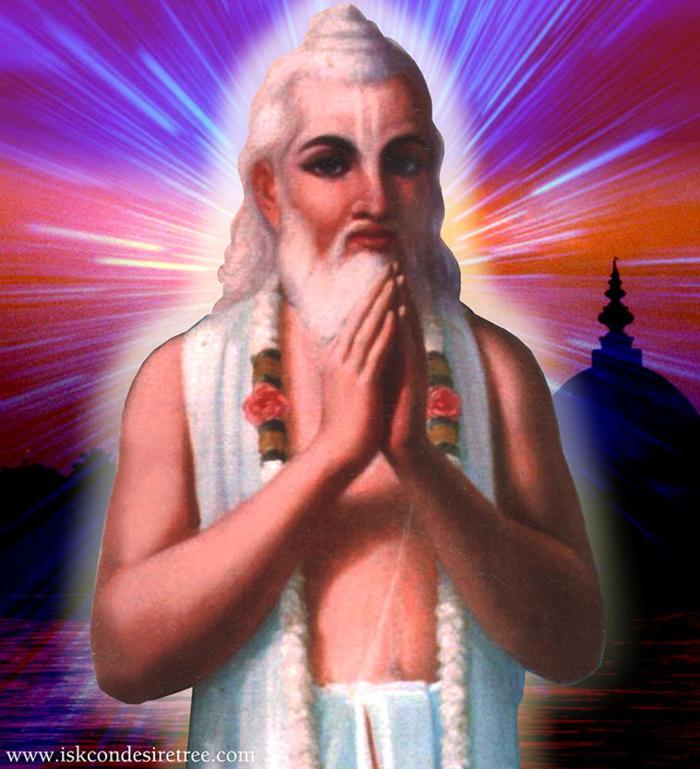
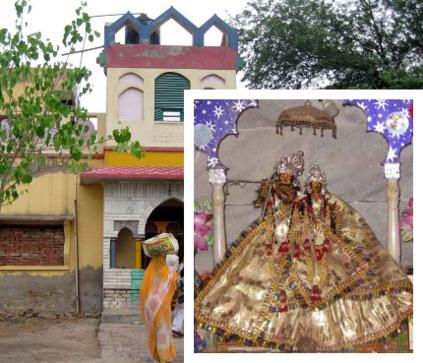
...Kamalakanta, a very confidential servant of Lord Chaitanya Mahaprabhu born in a brahmana family, engaged in the service of Shri Advaita Acharya as His secretary. (In the image: Shrila Advaita Acharya).

   Kamalakanta Vishvasa was born in a brahmana family. He was a  very confidential servant of Advaita Acharya.
 
‘kamalakanta visvasa’-nama acarya-kinkara
acarya-vyavahara saba—tanhara gocara
(C.C. Adi 12.28)
   Advaita Acharya’s very confidential servant named Kamalakanta Vishvasa knew all the dealings of Advaita Acharya.
 
   Shrila Prabhupada writes in the purport: 
   The name Kamalananda mentioned in the Adi-lila (10.149) and the name Kamalakanta mentioned in the Madhya-lila (10.94) both refer to the same man. Kamalakanta, a very confidential servant of Lord Chaitanya Mahaprabhu born in a brahmana family, engaged in the service of Shri Advaita Acharya as His secretary. When Paramananda Puri went from Navadwipa to Jagannatha Puri, he took Kamalakanta Vishvasa with him, and they both went to see Lord Chaitanya at Jagannatha Puri. It is mentioned in the Madhya-lila (10.94) that one of the Devotees of Lord Chaitanya, the brahmana Kamalakanta, went with Paramananda Puri to Jagannatha Puri.
 
singabhatta, kamabhatta, dantura sivananda
gaude purva bhrtya prabhura priya kamalananda
(C.C. Adi 10.149)
   Singabhatta was the thirty-first, Kamabhatta the thirty-second, Shivananda the thirty-third and Kamalananda the thirty-fourth. They all formerly served Shri Chaitanya Mahaprabhu in Bengal, but later these servants left Bengal to live with the Lord in Jagannatha Puri.
 
prabhura eka bhakta-’dvija kamalakanta’ nama
tanre laña nilacale karila prayana
(C.C. Madhya 10.94)
   There was a Devotee of Shri Chaitanya Mahaprabhu’s named Dvija Kamalakanta, whom Paramananda Puri took with him to Jagannatha Puri.

Sadashiva Kaviraja

Sadashiva Kaviraja

"Chandravali-gopi, who had been very dear to Lord Krishna in Vrajabhumi, appeared in Bengal as Sadashiva Kaviraja." (In the image: Shri Shri Chandravali Krishna, Rathor).

   Sadashiva Kaviraja was a great Devotee of Lord Chaitanya Mahaprabhu.
 
   He belonged to the spiritual lineage of Lord Nityananda. Four generations of Sadashiva's family were parsadas or Devotees of Lord Gauranga.  
 
   A Vaidya by caste, Sadashiva was the son of Kansari Sen.  Sadashiva's son was Purushottama dasa. His grandson was Kanu Thakura.
 
   The twenty-third and twenty-fourth prominent Devotees of Nityananda Prabhu were Sadashiva Kaviraja and his son Purushottama dasa, who was the tenth gopala. (CC. 1.11.38). 
 
   C.B. Antya 5 Text 741: Sadashiva Kaviraja was very glorious and fortunate. His son was named Purushottama dasa.
 
   Sadashiva Kaviraja is glorified in Shri Gaura Ganoddesha Dipika verse 156 as follows:
   "Chandravali-gopi, who had been very dear to Lord Krishna in Vrajabhumi, appeared in Bengal as Sadashiva Kaviraja."
 
   The present Goswami families of places such as Bodhakhana, Bhajanghat, etc., descend from Sadashiva.

Vidyavacaspati

He was the son of Mahesvara (Narahari Visarada) and the brother of the famous Vasudeva Sarvabhauma.  His origin name was Vishnudasa and he migrated from Navadvipa and built his Shripata at Kumarahatta. He wrote the commentary on Tattvacintamani.
 
During Lord Chaitanya's first visit from Puri to Gauda, He came to Vishnudasa's house at Vidyanagara but due to the crowds of visitors who had gathered there, the Lord quietly went off in the night to the house of Madhava dasa at Kulia village 
 
It's mentioned in Bhakti Ratnakara (1.598-602): "Vidyavachaspati was the religious guide of Sri Sanatana and from time to time he stayed at Ramkeli. Sri Sanatana studied many scriptures under him and his respect for Vidyavacaspati knew no bounds. He respectfully mentioned the name of his guru in his book Sri Dasama Tippani."
 
Sanatana received diksa from Vidyavacaspati.
 
Forced to submit to the ruling Muslim government, Sri Rupa and Sri Sanatana became ministers and lived at Ramakeli. But their real engagement was teaching sastras which they learned from Vidyavacaspati, brother of Sarvabhauma Bhattacarya.
 
Sri Sanatana Gosvami is described in the Gaura-ganoddesa-dipika (181). He was formerly known as Rati-mañjari or sometimes Lavanga-mañjari. In the Bhakti-ratnakara it is stated that his spiritual master, Vidya-vacaspati, sometimes stayed in the village of Ramakeli, and Sanatana Gosvami studied all the Vedic literatures from him. He was so devoted to his spiritual master that this cannot be described.(C.C.1.10.84)
 
Sanatana Gosvami sings praise to him among other gurus in the introductory part of Brhad Vaishnavatosani.
 
The charming vraja-gopi named Tungavidya appeared as Vidyavacaspati, who was dear to both Lord Caitanya and the residents of Vrndavana. (Sri Gaura Ganoddesha Dipika)

Madhusudana Vachaspati

Madhusudana Vachaspati

Madhusudana Vachaspati is also considered guru of Shrila Sanatana Goswami, who is Rati Lavanga-manjari in Krishna Lila. (In the image: Rupa and Lavanga Manjaris).

   He was a famous scholar and the Vedanta teacher of Kashi. He was the disciple of Vasudeva Sarvabhauma of Nilachala. (Bhaktiratnakara 1.776-778)
 
   The conclusions of Vedanta contained in Shrimad-Bhagavatam that were expounded by Shri Chaitanya Mahaprabhu to Sarvabhauma Bhattacharya in Puri had been in turn taught by the Bhattacharya to Madhusudana Vachaspati.
 
   Under Shri Madhusudana Vachaspati, Shrila Jiva Goswami studied Vedanta, logic, philosophy and all kinds of scripture. 
 
   Taking leave of Nityananda Prabhu, Jiva went to the house of Tapana Mishra at Kashi.
 
   In that sense Madhusudana was Jiva's Vaidantika guru (Bhaktiratnakara). Thereafter Jiva went to Vrindavana and Rupa and Sanatana, Jiva's uncles, happily received their nephew. Jiva then received diksha from Rupa Goswami.
 
   Madhusudana Vachaspati is also considered guru of Shrila Sanatana Goswami, who is Rati Lavanga-manjari in Krishna Lila. 

Shankararanya

Shankararanya

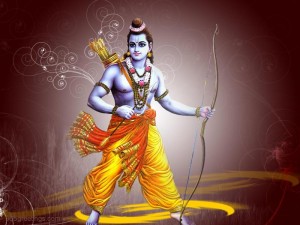
That Lord Nityananda is also non-differnent from Lord Sankarshana is described in the following statement of the Shri Chaitanya-chandradaya-nataka: "Lord Nityananda Avadhuta is non-different from Lord Sankarshana."..."Lord Nityananda Avadhuta is actually the Personality of Godhead Lord Balarama. Always staying among the Devotees, He shines with the splendor of thousands of suns." (In the wallpaper: from left to right Lord Shri Balarama, Shri Nityananda Prabhu, ISKCON Chennai).

   Shankararanya was the sannyasa name of Shrila Vishvarupa, who was the elder brother of Shri Chaitanya Mahaprabhu. At young age he left home and took sanyas. He left his body in Pandarapura.
 
sankararanya—acarya-vrksera eka sakha
mukunda, kasinatha, rudra—upasakha lekha
(C.C.1.10.106)
 
   The acharya Shankararanya was considered the forty-eighth branch of the original tree. From Him proceeded the subbranches known as Mukunda, Kashinatha and Rudra.
 
   Shrila Prabhupada writes in the purport: 
   It is said that Shankararanya was the sannyasa name of Shrila Vishvarupa, who was the elder brother of Vishvambhara (the original name of Shri Chaitanya Mahaprabhu). Shankararanya expired in 1432 Sakabda (A.D. 1510) at Sholapur, where there is a place of pilgrimage known as Pandarapura. This is referred to in the Madhya-lila, Chapter Nine, verses 299 and 300.
 
 
Lord Chaitanya hears about the passing away of Shankararanya
 
tanra eka yogya putra kariyache sannyasa
‘sankararanya’ nama tanra alpa vayasa
(C.C.2.9.299)
 
   Shri Ranga Puri also remembered that one of her (Sachimata) deserving sons had accepted the renounced order at a very young age. His name was Shankararanya.
 
ei tirthe sankararanyera siddhi-prapti haila
prastave sri-ranga-puri eteka kahila
(C.C.1.9.300)
 
   Shri Ranga Puri informed Shri Chaitanya Mahaprabhu that the sannyasi named Shankararanya had attained perfection in that holy place, Pandarapura.
 
   Shrila Prabhupada writes in the purport: 
   Shri Chaitanya Mahaprabhu’s elder brother was named Vishvarupa. He left home before Shri Chaitanya Mahaprabhu and accepted the sannyasa order under the name of Shankararanya Swami. He traveled all over the country and finally went to Pandarapura, where He passed away after attaining perfection. In other words, He entered the spiritual world after giving up His mortal body at Pandarapura. Shri Ranga Puri, a disciple of Shri Madhavendra Puri and Godbrother of Isvhara Puri, disclosed this important news to Shri Chaitanya Mahaprabhu.
 
There is a description in Chaitanya Bhagavata Adi Khanda Ch 7:
 
   Text 67
    In name only did Vishvarupa go home. He quickly returned to Advaita's house.
   Text 68
    Material happiness did not bring pleasure to Vishvarupa's heart, where the bliss of Krishna-kirtana always stayed.
   Text 69
    When He was home, Vishvarupa stayed always in the room that was a Vishnu Temple. He hardly ever went to the other rooms.
   Text 70
    When His parents began to make plans for His marriage, Vishvarupa became very unhappy at heart.
   Text 71
    "I must renounce the world", Vishvarupa decided in His heart. "I must go to the forest", was the only thought in His heart. It kept Him awake at night.
   Text 72
    Only the Supreme Personality of Godhead can truly understand the desires that stay in the Supreme Personality of Godhead's heart. After a few day Vishvarupa accepted sannyasa.
   Text 73 
    In this world He was known by the name "Shankararanya". The best of the Vaishnavas, He walked on the path that leads to the limitless Supreme Person. 
Shankararanya

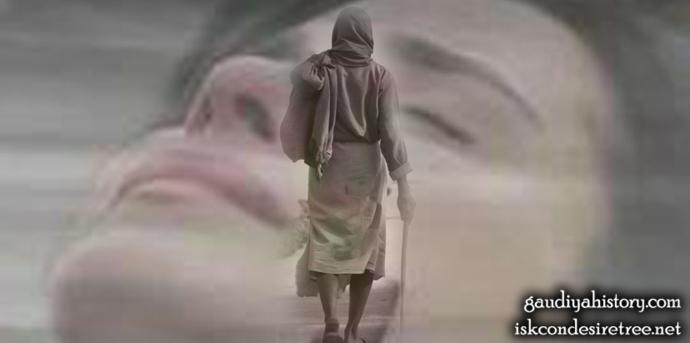
The Lord and His parents loudly wept. Tormented by separation from His brother, Lord Chaitanya fell unconscious...Jagannatha Mishra's home became filled with weeping.(In the wallpaper: crying person, and leaving person).

   Text 74
    When saintly Vishvarupa left, the hearts of Sachi and Jagannatha Mishra burst into flames.
   Text 75
    The Lord and His parents loudly wept. Tormented by separation from His brother, Lord Chaitanya fell unconscious.
   Text 76
    I do not have the power to place on my mouth words that describe that torment of separation. Jagannatha Mishra's home became filled with weeping.
   Text 77
    Seeing that Vishvarupa had accepted sannyasa, Advaita and the other Vaishnavas wept again and again.
   Text 78
    When they heard this news, the upper-class and middle-class non-devotees did not respond in the same way. Hearing this news, they were not overcome with grief.
   Text 79
    Their hearts broken, Sachi and Jagannatha Mishra cried, "Vishvarupa! Vishvarupa!"
   Text 80
    Jagannatha Mishra was overcome with grief for his son. His relatives and friends tried to console him.
   Text 81
    They said, "O Jagannatha Mishra, please be peaceful. Don't be unhappy at heart. Your son is a great soul who has brought liberation to His entire family.
   Text 82
    "When a person accepts sannyasa, then sixty-million of His family members go to live in Vaikuntha.
   Text 83
    "By acting in this way, your son has attained the perfection of knowledge.
    Text 84
    "You should be very happy." Speaking these words, everyone grasped the hands and feet of Sachi and Jagannatha Mishra.
   Text 85
    They said, "Your Vishvambhara is the ornament of the family. This son will continue your dynasty. 
   Text 86
    "He will destroy all your sufferings. How can ten millions sons in compare this son?"
   Text 87
    All the relatives and friends explained the truth in this way. Still Jagannatha Mishra's suffering did not break.
   Text 88
    Thinking of these instructions, Jagannatha Mishra became peaceful. Then, when he remembered Vishvarupa's virtues, he forgot all about being peaceful.
   Text 89
    Jagannatha Mishra said, "In my heart I do not know whether this son will stay home.
   Text 90
    "Lord Krishna gave me a son, and then Lord Krishna took Him away. Whatever Lord Krishnachandra wishes will certainly be.
   Text 91
    "Independent of You, the individual soul has not even a half mustard seed's worth of power. O Lord Krishna, I dedicate my body and senses to You. I take shelter of You." 
Shankararanya

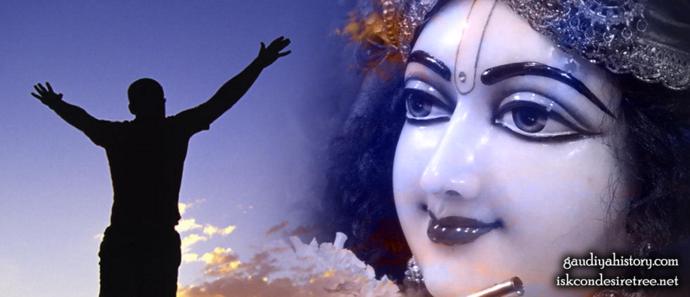
"Independent of You, the individual soul has not even a half mustard seed's worth of power. O Lord Krishna, I dedicate my body and senses to You. I take shelter of You." (In the wallpaper: Shri Krishna, ISKCON Chennai, a man).

   Text 92
    With this knowledge of jnana-yoga, little by little saintly Jagannatha Mishra became peaceful and steady in his thoughts.
   Text 93
    In this way Vishvarupa left home. His form is not different from the form of Lord Nityananda.
   Text 94
    Whoever hears this description of Lord Vishvarupa's sannyasa attains Krishna-bhakti (devotional service to Lord Krishna). For him the noose of karma is cut.
   Text 95
    When they heard of Vishvarupa's sannyasa, the Devotees felt both joy and sorrow at every moment.
 
In Shri Gaura Ganoddesha Dipika, Kavi Karnapura describes:
 
   58
   The original form of the Supreme Lord is considered not different from the Lord's direct expansions. For this reason it is considered that Lord Chaitanya Mahaprabhu, the son of Shrimati Sachi-devi, is non-different from His expansion Lord Vasudeva, the first member of the Chatur-vyuha. In the same way Shri Vishvarupa is considered non-different from the incarnation Lord Sankarshana, the second member of the Chatur-vyuha.
 
   59
   Lord Nityananda Avadhuta is also said to be non-different from Lord Sankarshana. That Shri Vishvarupa is identical with Lord Sankarshana is described in the Shri Chaitanya-chandrodaya-nataka, where Kali says to Dharma the following words:
 
   60
   "Lord Chaitanya's elder brother Vishvarupa is identical with the Personality of Godhead Lord Sankarshana. Vishvarupa never married, but accepted the order of parivrajakacharya-sannyasa and left home. It was the transcendental glory of Shri Vishvarupa that caused Lord Chaitanya to accept spiritual initiation from Ishvara Puri."
 
   61
   That Lord Nityananda is also non-differnent from Lord Sankarshana is described in the following statement of the Shri Chaitanya-chandradaya-nataka: "Lord Nityananda Avadhuta is non-different from Lord Sankarshana."
 
   62
   When the eternal Personality of Godhead Lord Vishvarupa disappeared from home, He entered the body of Lord Nityananda Avadhuta.
 
   63
   My father, Shivananda Sena, once said: "Lord Nityananda Avadhuta is actually the Personality of Godhead Lord Balarama. Always staying among the Devotees, He shines with the splendor of thousands of suns." Saying this, he began to dance.

We find references of Vishvambhara  in Chaitanya Mangala by Shri Lochana Das Thakur:

   Vishvarupa, the older brother of Vishvambhara, was a precocious student and he quickly learned all the Vedas. Who can explain the greatness of Nimai's brother?

Vishvarupa Takes Sannyasa

   I shall now describe a conversation between Murari Gupta and Damodara Pandita.

   Damodara Pandita asked Murari Gupta, "Where has Vishvarupa, Nimai's elder brother, gone?"

   Murari replied, "Listen to me, great Pandita Damodara. I will tell you whatever I know. Vishvambhara, the abode of good qualities, quickly learned all the scriptures. He's expert in all brahminical duties. He affectionately serves His parents. He is fully conversant with Vedanta, the essence of all religion. He does nothing but devotional service to Lord Vishnu. He is dear to everyone. He has achieved all perfections, yet within His heart He stays completely detached and fixed in the Absolute Truth.

   "Vishvarupa, the son of Jagannatha Mishra, held the shastras in his left hand and discussed Krishna-katha with his classmates. One day while walking home, Jagannatha Mishra saw this and thought, 'Now, my young beautiful son is eighteen years old and ready for marriage. I should make arrangements for Vishvarupa's marriage.'

   "Noticing his father' s meditative mood, Vishvarupa thought, 'it seems my father is thinking about my marriage, but I shouldn't get married. Of course, this might upset my mother.' The next day at dawn, Vishvarupa clasped his manuscripts and left home forever. He swam across the Ganges and took sannyasa.

   "At midday there was still no sign of Vishvampa. Jagannatha and Sachidevi searched every house in Navadwipa, but couldn't find their son. The neighbors whispered among themselves about Vishvarupa's taking sannyasa. When Jagannatha Mishra and Sachidevi heard this, they both fainted unconscious on the ground. The three words, appeared full of darkness.

   "Sachidevi cried out, 'O my son Vishvarupa! Come home, I want to see you. Why did you leave everything? How will your beautiful delicate body and tender feet tolerate the hardship of walking far and wide? You can't tolerate the slightest pain for even a moment. To whom will you present your insistent demands? When you were studying, you couldn't concentrate on your lessons. 'I can't go anywhere without thinking of you. When I take a bath, my mind is disturbed with the thought that you may return at any time. When I hear you calling "Mother" I forget everything else; for that sound is my greatest treasure. Seeing your sweet face, I no longer think of myself. I don't know what kind of suffering has caused you to neglect me and accept sannyasa.

   'O my husband, go search for Vishvarupa and bring him back to me. Let the people say whatever they want, but bring back my son again. I shall perform his sacred thread ceremony.'

   "Trying to pacify his bereaved wife, Jagannatha Mishra said, 'Please listen Sachidevi, don't lament. The whole material existence is false like a dream. Your son Vishvarupa is a great personality. By accepting sannyasa at such an early age, he will bring fortune to our family. Please bless him so he can remain fixed in his sannyasa vow, and progress steadily on the path of devotional service. Don't lament for his welfare. If a member of the family takes sannyasa, he benefits many generations of that family. So, our son has done a wonderful thing.' "Damodara, in this way Jagannatha and Sachidevi consoled each other. This concludes the story of Vishvarupa's sannyasa."

   Lochana Dasa says that at that time Vishvambhara was sitting on Sachimata's lap and gazing at His father's face. Vishvambhara said, "Father, it doesn't matter where My brother, Vishvarupa, has gone. Don't worry, I will look after you." On hearing this, Jagannatha Mishra and Sachidevi lovingly embraced Nimai and forgot their miseries. 

Shankararanya

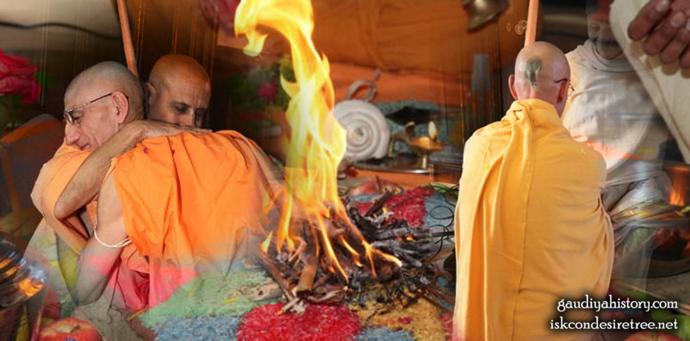
'Please listen Sachidevi, don't lament. The whole material existence is false like a dream. Your son Vishvarupa is a great personality. By accepting sannyasa at such an early age, he will bring fortune to our family. Please bless him so he can remain fixed in his sannyasa vow, and progress steadily on the path of devotional service. Don't lament for his welfare. If a member of the family takes sannyasa, he benefits many generations of that family. So, our son has done a wonderful thing.' (In the wallpaper: Sannyasa initiation fire sacrifice).

Anupama Mallika

   He belonged to the descending line from Lord Chaitanya. He was the youngest brother of Rupa and Sanatana Goswami. Kumardeva was the name of their father. Jiva Goswami of Vrindavana was the son of Anupama. Anupama was the Chief of the Mint, under the rule of Hussain Shah, the King of Gauda (Bhaktiratnakara 1.665 669 and CC 3.4.43) He was a worshipper of Rama, this may be why his name has not been mentioned separately in Gauraganoddesadipika and Vaishnava Vandana.

anupama-vallabha, sri-rupa, sanatana
ei tina sakha vrksera pascime sarvottama

"On the western side were the forty-third, forty-fourth and forty-fifth branches – Sri Sanatana, Sri Rupa and Sri Anupama. They were the best of all." [Cc. Adi 10.84]

   Sri Anupama was the father of Srila Jiva Gosvami and youngest brother of Sri Sanatana and Sri Rupa Gosvami. His former name was Vallabha, but after Lord Chaitanya met him He gave him the name Anupama. Because of working in the Mohammedan government, these three brothers were given the title Mullik. Mullik means "lord." 

Anupama Mallika

Rupa and Sanatana Goswami.

   The genealogical table of Vallabha Gosvami can be traced back to the Twelfth Century sakabda, when a gentleman of the name Sarvajna appeared in a very rich and opulent brahmana family in the province of Karnataka. He had two sons named Aniruddhera Rupesvara and Harihara, who were both bereft of their kingdom and were thus obliged to reside in the highlands.

   The son of Rupesvara, who was named Padmanabha, moved to a place in Bengal known as Naihati on the bank of the Ganges. There he had five sons, of whom the youngest, Mukunda, had a well behaved son named Kumaradeva, who was the father of Rupa, Sanatana and Vallabha.

   Kumaradeva lived in Baklacandradvipa, which is in the district of Yasohara and is now known as Phateyabad. Of his many sons, three took to the path of Vaishnavism. Later Sri Vallabha and his elder brothers Sri Rupa and Sanatana came from Chandradvipa to the village in the Maldah district of Bengal known as Ramakeli. It is in this village that Srila Jiva Gosvami took birth, accepting Vallabha as his father.

   When Lord Chaitanya Mahaprabhu visited the village of Ramakeli, He met Vallabha there. Later, Sri Rupa Gosvami, after meeting Sri Chaitanya Mahaprabhu, resigned from government service, and went to Vrindavana to meet Lord Chaitanya, Vallabha accompanied him. The meeting of Rupa Goswami and Vallabha with Chaitanya Mahaprabhu at Allahabad is described in the Madhya-lila, Chapter Nineteen.

   Actually, it is to be understood from the statement of Sanatana Gosvami that Sri Rupa Goswami and Vallabha went to Vrindavana under the instruction of Sri Chaitanya Mahaprabhu. First they went to Mathura, where they met a gentleman named Subuddhi Raya who maintained himself by selling dry fuel wood. He was very pleased to meet Sri Rupa Gosvami and Anupama, and he showed them the twelve forests of Vrindavana. Thus they lived in Vrindavana for one month and then again went to search for Sanatana Goswami. 

Anupama Mallika

"Vallabha was given the name Anupama by Sri Gaurasundara, but he was always absorbed in the devotional service of Lord Ramacandra. He did not know anyone but Sri Ramacandra, but he knew that Chaitanya Gosai was the same Lord Ramacandra."

   Following the course of the Ganges, they reached Allahabad, or Prayaga-tirtha, but because Sanatana Goswami had come there by a different road, they did not meet him there, and when Sanatana Goswami came to Mathura he was informed of the visit of Rupa Goswami and Anupama by Subuddhi Raya. When Rupa Goswami and Anupama met Chaitanya Mahaprabhu at Benares, they heard about Sanatana Goswami's travels from Him, and thus they returned to Bengal, adjusted their affairs with the state and, on the order of Sri Chaitanya Mahaprabhu, went to see the Lord at Jagannatha Puri.

   In the year 1436 Sakabda, the youngest brother, Anupama, died and went back home, back to Godhead. He went to the abode in the spiritual sky where Sri Ramachandra is situated. At Jagannatha Puri, Sri Rupa Goswami informed Sri Chaitanya Mahaprabhu of this incident. Vallabha was a great Devotee of Lord Ramacandra; therefore he could not seriously consider the worship of Radha-Govinda according to the instructions of Sri Chaitanya Mahaprabhu. Yet he directly accepted Sri Chaitanya Mahaprabhu as an incarnation of the Supreme Personality of Godhead Ramacandra.

   In the Bhakti-ratnakara there is the following statement: "Vallabha was given the name Anupama by Sri Gaurasundara, but he was always absorbed in the devotional service of Lord Ramacandra. He did not know anyone but Sri Ramacandra, but he knew that Chaitanya Gosai was the same Lord Ramacandra." 

Sulochana

   Sulochana is the forty-second branch of Chaitanya tree. He lived in the village of Shrihatta along with his dear friend Chiranjiva. They were completely surrendered to Lord Chaitanya, and because they were the friends and helpers of Narahari dasa they were honored and considered great souls.
 
vasanta, navani hoda, gopala, sanatana
visnai hajara, krsnananda, Sulochana
   (C.C.1.11.50)
 
   Vasanta was the fifty-first, Navani Hoda the fifty-second, Gopala the fifty-third, Sanatana the fifty-fourth, Visnai the fifty-fifth, Krishnananda the fifty-sixth and Sulochana the fifty-seventh.
 
   Shrila Prabhupada writes in the purport: 
   Shrila Bhaktisiddhanta Saraswati Thakura writes in his Anubhasya, “Navani Hoda appears to have been the same person as Hoda Krishnadasa, the son of the King of Badagachi. His father’s name was Hari Hoda. One can visit Badagachi by taking the Lalagola-ghata railway line. Formerly the Ganges flowed by Badagachi, but now it has become a canal known as the Kalsira Khala. Near the Mudagacha station is a village known as Shaligrama in which King Krishnadasa arranged for the marriage of Shri Nityananda Prabhu, as described in the Bhakti-ratnakara (Twelfth Wave). It is sometimes said that Navani Hoda was the son of Raja Krishnadasa. His descendants still live in Rukunapura, a village near Bahiragachi. They belong to the dakshina-radhiya-kayastha community, but, having been reformed as brahmanas, they still initiate all classes of men.”
 
khandavasi mukunda-dasa, sri-raghunandana
narahari-dasa, cirañjiva, Sulochana
ei saba mahasakha—Chaitanya-krpadhama
prema-phala-phula kare yahan tahan dana
   (C.C.1.10.78-79)
 
   Shri Khandavasi Mukunda and his son Raghunandana were the thirty-ninth branch of the tree, Narahari was the fortieth, Chiranjiva the forty-first and Sulochana the forty-second. They were all big branches of the all-merciful tree of Chaitanya Mahaprabhu. They distributed the fruits and flowers of love of Godhead anywhere and everywhere.
 
   Shri Sulochana was one of Shri Chaitanya Mahaprabhu’s associates and in Krishna-lila he was Chandrashekhara Gopi. 
Sulochana

Shri Khandavasi Mukunda and his son Raghunandana were the thirty-ninth branch of the tree, Narahari was the fortieth, Chiranjiva the forty-first and Sulochana the forty-second. They were all big branches of the all-merciful tree of Chaitanya Mahaprabhu. They distributed the fruits and flowers of love of Godhead anywhere and everywhere. (In the wallpaper: Shri Gaura Chandra, ISKCON Chowpatty, Mumbai).

Puri Das

   Paramananda Sena was the youngest of Shivananda Sena’s three sons. He accumulated spiritual power from Mahaprabhu when he placed the Lord’s big toe in his mouth and was given the name Puri Das
 
   CC Antya 12.44: Shivananda Sena introduced his three sons to Shri Chaitanya Mahaprabhu. Because they were his sons, the Lord showed the boys great mercy.
   CC Antya 12.45: Lord Chaitanya asked the youngest son's name, and Shivananda Sena informed the Lord that his name was Paramananda dasa.
   CC Antya 12.46-47: Once before when Shivananda Sena had visited Shri Chaitanya Mahaprabhu at His residence, the Lord had told him, "When this son is born, give him the name Puri dasa."
   CC Antya 12.48: The son was in the womb of Shivananda's wife, and when Shivananda returned home the son was born.
   CC Antya 12.49: The child was named Paramananda dasa in accordance with the Lord's order, and the Lord jokingly called him Puri dasa.
   CC Antya 12.50: When Shivananda Sena introduced the child to Shri Chaitanya Mahaprabhu, the Lord put His toe in the child's mouth.
   CC Antya 12.51: No one can cross over the ocean of Shivananda Sena's good fortune, for the Lord considered Shivananda's whole family His own.
 
   He was latter called Kavi Karnapura. He was very dear to the Lord and became a writer of books in which he revealed the Lord’s blessings on Sanatan Goswami.    (Bhakti-ratnakara 1.657)
 
   He was Gunachuda Sakhi in Vraja. 
Puri Das

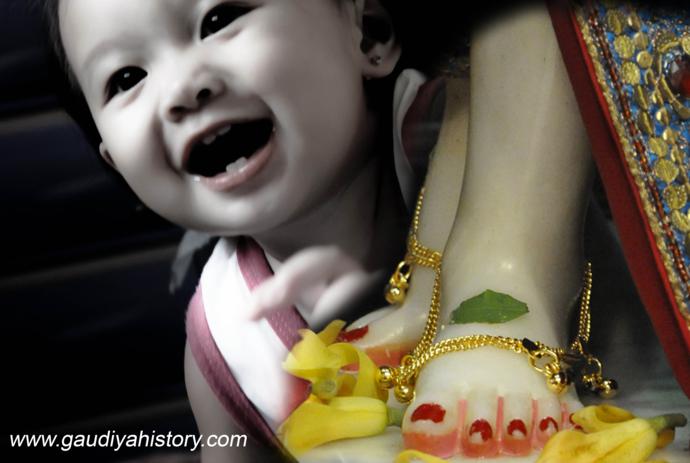
CC Antya 12.50: When Shivananda Sena introduced the child to Shri Chaitanya Mahaprabhu, the Lord put His toe in the child's mouth. (In the wallpaper: The lotus feet of Shri Gaurachandra, ISKCON Chowpatty, Mumbai, a kid).