Author Archives: Sevak

Bhavananda Raya

Bhavananda Raya

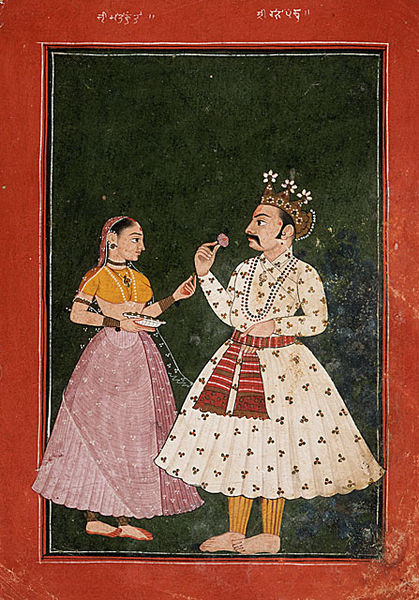
King Pandu with his wife Kunti.

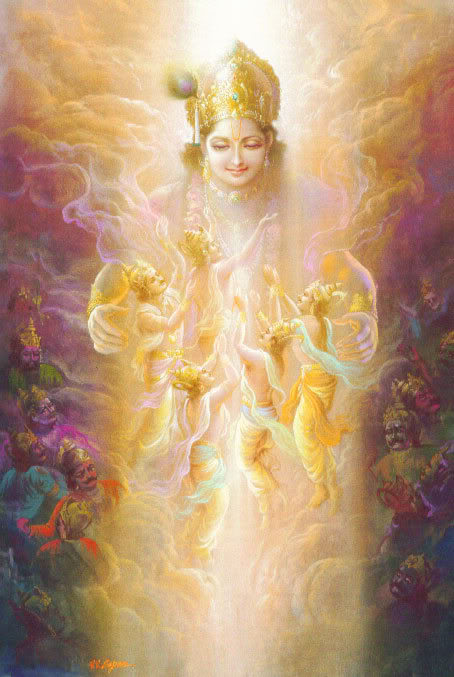
   Sri Bhavananda Raya dedicated himself and his entire family of five sons (Ramananda Raya, Gopinatha, Vaninatha, Kalanidhi, Sudhanidhi) to the lotus feet of Sri Chaitanya Mahaprabhu. Once the Lord happily embraced him saying, "Bhavananda, you are Pandu. And your five sons are the five Pandavas. I consider your sons to be like My relatives. These five brothers are all My eternal servants life after life." 
Bhavananda Raya

"Bhavananda, you are Pandu. And your five sons are the five Pandavas. I consider your sons to be like My relatives. These five brothers are all My eternal servants life after life." (In the image: Krishna is protecting 5 Pandavas).


   An ideal father, Bhavananda led his sons on the path of liberation from repeated birth and death. He fully engaged them in pure devotional service of Radha Giridhari's combined form of beauty, love, and mercy — Sri Gauranga Mahaprabhu. His Nam Samadhis is in the 64 samadhis area.


Bhaktivinoda Thakura

Bhaktivinod Thakur

Srila Bhaktivinod Thakur

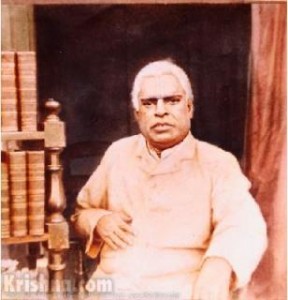
Sri Sacidananda Bhaktivinoda Thakura appeared in 1838 in a wealthy family in the Nadia district, West Bengal. He revealed that he is an eternal associate of Sri Caitanya Mahaprabhu by his extraordinary preaching activities and prolific writing. Living as a, mahabhagavata Vaisnava, he stayed in the grhasta ashram until the last few years of his life. Then he renounced everything, accepted babaji, and entered samadhi, totally absorbed in the loving service of Gaura-Gadadhara and Radha-Madhava.
 
   “He had a responsible government position as the District Magistrate (high court judge), maintained a Krishna conscious family, and wrote almost one hundred books on Krishna consciousness. At the same time, he served the Supreme Lord in so many ways. That is the beauty of his life. After a full day of government service he would sleep four hours, get up at midnight and write until morning. That was his daily program.” (Srila Prabhupada)
 
   Thakura Bhaktivinoda took Vaisnava diksa from Sri Vipinvihari Goswami in the line of Sri Jahnava Mata. Afterwards, he received spiritual inspiration and direction from Srila Jagannatha Dasa Babaji. Holding an exalted government post, vast erudition, and spiritual accomplishment never disturbed Bhaktivinoda Thakura. He remained prideless, always humble, friendly to all. Charity seekers at his home always left happy and satisfied. A well-wisher to everyone, he never kept grudges, even with opponents to his preaching. In fact, he never spoke a word that would hurt another’s feelings. 
Bhaktivinod Thakur

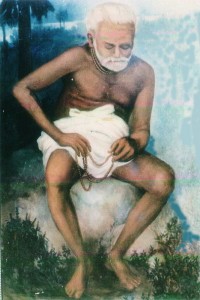
Jaganath Das Babaji Maharaj – Shiksha Guru of Bhaktivinod Thakur.


   “The Thakura was always courageous and acted for everyone’s welfare. Keeping personal needs to a minimum, he led the simplest of lives,” said one pandit. In the following entry from Saranagati, Srila Bhaktivinoda, who had all pure divine qualities, takes the role of a conditioned soul to teach us how to advance in Krishna consciousness:
 
“You should always absorb your mind in attentively chanting Krishna’s glories. By performing Krishna kirtana you’ll gain mastery over the mind. Give up all false pride. Always think yourself to be worthless, destitute, lower and more humble than straw in the street. Practice forgiveness like the tree. Giving up all violence toward other living beings, you should maintain them. Throughout your life you should never give anxiety to others. But do good to them, make them happy, and forget about your own happiness.
 
“Thus when you become a pious good soul by possessing all good qualities, you should give up desires for fame and honor. And just make your heart humble. Knowing that Lord Sri Krishna lives within all living beings, you should respect and honor everyone at all times. You will attain virtue by being humble, merciful, respecting others, and renouncing desires for fame and honor. In such a state, you should sing the glories of the Supreme Lord. Weeping, Bhaktivinoda submits his prayer at the lotus feet of the Lord. ‘0 Lord, when will You give me such qualities as these?’ ”
 
Always anxious to use every moment in loving service of Krishna, he followed a strict austere daily schedule: 8 p.m.-10 p.m.             Rest (two hours)
10 p.m.-4 a.m.             Write
4 a.m.-4:30 a.m.          Rest
4:30 a.m.-7 a.m.          Chant Japa
7 a.m.-7:30 a.m.           Correspondence    
7:30 a.m.-9:30 a.m.     Study sastras
9:30 a.m.-10 a.m.         Bath,prasadam (half-liter milk, fruit, 2 chapatis)
10 a.m.-1 p.m.              Court Duties
1 p.m.-2 p.m.                Refresh at home
2 p.m.-5 p.m.               Court Duties
5 p.m.-7 p.m.                Translate Sanskrit sastras to Bengali
7 p.m.-8 p.m.                Bath,prasadam (half-liter milk, rice, 2chapatis)

Summary Daily Schedule:

Sleep             3 hours
Write            8.5 hours
Japa,study   4.5 hours
Work            6 hours
 

   Srinivasa Acarya praises the six Gosvamis of Vrindavana, nana-sastra-vicaranaika-nipunau sad-dharma samsthakapau, lokanam hita karinau … “The six Gosvamis deeply studied all the sastras in order to establish eternal religious principles for the benefit of everyone.” Similarly, Thakura Bhaktivinoda made unlimited preaching contributions to help humanity. And for this he’s known as the “Seventh Gosvami.”

   Biographers list three major preaching achievements of Srila Bhaktivinoda Thakura:
 
   (1) Wrote 100 authorized spiritual books. (2) Discovered appearance place of Lord Caitanya. (3) Introduced preaching innovations. Besides books (in Bengali, Oriya, English) reviving and explaining Mahaprabhu’s message, he wrote hundreds of poems and songs full of spiritual sentiments and sastrie siddhanta (philosophical conclusions). 
Bhaktivinod Thakur

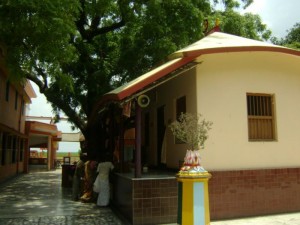
Yoga Pitha – Appearance Place of Lord Chaitania, Mayapur.


   “His writings have made the sacred teachings of Sri Caitanya Mahaprabhu fully available to every modern reader. And they are presented in a form which carries irresistable conviction and devotion,” said a late disciple of Thakura Bhaktivinoda.
 
   Sri Krishna-samhita, Kalyana Kalpa-taru, Sri Caitanya-siksamrta, Sri Navadvipa-dhama mahatmyam, Jaiva Dharma, Sri Harinama¬cintamani, Bhajana-rahasya, Gita-mala, Gitavalli, Saranagati, and commentaries on Bhagavad-gita and Caitanya-caritamrta are some of his works. The following quote comes from Thakura Bhaktivinoda’s Gitavali:
 
   “He who has failed to carefully worship the lotus feet of Sri Radhika, which are the abodes of all auspiciousness. He who has not taken shelter in the transcendental abode of Vrindavana, which is decorated with the lotus flower named Radha. He who in this life has not associated with the devotees of Radhika, who are full of wisdom and love for Radhika. How will such a person ever feel the bliss of bathing in the ocean of Lord Syamasundara’s sublime mellows?
 
   “Please understand this most attentively. Sri Radhika is the teacher of madhurya rasa (mellows of conjugal love). Radha-Madhava madhurya prema is meant to be discussed and meditated upon. He who cherishes the lotus feet of Srimati Radharani obtains the lotus feet of Madhava, which are priceless jewels. Without taking shelter of Radha’s lotus feet one can never meet Krishna. The Vedic scriptures declare that Krishna is the property of the maidservants of Sri Radha. Give up wife, sons, friends, wealth, followers, speculative knowledge, all materialistic actions. Just become absorbed in the sweetness of serving the lotus feet of Srimati Radharani. This is Bhaktivinoda’s solemn declaration.”
 
   During the last five-hundred years, the original appearance place of Lord Caitanya had vanished under the indomitable Ganges River. In 1888, Srila Bhaktivinoda Thakura revealed Sri Caitanya Mahaprabhu’s janmasthana at the Yogapitha in Sridhama Mayapur. Srila Jagannatha Dasa Babaji Maharaja, a famous siddha saint, and paramahamsa rasika Vaisnava, confirmed the Thakura’s discovery. This most auspicious event delighted the Gaudiya Vaisnavas from Gaura-mandala to Vraja-bhumi. He established the worship of Lord Gauranga and Sri mati Vishnupriya at Yogapitha.
Bhaktivinod Thakur

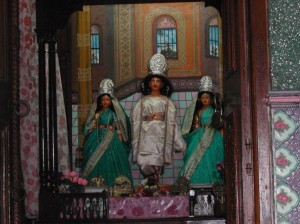
Gaura-Narayana and His two wives, Laksmipriya and Vishnupriya.


   In the mood of innovation, in 1896 he sent to universities around the world a book of slokas, Sri Gauranga-lila smarana which had a forty-seven page English introduction: “Sri Caitanya Mahaprabhu: His Life and Precepts.” This act rose from a keen desire to spread Lord Caitanya’s teachings in the Western countries.
 
   Bhaktivinoda Thakura made three predictions concerning a person and a phenomena: “A personality will soon appear,” wrote Bhaktivinoda Thakura, “and he will travel all over the world to spread the teachings of Lord Caitanya.”
 
   His second prediction: “Very soon the chanting of ‘Harinama sankirtana will be spread all over the world. Oh, when will that day come when people from America, England, France, Germany, Russia will take up karatals and mrdangas and chant Hare Krishna in their towns?”
 
   The third prediction: “When will that day come when the fair-skinned foreigners will come to Sri Mayapur-dhama and join with the Bengali Vaisnavas to chant, Jaya Sacinandana, Jaya Sacinandana. When will that day be? ”
 
   Srila Prabhupada said it’s spiritually significant that he himself appeared in 1896, the same year Bhaktivinoda Thakura sent his book overseas. The will of Lord Caitanya, the desire of Thakura Bhaktivinoda, and the mercy of Srila Sarasvati Thakura empowered Srila A.c. Bhaktivedanta Swami Prabhupada to spread Sri Caitanya’s teachings and the chanting of Hare Krishna all over the world. Prabhupada fulfilled the Thakura’s three predictions! 
Bhaktivinod Thakur

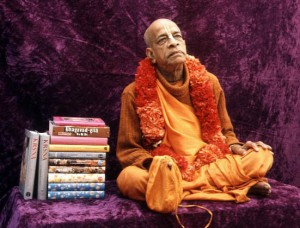
Founder Acharya of ISKCON AC Bhaktivedanta Swami Prabhupada.


   Devoid of pride, full of humility, radiant with pure love for Radha-Govinda, Srila Prabhupada gave all credit to the previous acaryas. “We should take it,” said Srila Prabhupada, “that Srila Bhaktivinoda Thakura was the origin of the Krishna Consciousness Movement in its pure form.”
 
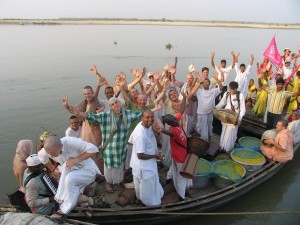
   In 1986, just one-hundred years after Bhaktivinoda Thakura’s third prediction, three-thousand “fair skinned devotees” from America, England, France, Germany, Russia, and fifty other countries gathered at the ISKCON Mayapura Chandrodaya Mandir in Sridhama Mayapur. They joined one thousand “Bengali Vaisnavas” to rock the universe by chanting Jaya Sacinandana, Jaya Sacinandana, Jaya Sacinandana, Gaura-Hari. Srila Saccidananda Bhaktivinoda Thakura ki jai! 
Bhaktivinod Thakur

Devotees all around the world came to Mayapur to sing: “Jai Sachinandana Goura Hari!!!”

 
     .
   In 1914, on the tirobhava tithi (disappearance day) of Sri Gadadhara Pandit (the incarnation of Sri Radha), Thakura Bhaktivinoda entered the eternal pastimes of Gaura-Gadadhara and Radha-Madhava. 
Bhaktivinod Thakur

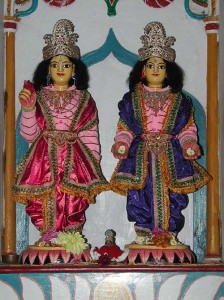
Goura – Gadadhar Deities of Bhaktivinod Thakur.

 In Godrumadvipa (Navadvipa) Sri-Sri Gaura-Gadadhara, the worshipable Deities of Thakura Bhaktivinoda, await to bless any visitors to Svananda-sukhada-kunja. In Radha-Madhava’s nitya-vraja lila Bhaktivinoda Thakura takes the form of Kamala-manjari to serve Srimati Radharani. His pushpa samadhi is in his bhajana kutir at Radha-kunda.


Baladeva Vidyabhusana

Baladeva Vidyabhusana

Baladeva Vidyabhusana.

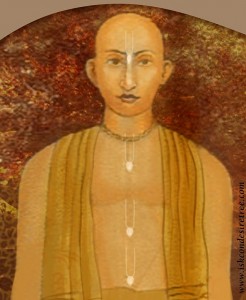
   Sri Baladeva Vidyabhusana (Sri Govinda Dasa) appeared in the 1600's near Remuna, Orissa. In his youth, he mastered Sanskrit grammar, poetry, and logic. After carefully studying the commentries of Sankara and Madhva he took initiation in the Tattva-vadi disciplic succession of Sripad Madhvacarya. Baladeva Vidyabhusana became a dig vijaya pandit (conqueror of all opponents) and began visiting the holy places. Wherever he went he defeated the local sages, scholars, and sannyasis.
   
   In Jagannatha Puri, he learned the superexcellent philosophy of Sri Krishna Chaitanya from Sri Radha-Damodara Goswami, and took initiation after converting to Gaudiya Vaishnavism. In Vrindavana, he studied Shrimad Bhagavatam under Srila Vishvanatha Cakravarti Thakura and worshiped Radha-Syamasundara.
 
   In 1706 A.D. Vishvanatha Cakravarti Thakura sent him to Gulta (near Jaipur,Rajasthan) to uphold the credibility of Mahaprabhu's movement. The local Ramanandis (a branch of Sri Vaishnavas) were claiming that the Bengali Vaishnavas had no right to worship Govindaji because they had no commentary on the Vedanta-sutra. 
Baladeva Vidyabhusana

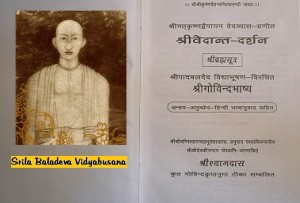
Sri Baladeva Vidyabhusana commentary on Vedanta Sutra "Govinda-Bhasya".


   Lord Govindaji Himself directly revealed the Govinda-bhasya (a Vaishnava commentary on Vedanta) to Baladeva Vidyabhusana. Using it, Baladeva solidly established Gaudiya Vaishnavism as an independent philosophy. He also reinstated the Bengali Vaishnavas in Govindaji's service in Jaipura. Govinda-bhasya is the only bhakti commentary on Vedanta-sutra.
 
   Sri Baladeva Vidyabhusana was a niskincana-parama bhagavata, fully-renounced topmost Devotee of Lord Krishna. His more than twenty-four books and commentaries have helped thousands of Vaishnavas understand the sublime philosophy of Krishna consciousness and the intimate writings of the six Goswamis. Since he was devoid of false prestige, he never wrote about his birth, parents, lineage, personal life. According to Sri Bhaktivinoda Thakura in Navadvipa-dhama mahatyam, in Chaitanya lila Baladeva Vidyabhusana is Sri Gopinatha Acarya, the brother-in-law of Sri Sarvabhauma Bhattacarya. In Vraja he serves as Sri Radha's eternal maidservant Ratnavali Devi. 

Akincana Krishna Dasa Babaji Maharaja

Akincana Krishna Dasa Babaji Maharaja

Akincana Krishna Dasa Babaji Maharaja.

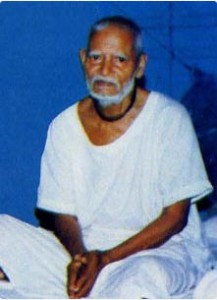
   "Srila Prabhupada said that Krishna Dasa Babaji was akincana (free from all material attachments and possessions) and a paramahamsa (a swan-like pure Devotee). He was attached only to chanting the Holy Name of Krishna. Born in E. Bengal, he began Krishna consciousness in college, joined the Gaudiya Math, and took initiation from Srila Bhaktisiddhanta Sarasvati Thakura.
 
   "His sole engagement in the Temple was chanting Hare Krishna day and night. His Godbrothers, however, complained to Srila Bhaktisiddhanta Sarasvati Thakura. He told them his chanting was fine and that they should encourage him. He further said that they should place one newspaper ad, inviting all sincere men who were willing to chant Krishna's name all day and night to join the Gaudiya Math. A few men came, chanted, and left. But Krishna Dasa remained steady in his chanting. Srila Bhaktisiddhanta Sarasvati ordered his men to provide all facility to the babaji.
 
   "Continually chanting Hare Krishna, Krishna Dasa Babaji began wandering all over India, especially in Mayapur and Vrindavana. He was fond of repeating the last instruction of Srimad Bhagavatam, 'Always chant Hare Krishna and offer obeisances to the Lord.' Before singing, which he liked, he would always glorify the previous acaryas.
 
   "While he was performing kirtana at Srila Prabhupada's sannyasa initiation in Mathura, Srila Prabhupada told him to chant more. At that time, Krishna Dasa realized that Srila Prabhupada would lead a worldwide Hare Krishna movement. When remembering Srila Prabhupada, Krishna Dasa would often tell us:

   'Your spiritual master is the greatest spiritual master who has ever existed, more than any other spiritual master. More miracles, more work than anyone before. Why? Because no other spiritual master was such a great servant of the Holy Name. And because he took the Holy Name all over the world.'
 
   "Krishna Dasa would never accept any honor or gifts. Although he would accept maha-prasadam garlands, and then immeditately remove them. Near the end of his life, a reputable doctor examined his heart with a stethoscope. The surprised doctor and several other witnesses heard the most incredible: and unbelievable sound. Instead of hearing the normal heartbeat, lub-dub lub-dub lub-dub, they heard the maha-mantra vibrating from within Krishna Dasa Babaji's heart, Hare Krishna Hare Krishna Krishna Krishna Hare Hare, Hare Rama Hare Rama Rama Rama Hare Hare. On this day of his divine disappearance, we should pray to Krishna Dasa Babaji Maharaja for the blessings of attraction for chanting the Holy Name of Krishna." (B.B. Govinda Maharaja memoirs) 

Akincana Krishna Dasa Babaji Maharaja

...they heard the maha-mantra vibrating from within Krishna Dasa Babaji's heart, Hare Krishna Hare Krishna Krishna Krishna Hare Hare, Hare Rama Hare Rama Rama Rama Hare Hare.

   Srimad Bhaktisiddhanta Dasa, a disciple of Srila Prabhupada and an acquaintance of Krishna Dasa Babaji Maharaja, gives this account:

   "Krishna Dasa Babaji Maharaja was a close friend of Srila Prabhupada and a great well-wisher of his disciples. Whenever we would ask him questions, his usual answer was Hare Krishna Hare Krishna Krishna Krishna Hare Hare, Hare Rama Hare Rama Rama Rama Hare Hare. Although highly educated and fluent in both English and Bengali, he mostly just kept chanting Hare Krishna. When a Devotee would offer him obeisances and ask, 'Krishna Dasa, please give me your mercy?' Babaji Maharaja would reply,
'No, you please give me your mercy. I need it more.'
 
   "He was always absorbed in hearing and chanting Krishna's Holy Names. He had no disciples. Being dear to all Devotees of the Lord, he was warmly received wherever he traveled. He was always jolly. Regardless of what was happening, he would respond by saying, Hare Krishna Hare Krishna, and chuckle slightly or laugh.

   "Despite his old age and seemingly frail body, whenever he picked up a mrdanga to glorify Krishna he would play the drum with masterful expertise. He would sing with intense devotional concentration, his voice expressing his deep inner feelings of love for Krishna. He would wander around Vraja mandala visiting the places of Krishna's pastimes. He would sit down at one and chant Krishna's glories with tears of ecstatic love in his eyes.
 
   "We brought him to Pavana Sarovara in Nandagrama to spend his last days absorbed in bhajana. When we asked him for any last instruction, he just laughed and said, 'My only instruction is to chant Hare Krishna. That's all there is.'
 
   In a small song book, in which he kept notes, Krishna Dasa Babaji made this last entry before leaving this world:
 
   'Chanting the Holy Name of Krishna is the true nectar. The Holy Name is like honey. Hare Krishna Hare Krishna Krishna Krishna Hare Hare, Hare Rama Hare Rama Rama Rama Hare Hare.' His samadhi is in Nandagrama at Pavana Sarovara within the Gaudiya Math Temple at Sri Sanatana Gosvami's bhajana sthali. 

Akincana Krishna Dasa Babaji Maharaja

'Chanting the Holy Name of Krishna is the true nectar. The Holy Name is like honey. Hare Krishna Hare Krishna Krishna Krishna Hare Hare, Hare Rama Hare Rama Rama Rama Hare Hare.' Krishna Dasa Babaji.


Abhirama Gopala Thakura

Abhiram Thakur

According to Gaura-Ganodesha-Dipika (12) in Krishna-lila he was Shridama, one of the 12 prominent boy cowherd friends of Shri Krishna.

   Shri Abhirama Gopal Thakura  was also known as Shri Rama Das. He was a great Devotee of Lord Nityananda.  On the order of Shri Nityananda Prabhu, he became a great acharya and preacher of Gaudiya Vaishnavism. He was a very influential personality, and atheists and blasphemers were very much afraid of him. Empowered by Shri Nityananda Prabhu, he was always in ecstasy and was kind to all fallen souls. It is siad that if he offered obeisances to any stone other than a shalagram-shila, it would immediately burst into pieces. According to Gaura-Ganodesha-Dipika  (12) in Krishna-lila he was Shridama, one of the 12 prominent boy cowherd friends of Shri Krishna. He was Nityananda's dearmost Devotee. Abhiram Gopal's wife's name was Shri Malini devi.
 
   Abhirama Gopala Thakura lived in Khanakula Krishnanagara. Khanakula Krishanagar may be visited by taking the narrow gauge train from Howrah Station in Calcutta to Amta. It is located in the present Hooghly District of West Bengal.  There, in Khanakula Krishnanagara, near the bank of the Khana river,  is the Temple of Abhirama Thakura.  Because it is a town (nagara) with a Krishna Temple, the town is called Krishna-nagara, and because the Temple is on the kula (banks) of the Khana, it is called Khanakula-krishna nagara. Just outside the Temple is a bakula tree. This place is known as Siddha-bakula-kunja. It is said that Abhirama Thakura used to like sitting beneath this tree. 
 
   The story of how the Gopinath Deity of Khanakula Krishnanagara was established is as follows. One day, the Deity of Gopinatha appeared to Abhiram Gopal in a dream, and informed him that he wanted to manifest Himself in Khanakula Krishnanagara. It is said that he was buried in the earth, and that in the dream he ordered Abhirama Gopal to excavate him and inaugurate His worship. Abhirama Gopal went to the place where the Lord had indicated he would be found, and began excavation. There, after digging for some time, he found the mind-enchanting Deity of Shri Gopinatha.  The place where this discovery was made is now called Rama kunda, and there is a small lake there. The Bhakti Ratnakara says, "After having excavated the Gopinatha Deity, all the Devotees headed by Rama Dasa (Abhirama Gopala) bathed in the sacred waters of the kunda near the spot where the Deity had been found.  From that day on the kunda became famous as Rama Kunda. Whoever bathes there becomes free from repeated birth and death." 
Abhiram Thakur

Sri Sri Radha Gopinath, Deities of Abhiram Gopala Thakur.

 
   One day Shri Abhirama Gopala was overwhelmed with the ecstasy of sakhya rasa, and had a desire to play the flute of a cowherd boy.  Intoxicated by the bliss of Krishna-prema, he began searching the four directions for a suitable flute. As he searched through the forest for a suitable instrument all at once he saw before him a big log. The log was so huge that sixteen men could not move it. Grabbing hold of that log, he turned it into a flute and began to play upon it.  The Chaitanya Charitamrita says, "Rama dasa was one of the principle branches of the Nityananda branch of the Chaitanya tree of bhakti. He was full of sakhya-prema—love of Krishna saturated with the mellow of friendship. He once picked up a log that sixteen men couldn't lift and used it as a flute." 
 
   Shri Abhirama Thakura had a bullwhip that was imbued with divine power. Its name was "Jayamangal."  Whoever was struck with this whip became filled with Krishna prema.  One day Shrinivasa Acharya went to take darshan of Abhiram Gopala.  At that time, Abhiram Gopal touched him three times with Jayamangal. The Thakur's good wife, Malini, cried out, "My Lord! Do not touch him again. Calm yourself. Shrinivas is only a boy. If you touch him again he will lose consciousness." As a result of coming in contact with the whip of Abhirama Thakura, Shrinivasa Acharya became filled with Shri Krishna prema.
 
   When Shri Chaitanya Mahaprabhu ordered Nityananda Prabhu to preach in Bengal, he sent Abhirama Gopal and Gadadhara Das along with him. Simply upon seeing Abhiram Gopal, atheists and blasphemers would flee in terror. He was a remarkable scholar, well-versed in all the scriptures. He married his wife, Malini, upon the order of Shri Nityananda Prabhu.  His disappearance day is on the seventh day of the dark moon in the month of Chaitra, and on that day a great festival attended by thousands of Devotees is held every year in Khanakula-Krishnanagara. 

Jahnava Mata

Jahnava Mata

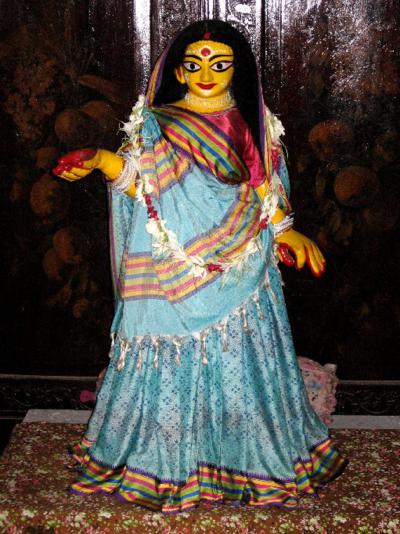
"...You are Nityananda-sakti, the divine energy of Lord Nityananda Himself. You are the guru of Krishna bhakti. Be merciful to me and grant me the shade of your lotus feet, which are like a desire tree. You have delivered countless abominable sinners. Please deliver me in the same way. Today, praying for your mercy, this lowly sinner falls at your holy feet." (In the image: Jahnava Mata).

   Shri Nityananda's two wives, Shri Vasudha and Shri Jahnava Devi, are expansions of Lord Balarama's eternal consorts Varuni and Revati. After the disappearance of the Pancha-tattva and many of Lord Chaitanaya's eternal associates, a huge sankirtana festival was held in Kheturi on Gaura-Purnima. Thousands of Lord Gauranga's followers such as Narottama, Shyamananda, Shrinivasa, Vrindavana Dasa, Murari Chaitanya, Parameshvara, and Miniketana Rama attended the first Kheturi Sankirtana Mahotsava.

   They celebrated Gauranga's appearance day with thunderous chanting, exuberant dancing, tasty Prasadam. Six sets of beautiful Deities were installed. Shri Jahnava Mata cooked a matchless feast and personally served all the Vaishnavas. During Narottama Dasa Thakura's prema nama kirtana, Shri Chaitanya Mahaprabhu, Shri Nityananda Prabhu, and all Their associates suddenly appeared to the delight of all.

   Ma Jahnava, an affectionate name given by the Devotees, traveled throughout Gaura and Vraja mandalas. Wherever she went the Gaura bhaktas happily greeted and served her. Known as Nityananda-svarupini, Jahnava Devi overflowed with prema bhakti. She delivered many atheists and sinners by her compassionate preaching.

   Shrila Thakura Bhaktivinoda offers this prayer to Jahnava Mata in Kalyana-kalpa-taru: "0h Jahnava Devi! By the power of your divine qualities, be merciful to this servant of yours. Dispel this illusion which torments me. And relieve me of material existence. Let me take shelter at your lotus feet. You are Nityananda-sakti, the divine energy of Lord Nityananda Himself. You are the guru of Krishna bhakti. Be merciful to me and grant me the shade of your lotus feet, which are like a desire tree. You have delivered countless abominable sinners. Please deliver me in the same way. Today, praying for your mercy, this lowly sinner falls at your holy feet."

   It is said that Shri Jahvana Devi left this world by entering the Deity of Gopinatha in Vrindavana. 

Jahnava Mata

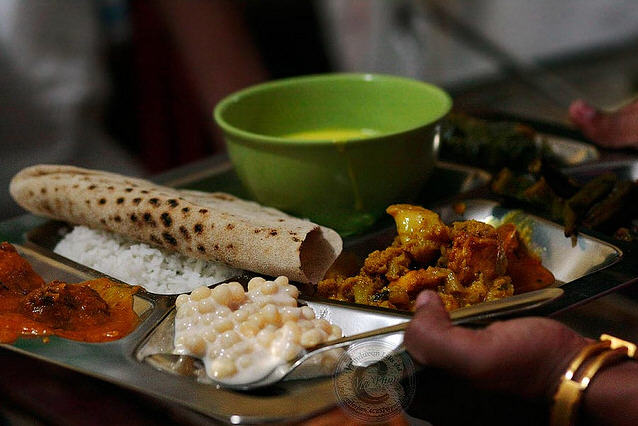
They celebrated Gauranga's appearance day with thunderous chanting, exuberant dancing, tasty Prasadam. Six sets of beautiful Deities were installed. Shri Jahnava Mata cooked a matchless feast and personally served all the Vaishnavas. During Narottama Dasa Thakura's prema nama kirtana, Shri Chaitanya Mahaprabhu, Shri Nityananda Prabhu, and all Their associates suddenly appeared to the delight of all. (In the image: Prasadam - food offered to Krishna).