Author Archives: Sevak

Vamshi das Babaji – Biography

The Paramahamsa Avadhuta
 
This article has been written on the basis of ones which previously appeared in the old Gaudiya magazine and various statements made by Srila Bhaktisiddhanta Saraswati Goswami Thakur and his disciples who knew Vamshi Das Babaji personally.
 
Srila Vamshi Das Babaji appeared in the village of Majidpur in the Jamalpur district of Bangla Desh, near the city of Jamalpur. Before the partition of India, this city was formerly in the district of Mymensingh. According to Hari Das Das, his father’s name was Sanatana Malobrahma and he was previously known as Bhairava. Babaji Maharaj came to Nabadwip from East Bengal. He was a paramahamsa Vaishnava who acted in the manner of an avadhuta. The word avadhuta refers to one who has shaken off from himself all worldly feeling and obligation. He does not care for social conventions, particularly the varnashrama-dharma, i.e., he is quite eccentric in his behavior. Nityananda Prabhu is often characterized as an avadhuta.
 
He lived there under a tree on the banks of the Ganges, demonstrating a very high standard of renunciation. Srila Bhaktisiddhanta Saraswati Goswami Thakur was attracted by his Vaishnava behavior and his disregard for the rules and regulations of society at large, in the fashion of a paramahamsa avadhuta. He himself paid his obeisances to Babaji Maharaj from a distance, but did not allow his disciples to associate with him. For even though Babaji Maharaj was a paramahamsa Vaishnava, an ordinary beginner in devotional practice would likely misunderstand his indifference to the rules and regulations and end up committing offenses at his feet.
 
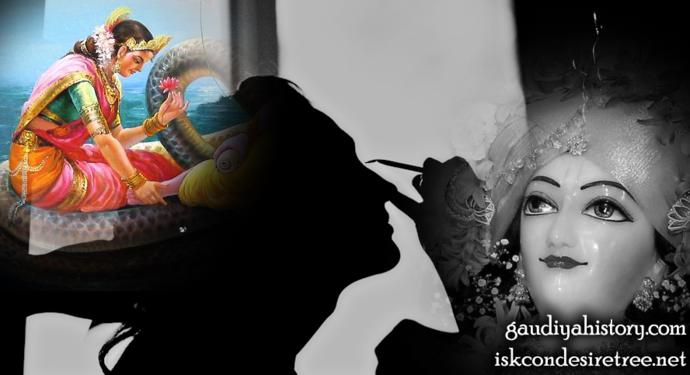
The primary purpose of the rules and regulations is to bring pleasure to Sri Sri Radha and Govinda. A practitioner who has not yet overcome his mundane conditioning may very well judge an advanced Vaishnava according to rules and regulations which were designed to help him advance to the next level of spiritual realization. If he measures a perfected soul by the standards which have been set for the beginner, there is a possibility of committing offenses which could result in falldown from the devotional path. It is said that Babaji Maharaj had two cloth bags. He kept his Nitai-Gaura deities in one, Radha-Govinda in the other. He regularly worshiped them, taking them out of the bags and serving them mentally with mantras. Then, when he had finished, he would place the deities back in their bags. On occasion he would leave them outside the bags so that people could look at them. Once in a while, he would put tobacco in a hookah and offer it to Radha and Govinda from a distance, but not to Nitai-Gauranga. People would come with offerings of rice, fruits, vegetables, flour, bananas, etc., but Babaji Maharaj would ignore them. When he noticed an accumulation of these offerings, he would mentally give them to his deities and then distribute them to whomever happened to be present. What person could understand this kind of behavior?
 
Babaji Maharaj only wore a kaupina, a strip of cloth covering his private parts. He left his hair and beard uncut and unkept. Yet he was tall enought to be able to pick fruits for his puja from high branches in a tree without making use of ladders or other paraphernalia. On one occasion, he fell from a tree and from that time on he took on the guise of a lame person.
 
Babaji Maharaj’s Voyage to Vraja
 
Babaji Maharaj did not stay exclusively in the Nabadwip area, but travelled to many holy places where he also practiced the spiritual disciplines of bhakti-yoga. He embodied the verse Krishna-bhakti-rasa-bhavita-matih, and wherever he went he always remained immersed in the ocean of Krishna-rasa. Therefore, everything reminded him of Krishna-lila, but especially the peepal tree, or bata. Whenever he saw a peepal tree, he would sit under it, taking it to be the Vamshi-bata under which Krishna played his flute to attract the gopis. Once he had installed himself there, it would be difficult to get him to move. On the 12th of Phalguna, 1347 (Monday, Feb. 24, 1941), Vamshi Dasji left Nabadwip city and headed for Vrindavan. He sometimes walked, sometimes he travelled by ox-cart and sometimes by rail. He first went to Katwa where he stayed for two days under a bata tree near the train station. Then he took the train to Bhagalpur where he stayed for one day under a bata tree near the station and for four days by the Ganges. Then he travelled on to Gaya where he remained on the banks of the Phalgu River for three days.
He also stayed on a boat in the Ganges near Dashashvamedha Ghat in Benares for three days, spent another three days in Ayodhya by the Sarayu including three hours under a bata tree, at the Triveni confluence at Prayag for ten days, two days at the Vishrama Ghat in Mathura, eight days at the Vamshi Bata in Vrindavan, nine days at the Madhya-curia on the banks of the Yamuna, one day at the Govindaji temple, two days at Kaliya-daha, eight days under a tamala tree on the east bank of Surya Kund at Nandagrama, two days at Pavana-sarovara, four days at the foot of a Pilu tree, and then another nine days at Vamshi Bata Ghat in Vrindavan. Everywhere that he went, he remained absorbed in chanting the Holy Names and meditating on Krishna’s form and pastimes. After three months, he returned to Nabadwip Dhama, in the month of Jyestha.
 
Those who travelled with him recounted that when wandering through Vraja Mandala, he would sometimes sing songs about Krishna’s lila, sometimes glorify Nabadwip Dhama, sometimes laugh madly. Sometimes, he would babble incoherently, and oftentimes he would remain completely silent. When visiting a temple, he was often seen muttering confidentially to the deities, disclosing some personal sentiment to them. All in all, his companions were charmed by his devotional absorption.
 
In the old Gaudiya weekly magazine, further accounts of Babaji Maharaj’s travels given. It is stated there in the four years from March 1943, he travelled to Ambika Kalna, Khariagpura, Baleshvara, Soro, Bhadrak, Khurda Road and Purushottam. Afterwards, he again visited Gaya, Kashi, Saidpur, Patna, Munger, etc. After travelling to all these places, some devotees from his birthplace in Majidpur invited him to come for a visit. He acquiesced to their enthusiasm, but found little pleasure in going. He said that it was a place which the Pandavas had neglected.
 
H. H. Bhakti Pramode Puri Maharaja’s Reminiscences
 
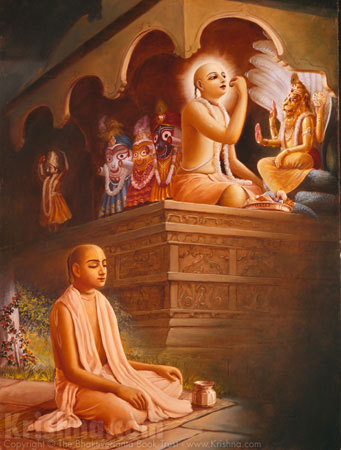
My shiksha-guru, H. H. Bhakti Pramode Puri Maharaja has told a few anecdotes about Vamshi Das Babaji based on his eyewitness account: “At Babaji Maharaj’s cottage by the Ganges, a pile of fruit intended for the service of the deities had accumulated once and Baba would not let anyone lay a finger on it. One day, however, a cow entered the cottage and ate all the fruits. Babaji Maharaj watched and laughed, clapping his hands. I can’t remember now whether Baba’s disciple’s name was Purna or Punya. Anyhow, I asked him out of curiosity why Baba was laughing. He said, Last night a thief stole all the deity’s pots and pans, dishes and utensils. Now a cow has come and eaten all the fruit. So he is beside himself with joy and is laughing and saying, ‘One thief gives and another thief takes away!’ No one was able to drive the cow away. The supreme thief is Krishna. [FN. According to Haridas Das, Vamshi Das Babaji never locked his doors, even though he was asked to do so by his well-wishers. Thus he was regularly robbed. When asked why he didn’t lock his doors, he only said that it was Gaura-Nitai’s responsibility. It was their house and their possessions that were stolen. Sometimes he would chastise the deities for not stopping the thieves when he found that the pots or foodstuffs had been stolen.
Gaudiya Vaishnava Jivana, Vol 2, 327.]
 
“Babaji Maharaj never allowed anyone to touch his feet, but on the day after one Phalguni Purnima, when everyone remembered Jagannath Mishra’s celebration of Gauranga’s birth. Babaji Maharaj was so ecstatic that he forgot his rule and became as generous as a desire tree. So on that day I was fortunate enough to get the dust of his lotus feet. I also had the good fortune to get his prasadi leftovers one day.
 
“Babaji Maharaj enjoyed hearing devotional songs. One day, he heard Bhaktivinoda Thakur’s couplet, tyajiya shayana sukha, vicitra palanka, kabe vrajer dhulaya dhusara habe anga — ‘When will I give up the pleasure of sleeping in a comfortable bed and roll in the dust of Vrindavan?’ Babaji Maharaj said, ‘You are only singing a song. For someone who has exploded, it has exploded.’ In other words, we only sing the songs of the Mahajanas, but we feel no emotion. When the dust of the Holy Places covers our bodies, we only think of brushing it off. We have no real idea of its value.
 
“We have heard that Vamshi Das took vesha from our Parama Gurudeva, Srila Gaura Kishora Das Babaji Maharaj.
 
“One day, someone started singing one of these new-fangled, invented mantras that contradicts siddhanta and divine sentiment. Babaji Maharaj said, ‘That Name is not allowed here.’
 
“One gentleman often came to visit Babaji Maharaj and kept asking him for his mercy. One day, Baba finally became impatient and took off his kaupina and handed it to the gentleman and said, ‘You want mercy, here it is, take it.’ The visitor was frightened by the manner in which Baba challenged him. We have heard that all perfections come from the grace of the Vaishnavas, but we have not got the sincerity necessary to really take their blessings when they are given. What is the use of repeatedly saying, ‘Be merciful, be merciful.’
 
“We had an elderly Godbrother named Gokula Das Babaji. His family home was not far from that of Babaji Maharaj. Gokula Das Baba went frequently to see Vamshi Das Baba, and when they got together, they would joyfully converse about Krishna in their Mymensingh dialect.”
 
Vamshi Das’s Teachings
 
Babaji Maharaj was normally occupied with his devotional activities; he minded his own business and spoke little. Many people would come to him; often they would ask him questions. If he took notice at all, he would sometimes answer indirectly, but mostly he remained silent. He would be observed talking to the deities, sometimes laughing, sometimes crying desperately. If he did give spiritual instruction, he would rarely cite scripture, but always spoke from his personal realization. In two or three short phrases, he was often able to make a deep impression on the listener.
 
Once, he had a regular visitor who kept asking him, “How can we attain God?” Babaji Maharaj just remained silent, giving no answer to the questioner. One day, he suddenly looked at this visitor and asked him, “What do you want?” The fellow replied, “I want to find God.” Babaji Maharaj answered in one word, “Cry.”
 
Those who visited him reported the short answers that he gave to their questions. Some of these were noted and are given here.
 
Q: Baba, what should we do?
 
A: If you worship Nitai, you will get Gaura. All your unhappiness will disappear and you will experience the beginnings of real joy.
 
Q: How can one become free from the demands of the senses?
 
A: shuniya govinda-rab, apani palabe sab, simha-rabe yatha kari-gan (Narottama Das). “They will all flee at the sound of Govinda’s name just as the deer flee at the sound of the lion’s roar.”
 
Q: Baba, you find no happiness in this world, then?
 
A: There is no joy here, unless you worship Gaura-Nitai. That is our eternal world, while this illusion is your world. Your happiness in this world is like the laughing or crying of a dreaming baby.
 
Q: How can we recognize the blessings of Krishna or the Vaishnavas?
 
A: je kare tomara asha, tare koro sarva-nasha — “You ruin everything for someone who aspires to attain you.” kahake-o taka dey, kaharo taka nei — “To some he gives wealth, while others are penniless.” Toma sthane aparadhe nahi paritrana — “There is no pardon for an offense at your (Vaishnava Thakur’s) feet.” How can you stop it? Who will deliver you? Who will understand me if I try to explain? I haven’t got the slightest bit of attachment to the Vaishnavas.
 
Q: How will I attain Krishna’s mercy?
 
A: If you cry, you will get his mercy. Who cries? If you cry with tears of love, you will get the Lord’s mercy. Mukhe bali hari, kaje anya kari, prema-vari cokhe elo na — “I recite the names of Hari, but I act otherwise. So the tears of love do not well up in my eyes.”
 
Q: How can we be happy? In renunciation or in enjoyment?
 
A: There are saintly persons on the Sarayu who chant the names of Sita Rama. They are happy, they know no distress. Those who stay with King Duryodhana know no joy. Those who are with Yudhishthira are happy. Happiness and distress are brothers. Enjoyment and renunciation. Some people enjoy and some renounce.
 
Babaji Maharaj’s disappearance day was on the Shukla Caturthi of Shravan.
 
 
[Excerpted from "Sri Chaitanya: His Life & Associates" by Srila Bhakti Ballabh Tirtha Maharaj]
Uddhava Das

Uddhava Das is an avesha incarnation of the Moon-god.
(Gaura-ganoddesha-dipika 192)
 
In the Chaitanya Charitamrita (1.12.83), it is said that Uddhava Das is a branch of Gadadhara Pandit Goswami. As such, he is mentioned by Yadunatha Das in the Shakha-nirnayamrita (35):
 
ati-dinajane purna-prema-vitta-pradayakam
shrimad-uddhava-dasakhyam vande’ham guna-shalinam
 
I venerate the highly virtuous Uddhava Das, who gave the wealth of love to those who were most fallen.
 
When Rupa Goswami was old and living in Vrindavan, he was desperate to see the deity, but unable to go to Govardhana because of his advanced years. At this time, Gopal came to stay in Mathura at the house of Vitthalanatha, the youngest son of Vallabhacharya, ostensibly out of fear of possible attacks by the Muslim iconoclasts. Rupa Goswami thus had the opportunity to see Madhavendra Puri’s deity. Uddhava Das was amongst the devotees who stayed with Rupa at Vitthaladeva’s house for an entire month on this occasion.
(Chaitanya Charitamrita 2.18.51, Bhakti-ratnakara 5.1333)
 
Uddhava Das lived in Vrindavan. When Srinivas Acharya and Raghava Goswami were touring Vraja dham, they came to his cottage. He greeted them with enthusiastic hospitality. Uddhava Das was amongst the devotees who gathered to wish Srinivas Acharya, Narottama Das Thakur and Shyamananda Prabhu as they set off for Bengal with the books which had been given to them by Jiva Goswami.
(Bhakti-ratnakara 6.514)
 
According to the Gaudiya Vaishnava Abhidhana, there are at least two devotees named Uddhava Das. One was a follower of Sanatan Goswami who worshiped in Vraja on the banks of Pavana Sarovara; another was an initiated disciple of Radhamohana Thakur who wrote many songs about Radha-Krishna lila. He lived in Murshidabad district in the village of Öeïagram. His real name was Krishnakanta Majumdar.
 
[Excerpted from "Sri Chaitanya: His Life & Associates" by Srila Bhakti Ballabh Tirtha Maharaj]
Uddharana Datta Thakura – Biography

Uddharana Datta was the best of the Bhagavatas, who served Nityananda's lotus feet in every way possible.
Chaitanya Charitamrita 1.11.41
 
Whenever the Supreme Divinity, Nandanandan Sri Krishna, adopts the devotional mood and bodily luster of Srimati Radharani in order to become Sri Krishna Chaitanya, He is always accompanied by His eternal associates, who join Him in order to enrich His pastimes. Thus, Krishna's primary expansion or prakasa, Baladev, accepts the attitude of a devotee as Sri Nityananda Prabhu, appearing in Ekachakra village in order to embellish Mahaprabhu's lila. He too has his entourage of personal confidantes who descend to this earth to assist him in playing his role. Nityananda is Baladeva Tattva: he is none other than Lord Sesa, the source of three purusavataras, Maha Sankarshan's causal form or mula Sankarshan. His chief companions are known as the Dvadasa-gopalas or twelve cowherds. Thus it is stated in the Gaura-ganoddesa-dipika (129):
Subahur yo vraje gopo data uddharanakhyakah
 
The Cowherd Named Subahu Became Uddharan
 
Uddharana Datta Thakur is thus one of the Twelve Gopals. In order to assist Nityananda in his incarnation, he took birth in the town of Saptagram in the year 1481 AD. Saptagram is in Hooghly district, near the Trishbigha railway station. His parents were named Srikara nd Bhadravati and they belonged to the gold merchant class. Any caste in which a Vaishnava appears is to be considered holy – the earth itself is blessed by the appearance of a Vaishnava – and his or her mother has achieved the perfection of motherhood. Vrindavan Das has thus written:
Nityananda remained a few days in Khardaha and then went on to Saptagram with his troupe of associates. They stayed at the home of the fortunate Uddharana Datta on the banks of the Triveni. Completely surrendered to the feet of Nityananda Prabhu, Uddharana Datta worshipped him without any false pretense… The entire caste of gold merchants was purified by the presence of Uddharana Datta in its midst, of this there can be no doubt. Chaitanya Bhagavata 3.5.443,449-50, 453
 
Srila Vrindavan Das Thakur has particularly given extensive glorifications of Nityananda Prabhu. The sinful and offensive living beings of this world have no alternative but the mercy of Nityananda Prabhu if they want to be delivered. Even though Nityananda is Bhagavat-tattva, he behaves as a devotee. All of his associates are expansions of his mercy. Nityananda Prabhu is said to be the deliverer of the most fallen; his companions seek out even more fallen souls to deliver. In fact, Nityananda distributes his mercy to the conditioned souls through his devotees.
 
As one of Nityananda's closest confidantes, Uddharan Datta Thakur is called parama-parama-patita-pavana, "the deliverer of the most fallen amongst the most fallen." Thus any jiva who takes shelter of Uddharan Datta Thakur is quickly delivered from his material entanglements and attains the service of Nityananda Prabhu and Gauranga Prabhu's lotus feet. Therefore Krishna Das Kaviraj Goswami describes him as the best of the maha-bhagavatas and Vrindavan Das Thakur writes in the Chaitanya Bhagavata: " Uddharan Datta is a great and magnanimous Vaishnava, who has a title to the service of Nityananda Prabhu."
 
From a superficial point of view, Uddharan Datta worked as the manager of a big zamindar (Nairaja) of Naihati, about one and a half miles north of Katwa. The relics of this wealthy family are still visible not far from the Dain Hat station. The village where Uddharan Datta Tahkur lived while acting as the manager of the estate was named Uddharanpur.
 
Though he possessed a vast fortune, Uddharan Datta renounced all sense gratifications, dedicating his sense activities to the service of Nityananda Prabhu. Being controlled by the love of his devotee, Nityananda enjoyed the foodstuffs that Uddharan had cooked.
 
bhaktera dravya prabhu kari kari khaya
abhaktera dravya-pane ulati na caya
 
The Lord grabs the offerings given him by his devotee. That which is given him by a non-devotee is of no interest to him.
Saptagram stands on the banks of the Saraswati River. At Uddharan Datta's Sripat, one can still see the six-armed figure of Mahaprabhu that he personally worshipped. On the right side of Sri Chaitanya Mahaprabhu is a deity of Sri Nityananda. On another altar are the figures of Radha Govinda and a Shalagram Shila, and below the throne is a picture of Sri Uddharan Datta Thakur. After Uddharan Datta disappeared, Jahnava Devi made an auspicious visit to his home.
 
Krishna Das Kaviraj Goswami writes in the Chaitanya Charitamrita that his brother did not have as much faith in Nityananda Prabhu as he had in Chaitanya Mahaprabhu. This was the cause of an argument between his brother and Nityananda's follower Minaketana Rama Das. Krishna Das took Rama Das' side in this argument and rebuked his brother. Nityananda Prabhu was pleased with Krishna Das for having supported his devotee, even though this was a fairly ordinary qualification. Nityananda gave Krishna Das a vision of himself, the right to live in Vrindavana and service to the lotus feet of Radha and Krishna. The conclusion is that if we worship Uddharan Datta Thakur, serve him and try to please him, we will quickly be able to get the mercy of Lord Nityananda Prabhu, through which we will become eligible to attain love for Krishna and thus perfect our lives. In order to attract people to Uddharan Datta's Sripat it is necessary to make repairs to the buildings on the site. Through this, people will become aware of his glories and will seek his mercy and become blessed. If one makes an effort to serve the devotee, then he will give the commensurate power to serve.
 
In front of the Saptagram temple, a large hall has been constructed, in front of which is a shady, cool terrace covered by a madhavi creeper.
 
Srinivas Datta Thakur was Uddharan Datta's only son. Their descendants have spread into many branches and today live in Calcutta, Hooghly and many other places. Those who have taken birth in this family are doubtlessly very fortunate individuals. We pray that they abandon the superficial illusory family connection and establish their transcendental relation with him."
 
Uddharan Datta Thakur left this world in the Shaka year 1463 (1552), on the Krsna trayodasi of the month of Paush.
 
The following comments are added in A.C. Bhaktivedanta Swami's commentary on Chaitanya-Charitamrta 1.11.41: "When we returned from America in 1967, the executive committee members of this temple invited us to visit it, and thus we had the opportunity to visit this temple with some American students. Formerly, in our childhood, we visited this temple with our parents because all the members of the suvarna-vanik community enthusiastically take interest in this temple of Uddharan Datta Thakur. In the Bengali year 1283 (AD 1876) a babji named Nitai Das arranged for a donation of twelve bighas of land for this temple. The management of the temple later deteriorated, but then in 1306 (AD 1899), through the cooperation of the famous Balaram Mullik of Hooghly, who was an assistant magistrate, and many rich suvarna-vanik (gold merchant) community members, the management of the temple improved greatly. Not more than fifty years ago, one of the family members of Uddharan Datta Thakur named Jagamohana Datta established a wooden murti (statue) of Uddharan Datta Thakur in the temple, but that murti is no longer there; at present, a picture of Uddharan Datta Thakur is worshiped. It is understood, however, that the wooden murti of Uddharan Datta was taken away by Sri Madana-mohana Datta and is now being worshiped with a Shalagram Shila by Srinath Datta."
 
 
[Excerpted from "Sri Chaitanya: His Life & Associates" by Srila Bhakti Ballabh Tirtha Maharaj]
Subuddhi Raya – Biography 2

   Nothing is known about Subuddi Raya’s birthplace or his parents. His life is memorable because he received Mahaprabhu’s association and special blessings. In the first part of his life, he became the king of Gaudadesha. According to Ashutosha Deva’s Bengali dictionary, Gauda was the name of the ancient capital of Bengal in Malda district, from which the entire Bengali kingdom took its name. On the other hand, Hari Das writes in his Gaudiya Vaishnava Abhidhana that, according to the Skanda Purana, there were five Gaudas, by which were meant the kingdoms of Sarasvata, Kanyakubja, Utkala (Orissa), Maithila, and Bengal, but that the name was primarily used for the region lying between East Bengal (Banga) and Mithila. Vijaya Sena of Karnataka came and became the king of Gauda and his descendants were known as Gaudeshvara. Vijaya Sena’s son Ballala Sena established the city of Gauda on the banks of the Ganges. The course of the Ganges has since moved. Previously, all Bengalis were known as Gaudiyas, but the name has become synonymous with Vaishnavas who follow Chaitanya Mahaprabhu.
 
   Subuddhi Raya was born in a Brahmin family and was well-known for his scholarship. While he was king of Gauda, Hussein Shah was his protégé. Previously, Subuddhi was the master of Bengal and Hussein Khan Sayyid worked for him. (Chaitanya-charitamrita 2.25.180).
 
   Subuddhi put Hussein Khan in charge of digging a big tank, but because of mistakes made by the latter, punished him by having him whipped. Subsequently, Hussein Khan himself became the king of Gauda. Nevertheless, because of the help which Subuddhi had given him in the past, continued to treat him with a great deal of respect. The scars of the flogging he had received from Subuddhi remained on his body, however, and one day Hussein Shah’s queen asked where they came from. When the King told his wife the story, she became angry and incited her husband to punish Subuddhi by putting him to death. Hussein Shah refused to go to such extremes, and so his wife suggested that he punish him by bringing about his caste falldown. The King refused to do this because he knew that doing so would be tantamount to killing him. His wife insisted, however, even threatening to kill herself if he did not do something. Finally, he was obliged to give in to his wife and he gave water to Subuddhi to drink, which according to the Hindu rules of the time meant that he lost his caste status.
 
   Even prior to these events Subuddhi had become completely detached from material life. He took this opportunity to leave his home and family and go to live in Varanasi. There he inquired from the Smarta Brahmanas how to go about atoning for the loss of caste status. They told him that he should commit suicide by drinking boiling ghee. In the Gaudiya Vaishnava Abhidhana, it is said that it was common to be told to atone by jumping into a fire of chaff, i.e., a fire which is not easily extinguished. Others, however, objected that such a heavy punishment did not fit the minor nature of the offense. As a result of this difference of opinion amongst the Brahmins, Subuddhi Raya hesitated. 
Subuddhi Raya

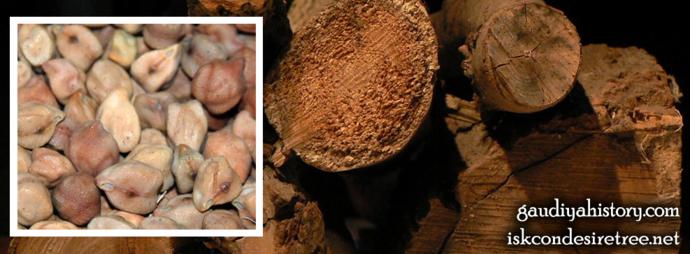
Subuddhi Raya gathered dry wood and sold it in Mathura, receiving five or six paisa for each load. He spent only one paisa for food, eating dried chick peas. The rest of the money was kept with a businessman. Whenever he saw Vaishnavas in distress, he would feed them and when Gaudiya Vaishnavas arrived in town, he would provide them with rice, yogurt and mustard oil for rubbing on the body. (Chaitanya-charitamrita Madhya 25.197-9) (In the wallpaper: wood and dry chickpeas).

 
   When Mahaprabhu came to Varanasi, Subuddhi came to see Him and recounted the whole story from beginning to end. The Lord recommended to him that he go to Vrindavan and chant the names of Krishna. The Lord said, Leave here and go to Vrindavan. Chant the Holy Names of Krishna constantly. The shadow of the Name will destroy any sins you may have committed. If you go on chanting, you will attain Krishna’s lotus feet. (Chaitanya-charitamrita 2.25.191-3)
 
   On the Lord’s order, Subuddhi Raya set off for Vrindavan, stopping in Prayag, Ayodhya and Naimisharanya, where he stayed for some time. When he finally arrived in Mathura, he learned that the Lord had already left for Prayag and that he had thus missed Him. In distress and separation, Subuddhi became very renounced. He made his living by gather dry wood from the jungle and selling it in Mathura. He subsisted on the little money that he made from this work, eating only dried chick peas to keep body and soul together. Even so, he was able to put some money aside which he used for serving the Bengali Vaishnavas, feeding them with rice and yogurt.
 
   Subuddhi Raya gathered dry wood and sold it in Mathura, receiving five or six paisa for each load. He spent only one paisa for food, eating dried chick peas. The rest of the money was kept with a businessman. Whenever he saw Vaishnavas in distress, he would feed them and when Gaudiya Vaishnavas arrived in town, he would provide them with rice, yogurt and mustard oil for rubbing on the body. (Chaitanya-charitamrita Madhya 25.197-9) 
 
   Rupa Goswami was extremely happy when he saw Subuddhi Raya’s renunciation and service to the Vaishnavas. Subuddhi took Rupa with him to visit all the holy sites in Vraja-mandala. (Chaitanya-charitamrita 2.25.200) It is clear from this that service to the Vaishnavas is not restricted to the very rich. Even a poor person will find the means to serve Vishnu and the Vaishnavas if he has a sincere desire to do so. By the will of the Lord, he will never have any shortage. This is the example set by Subuddhi Raya’s holy life.
 
   When Sanatana Goswami was walking from Varanasi to Mathura, he took the main road from Prayag on the Lord’s order. In the meantime, Rupa and Anupama had taken the road along the banks of the Ganges in order to meet Mahaprabhu in Prayag. When Sanatana met Subuddhi in Mathura, he learned from him that he had missed Rupa and Anupama. Subuddhi showed a great deal of affection for Sanatana as he had known him in his previous life as a government minister. He wanted to serve him, but Sanatana did not wish to accept his service.
 
   Subuddhi Raya spent the rest of his life in Vrindavan worshiping the Lord by chanting the Holy Names in great renunciation. In this way he followed the order of Shri Chaitanya Mahaprabhu. The date of his death is unknown.
 
   [Excerpted from “Shri Chaitanya: His Life & Associates” by Shrila Bhakti Ballabh Tirtha Maharaj] 
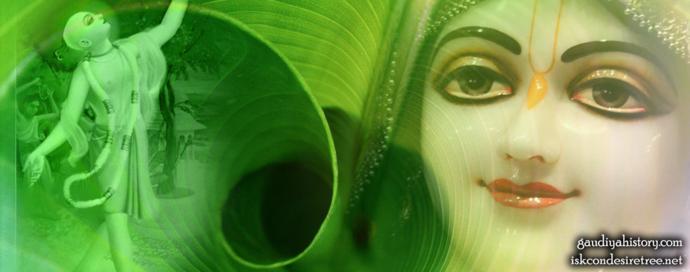
Subuddhi Raya

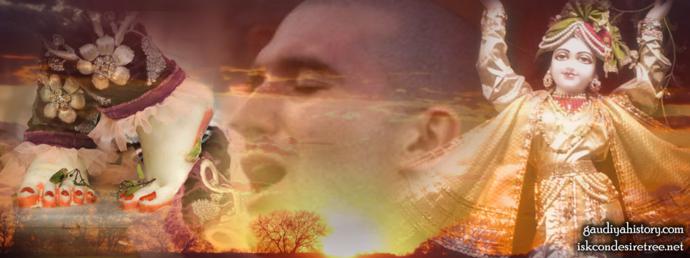
When Mahaprabhu came to Varanasi, Subuddhi came to see Him and recounted the whole story from beginning to end. The Lord recommended to him that he go to Vrindavan and chant the names of Krishna. The Lord said, Leave here and go to Vrindavan. Chant the Holy Names of Krishna constantly. The shadow of the Name will destroy any sins you may have committed. If you go on chanting, you will attain Krishna’s lotus feet. (Chaitanya-charitamrita 2.25.191-3) (In the wallpaper: from left to right the lotus feet of Shri Gopinath, ISKCON Chowpatty, Mumbai, A Devotee in Harinama, Santa Monica, Shri Gauranga Mahaprabhu, ISKCON Chennai).

Kholavecha Shridhara – Biogrphy

khola-becataya khyatah panditah shridharo dvijah
asid vraje hasya-karo yo namna kusumasavah 
   (Gaura-ganoddesha-dipika 133) 
Shridhara Pandit

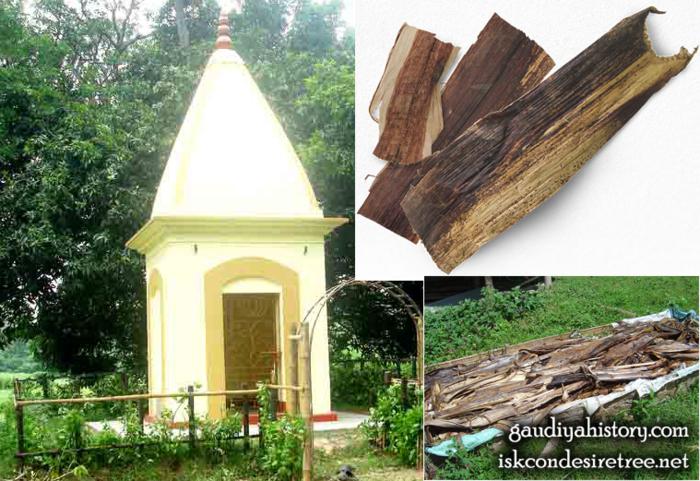
Shridhara Pandit was a resident of Navadwip. Navadwip is composed of nine islands, of which the central island is known as Antardwipa. He used to live at the northern extremity of Mayapur and to the southeast of the Chand Kazi’s samadhi, in the place that now goes by the name of Shridhara Angan. During his lifetime, it was a banana orchard...(In the wallpaper: Shridhara Pandit's home, Shri Mayapur dham, banana barks).

 
   One of the twelve Gopals in Krishna lila was named Kusumasava. He appeared in Gaura-lila as Shridhara Pandit, who was given the nickname khola-becha, “bark-seller.”
 
   Shridhara Pandit was a resident of Navadwip. Navadwip is composed of nine islands, of which the central island is known as Antardwipa. He used to live at the northern extremity of Mayapur and to the southeast of the Chand Kazi’s samadhi, in the place that now goes by the name of Shridhara Angan. During his lifetime, it was a banana orchard, which nowadays is no longer the case, at least not to our mortal eyes. During this incarnation, Shridhara played the role of a poor Brahmin who made his living selling the produce of his banana garden. In order to keep the memory of Shridhara Pandit alive, the founder of the world-wide Chaitanya and Gaudiya Maths, Nitya-lila-pravishta Om Vishnupada Shrila Bhaktisiddhanta Saraswati Goswami Prabhupada, discovered and revealed this site of Chaitanya Mahaprabhu’s pastimes. Deity worship was established there and it continued until after Shrila Bhaktisiddhanta Saraswati Goswami Thakur’s disappearance. Now, because of problems with local people, the place is once again losing its beauty. Even so, during the Navadwip parikrama, Devotees still pay their obeisances at that spot to the memory of Shridhara Pandit. 
 
   Shrila Bhaktivinoda Thakur has written as follows in his Nabadvipa-dhama-mahatmya: “Shridhara Pandit’s home comes after the weavers’ neighborhood. Gauranga Mahaprabhu ended the kirtan there.” Nityananda Prabhu says the following to Jiva Goswami:
 
   “Out of His mercy, Mahaprabhu Gauranga Hari would end the kirtan here so that the Devotees could rest. It is therefore known as vishrama-sthana, or the Lord’s place of rest. So let us also repose a while here at the house of Shridhara Pandit.” (Navadwip-dhama-mahatmya)
 
   According to this same book, there was previously a large tank near Shridhara’s banana orchard, but this too is no longer visible.
 
Shridhara’s Poverty
 
   Material wealth and prosperity are not the truest signs of the Lord’s mercy on someone. Those who worship the gods and goddesses are generally seen to prosper materially, but one who is rich in the wealth of devotion to the Lord is the one who has truly benefited from his mercy. Mahaprabhu gave this teaching to His associates through Shridhara Pandit: a Devotee of Vishnu is free from attachments to material possessions and enjoyments.
 
   One day, the Lord went to Shridhara’s place and asked him why he was so poor. He was worshiping the husband of the goddess of fortune, Lakshmi, and yet he never had enough money for food or clothing, and his house was dilapidated. On the other hand, those who worshiped the bloodthirsty Kali always seemed to have an abundance of material wealth. Shridhara answered that a bird who made its nest in the trees and wandered from place to place to find food was passing the time of day in the same way as a king in his palace who enjoyed the best objects of gratification. There was no difference of degree or amount of pleasure experienced by the two. The Lord then said to Shridhara: “Externally, though you appear to be poor, you are actually the true rich man. I will shortly reveal to the entire foolish world that the Devotee is qualified to possess the greatest wealth, indeed they are the owners of all things.” 
Shridhara Pandit

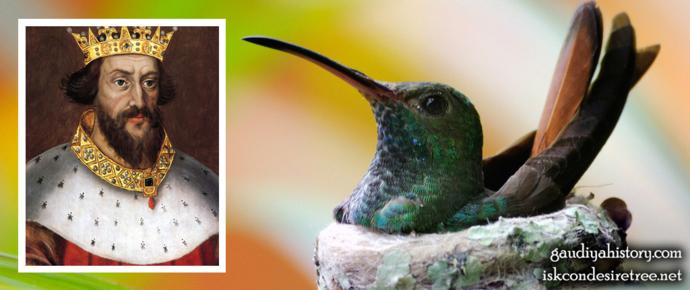
...a bird who made its nest in the trees and wandered from place to place to find food was passing the time of day in the same way as a king in his palace who enjoyed the best objects of gratification. There was no difference of degree or amount of pleasure experienced by the two. (In the wallpaper: The king Henry I, a bird in the nest).

 
   Generally we call that person poor or unfortunate who is deprived of wealth, possessions and a home. One who has these things is called rich or fortunate. People try to accumulate wealth in order to find happiness, and not the opposite. This happiness is the real wealth, not the external possessions, etc. Shri Krishna is the personification of happiness. Thus in actual fact, the difference between wealth and poverty: the one who has love for Krishna is rich; one who does not is poor. By way of example, during Krishna’s lila, Vidura played the part of a poor man, but one who was rich in love for Krishna. On the other hand, Duryodhana possessed unlimited riches but had no love for Krishna, and thus was truly poor. The Supreme Lord used Kholabecha Shridhara to show the world who was truly wealthy and fortunate. The Lord is conquered by loving devotion alone, and by nothing else.
 
bhaktyaham ekaya grahyah shraddayatma priyah satam
bhaktih punati man-nishtha shvapakan api sambhavat
 
   Being very dear to the saintly, I am only attained through devotion and unflinching faith. Devotion fixed on Me purifies even a dog-eater from all faults due to low birth and circumstances such as poverty. (Shrimad Bhagavatam 11.14.21)
 
patram pushpam phalam toyam yo me bhaktya prayacchati
tad aham bhakty-upahritam ashnami prayatatmanah
 
   I accept whatever anyone offers Me with devotion, whether it be a leaf, a flower, a fruit or water, because of his pure consciousness. (Bhagavad-gita 6.29)
 
   The Lord accepts whatever is given to Him with devotion and eats it, but does not accept that which is given by a non-Devotee. He would not accept the invitation to eat the finest, most expensive foods with Duryodhana in order to take a humble meal prepared for him by Vidura and his wife.
 
The Lord Steals Shridhara’s Goods
 
   The Supreme Lord Chaitanya Mahaprabhu showed the amazing pastime of hungrily taking Shridhara’s foodstuffs without even being invited to do so. While the Lord was engaged in His student pastimes, Shridhara used to make his living by selling banana flowers (mocja) and the core of the banana plant (thoria). He would spend half of whatever little money he made in this way on worshiping the Ganges, the other half on his own necessities. Like Yudhisthira, he was a great Devotee of the truth and would always tell the real price of an item he would sell. Everyone in Navadwip knew this and so would not haggle with him. But Mahaprabhu would come to Shridhara and give him only half the amount that he was asking for his bananas, banana flowers or thoria and then start to walk away with them. Every day, the two of them would pull back and forth on a bunch of bananas or something else, arguing for an hour or more over the price that was to be paid.
 
   Every day they would argue for an hour and a half; then Mahaprabhu would leave half the asked price and walk away with the goods. Shridhara would always tell the truth and give the real price of each item, but the Lord would still only give him half of the amount he asked for and then take it. Shridhara would jump up and grab the item, trying to take it back, even pushing and shoving the Lord. (Chaitanya Bhagavat 2.9.163-5)
 
   Even though He argued with Shridhara, when He saw that he did not become angry, He would take all the goods that he was selling. Even though this is the way that it looks from a superficial point of view, the fact of the matter is that when Shridhara saw the beautiful form of the Lord, he allowed Him to get away with stealing his goods without getting angry. At the sight of the Lord’s beauty, he would become enchanted and immersed in an ocean of joy. While arguing with him, Mahaprabhu would call him names in great satisfaction, sometimes subtly hinting at His own divine identity:
 
   “Every day you buy things to offer to the Ganga. Why don’t you just give something to Me without charging anything? Don’t you know that I am the father of the Ganga that you worship. I am telling you the truth about this!” (Chaitanya Bhagavat 2.9.178-9)
 
   They finally came to a settlement and Shridhara agreed to daily give Mahaprabhu some bananas or other items from the banana tree for free. From then on, the Lord would daily eat with great satisfaction from the little bowls made of banana bark that had been given to him by Shridhara.
 
   The Lord said, “Alright, alright. There is no necessity for anything else.” And from that day on, He ate with great contentment on banana leaves given Him by Shridhara. The Lord thus eats anything that the Devotee offers Him, but He rejects even rich items given Him by a non-Devotee. (Chaitanya Bhagavat 2.9.184-6)
 
Shridhara Blessed at the Maha-prakasha
 
   On that eventful night when the Lord sat on the altar in Shrivasa’s home and revealed His divine form to His Devotees for 21 hours, showing them all the different incarnations of Vishnu, one after the other, He told them to bring Shridhara there also. Shridhara would regularly stay up the whole night chanting the Holy Names and calling out to the Lord. This was a source of happiness to the Devotees, but the non-Devotees would complain that he was keeping them awake with his noise and they would regularly criticize and rebuke him. As the Devotees were going to his house on the Lord’s order, they could hear him chanting loudly from a considerable distance prior to arriving.
 
   When he came to Shrivasa Angan, Shridhara beheld the glorious divine form of the Lord and fell to the ground in a faint. He was brought back to consciousness by the Lord’s voice and then, with the power that was given him through the Lord’s mercy, began to recite hymns of glorification. Satisfied with Shridhara’s hymns of praise, Mahaprabhu wished to give him the eight mystic powers as a benediction, but Shridhara refused, saying that he only wanted service to the Lord’s lotus feet.
 
   Lord Vishvambhara repeatedly urged Shridhara to ask for a boon. Finally Shridhara said, “Lord, if You must give me something, then I ask for this. May that Brahmin who used to pinch my banana leaves and bark be my Lord, lifetime after lifetime. May that Brahmin who used to argue with me be my master, and I serve His lotus feet.” (Chaitanya Bhagavat 2.9.223-5) 
Shridhara Pandit

“Lord, if You must give me something, then I ask for this. May that Brahmin who used to pinch my banana leaves and bark be my Lord, lifetime after lifetime. May that Brahmin who used to argue with me be my master, and I serve His lotus feet.” (Chaitanya Bhagavat 2.9.223-5) (In the wallpaper: in the right Lord Shri Chaitanya, ISKCON Chennai, banana leaf, again Lord Chaitanya).

 
   Who can recognize all these servants of the Lord who want neither wealth, nor followers, nor even scholarship. Of what use are learning, wealth, beauty, fame or high birth? All of these things simply increase one’s pride and are ultimately valueless. A millionaire may try for millions of years to achieve what Shridhara did, simply by selling bananas and banana products, and still not be able to do so. (Chaitanya Bhagavat 2.9.233-5)
 
   Shrila Bhaktisiddhanta Saraswati Goswami Thakur comments on these verses as follows: “Through empirical knowledge or external analysis, no one can recognize the true character of a Devotee. It should not be thought that the ability to collect great amounts of money is a function of devotion, nor that someone who is able to accumulate a great number of followers is a better Vaishnava than someone who cannot. Furthermore, if someone is a great religious scholar, this does not mean that he is a Devotee of the Lord. A servant of Shri Chaitanya might have very little money, may show no signs of having a great number of followers, and may have no talent for argument or debate, and ordinary people are unable to understand why he is indifferent to these externals. These Devotees consider service to Shri Chaitanya to be something more valuable than the accumulation of wealth, followers or learning. Thus, there is no possibility of the depth of their wisdom, their glories and their superiority being perceived by the general public.”
 
   Who is capable of recognizing a Devotee? He may possess all perfections, but we see only his poverty. The seller of banana products, Shridhara Pandit, is a living example of this. He disregarded the eight mystic perfections in order to simply accept devotion as a benediction. However much misery you see in a Devotee’s life, you should know that in fact he is enjoying divine pleasure in devotional service. Those who are absorbed in sense gratification and intoxicated by learning or wealth can never recognize a Vaishnava. (Chaitanya Bhagavat 2.9.238-41)
 
Mahaprabhu Drinks from Shridhara’s Waterpot
 
   When Mahaprabhu was leading the sankirtan party after having delivered Chand Kazi, He returned through the quarter of the conch shell merchants and that of the weavers to arrive finally at Shridhara Pandit’s house. He then took a long drink of water from Shridhara’s old, beaten iron water pot. When Shridhara saw Mahaprabhu do this, he was mortified and fell unconscious.
 
   Mahaprabhu’s action was meant to teach us that by drinking a Devotee’s water, we can attain devotion. He wanted to show that the water from a Devotee’s water jug, even though it is old and rusty, is still like nectar to the Supreme Lord Himself. By way of contrast, He ignores the proud non-Devotee’s water, even when offered in a jeweled goblet.
 
   When the Lord saw Shridhara’s tumbledown shack of a home from a distance, He laughed quietly from the inner joy He felt. He led the company of Devotees along the path to Shridhara’s hut, where He spotted an iron water pot full of holes. There was still a little water in it, and the Lord drank it thirstily. The Lord is bhakta-vatsala, ever affectionate toward His Devotees, and this act overwhelmed Him with feelings of love. Tears poured from His eyes like the currents of the Ganga, and a wonderful kirtan began in Shridhara’s courtyard in which all the Devotees led by Nityananda and Advaita Prabhus were crying. Ah, when I think of the great joy they all experienced on that day here at Shridhara’s house, my heart is torn. (Bhakti-ratnakara 12.3136-41)
 
   The Lord drank water from Shridhara’s iron water pot and He fulfilled the desires of every single Devotee. (Chaitanya Charitamrita 1.17.70)
 
   On the very day before He took sannyas, Mahaprabhu happily accepted a gift of a gourd from Shridhara. Sachi Mata cooked the gourd with milk, making one of the Lord’s favorite preparations.
 
   The pious Shridhara came to see the Lord carrying a gourd (lau). When Gaurasundara saw the gift He laughed and asked, “Where did you get it?” But He knew that He would be leaving the next day and would not be able to eat it then. But He did not want to see the gift go unused and so He determined to have it prepared that very day. (Chaitanya Bhagavat 2.28.33-6)
 
   After taking sannyas, Mahaprabhu wandered in the land of Rarha for three days in a intoxicated state of love for Krishna until Nityananda tricked Him to coming to Shantipur to Advaita Acharya’s house. When the Lord met Sachi Mata and the other Navadwip Devotees, He also met with Shridhara. Shridhara came every year to Puri to meet with the Lord at the time of the Rathayatra.
 
   [Excerpted from “Shri Chaitanya: His Life & Associates” by Shrila Bhakti Ballabh Tirtha Maharaj] 
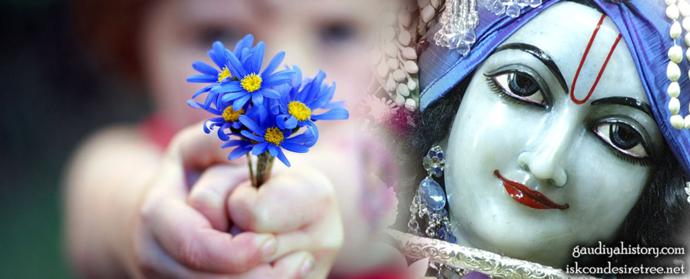
Shridhara Pandit

I accept whatever anyone offers Me with devotion, whether it be a leaf, a flower, a fruit or water, because of his pure consciousness. (Bhagavad-gita 6.29) (In the wallpaper: Shri Gopinath, ISKCON Chowpatty, Mumbai, the girl offering flowers).

Shikhi Mahiti

   Shikhi Mahiti was an Orissan, considered to be one of Mahaprabhu’s most intimate associates and one of His personal branches, who lived in Purushottam Kshetra. He was a servant of the Jagannath Deity with the title of likhanadhikari (Chaitanya Charitamrita 2.10.42). Shrila Bhaktivinoda Thakur explains that this was a Temple secretarial position, mainly responsible for publishing the annual ephemerus known as Matala Panji.
 
ragalekha kalakelyau radha-dasyau pura sthitau
te jneye shikhi-mahati tat-svasa madhavi kramat
 
   Shikhi Mahiti and his sister Madhavi Devi were previously Ragalekha and Kalakeli, two of Shrimati Radharani’s servants. (Gaura-ganoddesha-dipika 189)
 
   Shikhi Mahiti was a great soul, noted for his great compassion and his pure heart. Besides his highly qualified sister Madhavi, he had a brother named Murari Mahanta or Mahanti, who also had strong faith in Mahaprabhu. Their devotion to Him was spontaneous and unwavering. They never forgot Mahaprabhu for even a moment and the Lord also poured down unlimited affection on them.
 
   Lord, this is Murari Mahati, the brother of Shikhi Mahiti’s brother. He knows nothing other than Your lotus feet. (Chaitanya Charitamrita 2.10.44)
 
   Murari and Madhavi became Mahaprabhu’s Devotees before their older brother. However, much as they tried to persuade him, they were not able to convince him that the Moon of Vrindavan had become incarnate in Shri Gaurasundara. In his Anubhashya, Shrila Bhaktisiddhanta Saraswati Goswami Thakur has described how Shikhi Mahiti finally came to receive Chaitanya Mahaprabhu’s mercy. The following is a summary of his account, which is based on Kavi Karnapura’s Chaitanya-charita Mahakavya (13.89-109): One day, after his younger brother and sister had spent some time trying to convince him of Mahaprabhu’s divinity, Shikhi Mahiti dozed off. Towards the end of the night, he had a dream in which he saw his brother and sister looking upon the feet of Lord Gaurasundara and telling him to wake up. Startled, Shikhi Mahiti opened his eyes and saw that his siblings were indeed before him. The wonderful dream had inspired ecstatic symptoms in him and his eyes were filled with tears. He ecstatically embraced his brother and sister who asked him what was the reason for his joy. Shikhi Mahiti saw their wonder and in order to put their minds at ease said to them: 
Sikhi Mahiti

"...In my dream I saw Mahaprabhu taking darshan of Lord Jagannath in the Temple, and as He was doing so, He entered into the body of Jagannath and then came out again. He did this over and over and I can still see the Lord doing it. Am I still dreaming? The Lord of unlimited compassion, Gaurasundara, called me by name and then embraced me with His long arms of unblemished beauty." In the wallpaper: Lord Jagannath, and His Temple, Puri, Lord Shri Krishna Chaitanya in the front center, ISKCON Chennai).

 
   "I have just had the most wonderful dream. Listen to me. Today, I have finally become a believer in the glories of the son of Sachi, Shri Gauranga. In my dream I saw Mahaprabhu taking darshan of Lord Jagannath in the Temple, and as He was doing so, He entered into the body of Jagannath and then came out again. He did this over and over and I can still see the Lord doing it. Am I still dreaming? The Lord of unlimited compassion, Gaurasundara, called me by name and then embraced me with His long arms of unblemished beauty." As he recalled his dream, Shikhi Mahiti became overwhelmed by devotional ecstasy, whereupon Murari and Madhavi asked him to accompany them to the Temple to behold Lord Jagannath. As they entered the Temple, they saw Mahaprabhu standing at the Jagamohana gazing upon the Deity. They started to cry tears of joy and Shikhi Mahiti saw his dream come to life before him. Then Lord Gaurasundara embraced him, saying, "You are Murari’s brother." At the Lord’s touch, Shikhi Mahiti fell into an ocean of ecstasy and from that time on, he forgot everything else but the Lord’s service. 
 
   Krishnadas Kaviraj Goswami’s Chaitanya Charitamrita, Vrindavan Das Thakur’s Chaitanya Bhagavat and Narahari’s Bhakti-ratnakara all describe the extent to which Shikhi Mahiti was dear to Shri Chaitanya Mahaprabhu:
 
   The Lord joyfully met Svarupa Damodar and then Shikhi Mahiti and Bhavananda Raya. Chaitanya Charitamrita 2.1.130)
 
   All the Devotees joyfully came forward to meet the Lord, and He gave them an embrace of love to each one of them. Amongst the Devotees who were there, were Kashi Mishra, Ramananda Raya, Pradyumna Mishra, Sarvabhauma Bhattacharya, Vaninatha, Shikhi Mahiti and others. (Chaitanya Charitamrita 2.16.253-4)
 
   Shikhi Mahiti is mentioned as being present at the meeting of the Bengali Devotees with those of Puri in Chaitanya Bhagavat, 3.8.60.
 
   Shikhi Mahiti and others said that it was time to go and take darshan of Jagannath Deva. (Bhakti-ratnakara 8.237)
 
   Shikhi Mahiti was one of Mahaprabhu’s three and a half most intimate Devotees.
 
   The Lord accepted Shikhi Mahiti’s sister as one of Radha’s friends. In the entire world, there were only three and a half Devotees who were so worthy. They were Svarupa Damodar Goswami, Ramananda Raya and Shikhi Mahiti. His sister was the half person. (Chaitanya Charitamrita 3.2.105-6)
 
   [Excerpted from “Shri Chaitanya: His Life & Associates” by Shrila Bhakti Ballabh Tirtha Maharaj]
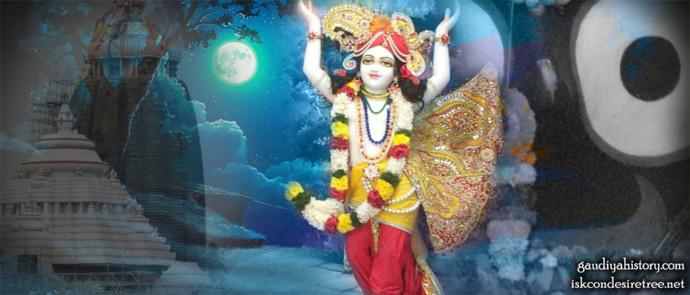
Shuklambara Brahmachari

Shuklambara Brahmachari

Shuklambar Brahmachari was previously one of the wives of the sacrificing Brahmins in Vraja. Mahaprabhu begged food from him and ate it. Some people say that he was one of the sacrificing Brahmins. (Gaura-ganoddesha-dipika 191) (In the wallpaper: Wives of brahmins and Krishna along with His friends, kheer).

   Shuklambar Brahmachari is counted among the branches of Chaitanya Mahaprabhu. He was a resident of Navadwip town, manifesting the pastimes of a poor Brahmin who begged for a living. Nevertheless, he had an abiding affection for the Lord. Though to an ordinary conditioned soul he appeared to be a poverty-stricken mendicant, to transcendental eyes he was rich because of his love for Mahaprabhu.
 
shuklambaro brahmacari purasid yajnapatnika
prarthayitva yad-annam shri-gaurango bhuktavan prabhuh
kecid ahur brahmacari yajïika-brahmanah pura
 
   Shuklambar Brahmachari was previously one of the wives of the sacrificing Brahmins in Vraja. Mahaprabhu begged food from him and ate it. Some people say that he was one of the sacrificing Brahmins. (Gaura-ganoddesha-dipika 191)
 
   Shuklambar Brahmachari, a poor mendicant
 
prema-dhana vina vyartha daridra jivana
dasa kari betana more deha prema-dhana
 
   Without the wealth of love of God, my life is poverty-stricken and worthless. Make me your servant and pay me with the wealth of love. (Chaitanya Charitamrita 3.20.37)
 
   Shrila Bhaktisiddhanta Saraswati Goswami Thakur paraphrases Mahaprabhu’s speech to Shuklambar Brahmachari in his Gaudiya-bhashya to the Chaitanya Bhagavat: “You are My poor servant lifetime after lifetime. You have no desire to enter into this world to become the head of a household. Rather, you remain a bachelor and beg from house to house, making an offering to Me of whatever you amass in this way. Your vow of celibacy is unbreakable. You are free of the mundane egoism that is prominent in householders and retired householders. You are thus factually fixed in the highest state of spiritual life, the highest stage of the renounced order. You are a de facto sannyasi, a completely surrendered carrier of the triple staff because you have successfully engaged every action of your body, mind and speech in My service. I pray constantly for your offerings for you have no interest in enjoying anything which has not been offered to Me. It is for this reason that I have made a show of My power and taken everything away from you, making you poor.” (2. 16.123)
 
   Shuklambar Brahmachari was very fortunate, for the Lord snatched his food from him and ate it Himself. (Chaitanya Charitamrita 1.10.38)
 
Mahaprabhu in Shuklambar’s House
 
   When Mahaprabhu returned from Gaya, He first met with the Devotees in Shuklambar Brahmachari’s house. Shriman Pandit then left along the banks of the Ganges, going to Shuklambar Brahmachari’s house [where the Lord had announced He would meet with the Devotees that night. Having heard Shriman make this announcement] Gadadhara Pandit quickly followed Him there. He hid in Shuklambar’s house thinking that he would eavesdrop, as Mahaprabhu would surely discuss some Krishna-related topics. All the loving Devotees of the Lord, such as Sadashiva, Murari, Shriman and Shuklambar, gathered there when suddenly Vishvambhara appeared on the scene. (Chaitanya Bhagavat 2.1.78-82)
 
   Shrila Gadadhara Pandit Goswami, Sadashiva, Murari, Shrivasa Pandit, Shriman Pandit and others all witnessed the Lord’s ecstatic transformations in Shuklambar’s house.
 
The Lord Snatches Rice from Shuklambar’s Begging Bag
 
   Shuklambar Brahmachari kept body and soul together by offering and eating the foodstuffs which he daily accumulated by begging. Since he was constantly absorbed in the joys of chanting the names of the Lord and remembering His qualities and pastimes, he never suffered from his poverty. Ignorant people thought he was just an ordinary beggar. No one can recognize Mahaprabhu’s servants unless he gets the Lord’s mercy. 
 
   One day, Mahaprabhu was sitting alone in a devotional trance when Shuklambar Brahmachari happened by, his begging bag flung over his shoulder. When he saw the Lord, he started to dance ecstatically. The Lord was pleased to see the depth of Shuklambar’s feeling and He began to glorify him. He then plucked a handful of the dry rice from his bag and began to chew it. Shuklambar Brahmachari was troubled to see the Lord eating the uncleaned and broken fragments of low-quality rice and felt that he was committing an offense. The Lord calmed him and said that He always ate His Devotee’s food with great enthusiasm, but that He had no interest whatsoever in the finest foods of the non-devotee. The Devotees were delighted to see the Lord’s mercy on Shuklambar Brahmachari, who was then given a blessing by the Lord. 
Shuklambara Brahmachari

The Lord calmed him and said that He always ate His Devotee’s food with great enthusiasm, but that He had no interest whatsoever in the finest foods of the non-devotee. (In the wallpaper: Shri Vijaya Gauranga, ISKCON Hungary, Budapesht, rice).

 
   The Lord said, “Listen, Shuklambar Brahmachari. I reside permanently in your heart. Whenever you eat, I eat. When you go on your begging rounds, I accompany you. I have descended to distribute love of Godhead and you are My servant, lifetime after lifetime. I hereby bestow upon you prema bhakti, which is My very soul.” When the Devotees heard the Lord’s blessing, the Devotees made a joyful noise, shouting “Jaya, jaya!” (Chaitanya Bhagavat 2.16.133-8)
 
   The Lord was sitting here on this altar of Vishnu, absorbed in the sound of the Holy Name, when Shuklambar Brahmachari passed by on his begging rounds. Mahaprabhu lovingly put His hand on Shuklambar’s begging bag and took a handful of unwashed rice, calling him Sudama. Shuklambar Brahmachari made repeated humble comments and danced in the kirtan with the bag still on his shoulder. The Lord and His Devotees felt the intensity of their emotions increase as they watched Shuklambar’s ecstatic transformations. This is one of the pastimes of the Lord in the house of Shrivasa Pandit, after which he went through the town back to his own house. (Bhakti-ratnakara 12.2754-8)
 
The Lord Eats at Shuklambar’s House
 
   In the Chaitanya Bhagavat, it is also said that Mahaprabhu ate cooked food in the house of Shuklambar Brahmachari, being attracted by his love. When the Lord announced to Shuklambar that He wished to eat at his house, the brahmachari felt nervous because he was afraid that he was unable to provide suitable fare for the Lord with his begged rice. However, the Lord repeatedly told him that this was indeed His desire, and so Shuklambar went to the other Devotees to ask their advice. The Devotees suggested that he cook without touching the food and that this would be satisfactory.
 
   On the day of the invitation, Shuklambar bathed and dressed. He then lit the stove and put water to boil. Then, without touching the rice, he poured it into the water along with the spathe of the plantain tree (thori), all the while emotionally chanting the names, “Jaya Krishna Gopal, Govinda, Vanamali!”. At that moment, Lakshmi Devi blessed the food cooked by the Devotee by glancing at it. When Mahaprabhu came to Shuklambar’s house with His associates, He offered the rice and vegetables to Vishnu by His own hand. When it came time to eat it, He praised its flavor, saying “In my entire life, I have never eaten anything so delicious.” Once again the Devotees cried at the sight of the Lord’s merciful attitude to Shuklambar.
 
   When the Devotees saw the majestic blessings of the Lord to Shuklambar Brahmachari, they all began to cry. The Lord continued to eat joyfully, greatly relishing its taste. May all the rich millionaire non-devotees observe the mercy received by the beggar Shuklambar. No one can attain the Lord’s mercy through wealth, high birth or scholarship. The scriptures repeatedly tell us that the Lord is only attracted by the taste of devotion. (Chaitanya Bhagavat 2.26.28-31)
 
   Shrila Bhaktisiddhanta Saraswati Goswami Thakur comments on this in his Gaudiya-bhashya: “Vishnu is the Lord of the Sacrifice who only eats that which is offered by Brahma in sacrifice. Shuklambar Brahmachari gathered rice by begging from a variety of households. This rice is often parboiled rather than sun-dried rice. Householder Brahmins thus normally consider it contaminated and refuse to accept it. However, Vaishnavas hold that rice received from begging is superior to any other rice because it has been obtained by the mercy of the Lord. Though superficially this rice appears to be contaminated by the touch of non-devotees and offering it is thus a deviation from the usual rules and regulations, in Mahaprabhu’s path, the purity of a Devotee’s heart is the most important ingredient in Maha Prasad. One should not think that a millionaire is the only person who can offer foods which are suitable for the Lord. Shuklambar was poverty-stricken, but the Lord was satisfied with the food that he had gathered through begging. The sinful and devotionally-challenged cannot understand this at all.”
 
   Shuklambar Brahmachari, whose rice had been eaten by Lord Gaurasundara, joyfully returned to his home. (Chaitanya Bhagavat 3.8.23)
 
   One day, the Lord asked Shuklambar to cook lunch for Him. This is the street that the Devotees took to go to his house. What can I say? The Lord ate Shuklambar’s cooking and a wonderful pastime took place there. (Bhakti-ratnakara 12.3467-8)
 
   [Excerpted from “Shri Chaitanya: His Life & Associates” by Shrila Bhakti Ballabh Tirtha Maharaj] 
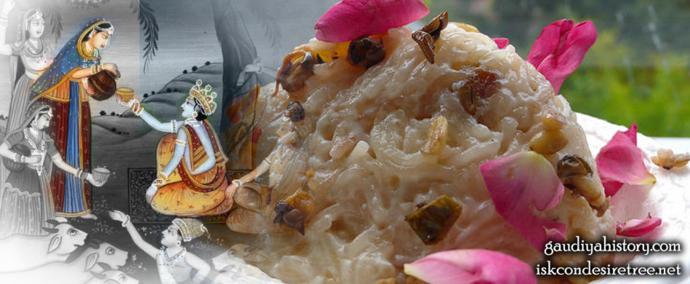
Shuklambara Brahmachari

"...This rice is often parboiled rather than sun-dried rice. Householder Brahmins thus normally consider it contaminated and refuse to accept it. However, Vaishnavas hold that rice received from begging is superior to any other rice because it has been obtained by the mercy of the Lord. Though superficially this rice appears to be contaminated by the touch of non-devotees and offering it is thus a deviation from the usual rules and regulations, in Mahaprabhu’s path, the purity of a Devotee’s heart is the most important ingredient in Maha Prasad. One should not think that a millionaire is the only person who can offer foods which are suitable for the Lord. Shuklambar was poverty-stricken, but the Lord was satisfied with the food that he had gathered through begging. The sinful and devotionally-challenged cannot understand this at all.” (In the wallpaper: rice on banana leaf, the lotus feet of Vijaya Gauranga, ISKCON Hungary, Budapesht).

Shivananda Sena – Biography 2

pura vrindavane vira duti sarvash ca gopikah
ninaya krishna-nikatam sedanim janako mama
   (Gaura-ganoddesha-dipika 176)
 
   The go-between Vira, who previously brought all the gopis to Krishna, is my father.
 
Shivananda’s Home and Family
 
   Shivananda Sena’s son, Paramananda Sena, also known as Kavi Karnapura, wrote this verse in his Gaura-ganoddesha-dipika. Just as Vira Duti acted to enrich the pastimes of Krishna and the gopis, Shivananda Sena appeared to enrich Gaura Hari’s lila. Shivananda Sena’s home was in the present day city of Halisahar, in Kumarahatta near Kanchariaparia. This is the same town in which Ishvara Puri, Mahaprabhu’s guru, was born. Mahaprabhu took the earth from Ishvara Puri’s birthplace. Ever since, Devotees have been taking earth from that spot, leaving a hole in the ground big enough to form a pool that has taken the name of Shri Chaitanya Toba.
 
   After Mahaprabhu took sannyas, Shrivasa Pandit and his family found it impossible painful to remain in Navadwip and so moved to Kumarahatta. Other notable residents of the town were Vasudeva Datta Thakur, Khanja Bhagavan Das and others. The Gaura Gopal Deity installed by Shivananda Sena is still being worshiped in the Krishnaraya Temple in Kanchra Para.
 
   Shivananda Sena was present when Mahaprabhu came to visit Shrivasa Pandit’s house in Kumaahatta:
 
   Vasudeva Datta came immediately, as did Shivananda Sena and his family members. (Chaitanya Bhagavat 3.5.18)
 
   A Vaishnava may take birth in any family. Shivananda Sena manifested his lila of being born in the Vaidya or physician caste for its glory.
 
   Shri Shivananda Sena had three sons: Shri Chaitanya Das, Shri Rama Das and Shri Paramananda Kavi Karnapur. 
Shivananda Sena

All the Devotees went to Puri at the time of the Rathayatra in order to see Mahaprabhu. Shivananda Sena managed these trip, taking responsibility for the route the Devotees took, the costs of both coming and going, their lodgings, etc. (In the wallpaper: Lord Jagannath, Jagannath Temple in Puri).

 
   All the Devotees went to Puri at the time of the Rathayatra in order to see Mahaprabhu. Shivananda Sena managed these trip, taking responsibility for the route the Devotees took, the costs of both coming and going, their lodgings, etc. 
 
   On the Lord’s orders, every single year all the Devotees came to see the Rathayatra…. Amongst them were Krishna’s own singer, Mukunda Datta and Shivananda Sena and others who were accompanied by their family members. (Chaitanya Bhagavat 3.8.5, 15)
 
Shivananda’s Service
 
   Shivananda Sena took care of the paying the customs duties and ferry fees for the group. He took personal care of everyone in the pilgrimage. He care of all the Devotees’ necessities, especially making lodging arrangements. He knew the roads through Orissa and would show the way. (Chaitanya Charitamrita 2.16.19-20)
 
   In the third year, when Mahaprabhu’s associates took their wives with them, Shivananda Sena also took his wife and son, Shri Chaitanya Das. The Chaitanya Charitamrita’s description of that trip is as follows:
 
   Malini accompanied Shrivasa Pandit, Shivananda Sena’s wife travelled with him. Shivananda’s little boy named Chaitanya Das also jubilantly came along with them to see the Lord… Shivananda Sena dealt with customs officials and made eating and lodging arrangements, ecstatically going on the road to see Mahaprabhu. (Chaitanya Charitamrita 2.16.22-3, 26-7)
 
   One of Mahaprabhu’s dear Devotees was Vasudeva Datta from Chittagong. He was very generous and somewhat prodigal in his spending. Mahaprabhu told Shivananda Sena to take charge of his affairs to help him cut back on his expenses, giving practical instructions on the necessity of earning money to run a household.
 
   He respectfully said to Shivananda Sena, “Please take Vasudeva Datta to hand. He is too generous. He spends whatever he earns on the very same day. He is a householder, he has to save some money; if he doesn’t do so, he will not be able to maintain his wife and family. I want you to supervise his income and expenditures; be his manager and resolve his difficulties." (Chaitanya Charitamrita 2.15.93-96)
 
Shivananda Sena and the Dog
 
   In the Chaitanya Charitamrita, Krishnadas Kaviraj Goswami has told an anecdote about the amazing relationship between Shivananda Sena and a dog.
 
   One year, as the pilgrimage party was on its way to Puri, a dog began to tag along with it. When they had to cross a certain river, the ferryman refused to allow the dog to get on board the ferry. Shivananda Sena finally paid him 10 panas of cowry shells to get it across. One day, Shivananda’s servant forgot to feed the dog and it disappeared. He sent ten men to find the animal, but they had no success. Shivananda was so upset that he did not eat his meal that evening. In great anxiety, the Devotees reached Puri and met Mahaprabhu and then went to the Temple to see Jagannath. Mahaprabhu ate with the Devotees and at the end of the meal sent them all to their lodgings. The next day, the Devotees came to see Mahaprabhu and were amazed to see the dog there. Mahaprabhu was laughing and giving coconut Prasad to the animal and was saying, “Chant Hare Krishna, Hare Rama!” The dog was clearly barking out the names and eating the Prasad given him by the Lord. Everyone was completely astonished to see this extraordinary happening. Shivananda Sena prostrated himself on the ground in obeisances to the dog and begged him for forgiveness with all humility. After this, the dog disappeared and was never seen again. By Mahaprabhu’s mercy, the dog had received a spiritual body and gone to Vaikuntha. 
Shivananda Sena

Shivananda Sena prostrated himself on the ground in obeisances to the dog and begged him for forgiveness with all humility. After this, the dog disappeared and was never seen again. By Mahaprabhu’s mercy, the dog had received a spiritual body and gone to Vaikuntha. (In the wallpaper: Shri Vijaya Gauranga in the right, ISKCON Hungary, Budapesht, spiritual body in the left, a dog).

 
The next day, no one saw the dog anywhere for it had obtained a spiritual body and gone to Vaikuntha. These are the transcendental pastimes of Lord Sachinandana: he made a dog say the names of Krishna and then he sent him to the spiritual world.
(Chaitanya Charitamrita 3.1.32-3)
 
Shivananda Sena and Nakula Brahmachari
 
   During the period of Muslim rule, the county courthouse in the town of Kalna in the district of Burdwan was in the neighborhood named Ambika. This neighborhood was known then as Ambua Muluk, today as Pyari Ganj. A great Vaishnava named Nakula Brahmachari lived there. Mahaprabhu entered into Nakula’s heart out of his desire to deliver the people of Bengal, The brahmachari began to behave just like someone who was possessed by the planets and would dance, sing and shout in a deep mood of divine love. Both his inner attitude and his physical appearance took on Mahaprabhu’s nature.
 
   When people heard about the miraculous occurrences surrounding Nakula Brahmachari, they flocked to see him. In his presence everyone would be influenced by his absorption in Mahaprabhu’s mood; they would sing Krishna’s names and begin to experience the taste of Krishna-prema.
 
   When he heard about all this, Shivananda Sena could not at first believe that it was true and he decided to test Nakula Brahmachari to eradicate his doubts. He came to Ambika, but kept himself at some distance from the brahmachari. His idea was that if Nakula were truly possessed by Mahaprabhu, he would call out to him and tell him what his own secret mantra was. In spite of the fact that Shivananda was invisible in the great crowd of countless Devotees, Nakula called out his name and sent people to look for him. When he heard his name being called, Shivananda came forth and paid his obeisances to Nakula. The brahmachari said, “You doubted me, so listen carefully and I will put an end to your doubts. Your worshipable mantra is the four-syllable Gaura-Gopal mantra. Give up the uncertainty which you kept in your heart.” (Chaitanya Charitamrita 3.2.30-31)
 
   When he heard this, Shivananda became convinced that Nakula Brahmachari was indeed filled with the presence of Mahaprabhu. He paid his prostrated obeisances to him and acknowledged his faith and devotion to him. This is just one example of Mahaprabhu’s inconceivable potencies.
 
Shivananda Sena and Nrisimhananda Brahmachari
 
   Shivananda Sena had a nephew, Shrikanta Sena, who was so eager to see the Lord that one year he went to Puri alone. Mahaprabhu treated him warmly and kept him for two months before instructing him to return to Bengal. He told him to convey the message to the Bengali Devotees that there was no need for them to come to Puri that year, for He Himself would be visiting Bengal in the month of Paush. He would then meet with them all and eat at Jagadananda’s house. When Shrikanta returned with the news, everyone was jubilant in expectation of the Lord’s visit. But when the time of Mahaprabhu’s expected arrival approached, Shivananda, Jagadananda and the others who had been waiting anxiously were distressed to see that He did not come.
 
   At that time, Pradyumna Brahmachari (who had been given the name Nrisinghananda by Mahaprabhu) happened by and asked them why everyone was so unhappy. When he heard about their disappointment over Mahaprabhu’s non-arrival, he assured them that he would bring Mahaprabhu there within three days. Everyone knew of Pradyumna’s spiritual powers and so they believed him.
 
   Pradyumna sat down in meditation. After two days, he said, “Mahaprabhu has arrived in Panihati. By midday tomorrow He will be at Shivananda’s house.” Without showing the slightest doubt, he ordered Shivananda Sena to start making preparations for a feast in honor of Mahaprabhu’s arrival. Nrisinghananda personally started cooking early in the morning, and made a large variety of preparations, which he distributed onto three plates to make offerings to Jagannath, Nrisinghadeva and to Mahaprabhu. As soon as he sat down in meditation for the offerings, Mahaprabhu personally appeared and ate all three offerings, without leaving any remnants. 
Shivananda-Sena

...though he well knew that on a higher level there is no distinction between Mahaprabhu, Nrisingha and Jagannath, in order to demonstrate the principle of devotion to one’s own personal worshipable Deity, he said, “Nrisinghadeva has not eaten anything today.” Shivananda asked why this was so and Pradyumna Brahmachari answered, “Mahaprabhu ate the offerings intended for all three Deities. Therefore Nrisingha and Jagannath have gone hungry.” (Chaitanya Charitamrita 3.2.71) (In the image: Lord Chaitanya eating the food offered to the Deity of Lord Narasimhadeva, Nrisimhananda Brahmachari).

 
   Pradyumna was overjoyed to see the Lord accept his offerings. Nevertheless, though he well knew that on a higher level there is no distinction between Mahaprabhu, Nrisingha and Jagannath, in order to demonstrate the principle of devotion to one’s own personal worshipable Deity, he said, “Nrisinghadeva has not eaten anything today.” Shivananda asked why this was so and Pradyumna Brahmachari answered, “Mahaprabhu ate the offerings intended for all three Deities. Therefore Nrisingha and Jagannath have gone hungry.” (Chaitanya Charitamrita 3.2.71)
 
   When he heard this, Shivananda felt a twinge of doubt. Nevertheless, he furnished Pradyumna with more raw foodstuffs so that he could prepare another offering for Nrisinghadeva. The next year, when Shivananda came to Nilachala, Mahaprabhu one day started to glorify Nrisinghananda’s virtues to all the Devotees.
 
   “Last year in the month of Paush, he gave Me such a nice meal. I have never tasted such delicious rice and vegetables!” (Chaitanya Charitamrita 3.2.77)
 
   All the Devotees were struck with wonder at hearing this, and Shivananda himself became confident that the incident was true. This is another example of Mahaprabhu’s mercy to Shivananda.
 
Nityananda Prabhu’s Punishment of Shivananda
 
   Shivananda Sena also received much mercy from Nityananda Prabhu. One day Nityananda kicked Shivananda who thus received the touch of his lotus feet, a rare attainment for even Brahma and the demigods. Krishnadas Kaviraj Goswami has described this incident in the 12th chapter of the Chaitanya Charitamrita’s Antya-lila. After the disappearance of Hari Das Thakur, Mahaprabhu’s ecstatic transformations increased day by day. That year, the Devotees gathered in Navadwip as usual in preparation for the journey to Puri. Nityananda also joined the party, even though Mahaprabhu had expressly forbidden him to come. Shivananda was accompanied by his wife and three sons. Since he knew the roads of Orissa, he was in charge of the party and would take care of the customs agents, toll collectors, etc., along the way.
 
   Normally, Shivananda would cross the tollgate last, after first insuring that all members of the party had gone through. On one occasion, the procedure took longer than usual and since Shivananda had not arranged for lodgings for the company in the nearby village, the Devotees were obliged to stand and sit about under a tree until quite late at night. While waiting for Shivananda to come through the tollgate, Nityananda Prabhu appeared to take on the mood of a cowherd boy from Vraja overcome by hunger. He made a pretense of being angry at Shivananda, complaining, “Shiva has still not come and arranged for a place for us to stay and I am dying of hunger. I curse his three sons to die.”
 
   On hearing Nityananda make such a curse, Shivananda’s wife started to cry. When Shivananda finally returned from paying the toll collector, he had to calm his wife. He said, “Foolish woman! Why are you needlessly crying? Let our sons die for the inconvenience we have caused Nityananda Prabhu.”
 
   He then went to speak to Nityananda, who kicked him in the head as he paid his obeisances. Shivananda was overjoyed to receive the merciful touch of the Lord’s foot and immediately went to arrange quarters for the night in the house of a milkman. When Shivananda had brought Nityananda Prabhu to his lodgings, he glorified him and prayed to receive the touch of his feet again and again. He said, “Today you have accepted me as your servant, for you have punished me appropriately as you would your own servant. You are so compassionate that even your punishments are a sign of your causeless mercy. Who in the three worlds can understand your personality? The dust of your feet is unattainable by even Brahma, yet it has fallen on my wretched body. My life, my family and my service have all become perfected today. Today I have attained devotion to Krishna, as well as all the other goals of human life.” (Chaitanya Charitamrita 3.12.27-30) 
Shivananda Sena

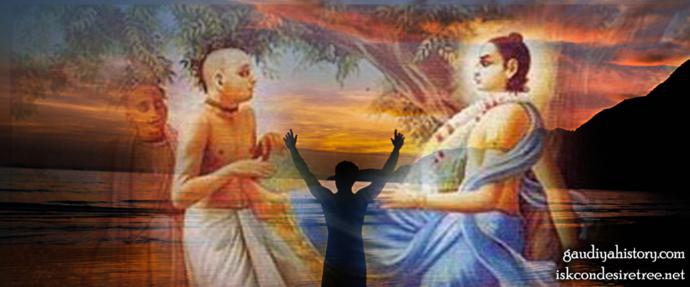
...“Foolish woman! Why are you needlessly crying? Let our sons die for the inconvenience we have caused Nityananda Prabhu.”...“Today you have accepted me as your servant, for you have punished me appropriately as you would your own servant. You are so compassionate that even your punishments are a sign of your causeless mercy. Who in the three worlds can understand your personality? The dust of your feet is unattainable by even Brahma, yet it has fallen on my wretched body. My life, my family and my service have all become perfected today. Today I have attained devotion to Krishna, as well as all the other goals of human life.” (Chaitanya Charitamrita 3.12.27-30) (In the wallpaper: Lord Nityananda kicking Shivananda Sena, a man).

 
   Nityananda was so pleased by Shivananda’s prayers that he embraced him. However, Shrikanta, Shivananda’s nephew, had been upset by Nityananda’s behavior. He thought, “Shivananda is Mahaprabhu’s dear associate and respected by all the Devotees, and yet Nityananda has kicked him in the head.” He left the party and went ahead to Puri on his own. Upon his arrival, he went to Mahaprabhu and paid his prostrated obeisances. Mahaprabhu first told His servant Govinda to instruct Shrikanta to take off his upper garments when paying obeisances. Then, knowing his thoughts, he said to His associates, “Shrikanta has come on his own because of some great mental distress. Don’t say anything to him; let him do as he wishes.” (Chaitanya Charitamrita 3.12.38)
 
   From these words, Shrikanta could understand that Mahaprabhu is all-knowing and so said nothing about the incident to anyone. The Lord is so affectionate to His Devotees that even their friends and relations are also dear to Him.
 
aham bhaktaparadhino hy asvatantra iva dvija
sadhubhir grasta-hridayo bhaktair bhakta-janapriyah
 
   I am under the control of My Devotees, O Brahmin, as though I were completely lacking any independence. The saintly Devotees have taken possession of My heart, for I am dear to them and they to Me. (Shrimad Bhagavatam 9.4.63)
 
Mahaprabhu’s Mercy on Shivananda’s Family
 
   Due to their relation to Shivananda, his wife and three sons also received the Lord’s unlimited mercy. He named his youngest son Paramananda Das in accordance with Mahaprabhu’s instruction. Mahaprabhu would jokingly call him Puri Das. When Shivananda presented the little child to Him, the Lord affectionately allowed him to suck on His toe.
 
   Who can find the limits of the ocean of Shivananda’s good fortune? The Lord accepted his entire family as His own. Then He sat down and ate with all the Devotees. As He washed His mouth and hands after the meal, He said to Govinda: “As long as Shivananda Sena, his wife and child remain in Puri, you should give them My remnants.” (Chaitanya Charitamrita 3.12.51-3)
 
   Mahaprabhu’s unlimited mercy on Shivananda’s youngest son, Puri Das, is described in the sixteenth chapter of the Antya-lila. One year, when Shivananda and his wife were in Puri for the Rathayatra, Mahaprabhu said to the little boy, “Say Krishna, say Krishna!” Though the Lord asked him to chant repeatedly, the boy refused to utter the Holy Name. His embarrassed father also tried to get him to chant, but the child was steadfast in his refusal. Mahaprabhu said that He had induced everyone in the universe, even including the lower forms of life, to chant the names of Krishna, but was unable to make this little child do so. What could be the reason? Svarupa Damodar realized what it was: “You have instructed him in the mantra consisting of Krishna’s name. Now that he has received the mantra, he will not reveal it publicly but only chants it mentally. That is my guess.”
 
   In his Anubhashya, Shrila Bhaktisiddhanta Saraswati Goswami Thakur has written: “The mantra which one has received from the guru is not to be revealed to anyone else, otherwise it will lose its potency. We have seen this previously from the story about Gadadhara Pandit.”
 
   Another day, Mahaprabhu asked Puri Das to recite a verse. Puri Das broke his silence and recited a verse of his own composition that astonished all those who heard it. Even Brahma and the gods cannot understand the glories of Mahaprabhu’s mercy. Puri Das, or Kavi Karnapura’s verse:
 
shravasoh kuvalayam akshnor
aïjanam uraso mahendramanidama
vrindavana-ramaninam
mandanam akhilam harir jayati
 
All glories to Hari,
the ornament for all the beauties of Vrindavan,
who is a blue lotus for their ears,
black collyrium for their eyes,
and a necklace of blue sapphires
to decorate their breast.
   (Chaitanya Charitamrita 3.16.74)
 
Shivananda and Raghunatha Das Goswami
 
   When Raghunatha Das Goswami left home, using a service to his guru Yadunandana Acharya as a pretext, his father Govardhana Majumdar, sent ten men to Shivananda, who was already on his way to Puri, asking him to send Raghunatha Das back. They did not find Raghunatha Das, however, and so returned empty-handed. At the end of the rainy season, when Shivananda and the other Devotees returned from Puri, Govardhana Majumdar heard from some of them that Raghunatha Das was engaged in strict austere practices and begging near the Singha Dvara of the Jagannath Temple. His father and mother were greatly distressed by his departure and the next time that the Devotees went to Puri, Govardhana gave 400 rupees to Shivananda for his son. Raghunatha refused to accept this money for himself. Shivananda Sena’s son Kavi Karnapura glorified Raghunatha Das extensively in his play, Chaitanya Chandrodaya.
 
   The dates of Shivananda Sena’s appearance and disappearance are not known, nor the names of his parents or wife.
 
   [Excerpted from “Shri Chaitanya: His Life & Associates” by Shrila Bhakti Ballabh Tirtha Maharaj] 
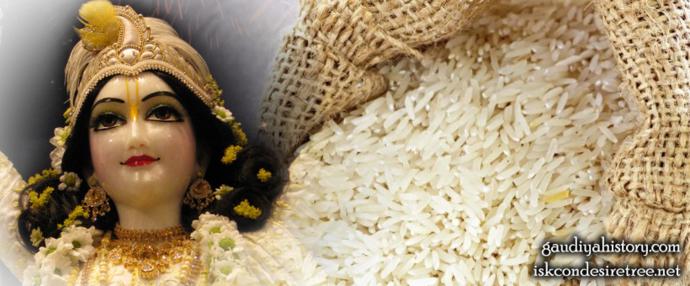
Shivananda Sena

All glories to Hari, the ornament for all the beauties of Vrindavan, who is a blue lotus for their ears, black collyrium for their eyes, and a necklace of blue sapphires to decorate their breast. (In the wallpaper: Shri Gopinath, ISKCON Chowpatty, Mumbai).

Sanoriya Vipra

   Krishnadas Kaviraj Goswami tells about Mahaprabhu’s meetings with the Sanoriya Brahmin in the seventeenth and eighteenth chapters of the Madhya-lila. Nothing is known about this Brahmin’s family background — even his name is unknown. What we are concerned with here is the teachings which are to be found through his example.
 
Mahaprabhu Meets the Sanoriya Brahmin 
 
Sanoriya Vipra

When Mahaprabhu arrived in Mathura after passing through Kashi and Prayag, He first came to the Vishrama Ghat in Mathura where He bathed. Then He visited Krishna’s birthplace and the Deity of Adi Keshava, dancing before Him in ecstatic love. Other visitors to the Temple were amazed and charmed by the Lord’s ecstatic dancing. (In the wallpaper: Lord Chaitanya at Vishram Ghat, Mathura, Uttar Pradesh).

   When Mahaprabhu arrived in Mathura after passing through Kashi and Prayag, He first came to the Vishrama Ghat in Mathura where He bathed. Then He visited Krishna’s birthplace and the Deity of Adi Keshava, dancing before Him in ecstatic love. Other visitors to the Temple were amazed and charmed by the Lord’s ecstatic dancing. At the same time, a certain Brahmin fell at the Lord’s feet and then started to dance with Him, joining the Lord in His trance of divine love. They embraced each other and then raised their arms and told everyone to sing the Holy Names of Hari and Krishna and a great tumult arose within the Adi Keshava Temple. When the kirtan finished, Mahaprabhu took the Brahmin aside and asked him,
 
   "You are a sincere and respectable elderly Brahmin. Tell me where you got this wealth of love for Krishna." (Chaitanya Charitamrita 2.17.155)
 
   In reply, the Brahmin said, "While travelling throughout India, Madhavendra Puripada came to Mathura. He blessed me by setting foot in my humble abode. He initiated me by giving me the mantra and further blessed me by accepting food which I had cooked. He discovered the Gopal Deity which is still being worshiped to this day by Govardhana."
 
   As soon as He learned of the elderly Brahmin’s relationship to Madhavendra Puri, the Lord fell at his feet. The Brahmin became afraid at this action of the Lord and himself touched the Lord’s feet. To teach that the spiritual master’s godbrothers are worshipable by the disciple, the Lord said, "You are My guru, and I am practically your disciple. It is not fitting for a guru to pay obeisances to a disciple." (Chaitanya Charitamrita 2.17.170)
 
   The Brahmin was astonished by the Lord’s humility and said, "You are a sannyasi; it is not proper for a sannyasi to pay obeisances to a fallen person like myself." But the Brahmin had also determined from the Lord’s ecstatic symptoms that He too had some relationship to Madhavendra Puri. He asked the Lord’s travelling companion, Balabhadra Bhattacharya the name of the Lord’s guru. Upon learning that his guess had been correct, he was overjoyed. The Brahmin then invited the Lord to his house and the Lord accepted, giving him the opportunity to personally render Him various kinds of service. 
 
The Lord Accepts the Brahmin’s Invitation
 
   When it was time, the Brahmin asked Balabhadra Bhattacharya to cook the Lord’s lunch, but Mahaprabhu Himself intervened. He said, "Puri Gosai ate your cooking, so you should cook for Me, too. This is what I have learned from his example."
 
   The Lord’s host belonged to the Sanoriya community of Brahmins. According to Shrila Bhaktivinoda Thakur, members of the business community (vaishyas) in the west of India are divided into several castes: Agrawalas, Kanwars, Sanwars, etc. Of these, the Agrawalas are considered to be very pure, while the two other groups are considered fallen as a result of their own karma. Those Brahmins who perform the ritual activities for the gold and jewellery merchants (Kanwars and Sanwars) are known as Sanoriya Brahmins. Normally, because of these low caste associations, they are considered to be fallen as a caste. Sannyasis thus refuse to accept food in their homes.
 
   Shrila Bhaktisiddhanta Saraswati Goswami Thakur adds to this the following analysis based on pure devotion. "The Sanoriya Brahmin was a pure Devotee, and although even drinking water from his hand was prohibited due to his caste status, he nevertheless was fixed in the daiva-varnashrama system and the Absolute Truth, both of which favor pure devotion. Those who judged Devotees in terms of their mundane caste status (the adaiva-varnashrama) or who cast aspersions on Maha Prasad were unhesitatingly identified as wicked fools by the Lord."
 
   Though sannyasis generally do not accept food from members of the Sanoriya caste, Madhavendra Puri did not hesitate to do so. Judging this Brahmin to have the qualities of a Vaishnava, Puripada gave him initiation and then ate in his house. The Sanoriya Brahmin himself was simply taking consideration of the Lord’s reputation, which would be subject to criticism if he ignored caste rules. The Lord explained that since there may be some difference opinion between the various scriptures and the seers, the best course of action was to follow the example set by those saintly persons who establish the principles of religion. Finally, the Brahmin could understand the desire of the Lord and he cooked for Him himself.
 
Saving the Lord’s Companions from Danger
 
   As the Lord traveled from Puri to Mathura, His absorption in ecstatic love increased a hundredfold over that which He experienced in Puri. Upon arriving in Mathura, it increased a thousandfold, and when He went through the twelve forests of Vraja, it increased a hundred-thousandfold. Before leaving Nilachala, Ramananda Raya and Svarupa Damodar Goswami had arranged for two people to accompany Him, Balabhadra Bhattacharya and another Brahmin servant.
 
   While He was wandering through the twelve forests, a Rajaputa Krishna Das, was attracted by the Lord and joined Him and His companions. When the Lord came to Akrura Ghat He jumped into the Yamuna in a transport of ecstasy and remained submerged for a long period of time. Krishna Das became afraid that the Lord had drowned and started to cry out for help. Balabhadra Bhattacharya heard his shouts and immediately went into the water to pull the Lord out. 
Sanoriya Vipra

When the Lord came to Akrura Ghat He jumped into the Yamuna in a transport of ecstasy and remained submerged for a long period of time. Krishna Das became afraid that the Lord had drowned and started to cry out for help. Balabhadra Bhattacharya heard his shouts and immediately went into the water to pull the Lord out. (In the wallpaper: Shri Chaitanya Mahaprabhu, Akrur ghat, Yamuna, Shri Vrindavan dham).

 
   Balabhadra was anxious about the Lord’s great distraction in divine ecstasy and so he discussed with Madhavendra Puri’s disciple, the Sanoriya Brahmin, about what could be done to protect Him. After some discussion, they decided that it was not wise to allow the Lord to stay any longer in Vrindavan. Rather, by telling Him of the full-moon bath at the end of the month of Magh, known also as Makara-sankranti, they should incite Him to go to Soro-kshetra on the banks of the Ganges, whence they could go on to Prayag. Since the Sanoriya Brahmin was the godbrother of the Lord’s guru, He was not able to refuse him when he made the suggestion to leave Vraja.
 
   Though the Lord’s body left the boundaries of Vrindavan, His consciousness remained fixed in love for Krishna, and His ecstatic trance remained unbroken. As He tired from walking, the Lord sat down underneath a tree. Nearby, a herd of cows was grazing which reminded Him of Krishna’s Vrindavan lila. All of a sudden, a cowherd began to play His flute causing Mahaprabhu to faint in an ecstasy of love. The Lord fell to the ground, His breathing stopped and foam accumulated around His mouth. At this very moment, the Muslim soldier Bijali Khan was passing by with a troop of ten cavalrymen. On seeing the Lord’s condition, Bijali Khan immediately became suspicious that foul play was afoot. He thought that the four men accompanying the Lord had poisoned Him with datura in order to steal gold he had in his possession.
 
   The Pathan immediately made prisoners of the Lord’s four companions with the intention of killing them. The two Bengali Brahmins began to tremble in fear; the two others, however, were fearless and able to think on their feet. The Sanoriya Brahmin tried to explain to the Pathan by saying: "I am a Brahmin from Mathura and I know hundreds of people in the Emperor’s court. This sannyasi is my guru and He happens to have an illness which makes Him faint from time to time. Go ahead and tie us up and wait for a few minutes. My guru will soon regain consciousness and you will be able to hear the truth from Him."
 
   Bijali Khan listened to the Sanoriya Brahmin speak fearlessly and began to doubt his understanding of the situation. He replied, "I can recognize from your speech that you are from Mathura, but these two people are foreigners. They are also trembling, so they must be guilty of something."
 
   The Rajaput a Krishna Das sensed that the situation was becoming more dangerous and said brazenly, trying to frighten the Pathan, "I live in the neighboring village. I have two hundred soldiers with a hundred cannons. I only have to shout and they will come here and take your horses and equipment. I think that you must be the real highwaymen and not these two Bengalis."
 
   The Muslim cavalrymen were cast into doubt by the Rajaputa’s fearless words. Meanwhile, the Lord came back to consciousness and in a transport of ecstasy, loudly cried out the names "Hari! Hari!" and began to dance. The Pathan soldiers were overcome by fear when they heard the Lord bellow and saw His ecstatic dancing. They immediately liberated their four prisoners so that the Lord did not see His Devotees tied up. The Muslims were attracted by the Lord’s physical beauty and spiritual mood and they asked Him the question which had been troubling them: were these four people robbers who had drugged Him in order to steal His possessions?
 
   The Lord answered, "I am a sannyasi and I live by begging. I have no wealth. These four men are My followers. I sometimes suffer from epilepsy and fall unconscious as a result. These four companions mercifully stay with Me when this happens to protect Me and take care of Me."
 
Onward to Prayag
 
   Upon His arrival at Sorokshetra, Mahaprabhu took His bath in the Ganges and then desired to set off for Prayag along the banks of the holy river. He turned to the Sanoriya Brahmin and the Rajaputa Krishna Das, "You have taken such trouble to come all this way from Mathura just to show us the way. I do not wish you to trouble yourselves any further. Please go back now."
 
   The two Vrajavasis answered, "We don’t know when we will have the good fortune of your company again. There is a great likelihood of danger on the highways of this country which is dominated by non-Hindus. Balabhadra Bhattacharya does not know the local language. We think that these are good reasons for us to accompany You as far as Prayag."
 
   The Lord laughed slightly and agreed.
 
   [Excerpted from “Shri Chaitanya: His Life & Associates” by Shrila Bhakti Ballabh Tirtha Maharaj]
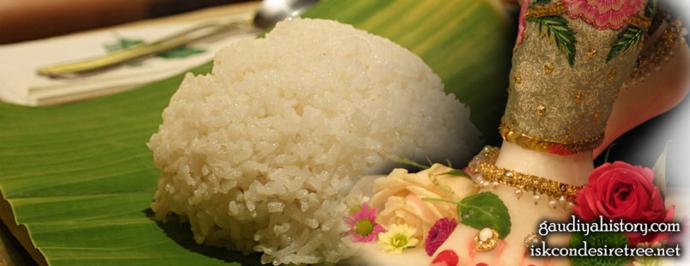
Sadashiva Pandit

   Sadashiva Pandit is considered a Chaitanya branch of the tree of divine love. He was a resident of Navadwip who participated in the beginnings of the sankirtan movement. When Nityananda Prabhu first arrived in Navadwip, he stayed in his house.
 
   Sadashiva Pandit placed all his hopes at the Lord’s feet. His house was Nityananda Prabhu’s first residence in Navadwip. (Chaitanya Charitamrita 1.10.34) 
Sadashiva Pandit

He was also one of the Lord’s companions when He engaged in water sports in the Ganges. (In the wallpaper: Shri Krishna Chaitanya, ISKCON Chennai).

 
   Sadashiva Pandit, in whose home Nityananda had previously been domiciled, also went [with the party of Devotees to Jagannath Puri]. (Chaitanya Bhagavat 3.8.19)
 
   In Vrindavan Das Thakur’s Chaitanya Bhagavat, Sadashiva Pandit’s name is included in the list of Devotees who were present in the kirtan in the house of Shrivasa Pandit, along with Gopinath, Jagadisha, Shriman, Shridhara, Vakreshvara, Shrigarbha and Shuklambar. (Chaitanya Bhagavat 2.8.115)
 
   He was also one of the Lord’s companions when He engaged in water sports in the Ganges. He was also one of the first to witness the Lord’s displays of ecstatic love after He returned from Gaya. Mahaprabhu also told him to be present in Shuklambar’s house where He publicly announced the transformation that had taken place.
 
   [The Lord said,] “You [Shriman Pandit] and Sadashiva Pandit should also come tomorrow to Shuklambar’s house. (Chaitanya Bhagavat 2.1.40)
 
   Sadashiva, Murari, Shriman and Shuklambar, and all the Lord’s other devoted followers assembled there. (Chaitanya Bhagavat 2.1.81)
 
   On the same occasion, the Lord Himself revealed to the world how dearly He considered Sadashiva by unveiling His secret pain to him.
 
   “I will reveal all My sadness to you [Shriman Pandit], Sadashiva and Murari Gupta. (Chaitanya Bhagavat 2.1.70)
 
   When Mahaprabhu decided to put on a performance of Vraja lila in the house of Chandrashekhara Acharya, He gave the responsibility for costumes and makeup to Sadashiva and Buddhimanta Khan. Sadashiva was ecstatic to receive this order from the Lord.
 
   The Lord called Buddhimanta Khan and Sadashiva and told them to go immediately to arrange for the actors’ costumes. (Chaitanya Bhagavat 2.18.7)
 
   Overjoyed, Buddhimanta and Sadashiva immediately went home to fulfill the duties given them by the Lord. (Chaitanya Bhagavat 2.18.14)
 
   Here [at the house of Chandrashekhara Acharya], Buddhimanta Khan and Sadashiva Pandit made all kinds of costume arrangements to help Lord Gauranga put on a performance as Lakshmi, so that the entire universe will become intoxicated by the singing of the Holy Names. (Bhakti-ratnakara 12.2903-4)
 
   [Excerpted from “Shri Chaitanya: His Life & Associates” by Shrila Bhakti Ballabh Tirtha Maharaj] 
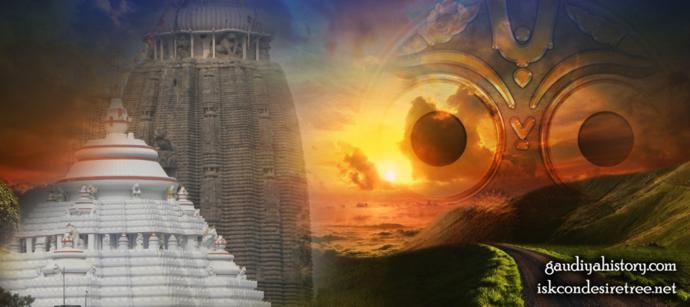
Sadashiva Pandit

When Mahaprabhu decided to put on a performance of Vraja lila in the house of Chandrashekhara Acharya, He gave the responsibility for costumes and makeup to Sadashiva and Buddhimanta Khan. Sadashiva was ecstatic to receive this order from the Lord. (In the wallpaper: In the right below Shri Vijaya Gauranga, ISKCON Hungary, New Vraja Dham, Shrimati Lakshmi Devi and in the background image artist putting make up to an actress).