Author Archives: Sevak

Shrivasa Pandit – Biography 2

Shrivasa Pandit

Shrivasa Pandit.

   asyaartho vivrtas tair yah
sa sankshipyaa vilikhyate
bhakta-rupo gaurachandro
yato 'sau nandanandanah

bhakta-swarupo nityanando
vraje yah Shri-halayudhah
bhaktaavatara acaryo
'dvaito yah Shri-sadaasivah

bhaktaakhyaah Shrinivaasaadyaa
yatas te bhakta-rupinah
bhakta-shaktir dvi jaagranyah
Shri-gadaadhara-panditah

   "I shall now summarily explain the meaning of these words. In this Pancha-tattwa, the bhakta-rupa (form of a Devotee) is Lord Chaitanya Mahaprabhu, who formerly appeared as Shri Krishna, the son of Nanda Maharaj. The bhakta-swarupa (devotional incarnation) is Lord Nityananda, who formerly appeared in Vrajabhumi as Lord Balarama. The bhaktaavatara (devotional manifestation) is Lord Advaita Acharya, who is not different from Sadaashiva. The bhataakhya (pure Devotee) is Shrinivasa and other great Devotees as well. The bhakta-shakti (devotional energy) is Gadadhara Pandita, the foremost of brahmanas." (Gaura Ganodesh Dipika 11.)

shri-visvambharaadvaita
nityanandaavadhutahah
atra trayah samunneyaa
vighraha prabhavaash ca te

eko mahaaprabhur jneyah
shri-Chaitanya dayaambudhih
prabhu dvau Shri-yutau nityaa-
nandaadvaitau mahaashayau

goswaamino vighrash ca
te dvi jaash ca gadaadharah
pancha-tattwaatmaka ete
Shrinivaasas ca panditah

    "Lord Chaitanya, Lord Nityananda Avadhuta, and Lord Advaita, are all incarnations of the supremly exalted Personality of Godhead, and They are all known by the title Prabhu (Master). Among Them, Lord Chaitanya, Who is an ocean of mercy, is known as Mahaprabhu (The Great Master), and the great personalities Lord Nityananda and Lord Advaita are known only as Prabhu (Master). All three are also known as Goswami (Master of the Senses). Gadaadhara is called by the title Dvija (Brahmana, and Shrinivaasa is called by the title Pandita (Learned Scholar). These are the titles of the members of the Pancha-tattwa." (Gaura Ganodesha Dipika 13.)

   "O my Lord Gaurahari, You are the abode of auspiciousness which is as beautiful as the kirtana of Krishna. You are the ocean of elegance, bestower of constant flow of devotion and mountain of love which is as bright as gold. Your beautiful features give soothing relief to the eyes of every living being and you are mankind's salvation from all kinds of misfortune. You are the center of the Lila Vilasa, and the life of the Devotees. Be kind to me." (Bhakti-ratnakara. KJA1.)

   "O my Prabhu, Shri Gopala Bhatta, the bee at the lotus like feet of Shri Gaura. You are the sun which destroys the darkness of illusion, the ocean of kindness and the greatest of all the brahmanas. You are the son of Shri Venkata Bhatta and a valuable ornament of divine love and devotion. You are the destroyer of worldly miseries and a resort of happiness to the misery stricken people. O Lord save me." (Bhakti-ratnakara. KJA.2.) 

   "O my Prabhu, Shrila Gopala Bhatta, a bee at the lotus like feet of Mahaprabhu. You are the most skillful Devotee of the Lord. O my Prabhu Shrinivasa, whose complexion is as golden as Shri Sachinandana, you are the king amongst all the brahmanas. Please bless me." (Bhakti-ratnakara. KJA3.)

   "I constantly worship the companions of Shrinivasa Prabhu who is like the wishing tree of devotional love of Shri Krishna Chaitanya Cahndra." (Bhakti-ratnakara. KJA4.)

   "My dear listeners, please repeatedly and joyfully hear the Bhaktiratnakara which is the life of all Vaishnavas and the destroyer of all miseries and misfortunes." (Bhakti-ratnakara. KJA5.)

   "Shri Gadadhara is expansion Radharani and Shrinivasa is the expansion of Narada Muni, or in other words they are the internal and the devotional energy respectively." (A.C. Bhaktivedanta Swami Prabhupad. 27th May 1970. Letter to Tamal Krishna.)

shrivas-pandito dhimaan
yah pura narado munih
purvataakhyo muni-varo
ya aasin narada-priyah
sa raama-panditah Shrimams
tat-kanistha-sahaodarah

   "Intelligent Shrivasa Pandita had previously been Narada Muni, the best of the sages. Shrivasa's younger brother, Shriman Rama Pandita, had previously been Narada's close friend Parvata Muni" (Gaura Ganodesh Dipika 90.) 

Shrivasa Pandit

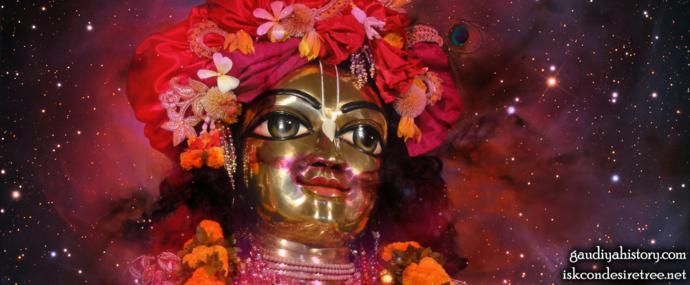
"O my Lord Gaurahari, You are the abode of auspiciousness which is as beautiful as the kirtana of Krishna. You are the ocean of elegance, bestower of constant flow of devotion and mountain of love which is as bright as gold. Your beautiful features give soothing relief to the eyes of every living being and you are mankind's salvation from all kinds of misfortune. You are the center of the Lila Vilasa, and the life of the Devotees. Be kind to me." (Bhakti-ratnakara. KJA1.) (In the wallpaper: Shri Gauranga Mahaprabhu, ISKCON Chennai).

   Shrila Vrindavana dasa Thakura, the Vyasadeva of Shri Gaurasundara's pastimes, has sung the praises of Shrivasa Pandita in this way:

   "It was in Shrivasa Pandita's house that Shri Chaitanya enacted His pastimes of sankirtana. Those four brothers (Shrivasa, Shri Rama, Shripati and Shrinidhi) were continuously engaged in singing the names of Shri Krishna. They worshipped Shri Krishna and bathed in the Ganges thrice daily."

   These four brothers previously lived in the district of Shri Hatta. Later on they came to reside on the banks of the Ganges. There they regularly used to attend the assembly of Devotees who gathered at Shri Advaita Acharya's house to hear the Shrimad Bhagavatam and engage in congregational chanting of the Holy Names. Gradually the brothers became very close friends of Shri Jagannatha Mishra, with whom they would chant and listen to the Bhagavatam.

   In all matters Shrivasa was the leader of the four brothers. By the strength of his devotion, he could understand that Shri Krishna was going to appear in the house of Jagannatha Mishra.

   Shrivasa Pandits's wife's name was Shri Malini Devi. She was a very close friend of Shri Sachi Devi and was always very helpful to her.

   Seeing the wretched state of the fallen living entities in Kali yuga, the Devotees began to plaintively pray to the Lord for their deliverance. Krishna hears the call of His Devotees. On the full moon day in the month of Phalguna, in the year 1407 (Christian era 1486), the Lord incarnated Himself. With His appearance there was the simultaneous dawning of all auspiciousness within the world as it became filled with Harinama. Just as Shri Advaita Acharya, from Shantipura, could understand that the Lord had appeared, similarly, Shrivasa and some of the other Devotees of Navadwipa also understood.

   Since previously Malini Devi was engaged in attending upon Sachi Devi, Shrivasa and Jagannatha Mishra came to her at this time and hinted that she was especially needed now. As long as the Lord chooses not to reveal Himself, no one can possibly recognize Him. Therefore, even though from His childhood the Lord exhibited many supernatural abilities, still, due to His deluding potency, the Devotees could not fully understand His true nature.

   Their hearts were simply filled with parental affection for Him, without a trace of awe or reverence. Shrivasa and Malini gave Sachi Devi and Jagannatha much advice how to raise their new son. Shrivasa and Malini were just like a mother and father to Shri Gaurasundara. Because young Nimai Pandita seemed to have grown arrogant by His scholarship, one day Shrivasa Pandita decided to give Him good counsel.

   "Why do people study? So that they might understand what is devotion to Shri Krishna," he told Nimai. "If by scholarship one doesn't gain devotion to Shri Krishna, then how will that learning help him? It becomes simply a tedious endeavour which in the end is nothing but a waste of time. If you have actually learned something then begin your worship of Shri Krishna now. Make haste. This is the purpose of your life."

   Nimai laughed as He replied, "By your mercy certainly that will come to be. If you are all kind enough for Me, then definitely I'll attain devotion to Shri Krishna's lotus feet."

   Shortly thereafter Mahaprabhu journeyed to Gaya where He performed the pastimes of accepting initiation from Shri Ishvara Puri. Thus gradually, He began to take up His real work of distributing loving devotion to Shri Krishna.

   One day, in an ecstatic mood, Lord Gauranga entered Shrivasa's house asking, "Shrivas, whom do you worship? Whom do you meditate upon? Now with your own two eyes, see that person standing before you." [C.B. Madhya 2/258]

   Saying this, Mahaprabhu entered the Deity room within Shrivasa's home Temple and sat down on the simhasana of Lord Visnu, revealing His own four-armed form, holding the conch, disc club and lotus flower. Seeing this form, Shrivasa was totally stupefied.

   Shri Gaurasundara then said, "Due to being called by your sankirtana and the loud roaring of Shri Advaita Acharya, I have left Vaikuntha and have descended upon this mortal world, accompanied by My eternal associates, will destroy the miscreants and deliver the pious. Now, without fear, you can chant My glories."

   Hearing these words of His Lord, which dispelled all fear, Shrivasa fell on the ground, offering his obeisances. Then he began to recite hymns in praise of the Lord. 

Shrivasa Pandit

"My obeisances at the lotus feet of the support of the entire universe Vishvambhara, Whose bodily colour is like that of a newly arrived rain cloud and wore garments which are the color of a thunderbolt. My obeisances at the lotus feet of the son of Sachi, who is bedecked with ornaments of peacock feathers and a garland of read beads (gunja-mala). My obeisances at the lotus feet of the pupil of Ganga dasa, the beauty of whose lotus face conquers that of ten million moons. My obeisances at your lotus feet, You who carry a buffalo horn, stick and flute. The four Vedas have proclaimed You to be the son of Nanda. Unto You my dear Lord, my obeisances I offer again and again." (C.B.Madhya 2/272) (In the wallpaper: Shri Gauranga Mahaprabhu, ISKCON Mayapur).

   "My obeisances at the lotus feet of the support of the entire universe Vishvambhara, Whose bodily colour is like that of a newly arrived rain cloud and wore garments which are the color of a thunderbolt. My obeisances at the lotus feet of the son of Sachi, who is bedecked with ornaments of peacock feathers and a garland of read beads (gunja-mala). My obeisances at the lotus feet of the pupil of Ganga dasa, the beauty of whose lotus face conquers that of ten million moons. My obeisances at your lotus feet, You who carry a buffalo horn, stick and flute. The four Vedas have proclaimed You to be the son of Nanda. Unto You my dear Lord, my obeisances I offer again and again." (C.B.Madhya 2/272)

   "Today my birth, my activities, my everything has become successful. Today my very existence has been crowned with the greatest auspiciousness. Today the race of my forefathers has finally born fruit, and my house, which was also their house, has become blessed. Today the great fortune of my eyes is completely beyond calculation, because I have been able to see that person whose lotus feet are served by the goddess of fortune, Lakshmi Devi".

   Having described the glories of Shri Gaurasundara in various ways, Shri Gaurasundara showed even more compassion to Shrivasa by revealing Himself to all of his family members. Seeing the niece of Shrivasa Pandita present before Him, Prabhu called to her, "Narayani! Call upon Shri Krishna with tears in your eyes."

   And immediately this little girl, only four years of age, as if in a delirious frenzy began to cry out, "Hari! Krishna!" while shedding tears incessantly. In fact the flood of tears coursed down her body to such an extent that the ground around her feet became soaked." (C.B. Madhya. 2).

   Seeing little Narayani totally agitated in ecstatic love, Shrivasa's wife and even the household servants also began to shed tears of love. The courtyard of Shrivasa took on a very beautiful appearance, being decorated with ecstatic love for Krishna.

   There was one maidservant in Shrivasa Pandita's house by the name Duhkhi. Every day she used to bring water from the Ganga for Mahaprabhu's bath. One day Gaurasundara asked Shrivasa, "Who brings this water?"

   "Duhkhi brings it," Shrivasa replied.."From today her name is Sukhi." Thus the Lord indicated that those who serve the Lord and the Lord's Devotees are not duhkhi (sad); rather, they are sukhi (happy). At this time Shri Gaursundara began His lila as the yuga-avatara at the house of Shrivasa Pandit. Having been reunited with Shri Nityananda Prabhu He started congregational chanting of the Lord's Holy Names in the courtyard of Shrivasa's house. Nityananda Prabhu took up His residence there. Shri Malini Devi served Nitya­nanda as though He were her own son. Shri Nityananda was actually Shri Baladeva Himself, and in His pastimes as Lord Nityananda He behaved somewhat like a madman. He was always overwhelmed by love of Krishna, and was not aware of the state of His outward dress or ornaments.

   One evening, Shri Gaurasundara, accompanied by His associates, was engaged in chanting and dancing at the house of Shrivasa Thakura when one of Shrivas Thakur's sons passed away after having suffered the effects of some disease. Within the inner apartment of his house, the women began to wail in lamentation at the boy's untimely death. Shrivasa Pandita, who was outside in the courtyard, understood some tragedy must have taken place. He quickly entered the house only to find that his son had passed on to the next world. As he was a very grave Devotee and completely conversant in the science of the Absolute Truth, he was able to console the women in their grief.

   "You are all aware of Krishna's glories, so please restrain yourselves and don't cry. Whoever during his last moment hears the Lord's Holy Name, even though he might be the greatest sinner, attains Krishna's abode. And that incomparably wonderful Lord, He whose glories are sung by all His servants up to and including Lord Brahma, is now personally dancing in the courtyard of your house.

   "This moment is so auspicious that it is sure this boy has successfully completed his journey from this world. Is there anything to be lamented at in this? His good fortune is completely assured. I can understand that whatever part I have played in this is also crowned with success." [C.B.M 25.30]

   He concluded by telling them, "If you can't control your emotions because of your family affection to the boy, then at least don't cry now, you can cry later. The Supreme Lord of Gokula Himself, Shri Gaurasundara, is performing sankirtana accompanied by His Devotees in this house. If, due to your crying, the happiness that He is experiencing from dancing in ecstasy during sankirtana is disturbed, then I will just this minute jump into the Ganges and thus give up my own life."

   "Not a blade of grass moves unless by Krishna's will. To see in this happiness or distress, or knowledge or ignorance is simply imagination. Know that whatever Krishna wills is good, and thus, giving up your own selfish desires, become free from confusion and unnecessary botheration. Krishna is giving and Krishna is taking away, and it is Krishna alone Who is maintaining everyone. Someone He protects and someone He destroys, all according to His will. If someone contemplates something contrary to Krishna's will, then as a result of His desire He only get torment. Giving up all lamentation, simply hear Krishna's name, and thus pass through all difficulties feeling great happiness. Then your desires will actually be fulfilled.'

   Having given all of these instructions to those present, Shrivasa again went outside to join Mahaprabhu in ecstatic chanting and dancing. The women, leaving the dead body, came to hear the kirtan of Mahaprabhu. And so Mahaprabhu continued His chanting until the middle of the night.

   When everyone was at last leaving to take rest, Mahaprabhu spoke. "Today My mind is feeling some tribulation. I think some sad event has occurred in Shrivasa's house." The pandit replied, "What possible unhappiness could there be in that person's house where Your divinely blissful countenance is seen?" "Shrivasa! Why wasn't I feeling bliss in kirtana today? What inauspicious thing transpired in your house?"

   Shrivasa answered, "My Lord, You are Yourself all auspicious. Where You are present, no sorrow can be found anywhere!" But the other Devotees informed the Lord that Shrivasa's son had passed away. Hearing this news, Gaura Raya cried out, "Alas, what a tragic event. Why didn't you tell Me of this unfortunate news before?"

   "I will explain," Shrivasa Pandita replied. "I couldn't tolerate disturbing You while You were enjoying sankirtana. If one of my sons dies, what sorrow is there in that for me? If we all die while seeing You, that would actually be a matter of great happiness. On the other hand, if You would have to stop dancing, then perhaps I would have died. My Lord, this was the danger that I feared, and thus I didn't tell you at the time."

   Seeing Shrivasa Pandita's profound devotion, Shri Gaurasundara said, "How can I give up such company as this?" With tears in His eyes He continued. "Due to love for Me, he didn't even feel lamentation at the death of his son. How will I abandon their companionship?"

   The Lord continued to cry, and the Devotees began to worry within, having heard Him speak of leaving them.Thereafter Mahaprabhu came to where the dead body of the infant was lying. Touching it, He called, "Boy! Why are you going away and leaving Shrivasa Pandita?"

   The life of the dead child returned at the touch of Mahaprabhu's hand. After offering obeisances to the Lord, he replied, "O Prabhu! Whatever You ordain is absolute. No one can do anything but what is sanctioned by You. As many days as I was destined to remain here, that many days I have stayed. Now that my time has elapsed, I have proceeded to leave.

   "My Lord, I have taken birth and died repeatedly. But this time, at the time of death, I passed away quite happily, having taken darshana of Your beautiful face."

   After saying this, the child became silent. Shri Gauranga Raya thus enjoyed a kind of transcendental sport. Having heard the uncommon words of the dead child, the Devotees floated in the ocean of bliss. Shrivasa Pandita, along with his family members, then fell at the lotus feet of Shri Gaurasundara and cried in ecstatic love.

   Mahaprabhu then told him, "Since Myself and Nityananda are your two sons, please don't feel any more distress in your mind over what has happened." Hearing these compassionate words of their Lord, the Devotees cheers were resounded throughout the heavens. Proving the statements of shastra, Their Lordships Gaura-Nityananda became deeply indebted to Shrivasa due to his great love for and service to Them.

   After Mahaprabhu took sannyasa, Shrivasa Pandit came to live at Kumarhatta. Every year he would go with his brothers to see Mahaprabhu at Puri. He also regularly came to see Shri Sachimata in Navadwip and would spend a few days there during those times.

   When Mahaprabhu came from Nilachala to see His mother and the river Ganges, He also stopped at Kumarhatta to see Shrivasa.

   "After staying some days at Advaita's house, Mahaprabhu came to Shrivasa's Temple at Kumarhatta." [C.B]

   It was at this time that Mahaprabhu gave this benediction to Shrivasa: "There will never be poverty in your house. If you simply remain indoors, never even venturing out of your house, whatever you require for your worship will come to your door."

   Shrivasa Pandita, along with his three brothers, eternally serve Shri Gaurasundara. He is the incarnation of Narada and accompanied Mahaprabhu in all His Navadwipa lilas.

   Across the Ganges from Halisahar (the present name of the village of Kumarhatta), there is a town of the name Chuchura. Located here are some very beautiful Deities of Shri Shri Nitai-Gauranga. At present the seva-puja is becoming carried on by Devananda Gaudiya Matha. The resident Swami Maharaja recalls that when the Gaudiya Math took over the sevaitship of this Temple, its name was Shrivasa-Mahaprabhu Mandir. Thus there is a strong possibility that these are the worshippable Deities of Shrivasa Pandita. The Temple is at present named 'Uddhavar Gaudiya Math.' It is near 'Chaumatha', close to the 'Chori Mor' intersection where the town clock stands.

   There is a rail station at Chuchura (Chinsura) on the Bandel-Navadwip line. Chuchura may also be reached by ferry from Halisahar on the other side of the Ganga, where Chaitanya Boda, the birthplace of Shri Ishvara Puri, is located. 

Shrivasa Pandit

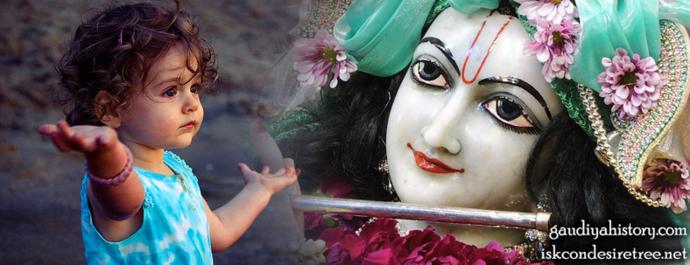
... immediately this little girl, only four years of age, as if in a delirious frenzy began to cry out, "Hari! Krishna!" while shedding tears incessantly. In fact the flood of tears coursed down her body to such an extent that the ground around her feet became soaked." (C.B. Madhya. 2). Seeing little Narayani totally agitated in ecstatic love, Shrivasa's wife and even the household servants also began to shed tears of love. The courtyard of Shrivasa took on a very beautiful appearance, being decorated with ecstatic love for Krishna. (In the wallpaper: a girl, Shri Gopinath, ISKCON Chowpatty, Mumbai).

Vakresvara Pandit – Biography

Sri Vakreshwar Pandit was present with Sriman Mahaprabhu during His pastimes in Navadwipa and after his acceptance of Sannyasa heal so accompanied Him to Jagannath Puri. During the time of theLord's residence in Puri he continued to live with Him there as well. Sri Vakreshwar Pandit took birth in the villageof Guptipara near Triveni. He was an especially proficient dancer and kirtaniyaand could dance continuously for 72 hours.

When Sri Caitanya Mahaprabhu began His pastimes of congregational chanting of the Holy Name of Sri Hari in Navadwip,Sri Vakreshwar Pandit was an important singer and dancer in that assembly. It was by His mercy that Devananda Pandit was delivered from the wrath of Mahaprabhu. He was also present during the Lord's journey to Ramakeli. Devananda Pandit was, at one time, known as the foremost lecturer on the Bhagavat. One day Srivas Pandit went to hear his discourse, and being moved in ecstatic love by hearing the Bhagavatam, he began to cry. A few of the ignorant students of Devananda Pandit, thinking that this was creating adisturbance, removed Srivas Pandit from the assembly and left him outside.Though this was done in front of Devananda he didn't restrain his students from this act of disregard to the devotee -Bhagavat.

There are two types of Bhagavat – the book bhagavat and the devotee bhagavat. For this reason,Devananda Pandit became implicated in anoffense to a great devotee (maha-bhagavat). When Sri Caitanya Mahaprabhu came to hear how his dear devotee, Srivas Pandit, had been disrespected, he gave many instructions concerning the Bhagavat. He told that those who read the book Bhagavat but don't offer respects to the devotee-Bhagavat,are simply offenders, though they may read the Bhagavat for eons,still they will never attain love of Godhead. The devotee bhagavata and the book bhagavata are non-different. In order to understand the book bhagavat one must first sincerely serve the devotee-bhagavata. Therefore Mahaprabhu neglected Devananda and didn't bestow His mercy on him. One evening Vakreshwar Pandit came to perform dancing and chanting of the Holy Name at the house ofone devotee from Kulia, across the bank of the Ganga from Nadia.Receiving this auspicious news Devananda proceeded there, and upon seeing the appearance of the symptoms of divine lovein the person of Sri Vakreshwar Pandit he became charmed. Graduallya great crowd gathered at that place, and Devananda Pandit, taking acane in his hand, kept the crowd in order so as not to obstruct the ecstatic dancing of Sri Vakreshwar Pandit.

In this way, Vakreshwar Pandit performed chanting, and dancing for two praharas (six hours), on into the night. When he finished dancing and sat down, Devananda came and offered dandavatsat the lotus feet of Sri Vakreshwar Pandit, who became pleased with this service and blessed Devananda with the words "Krishna-bhaktihauk" "May you attain devotion to Sri Lord Krishna." From that day devotion was awakened in the heart of Devananda by the mercy of Vakreshwar Pandit. There after when Mahaprabhu came to Nadia to have darshan of his mother and mother Ganges, he best owed His mercy on Devananda at Kulia. "Because you have served Vakreshwar I have noticed you.Vakreshwar is fully imbued with the Lord's transcendental energy,and whoever becomes devoted to him, attains to the lotus feet of Sri Krishna. His heart is the personal abode of Sri Krishna and as Sri Krishna dances, so Vakreshwar also dances.Wherever one can get the association of Vakreshwar, that place is the sum total of all Holy places and is as good as Sri Vaikuntha."

Sri Vakreshwar Pandit's disciple was Gopal Guru Goswami and Gopal Guru Goswami's disciple was Sri Dhyanchananda Goswami. In his DhyanChandra Paddhati – Dhyan Chandra Goswami has written – "that person who was previously very expert in the arts of singing and dancing, the gopi, Tungavidya, is presently renowned in the world as Vakreshwar Pandit. He has appeared on the fifth day of the dark fortnight of the month of Asar (Ashadha -June-July – Vaman mase) and he closed his pastimes in this world onthe sixth day of thebright fortnight of the month Asar. WhileVakreshwar danced,Mahaprabhu Himself would sing and Vakreshwarwould catch hold of Hislotus feet, saying; "O moon faced one, give me 10,000 gandharvas,and let them sing while I dance. Then I will be happy." Mahaprabhu answered, "You are one of my wings. If I had another (like you) I could fly in the sky."

[C. C. Adi 10.17]. Vakreshwar Pandit's worshippable deity is Sri Sri Radha-kanta, whom he worshipped in Kasi Misra's house, which was also the residence of Sri Caitanya Mahaprabhu (Gambhira).These Deities are still being worshipped there to this day.

Gangamata Goswamini – Biography

   Gaudiya Vaishnavism has been blessed with several important women Gurus who have been empowered by Shri Gauranga Mahaprabhu to serve as spiritual ‘bridges’ in times when there have been long gaps in the disciplic succession.
Gangamata Goswamini

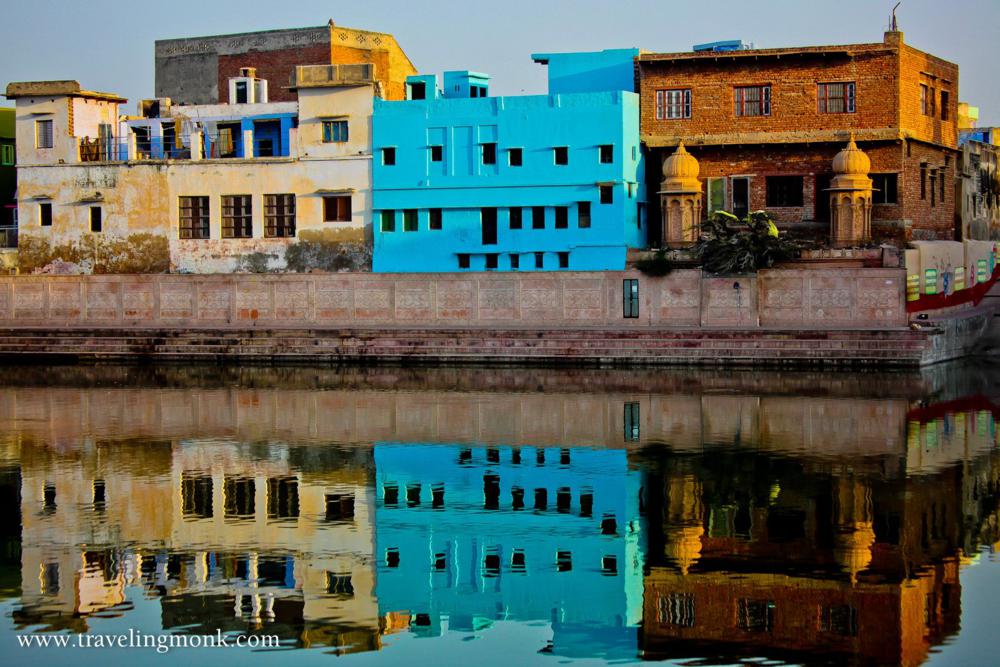
After a year of this intense devotional activity, she was told by her spiritual master to live in Radha Kund with her spiritually advanced aunt and god-sister, Lakshmipriya, who regularly chanted three lakhs of naam every day. As a part of their regular spiritual practice, the two of them daily circumambulated Shri Govardhana Giri. (In the image: Radha Kund, Vrindavan).

   Such important figures have been Sita Thakurani, the wife of Shri Advaita Acharya; Janhava Thakurani, Lord Nityananda’s shakti; Hemlata Thakurani, the daughter of Shrinivas Acharya and a contemporary of Janhava Thakurani; Gaurangapriya the second wife and disciple of Shrinivas Acharya; Krishnapriya and Vishnupriya, two renunciate sisters, daughters and disciples of Narottama Das's chief disciple Ganganarayan Chakravarti; Ganga Mata Goswami, the daughter of the zamindar of Puntiya.
 
   The zamindar of Puntiya, Naresh Narayana, was influenced and blessed by Shrinivas Acharya and received the mercy of the Vaishnavas. He thus accepted Vaishnava dharma.
 
   His daughter Sachi devi was born in Puntiya which is in the Rajashahi district of present-day Bangladesh. From her early childhood, Sachi Devi was indifferent to family life and devoted to Krishna. Her parents saw this and wanted to see her married as soon as possible, but Sachi told them that she refused to accept any mortal as her husband. When she announced her determination to remain unmarried in this way, her parents could do nothing to change her mind. When her mother died, Sachi Devi left home and set out on a pilgrimage which led her first to Puri and then to Vrindavan.
 
   Sachi devi dasi received initiation from Shri Haridas Pandit Goswami, the great worshiper of Shri Govindaji in Vrindavan and began performing her bhajan in Vrindavan. Later she continued her sadhana at Radha Kunda. 
Gangamata Goswamini

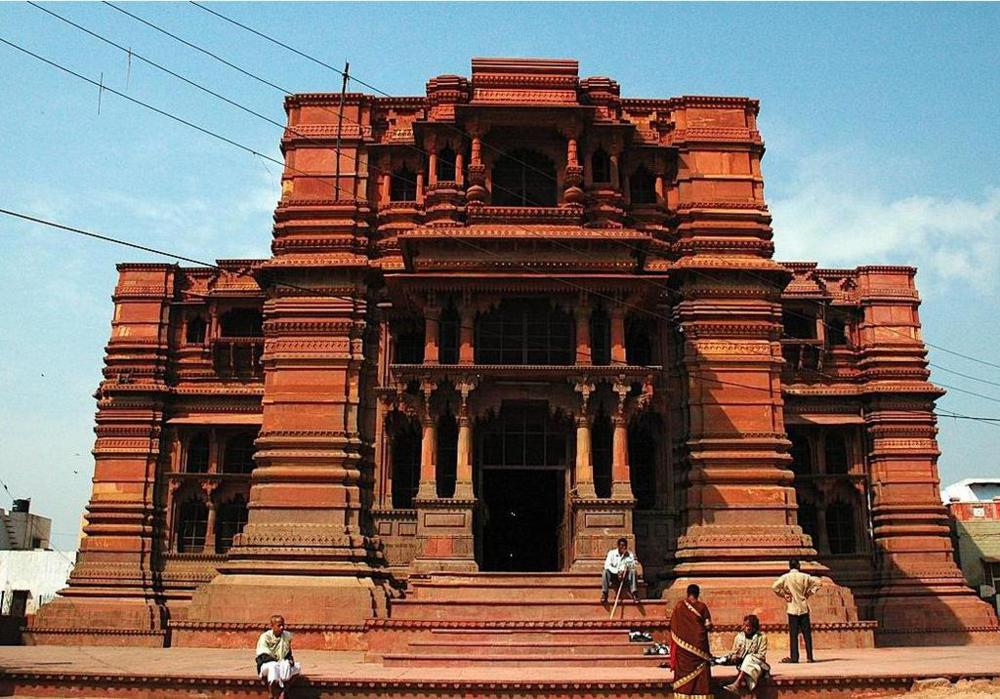
Upon her arrival in Vrindavan Dhama, she met Shri Haridas Goswami and felt her entire pilgrimage was fulfilled. She wanted to take initiation from him, but he hesitated at first because of her wealthy family background. Later, however, when he saw her asceticism and her unswerving determination to engage in pure devotional life, he gave her initiation in the eighteen-syllabled mantra. This event took place in the Govindaji Temple on the Chaitra Shukla Ekadashi. (Sri Govindaji Temple, Vrindavan).

 
   Upon her arrival in Vrindavan Dhama, she met Shri Haridas Goswami and felt her entire pilgrimage was fulfilled. She wanted to take initiation from him, but he hesitated at first because of her wealthy family background. Later, however, when he saw her asceticism and her unswerving determination to engage in pure devotional life, he gave her initiation in the eighteen-syllabled mantra. This event took place in the Govindaji Temple on the Chaitra Shukla Ekadashi.
 
   After having received her guru’s mercy, she began to engage in intense bhajana, subsisting through madhukari, i.e., by begging from door to door for food. After a year of this intense devotional activity, she was told by her spiritual master to live in Radha Kund with her spiritually advanced aunt and god-sister, Lakshmipriya, who regularly chanted three lakhs of naam every day. As a part of their regular spiritual practice, the two of them daily circumambulated Shri Govardhana Giri. 
 
   After several years of such practice at Radha Kund, when Sachi had become very advanced in her devotional life, her Guru sent her to Purushottam Kshetra to revive and restore the home of Sarvabhauma Bhattacharya, which had fallen into disrepair. Obeying her Guru’s instructions, Sachi Devi went to Jagannath Puri and took the kshetra-sannyasa vow.
 
   Among others, King Mukundadeva of Jagannath Puri and a number of Jagannath's sevaites received diksha from her. She was also an eloquent speaker and explained Shrimad Bhagavatam for large audiences.
 
   On the day of Ganga Sagara she desired to bathe in the Ganges. That night the Ganges came from the lotus feet of Lord Jagannath to her ashram and allowed her to bathe. Entering Ganga devi's waters, she floated to the lotus feet of Jagannath Swami in Jagannath Puri. Early in the morning, when the pujaris unlocked the doors and opened the gates, they discovered her.
 
   Thinking she was a thief, they put her in jail. But Lord Jagannath seeing this mistake appeared in the dream to both the king and the head pujari, ordering them to immediately release Sachi devi from jail and to take initiation from her.
Gangamata Goswamini

In Jaipur there is a Deity called Shri Shyama Raya which used to be worshiped by a brahmin. One night the Deity appeared to the Brahmin in his dream and told him he should take Him to Puri and hand Him to Gangamata Goswamini. Following the order of the Deity, the Brahmin went to Puri and presented Shri Shyama Raya to her. On the order of Ganga mata Goswamini, the king renovated the old palace of Shri Sarvabhauma Bhattracharya and she then established Shri Shyama Raya, and He is still being worshiped there today. (In the image: Temple of Shyama Raya, Puri).

   The glories of Sachi devi dasi spread throughout Puri and Sachi devi dasi was hurriedly released by the order of Jagannath Swami. From that time onwards she became famous as Ganga-mata Goswamini.
 
   In Jaipur there is a Deity called Shri Shyama Raya which used to be worshiped by a brahmin. One night the Deity appeared to the Brahmin in his dream and told him he should take Him to Puri and hand Him to Gangamata Goswamini. Following the order of the Deity, the Brahmin went to Puri and presented Shri Shyama Raya to her. On the order of Ganga mata Goswamini, the king renovated the old palace of Shri Sarvabhauma Bhattracharya and she then established Shri Shyama Raya, and He is still being worshiped there today.
 
   Ganga Mata Goswamini was initiated in the line of Gauranga's shakti, Srila Gadadhara Pandit Goswami, by Haridas Goswami. This is described in the Chaitanya Charitamrita. Ananta Acharya was a disciple of Gadadhara Pandit. Pandit Haridas was the beloved disciple of Shri Ananta Acharya.
 
   According to Srila Bhakti Siddhanta Saraswati Thakur, Ananta Acharya was Sudevi, one of the eight principal Gopis. This is stated in the Gaura-ganoddesha-dipika, verse 165, as follows: ‘Ananta Acharya Goswami was formerly Sudevi-gopi in Vraja [Vrindavan].’
 
   According to the disciplic succession descending from him at the famous Ganga-mata monastery, he is known as Vinoda manjari. One of his disciples was Haridas Pandit Goswami, who is also known as Shri Raghu Gopal and as Shri Rasa manjari. He had two important disciples: Lakshmipriya and her niece, Ganga Mata, daughter of the Raja of Puntiya.
 
http://www.srigaurangashram.in 
Gangamata Goswamini

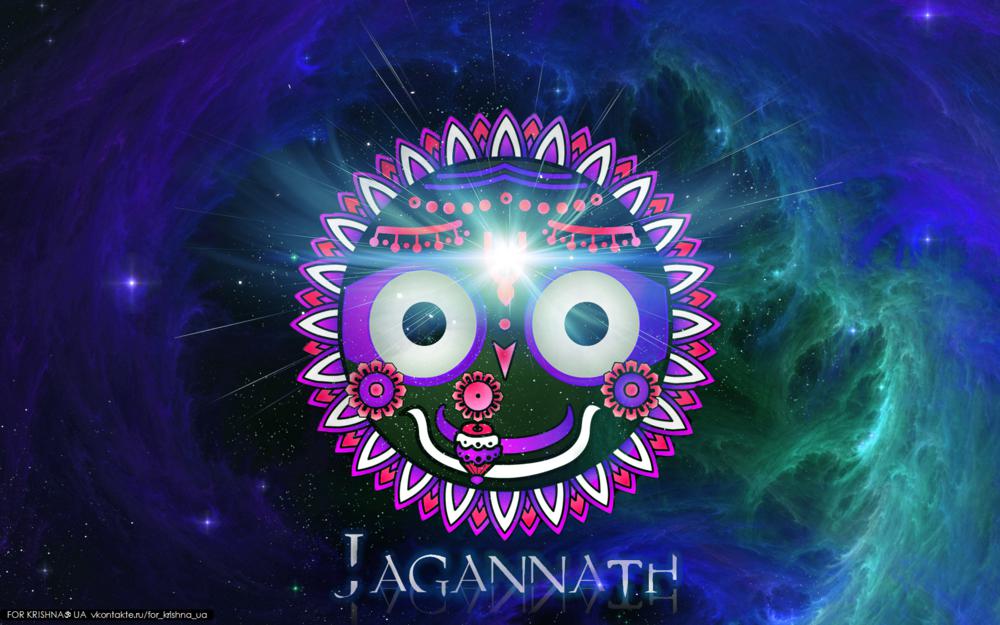
Thinking she was a thief, they put her in jail. But Lord Jagannath seeing this mistake appeared in the dream to both the king and the head pujari, ordering them to immediately release Sachi devi from jail and to take initiation from her. (In the wallpaper: Lord Sri Jagannath).

Mukunda Datta – Biography

   Shri Mukunda Datta was born in the Chattagrama district, in the village of Chanhara, which is under the jurisdiction of the police station named Patiya. This village is situated ten krosas, or about twenty miles, from the home of Pundarika Vidyanidhi. In the Gaura-ganoddesa-dipika (140) it is said:

vraje sthitau gayakau yau
madhukantha-madhuvratau
mukunda-vasudevau tau
dattau gauranga-gayakau

Mukunda Datta

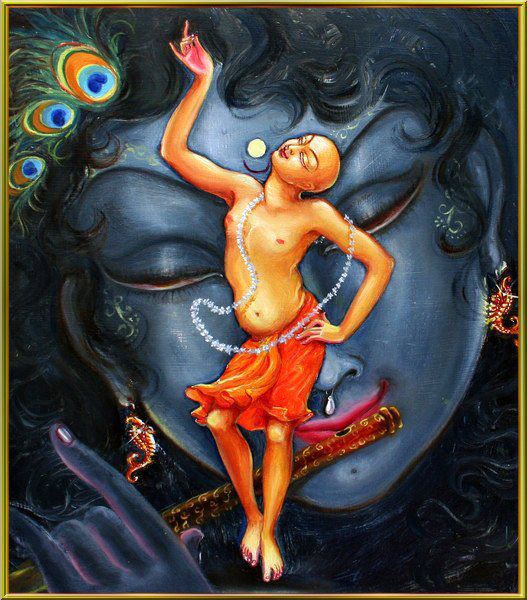
When Mukunda Datta sang in the courtyard of Shrivasa Prabhu, Mahaprabhu danced with His singing, and when Lord Chaitanya for twenty-one hours exhibited an ecstatic manifestation known as sata-prahariya, Mukunda Datta inaugurated the function by singing. (In the image: Lord Shri Chaitanya and Shri Krishna).

   “In Vraja there were two very nice singers named Madhukantha and Madhuvrata. They appeared in Chaitanya-lila as Mukunda and Vasudeva Datta, who were singers in the society of Lord Chaitanya Mahaprabhu.” When Lord Chaitanya was a student, Mukunda Datta was His class friend, and they frequently engaged in logical arguments. Sometimes Lord Chaitanya Mahaprabhu would fight with Mukunda Datta, using tricks of logic. This is described in the Chaitanya-bhagavata, Adi-lila, Chapters Eleven and Twelve. When Lord Chaitanya Mahaprabhu returned from Gaya, Mukunda Datta gave Him pleasure by reciting verses from Shrimad-Bhagavatam about Krishna-lila. It was by his endeavor that Gadadhara Pandita Goswami became a disciple of Pundarika Vidyanidhi, as stated in Shri Chaitanya-bhagavata, Madhya-lila, Chapter Seven. When Mukunda Datta sang in the courtyard of Shrivasa Prabhu, Mahaprabhu danced with His singing, and when Lord Chaitanya for twenty-one hours exhibited an ecstatic manifestation known as sata-prahariya, Mukunda Datta inaugurated the function by singing.

   Sometimes Lord Chaitanya Mahaprabhu chastised Mukunda Datta by calling him khadajathiya beta because he attended many functions held by different classes of nondevotees. This is stated in the Chaitanya-bhagavata, Madhya-lila, Chapter Ten. When Lord Chaitanya Mahaprabhu dressed Himself as the goddess of fortune to dance in the house of Chandrashekhara, Mukunda Datta began the first song.

   Before disclosing His desire to take the renounced order of life, Lord Chaitanya first went to the house of Mukunda Datta, but at that time Mukunda Datta requested Lord Chaitanya Mahaprabhu to continue His sankirtana movement for a few days more before taking sannyasa. This is stated in Chaitanya-bhagavata, Madhya-lila Chapter Twenty-six. The information of Lord Chaitanya’s accepting the renounced order was made known to Gadadhara Pandita, Chandrashekhara Acharya and Mukunda Datta by Nityananda Prabhu, and therefore all of them went to Katwa and arranged for kirtana and all the paraphernalia for Lord Chaitanya’s acceptance of sannyasa. After the Lord took sannyasa, they all followed Him, especially Shri Nityananda Prabhu, Gadadhara Prabhu and Govinda, who followed Him all the way to Purushottama-kshetra. In this connection one may refer to Shri Chaitanya-bhagavata, Antya-lila, Chapter Two. In the place known as Jaleshvara, Nityananda Prabhu broke the sannyasa rod of Chaitanya Mahaprabhu. Mukunda Datta was also present at that time. He went every year from Bengal to see Lord Chaitanya at Jagannatha Puri. (CC Adi lila 10:41. purport.) "Lord Shri Chaitanya Mahaprabhu blessed Mukunda Datta with punishment and in that way vanquished all his mental depression."

PURPORT

   Mukunda Datta was once forbidden to enter the association of Shri Chaitanya Mahaprabhu because of his mixing with the Mayavadi impersonalists. When Lord Chaitanya manifested His maha-prakasa, He called all the Devotees one after another and blessed them, while Mukunda Datta stood outside the door. The Devotees informed the Lord that Mukunda Datta was waiting outside, but the Lord replied, “I shall not soon be pleased with Mukunda Datta, for he explains devotional service among Devotees, but then he goes to Mayavadis to hear from them the Yoga-vasishtha-ramayana, which is full of Mayavada philosophy. For this I am greatly displeased with him.” Hearing the Lord speak in that way, Mukunda Datta, standing outside, was exceedingly glad that the Lord would at some time be pleased with him, although He was not pleased at that moment. But when the Lord understood that Mukunda Datta was going to give up the association of the Mayavadis for good, He was pleased, and He at once called to see Mukunda. Thus He delivered him from the association of the Mayavadis and gave him the association of pure Devotees. (A. C. Bhaktivedanta Swami Prabhupada. CC Adi lila 17:65 purport.)

   Vasudeva Datta, the brother of Mukunda Datta (in some places he is known as the father of Mukunda Datta), was also a resident of Chattagrama. In the Chaitanya-bhagavata it is said, yanra sthane krishna haya apane vikraya: Vasudeva Datta was such a powerful Devotee that Krishna was purchased by him. Vasudeva Datta stayed at Shrivasa Pandita’s house, and in the Chaitanya-bhagavata it is described that Lord Chaitanya Mahaprabhu was so pleased with Vasudeva Datta and so affectionate toward him that He used to say, “I am only Vasudeva Datta’s man. My body is only meant to please Vasudeva Datta, and he can sell Me anywhere.” Thrice He vowed that this was a fact and that no one should disbelieve these statements. “All My dear Devotees,” He said, “I tell you the truth. My body is especially meant for Vasudeva Datta.” Vasudeva Datta initiated Shri Yadunandana Acharya, the spiritual master of Raghunatha dasa, who later became Raghunatha dasa Goswami. This will be found in the Chaitanya-charitamrita, Antya-lila, Sixth Chapter, verse 161. Vasudeva Datta spent money very liberally; therefore Lord Chaitanya Mahaprabhu asked Shivananda Sena to become his sarakhela, or secretary, in order to control his extravagant expenses. Vasudeva Datta was so kind to the living entities that he wanted to take all their sinful reactions so that they might be delivered by Shri Chaitanya Mahaprabhu. (A.C. Bhaktivedanta Swami Prabhupada. CC Adi 10:41-42 purports). 

   This is described in the Fifteenth Chapter of the Chaitanya-charitamrita’s Madhya-lila, verses 159 through 180.

   There is a railway station named Purvasthali near the Navadwipa railway station, and about one mile away, in a village known as Mamagachi, which is the birthplace of Vrindavana dasa Thakura, there is presently a Temple of Madana-gopala that was established by Vasudeva Datta. The Gaudiya Matha Devotees have now taken charge of this Temple, and the seva-puja is going on very nicely. Every year all the pilgrims on the Navadwipa-parikrama visit Mamagachi. Since Shri Bhaktisiddhanta Saraswati Thakura inaugurated the Navadwipa-parikrama function, the Temple has been very well managed. 

Mukunda Datta

...it is described that Lord Chaitanya Mahaprabhu was so pleased with Vasudeva Datta and so affectionate toward him that He used to say, “I am only Vasudeva Datta’s man. My body is only meant to please Vasudeva Datta, and he can sell Me anywhere.” Thrice He vowed that this was a fact and that no one should disbelieve these statements. “All My dear Devotees,” He said, “I tell you the truth. My body is especially meant for Vasudeva Datta.” (In the image: Lord Shri Chaitanya).

Vrindavana Dasa Thakura – Biography

The mother of Srila Vrindavana dasa Thakura's was Sri Narayanidevi, the niece of Srivasa pandita. In his Sri Caitanya Bhagavata,Vrndavana dasa has described how his mother attained the affectionate fervour of Sri Gaurasundara.
 
"Narayani devi received the entire remnants of Mahaprabhu's meal. Though she was only an insensible child he best owed His mercy on her in this way."
 
Also as a result of this mercy, Srila Vrindavana dasa Thakura,whose life and soul was Sri Gaura-Nityananda, took his birth from her womb.
 
He hasn't mentioned the name of his father. It is believed that Narayani devi was married to someone at Kumarhatta. However,while she was still carrying the child in her womb, she was widowed. Being reduced to a condition of poverty by the loss of her husband, she finally accepted shelter in the house of Sri Vasudeva Datta Thakura, at Mamgachi, where she helped with the house work.Here Vrindavana dasa began his studies.
 
In the preface to Sri Caitanya Bhagavata, Sri Bhaktisiddhanta Sarasvati has written, "Narayani devi raised her child in the home of the father of Sri Malini devi where she had accepted shelter."
 
Vrindavana dasa was born four years after Mahaprabhu took sannyasa. When Mahaprabhu disappeared he couldn't have been more than twenty years old. He was initiated by Sri Nityananda Prabhuand was apparently the last disciple whom Sri Nityananda accepted.He accompanied Sri Jahnava Mata to the Kheturi maha-mahotsava. Sri Krsna dasa Kaviraja Goswami has glorified Vrindavana dasa Thakura as the Veda Vyasa of the pastimes of Sri Caitanya Mahaprabhu.
 
"The pastimes of Krishna have been described in the Srimad Bhagavatam by Veda Vyasa. Vrindavana dasa is the Veda Vyasa of the pastimes of Sri Caitanya. He has composed Caitanya Mangala which destroys any in auspiciousness for those who hear it. So that we can understand the glories of Caitanya-Nitai, the essence of the conclusions regarding devotional service as expanded in Srimad Bhagavatam and the limits of the conclusions regarding Krishna bhakti, he has composed this great literature to up lift man kind. To compose such a work is not conceivable for a human being therefore we can understand that Sri Caitanya Himself is speaking through him. I offer my obeisances tens of millions of times at the lotus feet of that person who has given us such a scripture which can deliver the whole world." (C.C. where and give SP'stranslation)
 
Vrindavana dasa Thakura's Sripat, where his worshippable Deities of Sri Sri Gaura-Nitai are still residing, is at Denur.Denur can be reached by bus from Navadvipa.

Ramananda Raya – Biography 3

Ramananda Raya

The Gauraganoddeshadipika (120-124) states that Ramananda Raya was Arjuna in his past incarnation. He is also considered to have been an incarnation of the gopi Lalita..." (In the wallpaper: Shri Lalita Sakhi in the right, ISKCON Chowpatty, Mumbai, Arjuna).

   Five hundred years ago in the district of Puri, in the village of Bentapur adjacent to Brahmagiri Alalnath, there lived a great Devotee named Bhavananda Raya. Bhavananda had five sons, the eldest of which was Ramananda. Descendants of this family-line are known as Choudhury Pattanayaka. It is said that Lord Chaitanya visited the birth-place of Ramananda in Alalnath every year.

   Ramananda was the Governor of East and West Godavari and a minister of King Prataparudra. A great statesman of that period, Ramananda was also a poet and a scholar.

   When Bhavananda met Shri Chaitanya Mahaprabhu, the Lord embraced him and said, "Formerly you appeared as Pandu, and your five sons appeared as the five Pandavas."

   The five sons of Bhavananda Raya were Ramananda Raya, Pattanayaka Gopinatha, Kalanidhi, Sudhanidhi and Nayaka Vaninatha.

   The Gauraganoddeshadipika (120-124) states that Ramananda Raya was Arjuna in his past incarnation. He is also considered to have been an incarnation of the gopi Lalita, although in the opinion of others he was an incarnation of Visakha Devi. He was a most confidential Devotee of Lord Chaitanya. Lord Chaitanya said, "Although I am a sannyasi, My mind is sometimes perturbed when I see a woman. But Ramananda Raya is greater than Me, for he is always undisturbed, even when he touches a woman."

   Only Ramananda Raya was able to act in this way, no one should imitate him. Unfortunately there are rascals who imitate the activities of Ramananda Raya.

   In Lord Chaitanya's final pastimes, both Ramananda Raya and Svarupa Damodara were always engaged in reciting suitable verses from Shrimad Bhagavatam to pacify the Lord in His ecstatic feelings of separation from Krishna. When Lord Chaitanya was about to leave for South India, Sarvabhauma Bhattacharya advised Him to meet Ramananda Raya for he declared that there was no Devotee as advanced in understanding the conjugal love of Krishna and the gopis.

   While touring South India Lord Chaitanya met Ramananda on the bank of the Godavari. There they had a long discourse in which the Lord took the role of a student and Ramananda Raya instructed the Lord. Lord Chaitanya concluded these discourses by saying, "My dear Ramananda Raya, both you and I are madmen, and therefore we met intimately, on an equal level." Lord Chaitanya advised Ramananda Raya to resign from his government post and come back to Jagannatha Puri to live with Him. It was Ramananda Raya who tactfully arranged a meeting between Lord Chaitanya and King Prataparudra of Orissa. Ramananda Raya was present when the Lord performed water-sports after the Rathayatra festival.

   Lord Chaitanya considered Ramananda Raya and Sanatana Goswami to be equal in their renunciation, for although Ramananda Raya was a grihasta engaged in government service and Sanatana Goswami was in the renounced order of complete detachment from material activities, they were both servants of the Supreme Personality of Godhead and kept Krishna in the center of all their activities. Ramananda Raya was one of the three and a half personalities with whom Lord Chaitanya discussed most confidential topics of Krishna Consciousness.

   Lord Chaitanya advised Pradyumna Mishra to learn the science of Krishna from Ramananda Raya. As Subala always assisted Krishna in His dealing with Radharani in Krishnalila, so Ramananda Raya assisted Lord Chaitanya in His feelings of separation from Krishna. Ramananda Raya was the author of Jagannatha-vallabha-nataka.

   In Ishwar dasa's Chaitanya Bhagavata (ed. A.B. Mohanty, Utkal University) a comprehensive description is given of Lord Chaitanya's relationship with Ramananda Raya.

   After hearing Ramananda Raya speak about the essence of premabhakti, Lord Chaitanya, with tears in His eyes and overwhelmed with emotion, warmly embraced Ramananda.

   In the Gurbhaktigita of Achyutananda dasa (Utkal University Vol. 3, Chapter XLIX P. 176) the author describes Ramananda as Vishakha, which is supported by Svarupavarnana (ms. of Rupa Goswami preserved in Utkal University Library, Catalogue no. O.L. 382 ) and Chaitanyaganoddesha (ms. of Sadashiva Kaviraja, preserved in Orissa State Museum).

   Lord Chaitanya's discourses with Raya Ramananda are fully described in CC.

   First of all, Shrila Ramananda Raya enunciated the system of the varnashrama institution.

   He recited various verses about karmarpana, stating that everything should be dedicated to the Lord.

   He then spoke of detached action, knowledge mixed with devotional service, and finally the spontaneous loving service of the Lord.

   After hearing Shrila Ramananda Raya recite some verses, Shri Chaitanya Mahaprabhu accepted the principle of pure devotional service devoid of all the kinds of speculation.

   After this, Shri Chaitanya Mahaprabhu asked Ramananda Raya to explain the higher platform of devotional service.

   Then Shrila Ramananda Raya explained unalloyed devotional service, love of Godhead, serving the Lord with pure servitude as well as in fraternity and parental love.

   Finally he spoke of serving the Lord in conjugal love. He then spoke of how conjugal love can be developed in various ways.

   This conjugal love attains its highest perfection in Shrimati Radharani's love for Krishna.

   He next described the position of Shrimati Radharani and the transcendental mellows of love of God.

   Shrila Ramananda Raya then recited one verse of his own concerning the platform of ecstatic vision, technically called prem-vilasa-vivarta.

   Shrila Ramananda Raya also explained that all stages of conjugal love can be attained through the mercy of the residents of Vrindavana, especially by the mercy of the gopis.

   The meeting of Lord Chaitanya and Shri Ramananda Raya is further described in GPC. After bathing in the River Godavari, the Lord walked a little distance from the bathing place and engaged in chanting the Holy Name of Krishna. At that time, accompanied by the sounds of music, Ramananda Raya came there mounted on a palanquin to take his bath. Many brahmanas, following the Vedic principles, accompanied Ramananda Raya. According to the Vedic rituals, Ramananda Raya took his bath and offered oblations to his forefathers. 

Ramananda Raya

Shri Chaitanya Mahaprabhu then inquired whether he was Ramananda Raya, and he replied, "Yes I am Your very low servant, and I belong to the shudra community." The Lord then embraced him very firmly. Indeed, both the master and the servant almost lost consciousness due to ecstatic love. (In the wallpaper: Shri Gaurachandra, ISKCON Chowpatty, Mumbai, in the background image Devotees' hug).

   Shri Chaitanya Mahaprabhu could understand that the person who had come to bathe in the river was Ramananda Raya. The Lord wanted so much to meet him that His mind immediately began running after him. Although the Lord was running after him mentally, He patiently remained sitting. Ramananda Raya, seeing the wonderful sannyasi, then came to see Him. Shrila Ramananda Raya then saw Shri Chaitanya Mahaprabhu as brilliant as a hundred suns. The Lord was covered by a saffron garment. He was large in body and very strongly built, and His eyes were like lotus petals. When Ramananda Raya saw the wonderful sannyasi, he was struck with wonder. He went to Him and immediately offered his respectful obeisances, falling down like a rod. The Lord stood up and asked Ramananda Raya to arise and chant the Holy Name of Krishna.

   Shri Chaitanya Mahaprabhu then inquired whether he was Ramananda Raya, and he replied, "Yes I am Your very low servant, and I belong to the shudra community." The Lord then embraced him very firmly. Indeed, both the master and the servant almost lost consciousness due to ecstatic love. 

   After composing themselves, they sat down and Shri Chaitanya Mahaprabhu said, "Sarvabhauma Bhattacharya has spoken of your good qualities, and he has made a great endeavor to convince Me to meet you.

   Indeed I have come here just to meet you. It is very good that even without making an effort I have gotten your interview here." Ramananda Raya replied, "Sarvabhauma Bhattacharya thinks of me as his servant. Even in my absence he is very careful to do me good. By his mercy I have received Your interview here. Consequently I consider that today I have become a successful human being. I can see that You have bestowed special mercy upon Sarvabhauma Bhattacharya. Therefore You have touched me, although I am untouchable. This is due only to his love for You. You are the Supreme Personality of Godhead, Narayana Himself, and I am only a government servant interested in materialistic activities. Indeed, I am the lowest amongst men of the fourth caste. You do not fear the Vedic injunctions stating that You should not associate with a shudra. You were not contemptuous of my touch, although in the Vedas You are forbidden to associate with sudras.

   At this time a brahmana Vaishnava came and invited the Lord for lunch, and after arranging to meet Ramananda Raya again later the Lord departed.

   After finishing His evening bath, Shri Chaitanya Mahaprabhu sat down and waited for Ramananda Raya to come. Then Ramananda Raya, accompanied by one servant, came to meet Him. He offered his respectful obeisances, and the Lord embraced him. Then they both began to discuss Krishna in a secluded place for the entire night. Again the next evening Shri Ramananda Raya visited Mahaprabhu and paid obeisances.

   Mahaprabhu fondly embraced him and began questioning him as follows :

   Q: What is the best education among all kinds of learning?
   A: Devotion for Krishna is by far the best learning.

   Q: What is the achievement of a living being?
   A: The best glory is to take the post of servant of Shri Radha and Krishna.

   Q: What is the best religion for a living being?
   A: Love for Shri Radha-Govinda is the best religion.

   Q: Which creature suffers the most?
   A: A Devotee who is suffering due to separation from the Lord.

   Q:Who is the most liberated person?
   A:One who loves Krishna is the most renounced person.

   Q: Which is the best song?
   A: Songs about the pastimes of Radha and Krishna.

   Q: What is the greatest well being for a living entity?
   A: The association of Krishna's Devotees.

   Q: What is the only thing to remember?
   A: Krishna's name, beauty and qualities.

   Q: What is the only object of meditation?
   A: The lotus feet of Radha Govinda.

   Q: Which is the best place for a living entity to reside?
   A: The place where Krishna's pastimes are performed.

   Q: What is the best thing to hear?
   A: The loving pastimes of Radha-Govinda

   Q: What is the only subject matter for a living entity to sing?
   A: The name of Radha Govinda.

   Q: What is the fate of a person who has worldly desires and of a man who desires liberation?
   A: Animate body, and celestial body.

   Q: What are the characteristics of a Devotee and of a knowledgeable person?
   A: A so called intelligent person, who is like a crow, eats the fruits of wisdom from the bitter Neem tree, whereas the Devotee is a cuckoo who drinks the nectar of love.

   Gradually Ramananda Raya could understand the position of Shri Chaitanya Mahaprabhu, and when the Lord exhibited His real form, Ramananda Raya fell unconscious.

   The Lord then requested Ramananda Raya, "Now there is no confidential activity unknown to you. Keep all these talks a secret. Please do not expose them anywhere and everywhere. Since My activities appear to be like those of a madman, people may take them lightly and laugh. Indeed, I am a madman, and you are also a madman. Therefore both of us are on the same platform."

   The next day, Shri Chaitanya Mahaprabhu begged Ramananda Raya to give Him permission to leave, and at the time of farewell the Lord gave him the following orders:

   "Give up all material engagements and come to Jagannatha Puri. I will return there very soon after finishing My tour and pilgrimage. The two of us shall remain together at Jagannatha Puri and happily pass our time discussing Krishna."

   Later, with the permission of King Prataparudra, Ramananda Raya went to Puri. Shri Svarupa Damodara was the dear-most friend of Shri Ramananda Raya. Having written dramas on the pastimes of Krishna, Ramananda had them performed before Shri Jagannatha Deva by the Devadasis of the Temple. Shri Ramananda Raya died after the disappearance of Shri Chaitanya Mahaprabhu. 

Ramananda Raya

"Give up all material engagements and come to Jagannatha Puri. I will return there very soon after finishing My tour and pilgrimage. The two of us shall remain together at Jagannatha Puri and happily pass our time discussing Krishna." (In the wallpaper: Shri Dhameshvar Mahaprabhu, Nadia, West Bengal, Jagannatha Puri Temple).

Shrinivasa Acharya – Biography 3

Shrinivasa Acharya

Shrinivasa Acharya.

   Shri Ramachandra Kaviraja, the son of Khandavasi Chiranjiva and Sunanda, was a disciple of Shrinivasa Acharya and the most intimate friend of Narottama dasa Thakura, who prayed several times for his association. His youngest brother was Govinda Kaviraja. Shrila Jiva Goswami very much appreciated Shri Ramachandra Kaviraja’s great devotion to Lord Krishna and therefore gave him the title Kaviraja. Shri Ramachandra Kaviraja, who was perpetually disinterested in family life, greatly assisted in the preaching work of Shrinivasa Acharya and Narottama dasa Thakura. He resided at first in Shrikhanda but later in the village of Kumara-nagara on the bank of the Ganges.

   Govinda Kaviraja was the brother of Ramachandra Kaviraja and youngest son of Chiranjiva of Shrikhanda. Although at first a shakta, or worshiper of Goddess Durga, he was later initiated by Shrinivasa Acharya Prabhu. Govinda Kaviraja also resided first in Shrikhanda and then in Kumara-nagara, but later he moved to the village known as Teliya Budhari, on the southern bank of the river Padma. Since Govinda Kaviraja, the author of two books, Sangita-madhava and Gitamrita, was a great Vaishnava kavi, or poet, Shrila Jiva Goswami gave him the title Kaviraja. He is described in the Bhakti-ratnakara (Ninth Wave). (A.C. Bhaktivedanta Swami Prabhupada. Shri Chaitanya Charitamrta Adi-lila 11:51. purport.)

   Shrila Krishnadasa Kaviraja took pleasure in writing the infrequent passages which glorified Gopala Bhatta, and he never told Shri Bhatta how he had written them. (Bhakti-ratnakara. KHA226.)

   I cannot write extentively about the depth of knowledge of Shri Gopala Bhatta during his life in Vrindavana for fear the book will become too large. (Bhakti-ratnakara. KHA227.)

   Shri Bhatta had given many comments on the book ”Krishnakarnamrta• which gave much pleasure to all the Vaishnavas. (Bhakti-ratnakara.KHA228.)

   Shri Gopala Bhatta, a remarkable person in the path of pure devotion had performed many supernatural activities. (Bhakti-ratnakara.KHA229.)

   At a much later time, Shrinivasa met him and got his desires fulfilled. (Bhakti-ratnakara. KHA230.)

   On the order of Prabhu, Shrinivasa took his initiation from Gopala Bhatta and later propagated the Goswami scriptures in Gauda. (Bhakti-ratnakara.KHA231.)

   Prabhu empowered Shri Rupa and others to write and compile scriptures on Vaishnava religion, for the propogation of those scriptures he empowered Shrinivasa. (Bhakti-ratnakara. KHA232.)

   Acharya and Shri Thakura Mahashaya were of the same soul in their devotion to Prabhu. Thakura Mahashaya had revealed the powers of both Rupa Goswami and Shrinivasa in his shlokas. (Bhakti-ratnakara. KHA233.)

   The shlokas by Thakura Mahashaya say: "When shall I be able to find Shri Chaitanya Deva, the ocean of kindness, within the range of my vision? His aim was to create many Vaishnava scriptures through the intellect of Shri Rupa and others to later disseminate those scriptures to the people of the world through the efforts of Shrinivasa." (Bhakti-ratnakara. KHA234.)

   Shrinivasa Acharya was a great scholar who benedicted the world by distributing those valuable Vaishnava books. (Bhakti-ratnakara.KHA235.)

   ”The favor of Lokanatha to Narottma" At that time Narottama arrived in Vrindavana and immediately engaged himself in the continous service of Shri Lokanatha. (Bhakti-ratnakara. KHA345.)

   Lokanatha was satisfied with Narottama's attitude and gave him Diksha mantra. (Bhakti-ratnakara.KHA346.)

   Shri Gopala Bhatta and the other Vaishnavas accepted Narottama as an intimate friend. (Bhakti-ratnakara.KHA347.)

   Narottama got the title Thakura Mahashaya along with the affection of Shri Jiva Goswami. (Bhakti-ratnakara.KHA348.)

   Shrinivasa Acharya met Narottama in Vrindavana and gradually a dynamic new circle of Vaishnavas was established there. (Bhakti-ratnakara.KHA349.)

   Shrinivasa also met Shyamananda in Vrindavana. (Bhakti-ratnakara. KHA350.)

   The Embodiment of Lord Chaitanya’s Love by Satyaraja dasa.

   It was the middle of the sixteenth century. Aspiring for perfection in spiritual life, young Shrinivasa had tried to meet Lord Chaitanya and His disciple Gadadhara. But Shrinivasa came too late they passed away before he could become their student. And so too did the great Rupa Goswami and Sanatana Goswami. But as Shrinivasa journeyed to the holy town Vrindavana, Rupa and Sanatana appeared to him in a dream. Go on to Vrindavana, they told him, and learn from the great goswamis Jiva and Gopala Bhatta.

PART I

   Shrinivasa Acharya is one of the most important personalities in the religious history of Bengal, perhaps the most important Vaishnava teacher in the generation immediately following Shri Chaitanya Mahaprabhu. He is chiefly remembered as the illustrious disciple of Gopala Bhatta Goswami and Jiva Goswami. His achievements include delivering the writings of the Goswamis from Vrindavana to Bengal, converting King Birhambir to Vaishnavism, and originating the Manohar Shoy style of kirtana. At Kheturi, Bengal, he co-organized the first Gaura Purnima Festival (celebrating the anniversary of Chaitanya Mahaprabhu’s appearance in this world), which Narottama, Shyamananda, and thousands of other Vaishnavas attended.

Shrinivasa’s Parents :

   Shrinivasa Acharya’s parents the brahmana Gangadhara Bhattacharya and his wife, Lakshmi Priya lived in the small village of Chakhandi, on the bank of the Ganges in the Burdwan district of Bengal. They longed to raise a child who would be a great Devotee, but until the birth of Shrinivasa, they were child-less for many years.

   Gangadhara was himself a great Devotee of the Golden Avatara, Lord Chaitanya Mahaprabhu, the incarnation of Shri Shri Radha and Krishna predicted in the scriptures. Lord Chaitanya had appeared in Navadwipa and was currently in the world. Gangadhara spent much of his time hearing and retelling the stories of Lord Chaitanya’s pastimes (lila) with the Lord’s intimate associates. He wanted to see Lord Chaitanya, but social and familial obligations kept him at home, so he resolved to meditate on the Lord in separation. In 1510, however, he could not tolerate the separation any longer. He set out for Navadwipa to see the Lord of his life. After only seven miles, as far as the village of Katwa, he learned that Nimai of Nadiya Chaitanya Mahaprabhu was in that very village taking sannyasa, the renounced order of life.

   “What?” cried Gangadhara. “Why must my Lord take the renounced order? This austerity is reserved for human beings like me so we can overcome our attachments to this world. Certainly there is no need for Shri Nimai, the Supreme Personality of Godhead, to live the harsh life of an ascetic.” But Gangadhara’s reservations were mixed with excitement: he would soon see his Lord face to face. When he approached the sacrificial area where Shri Nimai was taking sannyasa, he saw the Lord’s intimate associates Nityananda Prabhu, Chandrasekhara Acharya, Mukunda Datta, and many others. He saw Madhu Shila, the barber, preparing to cut Nimai’s beautiful locks of raven black hair. 
Shrinivasa Acharya

“No!” the onlookers were saying. “Please stop!” They, like Gangadhara, could not conceive of the Lord in the renounced order of life. Even Madhu, who had the good fortune to touch the Lord’s head, could cut His hair out of duty only, weeping profusely. Madhu and the others knew that the Lord had decided to set an example for the entire religious world and stress the importance of renunciation. There was nothing they could do. (In the wallpaper: Shri Maha Gauranga, ISKCON Brazil, Harinama party, a crying boy).

   “No!” the onlookers were saying. “Please stop!” They, like Gangadhara, could not conceive of the Lord in the renounced order of life. Even Madhu, who had the good fortune to touch the Lord’s head, could cut His hair out of duty only, weeping profusely. Madhu and the others knew that the Lord had decided to set an example for the entire religious world and stress the importance of renunciation. There was nothing they could do.

Chaitanya Dasa :

   Keshava Bharati, the sannyasa-guru, gave Nimai His new sannyasa name, “Shri Krishna Chaitanya.” The crowd was in shock: “Beautiful Nimai is really taking sannyasa!” They couldn’t believe their eyes, from which tears were flowing incessantly. But the deed was done.

   Madhu fainted. Why had he shaved the Lord’s head? It was as if he had been controlled by the Lord’s own hand to fulfill the Lord’s own desire. “Chaitanya! Chaitanya!” said Gangadhara Bhattacharya to himself. “Chaitanya! Chaitanya! Chaitanya!” he repeated again and again. His eyes pleaded with everyone there: he wanted to understand what had just happened, but all he could do was mutter in a stupor of mixed emotions.

   Gangadhara found himself calling the Lord’s names aloud with uncontrollable enthusiasm “Chaitanya! Shri Krishna Chaitanya! Shri Krishna Chaitanya!”

   He returned to Chakhandi, half mad with ecstasy, unable to stop repeating the Lord’s names. He told his wife what had happened, and she too was overcome with ecstasy. As the days passed, their ecstasy increased, and the whole town of Chakhandi marveled at Gangadhara’s transformation. Seeing Gangadhara’s absorption in Shri Chaitanya’s name, his wife and the other villagers began calling him Chaitanya Dasa.

Journey To Puri :

   Chaitanya Dasa and his wife went to Jagannatha Puri, where Lord Chaitanya had gone after accepting the renounced order. When the couple arrived, they went to Shri Chaitanya and surrendered at His feet. “Lord Jagannatha is very happy that you have come here,” the Lord said. “Go to the Temple and see His Deity form. The lotus-eyed Lord is extremely merciful, so please go see Him.”

   Govinda, Lord Chaitanya’s personal servant, accompanied Chaitanya Dasa and his wife to the Temple, where they offered many prayers at the feet of Lord Jagannatha. Weeping tears of divine love, the happy brahmana couple were soon escorted to the luxurious accommodations Lord Chaitanya had arranged for them. They spent several happy days with Shri Chaitanya in Jagannatha Puri.

   One day Lord Chaitanya told His servant of His plans for the couple. “Govinda,” the Lord said, “although Chaitanya Dasa and his wife have not mentioned it to Me, I know they would like to have a child. They said so in front of Lord Jagannatha, who is nondifferent from Me. They have prayed sincerely, and I know their hearts. Their desired offspring will soon appear. His name will be Shrinivasa, and he will be a greatly beautiful child. Through Rupa and Sanatana I will manifest the bhakti-shastras, and through Shrinivasa I will distribute them. Chaitanya Dasa and his wife should quickly return to Chakandhi.”

The Appearance of Shrinivasa :

   In Chakhandi the couple had a beautiful baby boy, whom they named Shrinivasa. He was born in the second or third decade of the sixteenth century on the auspicious full-moon day of the month of Vaishakha (April–May). Lakshmi Priya’s father, Balarama Vipra, a learned astrologer, told the happy couple that their son was a mahapurusha, a divinely empowered soul. The boy had a broad chest and a long, elegant nose, and his beautiful eyes extended like lotus petals. Like Lord Chaitanya, he had a bodily luster resembling molten gold and arms that extended down to his knees. According to custom, Chaitanya Dasa and Lakshmi Priya gave charity to the brahmanas, and the brahmanas blessed the child.

Shrinivasa’s Youth :

   Lakshmi Priya would constantly sing the glories of Lord Chaitanya into the child’s ears, and the melodious sounds made him joyful. As Shrinivasa grew, he learned to chant the names of Chaitanya Mahaprabhu and Radha-Krishna. Soon this small crescent moon known as Shrinivasa grew full and was known as the brightest and most beautiful boy in Chakhandi. He studied under the famed Dhananjaya Vidyavachaspati, who taught him all branches of Vedic learning, including religion, logic, poetry, political science, grammar, and Ayurveda. According to the Prema-vilasa, Dhananjaya Vidyavachaspati said that he had nothing to teach Shrinivasa. The Prema-vilasa also relates that the goddess of education appeared to Shrinivasa in a dream and told him she would make him proficient in all areas of learning, especially the scriptures. Still, Shrinivasa became known as Dhananjaya Vidyavachaspati’s prize pupil, and as such he was the pride of Chakhandi. He was loved by all the townspeople, who saw him as a precious gem.

Narahari Sarakara Thakura :

   Because of Shrinivasa’s popularity, he met Narahari Sarakara, an intimate associate of Lord Chaitanya from nearby Shrikhanda. Narahari Sarakara’s intense devotion had pleased Lord Chaitanya, and Narahari had the distinction of being allowed to sing the Lord’s glories in the Lord’s presence, although the Lord, out of humility, would not let anyone else do so. This distinction impressed young Shrinivasa, and he accepted Shri Narahari as his first instructing guru. After meeting Narahari Sarakara, Shrinivasa began to show signs of ecstasy. Narahari told Shrinivasa to go to Puri to see Shri Chaitanya Mahaprabhu. While Shrinivasa was considering how to execute the instruction, his father passed away from this mortal world after seven days of fever. It was a shock to the family, and Shrinivasa did all he could to console his mother.

   Meanwhile, the omniscient Shri Chaitanya Mahaprabhu was preparing His associates for Shrinivasa’s arrival. He had already written to Rupa, Sanatana, and Gopala Bhatta Goswamis requesting them to teach Shrinivasa spiritual life. And He asked Gadadhara Pandita in Jagannatha Puri to teach Shrinivasa the Shrimad-Bhagavatam. Narahari Sarakara advised Shrinivasa to see to his mother’s care in Jajigram, where her father and brothers had moved from Chakhandi. Then Shrinivasa was to proceed to Puri to associate with Lord Chaitanya. Shrinivasa asked Narahari to initiate him into the chanting of Krishna's name, but Narahari told him that Lord Chaitanya wanted him to take initiation from Gopala Bhatta Goswami.
Shrinivasa Acharya

“I’m glad you have come and introduced yourself,” he said. “Just before passing away, Chaitanya Mahaprabhu told me to teach you the Bhagavatam. He knew you would arrive in Puri one day, and He asked me to explain Krishna-lila to you.” (In the image: Shri Gadadhara Pandita, ISKCON Mayapur).

   Meeting with Gadadhara Pandita :

   Still a boy, Shrinivasa set out with a companion for Puri. On the way, he learned that Shri Chaitanya had left this world. Then Lord Chaitanya along with Nityananda Prabhu, who had also passed away appeared to Shrinivasa “on the pretext of a dream” and consoled him. The phrase shopna chaley (“on the pretext of a dream”) appears frequently in Bengali literature of the period and is usually taken to mean “in a spiritual vision.”

   Still, Shrinivasa remained grief-stricken. He went to the Gopinatha Temple in Puri to take shelter of Gadadhara Pandita. The Pandita was overcome with separation from Lord Chaitanya, and tears always flowed from his eyes. Shrinivasa bowed at Shri Gadadhara’s feet and introduced himself. Gadadhara Pandita became joyful. “I’m glad you have come and introduced yourself,” he said. “Just before passing away, Chaitanya Mahaprabhu told me to teach you the Bhagavatam. He knew you would arrive in Puri one day, and He asked me to explain Krishna-lila to you.”

   Gadadhara Pandita’s joy he could now fulfill this order of the Lord again turned to sadness. “I cannot teach you Bhagavatam at this time, O young Shrinivasa,” he said, “for the manuscript in my possession has become illegible from the tears I have cried onto its pages.” Shrinivasa touched the sacred book to his head and felt ecstasy arise within himself. Nonetheless, the problem of studying a book that had been rendered illegible remained. But Shri Gadadhara and Shrinivasa would not be swayed from their purpose. The will of Mahaprabhu could not be obstructed. Shri Gadadhara sent a message to Narahari Sarakara in Bengal asking him to secure another manuscript of Shrimad-Bhagavatam. Narahari replied that another copy was available and that a messenger should be dispatched immediately. Gadadhara sent Shrinivasa himself and told him to hurry. The separation from Lord Chaitanya was intolerable, he said, and he didn’t know how long he could stay in this world.

   Before leaving, Shrinivasa fulfilled a long-cherished desire to see Lord Chaitanya’s associates. He went to the homes of Ramananda Raya, Shikhi Mahiti, Sarvabhauma Bhattacharya, Vakreshvara Pandita, Paramananda Puri, Gopinatha Acharya, and many others. He also went to see King Prataparudra, but according to the Bhakti-ratnakara the king had gone away in solitude to lament the Lord’s passing.

Shrinivasa as Gaura Shakti :

   Shrinivasa reminded the great personalities in Puri of Lord Chaitanya. Seeing his intense and unprecedented love of Godhead, the Devotees could understand that he was Gaura Shakti, the embodiment of the energy of Chaitanya Mahaprabhu. According to the Prema-vilasa, Shrinivasa is an incarnation of Lord Chaitanya’s ecstasy. The Lord’s intimate associates could naturally perceive this and could understand that through Shrinivasa the eternal message of Lord Chaitanya the message of the Vedic literature would be widely distributed.

   Lord Chaitanya had broken open the storehouse of nectarean love of God, and the Goswamis, by writing books, had taken that nectar and placed it in tangible vessels. Shrinivasa would see that these vessels were circulated among all sincere souls. The intimate associates of the Lord gave Shrinivasa instructions and advice for carrying on the mission.

   When Shrinivasa arrived in Bengal and received the copy of the Bhagavatam from Narahari Sarakara Thakura, he learned that Gadadhara Pandita had passed away. The news was a terrible blow, and Shrinivasa lamented. Then Gadadhara Pandita appeared to him on the pre text of a dream and encouraged him to go forward.

   Shrinivasa reflected on the inconceivable will of the Lord. Why had He taken away the person who was to teach him the Bhagavatam? Was there a new plan? Was someone else to teach him the sacred scriptures? Some say that Shrinivasa fell despondent at this time, but not much is known about the years that followed Shri Gadadhara’s passing from this world. It is generally assumed that Shrinivasa spent this time at first in a heartbroken state and then in serious meditation. He probably continued his studies, as he was still in his teens.

   When Shri Jahnava Devi, the wife of Nityananda Prabhu, went to Vrindavana, Rupa Goswami asked her to send Shrinivasa to Vrindavana as soon as possible. On her return to Bengal, she relayed the message to Narahari. Shri Chaitanya had told the Goswamis of Vraja to train Shrinivasa, and Narahari advised him to hasten to Vrindavana so that the Lord’s command should not be violated. The request heightened Shrinivasa’s desire to study bhakti literature with Rupa and Sanatana. Had he gone to Vrindavana then, he would have met Rupa and Sanatana. But he decided to visit the homes of Lord Chaitanya’s principal associates on the way, stopping at Navadwipa to visit Shri Chaitanya’s home. 
Shrinivasa Acharya

Shrinivasa reflected on the inconceivable will of the Lord. Why had He taken away the person who was to teach him the Bhagavatam? Was there a new plan? Was someone else to teach him the sacred scriptures? Some say that Shrinivasa fell despondent at this time, but not much is known about the years that followed Shri Gadadhara’s passing from this world. It is generally assumed that Shrinivasa spent this time at first in a heartbroken state and then in serious meditation. (In the wallpaper: in the right Shri Gadadhara Pandita, ISKCON California, Laguna beach, USA, a person and sctripture).

Association with The Navadwipa Devotees :

   This was the second time Shrinivasa delayed a journey: first the journey to see Gadadhara Pandita, and now Rupa and Sanatana. Perhaps Shrinivasa’s enthusiasm to associate with Lord Chaitanya’s direct followers in Puri and Navadwipa was so overwhelming that he was unable to heed the advice of his forebears. Some say that all of this was the will of providence, so that Shrinivasa would take initiation from Gopala Bhatta Goswami. Others say that Shrinivasa, by his example, was teaching the importance of pilgrimage and association with Devotees.

   Shrinivasa was enthralled with the home of Shri Chaitanya in Navadwipa (Mayapur), where he met Vishnupriya Devi, the Lord’s revered widow, and her esteemed servants, Vamshivadana Thakura and Ishana Prabhu. They all blessed Shrinivasa, and he stayed with them for several days, hearing the pastimes of Lord Chaitanya. During those days he watched Vishnupriya Devi perform severe austerities. For example, she would chant the maha-mantra Hare Krishna, Hare Krishna, Krishna Krishna, Hare Hare  Hare Rama, Hare Rama, Rama Rama, Hare Hare over each grain of rice she was to eat. When she was finished with her daily chanting, she would eat only the grains she had set aside. "Truly," Shrinivasa said, "this is a wife who was worthy of Shri Chaitanya." Shrinivasa also met Damodara Pandita, Shuklambara, Murari Gupta, and other early friends and intimates of Lord Chaitanya in Navadwipa. From there Shrinivasa went to nearby Shantipura, where he was warmly greeted by Shri Advaita’s wife, Sita Thakurani, and her sons Achyuta and Gopala. 
Shrinivasa Acharya

she would chant the maha-mantra Hare Krishna, Hare Krishna, Krishna Krishna, Hare Hare Hare Rama, Hare Rama, Rama Rama, Hare Hare over each grain of rice she was to eat. When she was finished with her daily chanting, she would eat only the grains she had set aside. "Truly," Shrinivasa said, "this is a wife who was worthy of Shri Chaitanya." (In the wallpaper: in the right Shri Dhameshvar Mahaprabhu, Nadiya, rice, Shrimati Vishnupriya Devi).

Shrinivasa Meets Jahnava Devi :

   Then Shrinivasa visited the house of Nityananda Prabhu in Khardaha, where Jahnava Devi, her son Birabhadra, and others greeted Shrinivasa as if he were part of their own family. But Jahnava Devi encouraged him to start for Vrindavana without delay because Rupa and Sanatana would soon rejoin the Lord in the spiritual world.

   On the way to Vrindavana, Shrinivasa stopped at the well-known Abhirama Thakura’s house in Khanakul Krishnanagar to deliver a letter from Jahnava Devi. The Thakura greeted him with three loving lashes from an extraordinary whip, but this unusual greeting was a benediction. The whip, known as Jai Mangala, would bestow love of God on anyone it touched. Shri Abhirama and his wife, Malini, showed deep affection for Shrinivasa. Not only did they bless him with their famous whip, but they gave him valuable instructions and reiterated the importance of going to Vrindavana as soon as possible.

   While continuing his journey, Shrinivasa stopped in Katwa, where his father had seen Lord Chaitanya adopt the renounced order. Next he passed through Agradwipa, where the three famous Ghosh brothers Vasudeva, Govinda, and Madhava had established their Temple, and then he proceeded to Ekachakra, the birthplace of Nityananda Prabhu. Finally, Shrinivasa made one last stop in Jajigram to say farewell to his aging mother and to visit Narahari Sarakara, his beloved guru. Narahari was concerned about Shrinivasa's delay in going to Vrindavana and asked him to leave immediately. And so, without further delay Shrinivasa set out for Vraja. By this time he had achieved adulthood.

The Journey to Vraja :

   Meanwhile, Sanatana Goswami had left this mortal world, and Rupa Goswami could not bear the separation. Shri Rupa felt that he, too, might not survive to instruct Shrinivasa, so he asked his distinguished disciple (and nephew) Jiva Goswami to care for Shrinivasa.

   Traveling in those days, mostly by foot, was difficult. Nonetheless, Shrinivasa was making determined progress, stopping briefly on the way in Benares to visit the house of Chandrashekhara Acharya, where Lord Chaitanya had lived for two months. Here Shrinivasa met an elderly disciple of Chandrashekhara who invited him for a meal and showed him the places associated with Shri Chaitanya.

   Next, Shrinivasa reached Prayag (known today as Allahabad) and spent the night there. Four days before arriving in Vrindavana, he heard that Sanatana had passed away four months earlier. And when he reached Mathura, he learned that Rupa Goswami had passed away only three days earlier. Shrinivasa fell to the ground, crying like a madman. He felt himself the most unfortunate person in the universe. He had failed to meet Lord Chaitanya and to study the Bhagavatam with Gadadhara Pandita. Now he had failed to meet Rupa and Sanatana.

   While Shrinivasa sat beneath a tree wishing for his own death, Rupa and Sanatana appeared to him on the pretext of a dream and told him he was the embodiment of Lord Chaitanya's love. They encouraged him to proceed to Vrindavana to take shelter of Gopala Bhatta Goswami and to study under Shri Jiva with all his life and soul. 
Shrinivasa Acharya

While Shrinivasa sat beneath a tree wishing for his own death, Rupa and Sanatana appeared to him on the pretext of a dream and told him he was the embodiment of Lord Chaitanya's love. They encouraged him to proceed to Vrindavana to take shelter of Gopala Bhatta Goswami and to study under Shri Jiva with all his life and soul. (In the wallpaper: from left to right Shri Rupa and Sanatana Goswamis, Shri Krishna Chaitanya, ISKCON Leicester, UK, Shri Jiva and Gopal Bhatta Goswamis, a sleeping man).

PART II

Jiva and Gopala Bhatta Goswamis :

   The Words of Shri Sanatana and Rupa somewhat relieved Shrinivasa’s heavy heart. He could travel again, and soon he felt the dust of Vrindavana beneath his feet. He approached Rupa Goswami’s Govindadeva Temple hoping to find more solace at Lord Govinda’s lotus feet.

   As Shrinivasa sat before the Deity, Jiva Goswami and his many followers entered the Temple. Shrinivasa introduced himself, and Shri Jiva greeted him with warmth and loving hospitality. Shrinivasa spent the night in comfortable quarters at Shri Jiva’s Temple, Shri Shri Radha-Damodara. The next day, Shrinivasa offered his homage at the tomb of Shri Rupa in the Temple courtyard.

   Then Jiva introduced Shrinivasa to Gopala Bhatta Goswami, who greeted him with kind words and expressed hi/pnbsp; s disap pointment that Shrinivasa had not arrived sooner, as Rupa and Sanatana had been anxious to meet him. Gopala Bhatta took Shrinivasa to his Radha-Ramana Temple and asked the Deity there to bless him. Gopala Bhatta Goswami and Jiva Goswami gradually introduced Shrinivasa to the inhabitants of Vraja.

Narottama and Duhkhi Krishnadasa :

   Gopala Bhatta Goswami initiated Shrinivasa and taught him. And as Jiva Goswami was the preeminent Vaishnava philosopher of the period, Gopala Bhatta directed Shrinivasa to him for higher instruction, all in accordance with the desires of Lord Chaitanya and Rupa and Sanatana Goswamis. The Prema-vilasa states that Shri Jiva took care of Shrinivasa and gave him a thorough spiritual education.

   Another young scholar, the illustrious Narottama, had been studying under Jiva for one year when Shrinivasa arrived in Vrindavana. Narottama had been initiated by Lokanatha Goswami, who had sent him to Shri Jiva for additional spiritual instructions. Then young Duhkhi Krishnadasa came, sent by his guru, Hridaya Chaitanya. The three young Devotees studied under Jiva Goswami with the utmost enthusiasm and became his best students. They were widely known as inseparable friends. Jiva Goswami ordered them to study the forests of Vrindavana with Raghava Pandita, who knew all the sacred groves and their significance.

   Eventually Shrinivasa, Narottama, and Duhkhi Krishnadasa were given a special mission. They were to distribute the books of the Goswamis the bhakti-rasa scriptures in Bengal and other areas. Vaishnavism was widely embraced in Bengal, but literature explaining the Vaishnava philosophy was wanting. Nityananda Prabhu’s wife, Jahnava Devi, had visited Rupa and Sanatana in Vrindavana some years earlier and was well aware of the prolific spiritual literature the Vrindavana Goswamis were producing, so she contacted Jiva Goswami and suggested that the books be sent to Bengal. To comply, Shri Jiva summoned his three best men.

The Mission Begins :

   In a large assembly of Vaishnavas, Shri Jiva called forth Narottama Dasa: “From this day forward, you will be known as Narottama Thakura Mahasaya.” Then he called Shrinivasa: “You will be known as Shrinivasa Acharya.” And finally, Duhkhi Krishnadasa: “Because you have brought so much pleasure [ananda] to Radharani [Shyama], you will now be called Shyamananda. Acharya and Shri Thakura Mahashaya were of the same soul in their devotion to Prabhu. Thakura Mahashaya had revealed the powers of both Rupa Goswami and Shrinivasa in his shlokas. (Bhakti-ratnakara. KHA233.) ; Then Shri Jiva told them of their mission to Bengal, Orissa, and other provinces of India. Shrinivasa, Narottama, and Shyamananda did not want to leave Vrindavana, but they understood the importance of their mission. They went to their initiating gurus, who gave their blessings, instilling in them the necessary enthusiasm for the task.

   Shri Jiva began the preparations for the long and arduous journey. These Devotees were his best students, and he would spare no pains for their welfare. He had a rich merchant disciple from Mathura supply a large cart, four strong bullocks, and ten armed guards. The manuscripts original works by Rupa, Sanatana, Gopala Bhatta, Raghunatha Dasa, Jiva, and others were placed in a large wooden chest, which was bolted and covered with a waxed cloth. Shri Jiva also secured a special passport from the king of Jaipur that his three students would need to show as they traveled to eastern India. Then Shrinivasa, Narottama, and Shyamananda left Vrindavana.

The Journey to Bengal :

   As they began traveling, Shri Jiva and several other Devotees accompanied them, unable to bear being separated. As the caravan neared Agra, the well-wishers stayed behind. Now the journey was underway. There could be no turning back. After many months, the party reached a small village named Gopalapura, just within the boundaries of the Malla kingdom of Vana Vishnupura, in Bengal. When they retired that night, they felt confident that their mission was almost complete. Vishnupura is in the district of Birbhum, bounded on the north by the Santhal Pargannas and on the south by Midnapura. The king of Vishnupura, Virhamvir, was the leader of a strong group of bandits who were the terror of the adjoining countries. He had employed a large number of thugs and assassins who infested the highways and killed and robbed wayfarers. The astrologers of the court were ever ready to submit to him confidential reports as to what fortunes the stars would grant him if he carried on robberies in particular localities.

Stealing the Books :
Shrinivasa Acharya

The dacoits saw only fifteen men escorting the cart ten armed soldiers, two cartmen, and three holy men. The band of dacoits, numbering over two hundred, inflamed one another’s imaginations with the astrologers’ words: “This cart is filled with jewels more valuable than gold.” They almost overtook the party in a village named Tamar, but circumstances did not permit it. They followed the party through the towns of Raghunathapura and Panchavati. (In the wallpaper: Shrimad Bhagavatam books with the purports of Shrila Prabhupada, a cart).

   The king’s dacoits had been following the cart from afar. This cart was especially interesting because the king’s astrologers had said that it held a great treasure. Although the dacoits had been following the cart for quite a distance, they thought it wise to wait until the cart reached their own kingdom.

   The dacoits saw only fifteen men escorting the cart ten armed soldiers, two cartmen, and three holy men. The band of dacoits, numbering over two hundred, inflamed one another’s imaginations with the astrologers’ words: “This cart is filled with jewels more valuable than gold.” They almost overtook the party in a village named Tamar, but circumstances did not permit it. They followed the party through the towns of Raghunathapura and Panchavati.

   Finally, in Gopalapura, the party spent the night near a beautiful lake. All fifteen men slept soundly, tired from the journey. When they awakened, their worst nightmare had come to pass: the manuscripts had been stolen.

   They could not contain their tears. Shrinivasa, the leader of the party, advised Narottama and Shyamananda to proceed to Bengal and Orissa with the teachings of the six Goswamis. He would take it upon himself to retrieve the manuscripts. He wrote to Jiva Goswami and told him all that had happened.

The King’s Regret :

   Meanwhile, as King Virhamvir was rummaging through treasures stolen from various travelers, his servants appeared with the court’s most recent acquisition Shrinivasa’s carefully wrapped chest of “the most precious jewels.” Virhamvir dropped everything else and feverishly unwrapped his latest prize. Having heard the prophesies, he could scarcely imagine what splendors awaited him. In one suspenseful moment, he removed the cloth covering and opened the trunk to reveal manu scripts.

   Where was the priceless treasure? Lifting out the top manuscript in disbelief, the king saw the signature “Shri Rupa Goswami” written on a palm leaf. When he examined further and began reading Shri Rupa’s beautiful exposition of Vaishnava philosophy, he felt something change deep within. He reverentially returned the book to the trunk and retired for the evening, aware of the grave sin he had instigated.

Shrinivasa Appears in a Dream :

   That night, the king had an unusual dream. He saw a beautiful and effulgent person whose body was filled with divine energy. “Do not worry,” the person said with a loving smile. “Soon I will come to Vishnupura and we will meet. I will retrieve my manuscripts, and you will be relieved of all sinful reactions. Your joy will be boundless. Know for certain that you are my eternal servant and I am your eternal well-wisher.”

   The next morning the king awoke and started his life anew, waiting for the day when the mysterious prediction of his dream would come to pass. Meanwhile, Shrinivasa Acharya made his way to the outskirts of Vishnupura, where he met a brahmana resident named Shri Krishna Vallabha. The two became friends, and Krishna Vallabha invited Shrinivasa to be a guest in his home. Gradually, Krishna Vallabha realized Shrinivasa’s exalted position and surrendered to him as a disciple. In due course, Krishna Vallabha mentioned that the king regularly convened a Bhagavatam study group for all who were interested. Shrinivasa was curious about the nature of the Bhagavatam presentation and asked Krishna Vallabha to take him to the next meeting.

Bhagavatam Recitation :

   When they arrived, Vyas Acharya, the court pandita, was reciting and commenting upon the Bhagavatam. Shrinivasa was unimpressed but said nothing. The next day, they found Vyas Acharya pontificating in the same fashion. After two weeks of the court pandita, Shrinivasa could not contain himself, and after the meeting he spoke to Vyas Acharya.

   “You, sir, do not follow the text,” said Shrinivasa, “nor are your commentaries in line with Shridhara Swami or the other standard exponents of Bhagavata philosophy.”

   Vyas Acharya listened to Shrinivasa’s comments but ignored his advice. The king, however, who was nearby, overheard what was said and found it interesting.

   The next day at the recital Vyas Acharya again attempted to elucidate the esoteric section of the Bhagavatam that delineates Shri Krishna's rasa-lila.

   Respectful but firm, Shrinivasa interrupted with a question: “Sir, how can you comment on such confidential subjects without referring to the statements of Shridhara Swami? You are obviously unfamiliar with his work.”

   Vyas Acharya became angry. He disliked being challenged in front of his sycophantic assembly, who were accustomed only to his peculiar rendition of Bhagavatam commentary.

   Before another word was said, however, the king began to defend Shrinivasa’s position: “How is it that this brahmana scholar finds fault with your explanations? Perhaps your interpretations are questionable.”

   “Who can interpret the texts better than I?” the arrogant Vyas Acharya replied. “This newcomer is an upstart, and he dares to question me in the presence of Your Majesty.”

   Then he turned to Shrinivasa. “If you are such an authority on the Bhagavatam,” he said, “why don’t you come sit here and explain these verses in a better way?”

   Shrinivasa rose to the challenge. He sang the Bhagavatam verses beautifully and then commented upon them with great verve and authority. He drew upon existing Vaishnava explanations and yet offered his own unique presentation. No one had ever heard such a masterly enunciation of Bhagavata philosophy.

   The king encouraged him to go on, allowing him to speak for several hours. When he finished, the whole assembly applauded, ecstatic with Shrinivasa’s contagious love for Krishna. Vyas Acharya could not believe his ears. He was defeated, but he was happy.

   King Virhamvir was greatly moved. “No one has ever come to this kingdom and shared so much love and scholarship in the way you have,” he said to Shrinivasa. “Please, tell me your name and where you come from.”

   “My name is Shrinivasa and I am a native of this country,” said Shrinivasa. “I came here to see your magnificent court and to relish the Bhagavatam.”

   The king then gave him the best accommodations in the palace and asked him to stay as long as he liked.

The King Surrenders :

   Later that evening, the king asked Shrinivasa to dine with him, but Shrinivasa said that he took only one humble meal per day and had already eaten. Nonetheless, Virhamvir encouraged him to have some fruit, and he complied, not wanting to offend his distinguished host.

   As Shrinivasa ate his fruit, the king sat at his side like a humble servant. The king had never felt this way about anyone: Shrinivasa was that effulgent person he had seen in his dream—his guru—and he wanted to render some menial service.

   That night, he heard Shrinivasa repeating the name of Krishna in his room. It seemed as if Shrinivasa did not sleep. “Here is a genuine saint,” thought the king. “He is simply absorbed in the name of God.” With this pleasant idea, the king fell asleep, listening to Shrinivasa Acharya’s blissful voice in the next room.

   The following day in the great assembly Shrinivasa again spoke from the Bhagavatam. Once again, the eager, expectant audience relished every word. Shrinivasa astonished all who listened. Chroniclers of the event have reported that “even the stone walls of the hall seemed to melt with emotion.” Shrinivasa spoke with erudition, sensitivity, and devotion, honoring his Vaishnava predecessors, and everyone present agreed that the wisdom of the orator far exceeded his years. One by one, people came and bowed at Shrinivasa’s feet, hoping to become his disciples.

   Later, the king submitted himself to Shrinivasa as a lowly beggar: “You are the real king,” he said, “for you have love for Krishna. I am not even worthy to be in your presence.”

   Shrinivasa, with all humility, merely shook his head; he was not able to accept his own exalted position.

   But the king persisted: “Allow me to be your servant. Please! How can I serve you? My entire kingdom is at your disposal.”

   “I came from the holy city of Vrindavana with a mission from Gopala Bhatta Goswami and Jiva Goswami,” Shrinivasa replied. “I was to bring their writings to Bengal. But unfortunately this treasure was robbed within your kingdom. If I cannot retrieve these books, I would prefer to lose my life. Can you help me get them back?”

   The king burst into tears. “A poor worm am I,” he said, “lost hopelessly in this land of birth and death. My own men pillaged for years and years under my order, and then they came upon your party. We were told you carried the greatest treasure in the universe, and we naturally pursued it. I cannot express my sorrow.”

   Reflecting for a moment, the king said, “But there is a positive side to all of this. Our meeting would not have otherwise occurred. I would commit these sins again and again for but a moment of your association.” 
Shrinivasa Acharya

Shrinivasa asked the king to bring him Tulasi leaves, flower garlands, sandalwood paste, and other items to worship the sacred books. The king brought everything, and his own initiation ceremony followed. By reciting into the king’s ear the Maha-Mantra Hare Krishna, Hare Krishna, Krishna Krishna, Hare Hare/ Hare Rama, Hare Rama, Rama Rama, Hare Hare Shrinivasa initiated him. (In the wallpaper: Books and worshiping items).

   Shrinivasa laughed and reassured the king that sinful life was unnecessary for attaining his association. Shrinivasa then forgave the king for all his sins and asked him to sin no more.

The Books Are Safe! :

   The king led Shrinivasa to the room where his treasures were kept, and Shrinivasa saw the trunk with the Goswamis’ literature. Shrinivasa felt ecstasy and took the garland of flowers from his own neck and placed it on King Virhamvir. Shrinivasa asked the king to bring him Tulasi leaves, flower garlands, sandalwood paste, and other items to worship the sacred books. The king brought everything, and his own initiation ceremony followed. By reciting into the king’s ear the Maha-Mantra Hare Krishna, Hare Krishna, Krishna Krishna, Hare Hare/ Hare Rama, Hare Rama, Rama Rama, Hare Hare Shrinivasa initiated him. 

   According to the Prema-vilasa, Shrinivasa gave him the name Haricharana Dasa. Jiva Goswami later showed the king special mercy by writing a letter in which he renamed him Chaitanya Dasa. The king’s wife, Queen Sulakshana, and their son, Prince Dhari Hamvir, also became Shrinivasa Acharya’s surrendered servants. The queen’s initiated name is unknown, but the boy was named Gopala Dasa. Krishna Vallabha and Vyas Acharya also became dedicated disciples.

Vishnupura as a Vaishnava Center :

   The initiation of the king and his loyal subjects was an important event in the history of the Gaudiya tradition. Vishnupura soon became a great center of Vaishnavism. In all of India, only in Vana Vishnupura did Gaudiya Vaishnava culture and art develop without foreign or distracting influence. Even the Muslim intrusion was minimal. Consequently, the architectural and sculptural art of Bengal, from the beginning of the seventeenth century onwards, is nowhere found in such abundance and in such pristine form as in the Vaishnava monuments of Vishnupura. This is one of the many virtues of royal patronage.

   King Virhamvir reigned from 1596 to 1622 and in that time wrote many songs in praise of Krishna, Lord Chaitanya Mahaprabhu, and Shrinivasa Acharya. Much of his exquisite poetry can be found in the Bhakti-ratnakara and the Pada-kalpataru. The king’s beautiful voice, reflected in his literary work, helped him in his mission of spreading Vaishnavism throughout his domain.

   Shrinivasa had thus accomplished his mission in Vishnupura. He wrote to Jiva Goswami that not only had the books been retrieved but the main bandit, a king, had taken up Gaudiya Vaishnavism. All of Vrindavana rejoiced and sang the glories of Shrinivasa Acharya. King Virhamvir and his entire kingdom were now converted to Vaishnavism, and Shrinivasa was developing an important center there.

PART III (Conclusion)

   Thieves working for the king of Vishnupura stole priceless manuscripts Shrinivasa and his friends were bringing to Bengal. Shrinivasa therefore sent his companions ahead while he stayed in Vishnupura. He recovered the manuscripts, made the king his disciple, and inspired him to spread Krishna consciousness throughout the kingdom.

   Now Shrinivasa needed to see his dear friends Narottama and Shyamananda again. He had written them of the developments in Vishnupura, but he knew little of what his friends were doing. He had heard that his teacher Narahari Sarakara Thakura was ill and getting ready to die, so he wanted to go to Shrikhanda to see him and to nearby Jajigram to see his own aging mother.

Shrinivasa Returns to Jajigram :

   Bidding farewell to King Virhamvir, Shrinivasa took the chest of books to Jajigram. Upon arriving there, he told the Devotees what had happened. All the holy town’s people, especially his mother, rejoiced in his company. But they had heart-breaking news for him as well: Shrimati Vishnupriya had left this world. Shrimati Vishnupriya was Shri Chaitanya’s widow, an important person in the preaching mission of Bengal. On hearing of her passing, Shrinivasa fainted, and the Devotees had to revive and console him.

   A few days later, a message came from Narahari Sarakara and Raghunandana Thakura asking Shrinivasa to come to Shrikhanda. Shrinivasa left at once to see these two well-wishers who had guided him in his youth. During this meeting, Narahari suggested that Shrinivasa get married.

   “Your mother is a great Devotee,” Shri Narahari said. “She has been rendering valuable service in Jajigram for many years. You should fulfill whatever small desire she might have. I know she would be happy to see you married. Since she is a great Devotee, you should comply.”

   Hearing this, Shrinivasa resolved to marry and raise a family.

   After a few more days in Shrikhanda, Shrinivasa left for Kanthak Nagara to visit the great Gadadhara Dasa, one of the personal associates of Chaitanya Mahaprabhu. When Shrinivasa arrived, Gadadhara Dasa embraced him with affection. He asked Shrinivasa about the Devotees of Vrindavana, especially the Goswamis: How were they able to live in separation from the Lord and His confidential Devotees? Where were they living and under what conditions? Gadadhara Dasa and Shrinivasa talked about Chaitanya Mahaprabhu and the plight of His Devotees in His absence.

   After several days, Shrinivasa was to return to Jajigram. Before he left, Gadadhara Dasa blessed him: “One day you will taste the nectar of congregational chanting in the company of the Lord Himself, and in the company of His intimate associates. For now, you have my blessings to marry. May it bring you all good fortune.”

Shrinivasa Gets Married :

   The words of Gadadhara Dasa touched Shrinivasa. Meditating on their import, he returned to Jajigram, where he met Gopala Chakravarti, an elderly brahmana with a beautiful and devoted daughter named Draupadi. Observing that Shrinivasa and Draupadi were attracted to each other, Shri Raghunandana Thakura arranged the wedding.

   After the marriage, Draupadi was called Ishvari (some say it was her initiated name), honoring her devotion to God and acknowledging her marriage to a great saint. Her father, Gopala Chakravarti, soon accepted Shrinivasa as his spiritual master, as did her two brothers, Shyama Dasa and Ramachandra. Shrinivasa quickly became one of the most prominent gurus in all of Bengal.

   After some time, Ishvari bore a son, and when Shrinivasa wrote about the event to Jiva Goswami in Vrindavana, Jiva sent back an exuberant reply and named the boy Vrindavana Vallabha. Some time after, Shrinivasa married again (polygamy was common then). His second wife, Padmavati, was also a great Devotee, and after initiation she was known as Gauranga Priya.

   One may wonder why Shrinivasa took a second wife. Most of the standard biographies do not elaborate, stating merely that the second marriage followed the first by a few years. But the Anuragavali informs us that his most intimate disciples asked that he remarry upon the death of his two sons from Ishvari. They are said to have died young.

   Ishvari had three daughters Hemlata, Krishna-priya, and Kanchana, also known as Yamuna. Gauranga Priya had a son, Gati Govinda. Both Ishvari and her daughters later had many disciples, and Shrinivasa’s bloodline is still said to continue in Vrindavana from Gati Govinda.

The Passing of Narahari Sarakara :

   Some time after Shrinivasa’s marriage, Narahari Sarakara Thakura left the world, having seen Shrinivasa one last time. Shrinivasa organized a massive festival to honor Narahari’s memory. Everyone from Shrikhanda and neighboring villages attended, and Vaishnava festivals soon spread throughout the region. Ceremonies to install Deities of Krishna took place with elaborate festivities, including singing, dancing, and sharing of sacred food (Prasadam). By such festivals the Hare Krishna movement spread throughout Bengal.

Shrinivasa’s Disciples :

   In due course, Shrinivasa decided to return to Vrindavana. Ramachandra Kaviraja, one of his most renowned followers, went with him on this trip. Ramachandra was considered Shrinivasa’s “other eye and other arm.” Ramachandra and his brother, Govinda, who was also Shrinivasa’s disciple, were the sons of an intimate associate of Lord Chaitanya. Both Ramachandra and Govinda were celebrated scholars, artists, and poets, but Ramachandra came to be widely accepted as Shrinivasa’s most noteworthy disciple. This was in some measure due to Narottama Dasa Thakura, who at Shrinivasa’s request took charge of Ramachandra and forged an intimate friendship with him while schooling him in all the details of Vaishnava philosophy.

   With the help of King Virhamvir of Vishnupura, Shrinivasa spread his preaching in Bengal to the districts of Birbhum, Bankura, Burdwan, and as far as Tripura in the East. He taught all over Bengal and made hundreds of disciples.

Hemlata Thakurani :

   To the list of his prominent disciples, Hemlata Thakurani, his daughter, is often added. Although as a blood relation she is not properly counted a disciple, she was one of his most notable followers. A highly educated and vigorous preacher, she has been compared to the revered Jahnava Devi in spreading the movement throughout Bengal. She was a gifted and devoted leader, initiating both men and women into the Gaudiya Vaishnava tradition. One of her disciples, Yadunandana Thakura, became a famous scholar and poet. He composed simple Bengali versifications of Gaudiya literature, some at her personal request.

   In time she married a great Devotee and had several children. Today her descendants live in the villages of Maliati and Budhaipad, in the Murshidabad district of Bengal, where she revolutionized the preaching of Gaudiya Vaishnavism.

Shrinivasa Returns to Vrindavana :

   Shrinivasa had not been to Vrindavana since recovering the stolen books. The Goswamis were eager to show their appreciation, and when Shrinivasa arrived they did so gloriously. And now Shrinivasa had come to Vrindavana with Ramachandra Kaviraja. Such a worthy disciple showed Shrinivasa’s merit as a preacher. So Gopala Bhatta Goswami, who had wanted Shrinivasa to take over the worship of the Radha-Ramana Deity in Vrindavana, gave the duty to his other disciple, Gopinatha Pujari, and insisted that Shrinivasa keep preaching in Bengal. The descendants of Gopinatha’s brothers are still in charge of the Radha-Ramana Temple.

   Shyamananda Pandita returned to Vrindavana about the same time as Shrinivasa, so they were able to deepen their friendship. Together they resumed their studies. Gradually, Shrinivasa began to reveal his mystic potency, and it became apparent he was fully absorbed in the most intimate love of God.

Back to Vishnupura :

   But the missionary work was incomplete, and after several months Shrinivasa and others returned to Bengal, encouraged by the Vrindavana Goswamis. On the way, they stopped in Vana Vishnupura to see King Virhamvir, who was delighted by the presence of his guru and the other Devotees.

   The king’s devotion showed throughout the kingdom. In the words of D.C. Sen:

   Raja Vira Hamvira would not do anything without the advice of his guru [Shrinivasa Acharya], even in political matters. His [Shrinivasa’s] voice prevailed alike in the court and in the domestic circles of Vishnupura. We find that repeating the name of God a fixed number of times was made compulsory by penal law in the State. Sacrifice of animals at the altar of the gods was also discountenanced, though not actually prohibited by law. Worldly dignity attended the guru who had brought spiritual glory to the country. We find that on every occasion of Vaishnava festivities of any importance, valuable presents were given to Shrinivasa, while Raja Vira Hamvira was ever ready to minister to his physical comforts in every possible manner. But true to the traditions of a brahmin scholar and saint, Shrinivasa contented himself with living in a strawroofed hut, though he might have built palaces with the help of the Raja and other influential disciples. The money he received was mainly spent in feeding his disciples, of whom there was always a large number residing at his house. 

The Glories of Vishnupura :

   The pervasiveness of Krishna consciousness in Bengal, especially in Vishnupura, lasted well after the time of Shrinivasa and into the following centuries. King Virhamvir’s successor, Raghunatha Singh I, built Vaishnava Temples in many distant villages to make Krishna consciousness popular with the tribal people. In fact, the kings of Vishnupura from the time of Virhamvir onward assumed great responsibility for the material and spiritual wellbeing of their subjects.

According to Dr. Sambidananda Das:

   In short, the Vaishnava kings, from Vira Hamvira downwards, developed Vaishnava culture in all its branches. The practical religious lives of the kings … made the people of Vishnupura God-fearing, virtuous, humble, and courteous in manner and pure in heart. It is not an easy matter to make the whole population happy and pious. [But] the people regarded their kings as their gurus. To this day it is their custom to offer edibles to Shri Chaitanya’s altar in the name of the king, on the occasion of public worship. Thus did Shrinivasa, through Raja Vira Hamvira, start a new epoch in the religious life of the country.

Shrinivasa’s Daily Activities :

   The activities of Shrinivasa Acharya can fill volumes, and they have. Several books offer details of his daily life in Vishnupura and Jajigram. In the early morning he would read from scriptural books, explaining and interpreting them for his disciples. The study of these books would occupy him until ten o’clock in the morning. Then, till two in the afternoon, he would chant on beads in solitude, occasionally worshiping Krishna according to his inner meditation. From four o’clock to six in the evening he would perform congregational chanting with his disciples. The form of kirtana for which he became famous is called Manohar Shoy. Some say it is the only authentic classical style that has survived. At night he used to instruct his disciples and talk with them of Krishna's pastimes.

His Literary Work :

   It is said that Shrinivasa composed only five songs. He also wrote a commentary studied and respected to this day on the four essential verses of the Shrimad-Bhagavatam. His other works include the famous Goswami-ashtakam (“Eight Prayers to the Six Goswamis”). Though his literary work is spare, its content and style are nectarean. It has left a unique mark on the Gaudiya tradition.

Divine Ascension :

   Just as the authorized biographers of Shri Chaitanya Mahaprabhu leave aside the details of His passing from this world, Shrinivasa’s followers are silent about Shrinivasa’s disappearance. But although his divine ascension remains a mystery, his life remains an inspiration.

   NOTES :

   1. D. C. Sen, The Vaishnava Literature of Mediaeval Bengal (Calcutta University, 1917), pp. 156–157.
   2. Sambidananda Das, The History and Literature of Gaudiya Vaishnavas and Their Relation to Medieval Vaishnava Schools, Unpublished Ph. D. Thesis (Calcutta University, June 1935), p. 819.
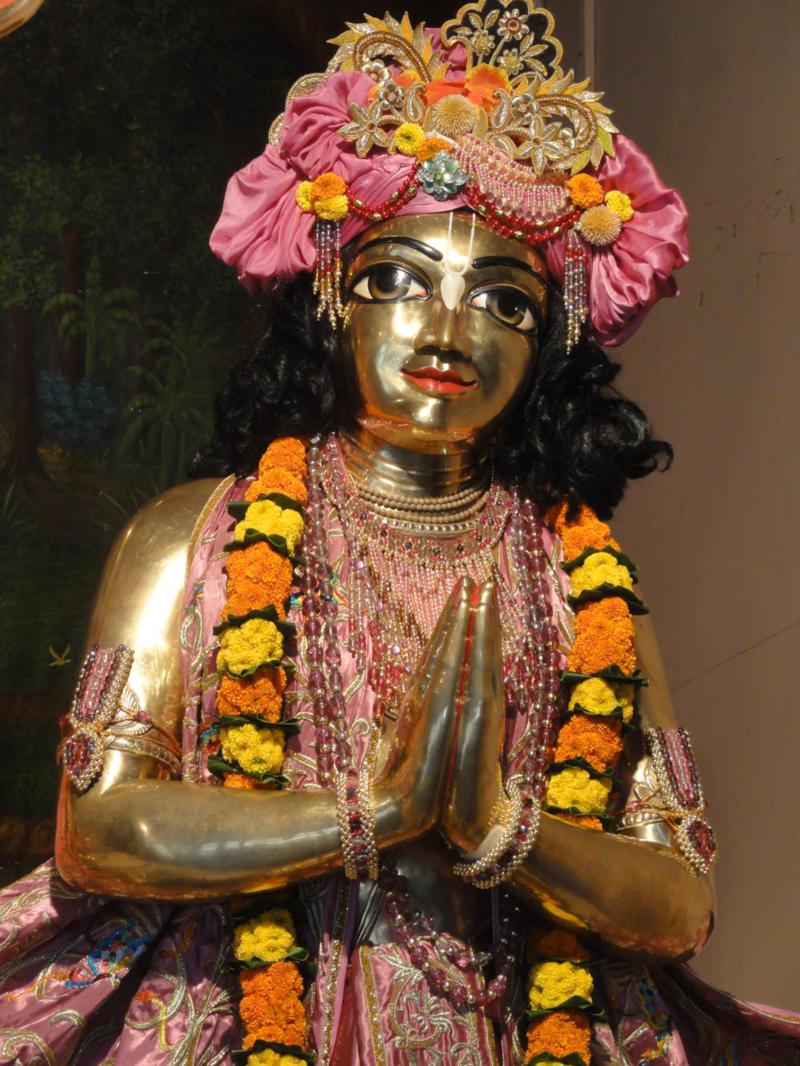
Madhavendra Puri – Biography

   During Nityananda Prabhu's tour of all the holy places of India for the purpose of purifying them, by the will of providence, he happened to meet Madhavendra Puripada somewhere in western India. When Nityananda Prabhu saw Madhavendra Puri Goswami he fainted away in a swoon of ecstatic love and His transcendental body became completely still. Similarly, when Madhavendra Puri gazed upon Nityananda Prabhu, he completely forgot himself and fainted to the ground.

Madhavendra Puri

During Nityananda Prabhu's tour of all the holy places of India for the purpose of purifying them, by the will of providence, he happened to meet Madhavendra Puripada somewhere in western India. When Nityananda Prabhu saw Madhavendra Puri Goswami he fainted away in a swoon of ecstatic love and His transcendental body became completely still. Similarly, when Madhavendra Puri gazed upon Nityananda Prabhu, he completely forgot himself and fainted to the ground. (In the image: Shri Nityananda Prabhu, ISKCON Chennai, Tamil Nadu).

   Shri Gaurachandra used to repeatedly remark that, in relishing theme allows of love in devotion, there is no one to compare with Madhavendra Puri. When the disciples of Madhavendra Puri, headed by Ishvara Puri, saw their spiritual master and the Prabhu fallen in afaint of ecstatic love, they began to cry. Gradually, Nityananda Prabhu and Madhavendra got back their external consciousness. When their eyes opened and they again got sight of one another, they put their arms around each other's necks and cried tears of joy. Then they began to roll in the sandy earth carried by the waves of ecstatic love,while rending the sky with their loud roaring. As a river of love began to flow from their eyes, Mother Earth considered herself to be blessed in being flooded by that inundation. With the appearance of the transformations brought by bhava, trembling, tears, and standing of the hairs on end, it could be understood that their bodies had become a place of pastimes for Chaitanya Gosai.

   Nityananda exclaimed, "Today I have received the fruit of all my travels to the holy places. In seeing the feet of Madhavendra Puri, I have received the treasure of love of God, and thus my life has become blessed."

   Madhavendra Puri continued to embrace Nityananda Prabhu tightly to his chest. He wanted to say something but his voice was choked updue to experiencing intense emotions. Ishvara Puri, Brahmananda Puri and the other disciples of Shri Puripada present, became complet elyenamored by Nityananda Prabhu. Some other pilgrims were present at that place but due to being devoid of devotion, they couldn't understand what was going on and continued to converse amongst themselves. The Devotees felt some sorrow to see the behaviour of those dull headed brutes so they retreated into the forest to be rid of their company. When they were alone together again, their distress was destroyed and they continued to relish the mellows of Krishna-prema. In this way Nityananda Prabhu and Madhavendra Puri spent some days together in the happiness of Krishna-katha.

   Madhavendra Puri's love of God was very uncommon. Simply upon seeing a dark rain cloud he would fall down unconscious. Day and night he imbibed the spirituous liquor of Krishna-prema, and thus remained intoxicated, sometimes laughing, sometimes crying, sometimes raising a tumultuous hue and cry. Nityananda also behaved just like a mad man, falling down on the ground, his body agitated by waves of ecstasy. As lava belches forth from a volcano, loud laughter erupted from his mouth while his wholebody, as if in the throes of a great earthquake, trembled violently. 

Madhavendra Puri

Madhavendra Puri's love of God was very uncommon. Simply upon seeing a dark rain cloud he would fall down unconscious. Day and night he imbibed the spirituous liquor of Krishna-prema, and thus remained intoxicated, sometimes laughing, sometimes crying, sometimes raising a tumultuous hue and cry. Nityananda also behaved just like a mad man, falling down on the ground, his body agitated by waves of ecstasy. As lava belches forth from a volcano, loud laughter erupted from his mouth while his wholebody, as if in the throes of a great earthquake, trembled violently. (In the wallpaper: Shri Gopinath, ISKCON Chowpatty, Mumbai).

   Never before having seen such unprecedented displays of ecstatic emotions, Madhavendra Puri's disciples continuously remain edengaged in Hari-kirtana. No one knew whether it was day or night. Having become completely absorbed in the mellows of Krishna-prema, the days were passing though it seemed to them that not even a moment had elapsed yet. Whatever was discussed between Madhavendra and Nityananda is known only to them and Shri Krishnachandra. Who else is capable of understanding such subject matter? Madhavendra Puri was unable to give up Nityananda's company and so he continued to roam about, keeping Nityananda with him.

   Madhavendra Puri told his disciples, "Never before anywhere in all my travels to all the holy places, have I ever seen such love as this. I could understand that the Supreme Lord is merciful to me when I got a friend like Nityananda as my close companion. Whenever one gets His association, that place becomes the sum total of all holy places and non-different from Vaikuntha itself. Whoever simply hears about Him will definitely get the association of Shri Krishnachandra. And whoever bears even the slightest enmity towards Him, though he may be a Devotee, is not dear to Krishna." In this way, day and night, Madhavendra praised the attractive qualities of Nityananda Prabhu.

   Lord Nityananda respected Madhavendra Puri as his guru and always behaved with him in that relationship. After travelling together for some days finally Nityananda Prabhu set of in the direction of Setu Bandha while Madhavendra Puri started for Sarayu. Having lost contact with the external world neither of them was aware of his own body. In order to maintain body and soul together, they thus remained in these transcendental states of consciousness. If in external consciousness, they would cease to live. [C.B. Adi9.158-192]

   At the time of his departure from this world, Madhavendra Puri was completely absorbed in separation from Krishna and constantly repeated one sloka. This verse is considered by Gaudiya Vaishnavasto be the essence of expression of the mood of separation.

   Among his associates and disciples were Shri Advaita Acharya, Shri Pundarika Vidyanidhi, Shri Nityananda Prabhu, Shri Ishvara Puri, Shri Paramananda Puri, Shri Ranga Puri, Shri Ramachandra Puri, Shri NrisimhaTirtha, Shri Raghupati Upadhyaya, Shri Sukhananda Puri, amongothers.

   "Madhavendra Puri's body is totally imbued with divine love, as are his followers as well. He takes nothing other than the juice of the mellows of love for Krishna as his food stuffs. Thus his body has become the place of pastimes of Shri Krishna." [C.B.Adi 9.155]

   His worshippable Deity, Gopalji, is presently residing at Nathdwarin Rajasthan, and is worshipped by the followers of Vallabhacharya. 

Madhavendra Puri 6

"Never before anywhere in all my travels to all the holy places, have I ever seen such love as this. I could understand that the Supreme Lord is merciful to me when I got a friend like Nityananda as my close companion. Whenever one gets His association, that place becomes the sum total of all holy places and non-different from Vaikuntha itself. Whoever simply hears about Him will definitely get the association of Shri Krishnachandra. And whoever bears even the slightest enmity towards Him, though he may be a Devotee, is not dear to Krishna." (In the image: Shri Nityananda Prabhu, ISKCON Chowpatty, Mumbai).