Author Archives: Sevak

Bhaktisiddhanta Saraswati Appearance Day Lecture By Srila Prabhupada On March 2, 1975

Prabhupada: auspicious day, 101 years ago, Srila Bhaktisiddhanta Sarasvati Thakura, he appeared on this day. So Bhaktisiddhanta Sarasvati Thakura is gaura-sakti. Gaura-sakti means empowered, empowered by Sri Caitanya Mahaprabhu. Sri Caitanya Mahaprabhu, He wanted His mission to be broadcast.(aside:) What is that sound? all over the world. He desired:

prithivite ache yata nagaradi-grama
sarvatra pracara haibe mora nama

Prithivite, all over the world, as many town and villages are there, Sri Caitanya Mahaprabhu predicted that His mission will spread. This prediction was made by Caitanya Mahaprabhu personally five hundred years ago.

So perhaps my Guru Maharaja, Bhaktisiddhanta Sarasvati Thakura, attempted to fulfill the desire of Sri Caitanya Mahaprabhu. And sometimes in the year 1918, he was brahmacari, and Bhaktivinoda Thakura, his material father, he wanted Actually, he wanted, Bhaktivinoda Thakura Of course, everyone wanted. But he wrote one small book, Teachings of Lord Caitanya, Teachings and Precepts of Lord Caitanya, in 1896. And he presented that book to the McGill University in Canada. And he very much desired that the foreigners, especially Americans, would join this movement. That was his desire in 1896. And then, in 1918, my Guru Maharaja started with this mission one institution known as Gaudiya Math. Perhaps some of you know the name, Gaudiya Math. And he was trying to spread this message of Sri Caitanya Mahaprabhu, and by chance or by prediction, as you think, I was taken to Bhaktisiddhanta Sarasvati Thakura by one of my friends. I did not want to go there, but he forcibly took me there. Yes. And he ordered me that “You preach the cult of Caitanya Mahaprabhu in English language. This is very much essential.” So on the first meeting he told me like that. That was my first meeting with him. So at that time I was in favor of Gandhi’s movement. So I said that “We are not independent subjugated. Who will hear about our message?” So Bhaktisidhanta Sarasvati Thakura refuted my argument. I was very much pleased. I had so many talks. But I was very much pleased to be defeated, that “This so called nationalism or any ism, they are all temporary. Real need is the self-realization.”

So I was convinced. But at that time, although he wanted me to immediately join him and spread this movement, so at that time I was a married man, young man. I was married in 1918. And I got a son also at that time, 1921. And in 1922 I met him. At that time I was manager in a big chemical factory. So I thought that “I am married man. I have got so many responsibilities. How I can join immediately? It is not my duty.” Of course, that was my mistake. I should have joined immediately. (laughter) I should have taken the opportunity immediately. But maya is there. So I thought like that. So that’s a long history. Then in 1954, no, not 1954, 1968, when I was fifty-four years old  Nineteen fifty-four, yes. Nineteen fifty-four, I was at that time fifty-eight years. So I left home, and I was living alone. Then, 1958, I took sannyasa, and then I decided to take up the responsibility of my Guru Maharaja. I thought that “My other Godbrothers are trying, so I am not capable to do it. They are better situated.” But somehow or other, they could not do very much, appreciative activities, in this connection.

So when I was seventy years old I decided, “Now I must do and execute the order of my Guru Maharaja. And thus this movement was started in 1965 from New York. And I was not very much hopeful because it is very difficult task, just opposite the European and Western culture. I came  When I first came, I had no money. So I got a free passage through some Indian steam navigation company. So I came by ship. So when I was on the ship at Boston port, Commonwealth port, I was thinking that “I have come here. I do not know what is the purpose because how the people will accept this movement? They are differently educated, and as soon as I will say, ’So, my dear sir, you have to give up meat-eating and illicit sex and no intoxication and gambling,’ they will say, ’Please go home.’ ” (laughter) Because that was the experience of one of my Godbrother. He went to London, and he had the opportunity to talk with one big man, Marquis of Zetland. Marquis of Zetland was formerly governor of Bengal. At that time I was student. He was Scotsman, and I was student of the Scottish Churches’ College. So he came to see our college, and he was standing in front of me in the second-year class. So he was very nice, good gentleman. So he proposed to my Godbrother, “Whether you can make me a brahmana?” So my Godbrother proposed, “Yes, we can make anyone brahmana provided you follow this principle: no illicit sex, no intoxication, no meat-eating, no gambling.” So that Lord Zetland immediately replied, “Impossible.” (laughter) So I was thinking that “I will propose something which is impossible. Anyway, let me try.”

Devotees: Jaya! Haribol!
Prabhupada: So now, by the grace of Krishna and Caitanya Mahaprabhu and in the presence of my Guru Maharaja, you are so nice boys and girls. So in front of Caitanya Mahaprabhu you are chanting Hare Krishna mantra, and you are taking part in it very seriously. So my Guru Maharaja will be very, very much pleased upon you and bless you with all benefits.

So he wanted this, and he is not It is not that he is dead and gone. That is not spiritual understanding. Even ordinary living being, he does not die. Na hanyate hanyamane sarire. And what to speak of such exalted, authorized personality like Bhaktisiddhanta. He is seeing. I never feel that I am alone. Of course, when I came to your country without any friend, without any means  Practically, just like a vagabond I came. But I had full faith that “My Guru Maharaja is with me.” I never lost this faith, and that is fact. There are two words, vani and vapuh. Vani means words, and vapuh means this physical body. So vani is more important than the vapuh. Vapuh will be finished. This is material body. It will be finished. That is the nature. But if we keep to the vani, to the words of spiritual master, then we remain very fixed up. It doesn’t matter. Just like Bhagavad-gita. It was spoken five thousand years ago. But if you keep to the words of Krishna, then it is always fresh and guiding. Not that because Arjuna personally listened to Krishna about the instruction of Bhagavad-gita, therefore he knew it. That is not the fact. If you accept Bhagavad-gita as it is, then you should know that Krishna is present before you in His words in the Bhagavad-gita. This is called spiritual realization. It is not mundane historical incidences.

evam parampara-praptam
imam rajarshayo viduh
sa kaleneha (mahata)
yogo nashtah parantapa

If you don’t keep in touch with the original link, then it will be lost. And if you keep touch with the original link, then you are directly hearing Krishna. Similarly, Krishna and Krishna’s representative, spiritual master, if you keep always intact, in link with the words and instruction of the superior authorities, then you are always fresh. This is spiritual understanding. Na jayate na mriyate va kadacit nityah sasvato ’yam purano. Puranah means very old. Just like Krishna, the Supreme Being. He must be very old because He is the original person. But the Brahma-samhita says, advaita acyuta anadi ananta-rupam adyam purana-purusha nava-yauvanam ca. Purana-purusha, the oldest person, but you will find Him nava-yauvanam ca, always a fresh youth. That is God. God is not a material, that it gets old. The body gets old.

So you are hearing this philosophy daily. Try to understand more and more. We have got so many books. And this is the mission of Caitanya Mahaprabhu and, by disciplic succession, Bhaktivinoda Thakura, then my spiritual master. Then we are trying our level best. Similarly, you will also try your level best on the same principle. Then it will go on. Same principle. It doesn’t matter whether one is born in India or outside India. No. When Caitanya Mahaprabhu said, prithivite ache yata nagaradi-grama, “As many towns and cities and villages are there,” He did not say it to make a farce. He is the Supreme Personality of Godhead. So sometimes I am very much criticized that I am making foreigners a brahmana. The caste brahmanas in India, they are very much against me. But this is not fact. When Caitanya Mahaprabhu said that all over the world His message will be broadcast, does it mean that it will be simply a cinema show? No. He wanted that everyone should become perfect Vaishnava. That is His purpose. It is not to make a farce, some lecturing and , or some mutual praising society. No. It is Krishna Society. Everyone who will join this Krishna Society movement, he is more than a brahmana. Brahmana, what is brahmana? Brahmana is also material. A devotee is more than brahmana. The brahminical culture is included already. Brahma janatiti brahmanah: “Brahmana means one who knows the Absolute Truth, Brahman.” He is brahmana. But that is not very fixed up. Brahmeti paramatmeti bhagavan iti sabdyate. Brahman is impersonal effulgence, and then further progress, realization of the localized aspect, Paramatma, Antaryami, and finally, understanding the Supreme Person, Krishna, Supreme Person, that is the final understanding.

So people cannot understand that how the Supreme, the origin of everything, can be a person. That is their difficulty. Because they are thinking, “A person, God? How it is possible. God is great, and He is the creator of everything. How a person can do that?” Yes. That is the Vedic version.

isvarah paramah krishnah
sac-cid-ananda-vigrahah
anadir adir govindah
sarva-karana-karanam

He is the cause of Brahman. He is the cause of Supersoul. So ordinary man cannot understand. Avajananti mam mudha manushim tanum asritam. It requires Krishna’s grace to understand Him.

So try to receive Krishna’s grace through the disciplic succession, Caitanya Mahaprabhu. Then you will understand everything. Yasya deve para bhaktir yatha deve tatha gurau. This is the process, Vedic process. One should have unflinching faith in God and spiritual master. Don’t jump over God, crossing the spiritual master. Then it will be failure. You must go through. We are observing Vyasa-puja ceremony, the birth anniversary of our Guru Maharaja. Why? We cannot understand Krishna without spiritual master. That is bogus. If anyone wants to understand Krishna, jumping over the spiritual master, then immediately he becomes a bogus. Therefore Caitanya Mahaprabhu says, guru- krishna-kripaya paya bhakti-lata-bija. That is Vedic injunction. Tad viddhi pranipatena pariprasnena sevaya. Nobody can understand Krishna without going through His most confidential servant. This is the meaning of this Vyasa-puja. You cannot surpass. If you think that you have become very learned and very advanced, now you can avoid the spiritual master and you understand Krishna, that is the bogus. That is the meaning of this Vyasa-puja ceremony. We should always pray, yasya prasadad bhagavat-prasadah. Yasya prasadad, only by the grace of spiritual master we can achieve the grace or mercy of Krishna. This is the meaning of this Vyasa- puja, offering obeisances by parampara system.

So you have taken a very nice line of activities, spiritual activities. Of course, as far as possible, we have tried to give you instruction, books. But remain always faithful to the spiritual master and try to understand Krishna. And if you simply understand Krishna, then your life is successful. Janma karma ca divyam me yo janati tattvatah. The human life is meant for understanding Krishna. That is the perfection of life. Any other so-called understanding, that is simply waste of time because we are under the grip of the material nature. You may be very learned scholar. You may be a fool. It doesn’t matter. You are under the laws of material nature. So before finishing this small span of life  We have got this human form of life. It will be finished, as the cats’ and dogs’ life also finished. But if we try through the guru and Vaishnava, then, we can achieve in this life the full success, not failure like cats’ and dogs’ life. That is the opportunity. So as far as possible, we are trying to lead you in this line, and you kindly follow. Then your life will be successful. That is the mission of Sri Caitanya Mahaprabhu. He wanted to deliver these fallen souls, the conditioned souls rotting in this material world. So Krishna Himself  Krishna comes Himself, Krishna sends His devotees, Krishna comes as devotee just to execute this mission to reclaim the fallen souls from the clutches of illusory energy, material world.

Bhaktisiddhanta Saraswati Appearance Day Lecture By Srila Prabhupada On February 15, 1971

Prabhupada:Sri Bhaktisiddhanta Sarasvati Goswami Maharaja, my spiritual master, his advent day today. In 1922, I was at that time very much engaged in Congress activity. I was very much devout follower of Mahatma Gandhi, and at that time, I was manager also in a very big chemical concern in Calcutta. Perhaps you may know, Dr. Bose’s laboratory. One of my friends he’s still living, Sri Narendranath Mullik he informed me that “One saintly person has come. Let us go and see.” At that time I was young man, and I did not care for very much about so-called saintly persons. Because in our house, my father used to receive so many sannyasis, but some of them were not very to the standard, and due to my association with college friends, younger days, I lost my faith practically, although I was born in a Vaishnava family. My father was a pure Vaishnava. From my childhood, he gave me Radha-Krishna Deity for worshiping. A ratha… I was playing with my boyfriends, Ratha-yatra, Dola, like that. My father encouraged. So I was trained up in this line, but in my youthful age, when I was college student, gradually, by their bad association or something, gradually, I lost my activities. But when this friend, Mr. Mullik, took me to Bhaktisiddhanta Sarasvati Goswami Maharaja, he immediately asked me that, “You are educated young boys. Why don’t you take up Lord Caitanya’s message and preach in the Western world?” In the very first sight, he told me. At that time, I argued with him that “We are dependent nation, and who is going to hear about our message?” So he defeated my argument. (aside:) There is no necessity of closing. Yes. He defeated my argument. He was learned scholar. What I was? I was still boy. So I agreed (chuckles) that I was defeated. So after finishing our visit with Bhaktisiddhanta Sarasvati, I got some impression that “Here is a person who has taken Lord Caitanya’s message very seriously. Now it will be preached.” My friend asked my opinion, that “What is your opinion?” So I gave this opinion, that “Here is a person who has taken Lord Caitanya’s movement very seriously, and now it will be preached.”
        
So that was in 1922. Then, in 1923, I left Calcutta on business account, and I started my business at Allahabad. But I was always thinking of my Guru Maharaja, although I was that time not initiated. But the impression was there. I was thinking, “I met a very nice saintly person.” So in this way, I passed from 1923 to 1928, I think. Then during Kumbhamela… (child making noise) Stop that noise he’s making. In 1928 my Guru Maharaja, along with other disciples, came to Allahabad for starting their branch there. So some gentlemen known to me might have told them that “The proprietor of such and such business, Prayaga Pharmacy, he’s a very nice gentleman. He can help you in so many ways.” So they came to me, and I saw the same saintly persons whom I met 1922. I was very glad to receive. In this way, my connection was more intimate with my Guru Maharaja. And in 1936, or 1933, I was initiated officially, although I was initiated 1922. But officially, I was initiated in 1933, although from 1922 to 1933 I was always thinking of His Divine Grace Bhaktisiddhanta Sarasvati Goswami Maharaja. So in 1936, he was to pass away by 31st December. So I do not know… Out of my own accord, I wrote him one letter that “Guru Maharaja, you have got many disciples. Some of them are directly serving you. I could not do so. I am a householder. So if you give me some direct service to you, it will be very kind of you.” So he replied that letter, that “You try to preach in English language. Then the persons who will be instructed by you and both yourself will be benefited.” Again, he said the same thing which he ordered me in 1922 at the first sight. Then there… He passed away 1936, 31st December.
        
Then there were other Godbrothers. I consulted him that “Guru Maharaja said like this. What can I do?” So they also encouraged me. I was writing. There was a paper, Harmonist. Then, by their desires, I started this Back to Godhead in 1944. That was also started on his advent day, this advent day. Back to Godhead was started. Yes. There was a meeting, and many friends came, and we first started this Back to Godhead on his advent day, this advent day, 1944. So our paper, Back to Godhead, the advent day is also today. Yes.

Hamsaduta: Doubly auspicious.
Prabhupada: Yes. So at that time, there was no sale of Back to Godhead. I was publishing about one thousand copies and distributing. So there was no income. I was spending three hundred, four hundred rupees from my pocket. At that time, I had income. Then, gradually… I wanted to remain as a grihastha and preach, but Guru Maharaja did not like this idea. I could understand. Sometime I was dreaming that he was calling me, and I was horrified that “I’ll have to go away from home.” (laughter) So at last it happened so that I left my home in 1950 and became a vanaprastha. I was living sometimes here and there. In 1959 I took sannyasa. But that Back to Godhead was going on. Then there was some inner dictation that “This paper, Back to Godhead, I am publishing, people are taking.” Some friend advised me that “Why don’t you write some books? That will be nice.” So then I began to translate Srimad-Bhagavatam. And because I left home, so practically I had no income. With this Bhagavatam, er, Back to Godhead, I was selling and I was some way or other maintaining. And whatever little money I had, that was finished.
        
Then, when I wrote book, Srimad-Bhagavatam First Canto was finished. So I approached the Bhaiji of… Perhaps Mataji knows this. (chuckles) In 1962. So I asked him that “You take this publication.” So I am very much obliged to Bhaiji. He said that “Our English printing is not very efficient. You can get this book published from elsewhere. I shall partly help you.” So he helped me with some money from the Dalmia Trust, and I first of all published my first part of Srimad-Bhagavatam. Then I published second part also. There was sale. Then there was no necessity of money. I was getting money by selling Srimad-Bhagavatam. Everyone appreciated. Even the, your American Embassy here, they purchased eighteen copies, and they gave me open order that “Whenever this Bhagavata will be published next part, subsequent parts, this is open order, eighteen copies, each part.” That order is still there.
        
So after publishing three parts of readings(?), then automatically, Guru Maharaja gave me indication that “Now you can start for America.” So some way or other, in 1965 I went to America, with great difficulty. But I took about two hundred sets of books. The customs clearance was done, I told them that “Oh, I am taking these books for distribution. Not for sale.” Anyway, they passed, and with these books I reached America. And I was maintaining myself by selling these books for one year. There was no friend, and I was living in apartment with great difficulty. Still, the whole, I mean to say, stock, and my typewriter, my tape recorder everything was stolen. In this way, I became very much depressed, and I was going to the shipping company, “When the next ship is going for, going to India?” So they gave me such and such date. Then I thought, “Let me wait for some time more. Then I shall return back.” I had return ticket, of course. There was no difficulty.

In this way, 1966, by selling these books, I had only $200, and I dared to take one apartment and storefront. Storefront one $125 per month, and apartment $75. So I had only $200 dollars. So I advanced him $200. I did not know how to pay next month’s rent. So I started in 1966, lecturing in a storefront and living in that apartment in 26 Second Avenue. Then gradually, these boys, American boys and girls, began to come. And then I started my kirtana in Tompkinson Square. More and more, these younger Americans, they came to me, and things were organized. Then I registered this Krishna Consciousness Society under religious act of New York in 1966, and gradually people took interest. People means the younger section. All the boys and girls, they were from sixteen… Not all sixteen, but there were sixteen. Krishna dasa was at that time sixteen years old. And… Between twenty to thirty. Only, I think, Keith—now Kirtanananda Maharaja—he was at that time twenty-nine. Hayagriva was, I think, twenty-nine. So in this way… This Hayagriva, I met him on the street. After renting the apartment and storefront, when I was returning, this Hayagriva, Professor Howard Wheeler, he was philosophically minded. So he asked me, “Swamiji, are you coming from India?” So I told, “Yes, I am coming from India.” So, “Are you interested in Indian philosophy?” “Yes, sir.” “So why don’t you come? I have taken one storefront and apartment.” So I came back. I showed him, “Here is my storefront and apartment. You come in the evening.” So… (Hindi)
 
So the Hayagriva and Kirtanananda, Keith, and some other boys, I think, Satsvarupa.
Pradyumna: Ravindra Svarupa?
Prabhupada: Ravindra, yes, yes, he was there.
Tamala Krishna: Mukunda.
Prabhupada: Mukunda. In this way, five or six students used to come. Gradually, it developed. Then we started next branch in San Francisco, next branch in Montreal, next branch in Buffalo, Boston. In this way… Now we have got forty-five branches. So practically, we began work from 1968. ’66 I started, but… And ’67 I became very much sick. So I came back to India, and again I went there in 1968. Practically, this propaganda work began vigorously from 1968. So from 1968, ’69, ’70, and this, ’71. So three, four years, all these branches have grown up, and now practically, throughout the whole continent, Europe and America, they know what is Hare Krishna maha-mantra. Due it to our propaganda. Just like these boys. You have seen they are chanting and dancing. We send street sankirtana even the most busiest quarter of New York, Fifth Avenue. And they go. The American boys, they are very daring. Sometimes police arrest them. And police is not harassing. The public and police, both, they are now sympathetic, that “Here is a movement which is actually genuine and very beneficial to our people.” They are sympathetic. And even some of the Christian priests, they are also very sympathetic. They say that “These boys, American boys, they are our boys. They’re so nice that they’re mad after God, but we could not give them. Swamiji has given them.” So they appreciate. Actually, these boys, they come from Christian family, Jewish family. There are many churches in America. I was surprised. When I first went to Butler, that’s a small county, but I saw there about dozen of churches. So I thought the American people are very religiously-minded. And actually so. The history of the American people, mostly they came from England for this religious purpose. So they migrated in America for being religiously advanced.

So American people, I very much appreciate them. They are religious. They have got very good potency for understanding God consciousness. That is my opinion. And I do not know why I was inclined to go to America. It was also Krishna’s desire. Because I thought that “If this movement, Caitanya Mahaprabhu’s movement.” Caitanya Mahaprabhu said that

prithivite ache yata nagaradi-grama
sarvatra pracara haibe mora nama

That is His prediction, that “As many towns and villages are there on the surface of the globe, everywhere, this message of Hare Krishna mantra and Lord Caitanya’s name will be there.” So I thought that “I should go to America. If the American people take it seriously, then other people will take it.” So actually, that is happening. These boys are so enthusiastic in preaching that on my word, they are going any part of the world. Any part of the world. They are prepared to go any part of the world. And just now I received one letter from my disciple Sriman Upendra dasa. He does not know Hindi, and in the Fiji Island there are many Indians, but still, he is making propaganda. He’s simply chanting Hare Krishna mantra door to door. They are also husband and wife. And people are very much appreciating.
       
So my Guru Maharaja’s desire and Caitanya Mahaprabhu’s prediction is now being fulfilled. At least, it has begun to be fulfilled. So it is a genuine movement, authorized movement, and India’s original culture. So our appeal to the Indian people, that “You should take seriously about this movement and try to cooperate with us.” That will be glorification for Indian culture. At the present moment, India is known as very poor, poverty-stricken country. People are under impression that “They are beggars. They have got nothing to give. They simply come here to beg.” Actually, our ministers go there and, for some begging purpose: “Give us rice, give us wheat, give us money, give us soldiers.” That is their business. But this movement, for the first time, India is giving something to them. It is not a begging propaganda; it is giving propaganda. Because they are hankering after this substance, Krishna consciousness. They have enjoyed enough of this material consciousness. The material consciousness means to enjoy sex life and drink and have sufficient money. These three items, they have got sufficient, immense. There are… So far material comforts, oh, there is no conception in India how they are materially comfortable. Their roads, their cars, their machines… You cannot imagine how American roads are there. There are freeways. In America, there are freeways: without any stoppage you can run your car in seventy mile speed, and four cars going up and four cars going down. And road just like velvet. (laughter) Our roads… So there is no comparison of their materially advancement. So I always… When I run in some freeway.These boys run our cars. And you’ll be very pleased that in each and every temple we have got at least four cars, nice. Especially one car for me and two cars for carrying them for sankirtana movement. Very good arrangement. Better than any temple in India. If you go sometimes… I request you to go. But one condition: that you have to become Life Member. (laughter) But if you go, will be very much pleased in our temples. And this Dr. Rao… Perhaps you know, he is a professor in your Gorakhpur University. He was a research scholar, atomic research scholar. His wife is sitting here. So he’s still. So he was very much captivated with the temple worship, and there he became my disciple.

So our temple is very nice. Just like this temple, you see practically how they are managing. Here, of course, we have no facility. But in other temples we have got very nice decorated. There is chandelier and… If you see, we have got pictures. It is very nice. So this movement is increasing, and our branches are increasing, practically, every month one branch. And these boys are doing very enthusiastically. So why not spread this movement in India? It is India’s culture. Why Indians are lacking? That is my… I have brought them to show you example. This is a genuine movement, Krishna. People are harassed, “Where is God?” Krishna, here is God. Why don’t you take Krishna? Krishnas tu bhagavan svayam. And Krishna’s order is there in the Bhagavad-gita: man-mana bhava mad-bhakto mad-yaji mam… Why you are misusing this Bhagavad-gita? You take it very seriously, and let there be a successful world movement, Krishna consciousness movement. And people will be happy.Actually, that is the peace formula.

bhoktaram yajna-tapasam
sarva-loka-mahesvaram
suhridam sarva-bhutanam
jnatva mam santim ricchati

Santi means to understand Krishna, or God, as the supreme enjoyer. Here, in the material world, everyone wants to be enjoyer. That is not possible. Not everyone is enjoyer; everyone is servant. But his misconception is that “I am enjoyer.” That is called maya, illusion. He’s not enjoyer. He’s servant. So Krishna therefore says in the Bhagavad-gita, sarva-dharman parityajya mam ekam saranam vraja. Sarva-dharman, we have created some dharma. Some dharma is for lording it over the material nature. Karmis. The karmis are trying to lord it over the material nature, all resources. Working hard, day and night, how to lord it over the material world. This is one dharma. Another dharma, when the karmi’s frustrated because he cannot enjoy… Because he is not enjoyer. Artificially, he is trying to enjoy. Then, when he’s frustrated, then he says, brahma satyam jagan mithya: “The brahma is satya, and this world is false.” Then he becomes a sannyasi, a renouncer. But he cannot live in that renouncement platform. And then he again comes back to this material world and engages himself in some philanthropic work: “Let us open hospital. Let us open schools and college…” If the brahma satyam jagan mithya… If the world is mithya, false, why you are again, a sannyasi, you are coming again back to this platform? That means he’s not satisfied in so-called brahma satyam. Practically, he has no realization of Brahman. Therefore he comes back again. And that is, I mean to say, indicated in the Srimad-Bhagavatam, that ye ’nye ’ravindaksha vimukta-maninah. Persons who are thinking that “I have become liberated. I have become Narayana. I have become God. I have become Brahman.” Brahman, everyone is Brahman, constitu… That’s a fact. But there is another Param Brahman. Param brahma param dhama pavitram paramam bhagvan Krishna.
        
So the Mayavadi philosophers, they mistake that “Param Brahman or myself all the same.” No. That is not the fact. Therefore, without having shelter of the Param Brahman, he falls down again in this material world. Aruhya kricchrena param padam tatah patanty adho ’nadrita yushmad anghrayah. Because he has no information of the lotus feet of Krishna, he falls down again to the material platform. So just like pendulum, the clock pendulum, tock, tock, tock sometimes he’s renouncer and sometimes he’s enjoyer. Sometimes he’s accepting… For example. Don’t take it otherwise. Just like our national father, he renounced everything. But renounced for what? Greater enjoyment, that his countrymen will be happy. “The Britishers will go away, and we shall get independence, and we shall be enjoyer.” You see? So this renouncement or that… Again, renouncement for enjoyment. The Mayavadi philosophers, they say “Renounce this whole…” Brahma satyam jagan mithya. Jagan mithya. “But I want to be one with that Supreme.” That is for greater enjoyment. “I have failed to enjoy this world even after becoming prime minister or big man. Now I’ll become God.”
        
So this kind of philosophy will not make you happy. Therefore Krishna says, sarva-dharman parityajya. We have created dharma in two categories: one for enjoyment and one for renouncement. Both these things have to be given up. Neither enjoyment, nor renouncement. Then what is this philosophy? The philosophy is that you cannot renounce anything. Because what is the value of your renouncement? You haven’t got anything. Everything belongs to God. So what you can renounce? Similarly, what you can enjoy if everything belongs to God? Isavasya. Bhoktaram yajna-tapasam. Krishna says, “I am the enjoyer. I am the proprietor.” So if Krishna is proprietor, if Krishna is the enjoyer, then how you can renounce? The proprietor is somebody else, so what is the value of your renouncement? You are sitting in this room. While going away, if you say, “I renounce this room,” what is the meaning of this renouncement? When this room belonged to you? You have come here for some time and sitting here for one or two hours. That does not mean you possess it. Similarly, we come here empty-handed; we leave here, say, fifty years or hundred years. When I become proprietor? This is another maya, renouncement. As enjoyment is another maya, similarly, renouncement. So we have to give up this renouncement or enjoyment. We have to take the real position, that “Everything belongs to Krishna, or God. We have simply to serve Krishna.” That is bhakti-yoga. That will give you actual peace. That is stated in the Bhagavad-gita. Bhoktaram yajna-tapasam. Krishna is the supreme enjoyer. You simply supply ingredients of His enjoyment; then you’ll be happy. Because He is enjoyer. And bhoktaram yajna-tapasam sarva-loka-mahesvaram. And He is the proprietor. So this attitude… Of course, they may criticize that “The bhaktas, the Vaishnavas, they have got slave mentality.” Some so-called philosopher remarked like that. But that is not slave mentality. That is the actual position. That we get information from Sri Caitanya Mahaprabhu. Jivera svarupa haya nitya krishna-dasa. We are eternally servant of Krishna. And mukti means svarupenavasthitih. When you are situated as servant of Krishna, that is mukti. And so long you are falsely claiming that “I am enjoyer, I am proprietor,” that is maya. That is our philosophy. And Krishna consciousness movement is meant for that.
 
We are that movement is not new. It was long, long ago started. Even before five thousand years, when Krishna spoke this philosophy to Arjuna, He said, imam vivasvate yogam proktavan aham avyayam. Formerly, He spoke to Vivasvan, the sun-god. Manu. Manu understood this philosophy from Vivasvan. That means four hundred millions of years ago. So it is not a new movement. It is very old. Just like Krishna is very old. Advaitam acyutam anadim ananta-rupam adyam purana-purusham. Purana means very old. Purana means very old. Nava-yauvanam ca: at the same time, very youthful. Similarly, this movement is very, very old, but it appears very fresh. Because it is spiritual, it is ever-fresh. So you take to this movement very seriously, and all of you will be very happy. That is our request. We are presenting this movement all over the world, and anyone who has taken, he is happy. But one must be sincere and serious. Then it will act.

Thank you very much.
Hamsaduta: The preceding lecture was recorded on February 15, the evening of the appearance day of Srila Bhaktisiddhanta Goswami Maharaja Prabhupada, at 3 Krishna Niketana, in Gorakhpur, Uttar Pradesh.

Gaura Kishora Dasa Babaji Maharaj – Biography

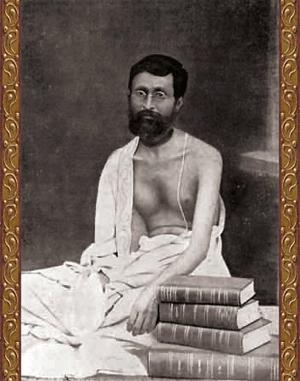
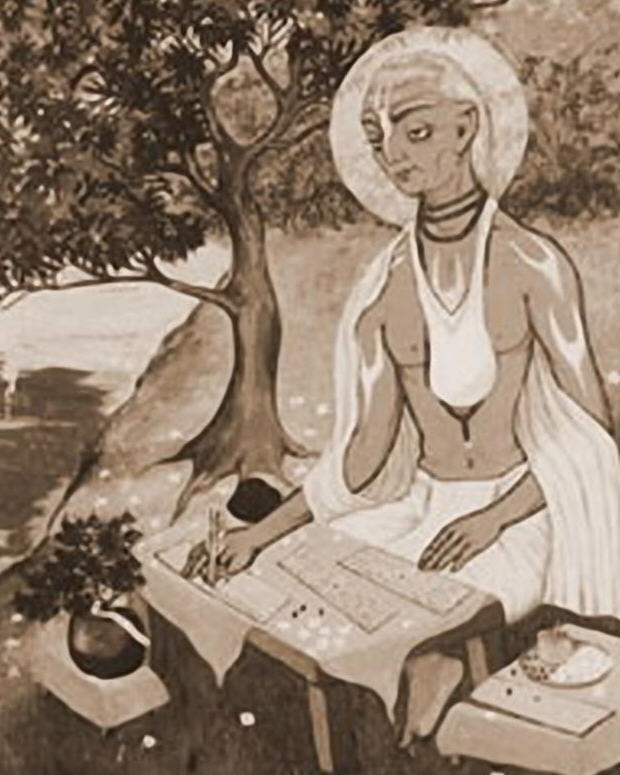
Gaura Kishora Dasa Babaji Maharaja

Gaura Kishora Dasa Babaji Maharaj.

   The next in the parampara, after and is an associate of Bhaktivinoda Thakura – a great paramahamsa babaji by the name of Gaura Kishora dasa Babaji Maharaja. Technically he was the disciple of Bhagavat dasa Babaji Maharaja, who was a disciple of Jagannatha dasa Babaji Maharaja.

   In 1897 Gaura Kishora dasa Babaji Maharaja came to Mayapur Navadwipa Dhama from Shri Vrindavana Dhama, where he was accredited the exalted title "Bhajananandi". Shrila Bhaktivinoda (Kedarnath Datt), seeing the transcendental behaviour of Babaji Maharaja, would use him as an example of nirapeksha (indifference), as his level of renunciation was beyond belief.

   This Vaishnava saint's life was an example of utter humility and poverty, the true attributes of a Vaishnava. Gaura Kishora never accepted any material object from anyone.  For his clothing he used the discarded loin cloths from corpses left on the bank of the Ganges.  For food, he would collect rice by begging, soak it in river water, and garnish it with salt and chilly.  He never asked favors from anyone and lived a fully detached life, devoid of all possessions.

    Very little information is available about the past life of Gaura Kishora except that he was born in a Vaishya family in the village of Bagjana near Tepakhola on the bank of the Padma. As a householder, Gaura Kishora was known by the name Vansidasa (different from Vamsi das babaji). At that time he was engaged in some agricultural trade and from the income took care of his wife and family honestly.  After the death of his wife, Gaura Kishora renounced his home and went to Vrindavana, where he was initiated into Vairagi Vesha by Bhagavata dasa babaji, one of the foremost disciples of Jagannatha dasa babaji. 

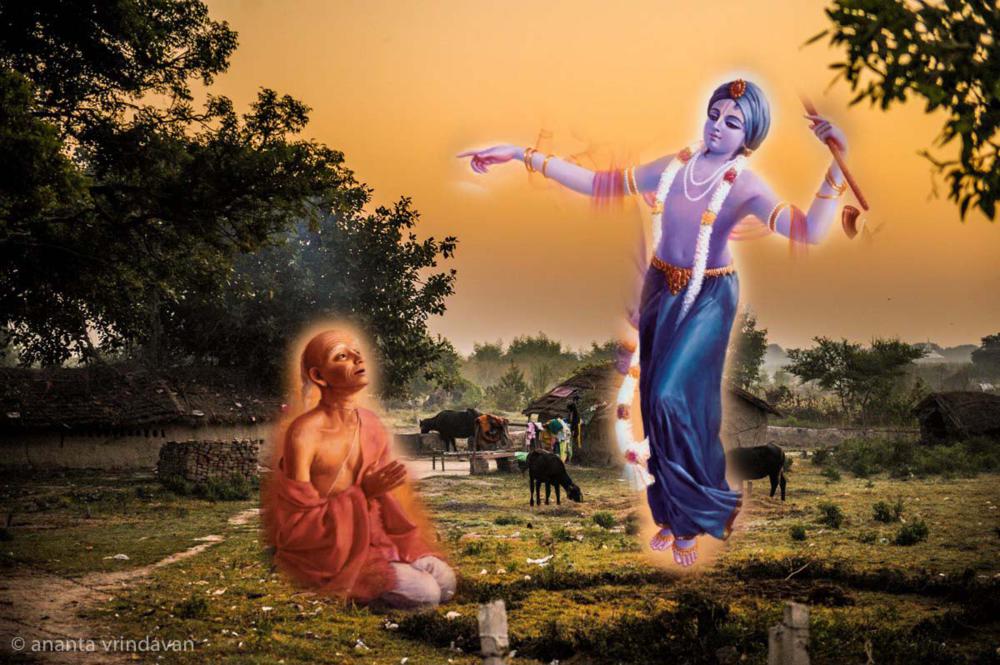
Gaura Kishora Dasa Babaji Maharaja

After the death of his wife, Gaura Kishora renounced his home and went to Vrindavana, where he was initiated into Vairagi Vesha by Bhagavata dasa babaji, one of the foremost disciples of Jagannatha dasa babaji. (In the image: Kalpa Vriksha Tree, Shri Vrindavan Dham).

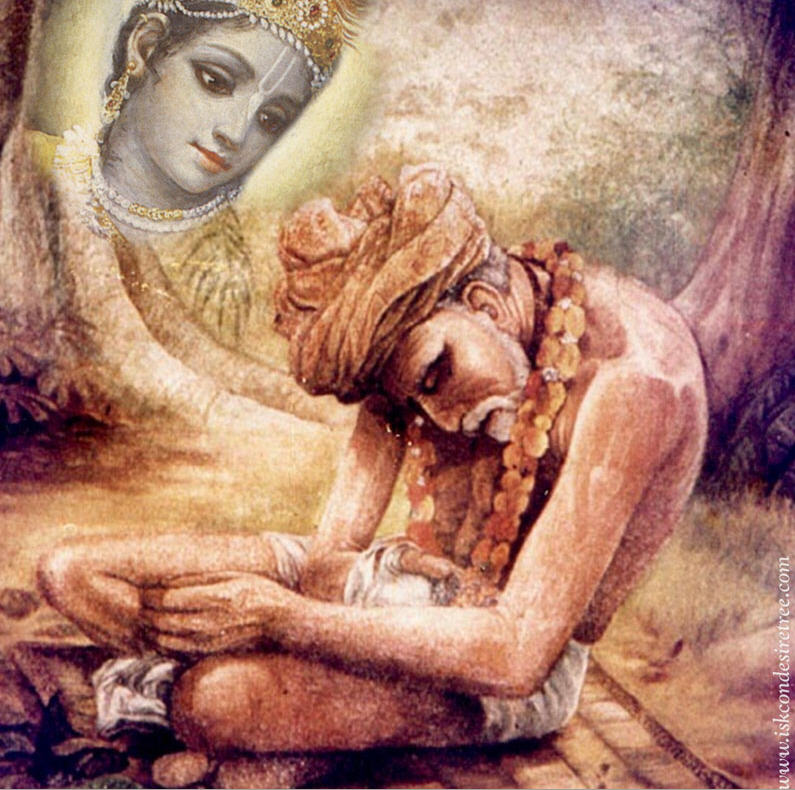
   Shrila Gaura Kishora lived on madhukari, begging and slept beneath a tree.  He would lie prostrate, offering his humble obeisances to the residents of Vraja, considering them as embodiments of Lord Krishna. He even offered his obeisances to the flowers, trees, and land around him. He spent about thirty years at Vraja mandala serving the Deities there.  Afterwards, perhaps by the direction of the Supreme Lord, he left for Navadwipa.

   During his stay at Navadwipa, Gaura Kishora underwent various transformations of spiritual moods.  Sometimes he danced on the bank of the Ganges chanting, "Gaura, Gaura", while at other times he would lie on the ground in an unconscious state.  He joyfully moved throughout the groves located on the bank of the Ganges, considering them sites of the divine sports of Shri Shri Radha Govinda.  His only clothing was a strip of cloth around his waist and often went totally naked.  He chanted japa on beads or sometimes knotted a cloth and used that as a substitute for japa beads. Occasionally, he went to Godruma Dwipa to listen to Bhaktivinoda Thakura recite Shrimad Bhagavatam.

   Babaji Maharaja would often visit Bhaktivinoda. During his last days in retirement, absorbed in Krishna katha, he would hear Shrimad Bhagavatam at Bhaktivinoda's house and they would discuss together. Though Babaji Maharaja could neither read nor write he was regarded as vastly learned and self-realized. His only possessions were the Tulasi beads around his neck and the japa mala he kept in his hand. Sometimes he wore no Tulasi mala on his neck and would chant on knotted cloth as beads – such was his renunciation. Sometimes he would live under an old broken overturned boat, and  other times he would scatter fish bones around a place he occasionally used as his bhajan kutir to make materialists think he was a fish-eater, and thus they would not disturb him. But by his pure bhajan he purified the three worlds.

   He was the guru of Shrila Bhaktisiddhanta Saraswati Goswami, the founder of the Chaitanya Mathas and Gaudiya Mathas. 

Gaura Kishora Dasa Babaji Maharaja

Shrila Bhaktisiddhanta Saraswati Goswami, the founder of the Chaitanya Mathas and Gaudiya Mathas.

   In 1898 when Bhaktivinoda's son, who was now residing in Godrumadwipa in Navadwipa Dhama, first came in contact with the person who was to be his spiritual master, Gaura Kishora dasa Babaji Maharaja, the crest jewel of avadhutas was wearing a tiger skin hat and carrying a basket with puja paraphernalia inside. He offered the boy four or five pieces of rope for chanting his rounds on, and a tilak stamp for marking the body with Hare Krishna carved on it. Bhaktivinoda later told his son, "You must take initiation from Babaji Maharaja, and don't return to this house if you don't." Gaura Kishora dasa Babaji used to walk across a bridge at the same time daily, so on one occasion Bhaktivinoda's son, Siddhanta Saraswati, blocked his path and in all humility said, "If you don't give me initiation then I will finish my life by throwing this useless body off this bridge." Gaura Kishora dasa Babaji Maharaja didn't want any disciples – he himself had taken shiksa from Bhaktivinoda, and this was Bhaktivinoda's dear son! Siddhanta Saraswati told him how his father had instructed him to become Babaji Maharaja's disciple or not return home, so in 1900 Babaji Maharaja gave him the name Varshabhanavi-devi-dayita dasa. He then gave his new initiate the tiger skin hat and basket that had been given to Gaura Kishora by his spiritual master Bhagavat dasa Babaji, which he in turn had received from Jagannatha dasa Babaji.

   In 1908 Gaura Kishora dasa Babaji Maharaja lost his external eye sight, so he then stopped travelling and just chanted and performed worship of Krishna. Being aloof from external consciousness, sometimes he would not dress his body instead he would sit in his bhajan kutir internally absorbed in Krishna's pastimes and in a very deep voice be heard calling the names of the gopis of Vrindavana.

   Once Shrila Varshabhanavi-devi-dayita dasa, Siddhanta Saraswati, offered to take Babaji Maharaja to Calcutta to see an eye specialist, but he refused saying, "Never! I will never go to the material world." His disciple protested, "But in Calcutta I could serve you nicely. You wouldn't have to undergo any inconvenience." But Babaji Maharaja was adamant declaring, "I will never accept this service. Better I throw myself in the Saraswati (Jalanghi) and drown."

   Once Babaji Maharaja turned up at the Yoga Pitha (Lord Chaitanya's birthplace) at two in the morning. Amazed, Shrila Bhaktisiddhanta Saraswati enquired how he got there in the pitch black of night. Babaji Maharaja replied, "Someone brought me here." "Who could have brought you such a distance at this time?" enquired Bhaktisiddhanta. Finally his mind concluded, "It must have been Krishna who personally brought you here or else how did you cross the Ganges? How did you find your way across the dark fields?" But Babaji Maharaja would not answer more than, "One person brought me across the river, that's all." 

Gaura Kishora Dasa Babaji Maharaja

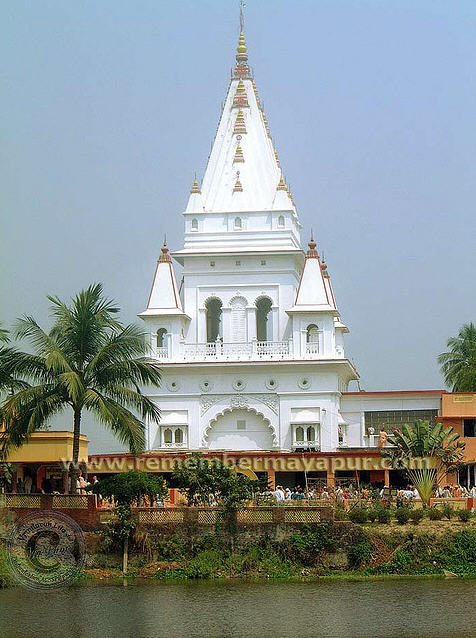
Lord Chaitanya's birthplace - Yoga Pitha, Shri Mayapur Dham.

   One day Shrila Gaura Kishora dasa Babaji Maharaja wrapped his body and two feet with a cloth. Sitting covered like this he said, "Many persons, after being informed by others, come here to collect the dust from my feet. I tell them I am not a Vaishnava. If you go to the vicinity where there are Vaishnavas with their feet pretentiously decorated and extended to touch, you can have unlimited dust. How can I bless you? I don't have barfi or sandesh or rasagulla, or even sweet words. How can I bless you? Nowadays people are interested in spiritual masters who can give these things – wealth, good wife, sweet words – these cheating things are now taken as anakula (favourable)."

   Every virtuous person looked forward to rendering service to Shrila Gaura Kishora. However, he rarely allowed anyone the chance to serve him.  Once Manindrachandra Nandi, the Maharaja of Kashimbazar, sent a distinguished messenger to escort Gaura Kishora to the former's palace. Gaura Kishora, however, did not accept the Maharaja's invitation saying that if he visited the palace he may feel tempted by the wealth of the Maharaja which may result in a strained relation between the two. Hence, Gaura Kishora suggested that instead of him visiting the palace, let the Maharaja free himself completely from the shackles of wealth by donating everything he owned to his relatives and then come to live with Gaura Kishora in a specially prepared shed where both of them could practice Haribhajan in peace."

   Shrila Gaura Kishora was very selective about accepting invitations for food.  He believed that partaking of food here and there could adversely affect the spiritual life of a Devotee.  Once a Devotee name Haren babu partook of Prasada offered at the festival held at Bhajan kutir at Navadwipa.  For this Gaura Kishora stopped communicating with Haren for three days.  On the fourth day Gaura Kishora explained that the Prasada of the above festival had been financed by a woman of questionable profession, a pumscari (one who is moved by other men).

   Once, on the eve of Sanatana Goswami's disappearance day, Gaura Kishora decided to celebrate the occasion. The Devotee attending him asked who would provide them with the materials for the celebration. Shrila Gaura Kishora replied: "Remember not to speak to anyone about it. We shall miss a meal and continue around the clock chanting the Holy Name.  This could be the typical festival for those of us who have taken the vow of poverty."

   Narendra Kumar Sen, a resident of Agartala (Tripura), once approached Gaura Kishora to learn about Guru pranali or Siddha pranali.  Gaura Kishora told him, "The Supreme Lord cannot be realized through worldly knowledge. Only through the chanting of the Holy Name can the true nature of the Lord be revealed.  As the Lord is revealed from the letters comprising the Nama, the Devotee gradually begins to understand his own nature and becomes acquainted with seva."

   Once a physician told Gaura Kishora that he intended to move to Navadwipa and take up charitable practices. Gaura Kishora advised the physician that if he truly desired to live in Navadwipa then he should give up the plan for a charitable practice because it would only encourage materially minded people to save money. Those who sincerely practiced Hari bhajan should never get distracted by the chains of welfare activities.

    A young seeker wearing only a kaupina, once stayed with Gaura Kishora for some days. later he arranged, through the agency of an employee of a female estate owner, to obtain five kathas of land as a donation from the woman. When Gaura Kishora heard about this he was extremely annoyed: "Navadwipa dhama is beyond this material world. How can a worldly land owner dare to hold land here and even think he can donate five kathas out of it?  A mere grain of sand of the transcendental Navadwipa is more valuable than all the precious gems in this world put together.  Moreover, how advanced could this young kaupina clad Devotee be if he dares to collect so much land in lieu of his bhajan merit?" 

Gaura Kishora Dasa Babaji Maharaja

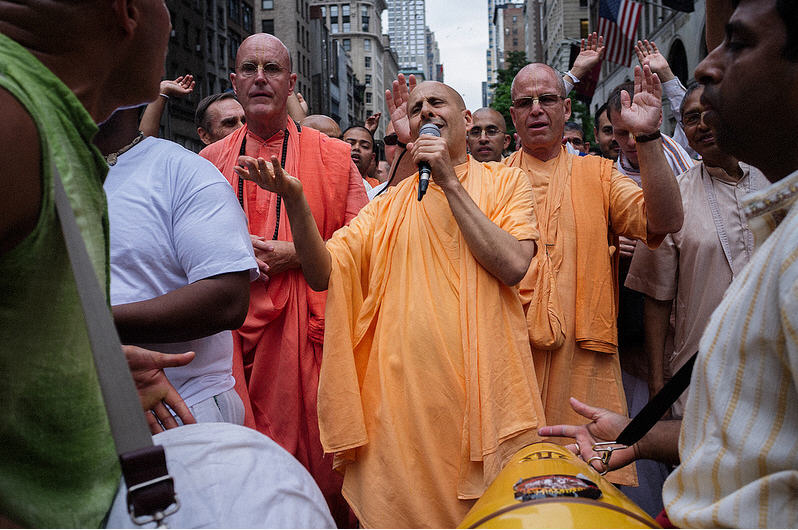
A realized soul can practice Haribhajan anywhere in an unconcerned manner, and wherever he resides, that place becomes Vaikuntha. (In the image: Ratha Yatra-2012, New York City, USA).

   Once a Devotee offered some sweets to Lord Gauranga and then took the offering to Gaura Kishora, urging him to partake of it. Gaura Kishora told the Devotee, "Those who are non vegetarian, those who commit adultery, or offer food to Lord Gauranga with a particular motive, their offerings never reach Lord Gauranga and are never sanctified as Prasada."

   Shrila Gaura Kishora regularly begged for rice, after which he would cook the rice, offer it, and partake of the Prasada.  He never touched any foodstuff offered by someone else. Once during monsoon, Gaura Kishora stayed in the rest house at Phulia Navadwipa. Some Prasada was left in a vessel for him to respect later.  Meanwhile a snake passed by the vessel and a woman there happened to notice it.  When Gaura Kishora sat down to take Prasada the woman appeared there and informed him about the snake. Gaura Kishora, however, firmly stated that he would not touch the Prasada until the woman left.  After the woman left, Gaura Kishora said, "Look how maya works!  Taking the form of compassion, maya attempts to hit deep into her target slowly.  Maya can assume countless forms.  She always prevents a mortal being from practicing Haribhajan."

   Giribabu and his wife once ardently requested Gaura Kishora to stay in their house at Navadwipa.  Gaura Kishora was moved by their sincere devotion and finally agreed to oblige them on the condition that he would live only in their toilet room where he would perform Hari bhajan.  Giribabu tried to persuade him to change his mind but Gaura Kishora remained firm.  Giribabu reluctantly arranged to have the toilet thorougly cleaned and Gaura Kishora used it for Haribhajan.  A realized soul can practice Haribhajan anywhere in an unconcerned manner, and wherever he resides, that place becomes Vaikuntha. 

   Shrila Gaura Kishora was a highly spiritually advanced soul.  He never allowed deceitful practices or any discussion which was not within the purview of the holy books.  One day when a devotee questioned Gaurakisora about a well known reiciter of ”Srimad Bhagavatam, who was in the habit of chanting "Gaura, Gaura", Gaurakisora remarked,  "He doesn't say "Gaura, Gaura.  Rather what he means to say is, "More More" (`Money, Money.') Those who recite ”Srimad Bhagavatam for payment are not entitled to chant the name of theSupreme Lord."

   Srila Gaura Kishora never delivered discourses openly, yet his spotless character drew everyone to him. Upon meeting Gaura Kishora, even a staunch materialist would become inclined take up Haribhajan.

Gaura Kishora Dasa Babaji Maharaja

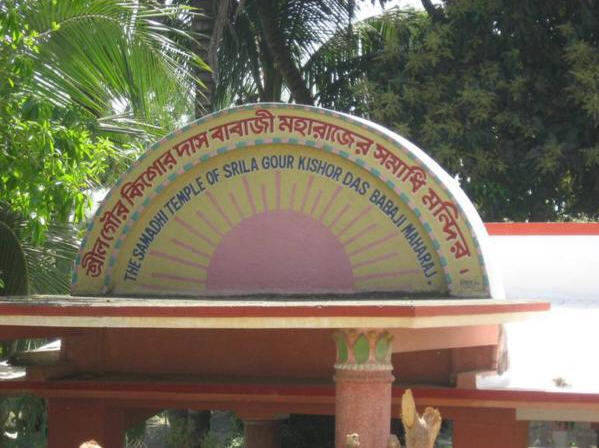
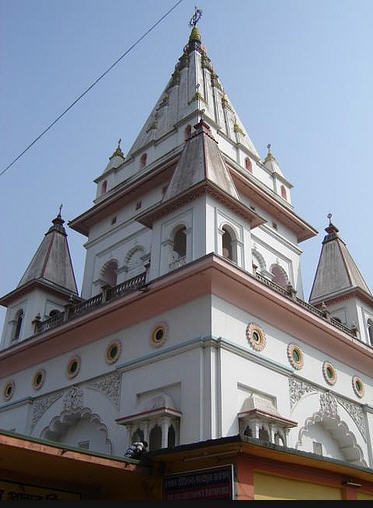
The Samadhi Temple of Gaura Kishora Dasa Babaji Maharaja, Shri Mayapur Dham.

   On 22nd June, 1914 Bhaktivinoda Thakura passed from this world into his samadhi, deep meditation, on Lord Krishna in Bhakti Bhavan, and then on November 17th, 1915 Gaura Kishora dasa Babaji Maharaja, on the auspicious Utthana Ekadashi, also left this world. His body was placed into a samadhi tomb, but sixteen years later, due to flooding, the samadhi had to be moved. There was a clamour of local babajis trying to claim the samadhi, but the bold Bhakti Siddhanta Saraswati (Varshabhanavi-devi-dayita dasa) told everybody frankly, "I am the only disciple of Paramahamsa Babaji Maharaja. Even though I have not accepted sannyasa, I am a celibate brahmachari and by the grace of Babaji Maharaja I am not secretly addicted to abominable habits or involved in fornication as some monkey-like people are. If there is someone amongst the people here present who is a renunciate of stainless character, then he can have Babaji Maharaja's samadhi. We have no objection to that. He, who within the last year, or the last six months, three months, one month or at least within the last three days, has not had illicit connection with a woman will be able to touch this spiritual blissful body. If anyone else touches it he will be completely ruined." Hearing these words, the Inspector of police, who had come to judge for a fair and honest decision said, "How will evidence be had for this?" Shrila Bhaktisiddhanta Saraswati replied, "I have faith in their word." At this, one by one all the bogus babajis slipped away without a word.

Bhaktivinoda Thakura Appearance Day Lecture By Srila Prabhupada

Prabhupada: Bring water, water. Water? So today is a very auspicious day, Thakura Bhaktivinoda’s birthday. Here is the picture of Thakura Sac-cid-ananda Bhaktivinoda. He was one of the acaryas of this disciplic succession from Krishna. We have got a succession table from Krishna, genealogical table. There are two kinds of genealogical tables, one by the semina father, his son, his son, like that. That is material genealogical table. And there is one spiritual genealogical table, disciplic succession. Just like Krishna. Krishna, the original father, Supreme Personality of Godhead, He spoke the Vedic knowledge to Brahma, Lord Brahma. He spoke to Narada. Narada spoke to Vyasa. Vyasa spoke to Madhvacarya. So in this disciplic succession, Lord Caitanya, from Lord Caitanya, the six Goswamis, and similarly, coming down, down, Bhaktivinoda Thakura, then Gaurakisora dasa Babaji Maharaja, then my spiritual master, then we are next generation, my disciples.

So there is a disciplic succession. And the acaryas, they’re authorities. Our process of knowledge is very simple. We take it from the authority. We don’t speculate. Speculation will not help us to come to the real knowledge. Just like when we are in difficulty, in legal implication, we go to some authority, lawyer. When we are diseased we go to a physician, the authority. There is no use, speculation. Suppose I am in difficulty in some legal implication. I simply speculate, “I shall be free in this way and that way.” That will not help. We have to go to the lawyer who knows things, and he gives us instruction that “You do not do this; then you’ll be free.” Similarly, when we are diseased, if I speculate at home that “My disease will be cured in this way and that way,” no. That is useless. You go to an authorized physician, and he will give you a nice prescription, and you’ll be cured. That is the process of knowledge. But in the modern age people think that “I am free, I am independent, and I can make my own solution.” That is rascaldom. That’s not good. So Arjuna, when he was talking with Krishna as friend, but when he saw that there was no solution talking like this, he surrendered to Krishna. He said, sishyas te ’ham, aham: “Myself, I surrender unto You as Your disciple.” Sishyas te ’ham sadhi mam prapannam. Prapannam means surrender. So that is the Vedic injunction, that if you want to know transcendental knowledge or science.“Transcendental” means beyond the scope of your direct perception.

So spiritual knowledge is beyond the scope of our sense speculation. Beyond the scope. Just like when a soul, a spiritual spark only, leaves this body, you cannot see. Therefore, atheistic class of men, they speculate, “There may be a soul; there may not be soul.” Or, “The bodily function was going like this; now it stopped. The blood corpuscles now cease. It is no more red; it is white; therefore life.” These are speculation. This is not actual knowledge. Actual knowledge you get from the authority, Krishna. He says, tatha dehantara-praptir dhiras tatra na muhyati. Just like the soul is passing through different stages. Dehino ’smin yatha dehe. Deha, deha means this body. Asmin dehe, in this body, there is dehi. Dehi means who is the owner of this body. That is soul. That is passing through childhood, boyhood, babyhood, youthhood, old age. Everyone, you can perceive that you were a child, you were a baby, you were a boy. Now you are young or old man. So you are there. So as you are passing through different types of bodies, similarly, when you give up this body you accept another body. What is the difficulty? Tatha dehantara-praptir dhiras tatra na muhyati. There is no question of becoming astonished, how transmigration of the self, soul, takes place. The vivid example is there. Simply you require little intelligence. That intelligence is developed through the instruction of acarya. Therefore, Vedic injunction is not to acquire knowledge by speculation. That is useless. Athapi te deva padambuja-dvayam janati tattvam prasada-lesanugrihita eva hi, na canya eko ’pi ciram vicinvan. Ciram vicinvan. Ciram means for thousands of years you can speculate; you cannot understand what is God. That is not possible. But if you receive knowledge from the devotee, he can deliver you. Therefore Vedic injunction is that tad-vijnana in order to understand tad-vijnana Vijnana means science. If you want to know the transcendental science, then you must approach a guru. Tad-vijnanartham, in order to If you are at all interested to understand the spiritual science. Tad vijnanartham (sa) gurum eva abhigacchet. You must approach guru. Guru means this disciplic succession, as I have explained.

So Bhaktivinoda Thakura is an ideal guru. He was not a sannyasi; he was grihastha, householder, living with family, wife, children. Still, he was guru. So anyone can become guru. Not that a sannyasi can become guru. A householder also can become guru, provided he knows the science. Caitanya Mahaprabhu, when He was talking with Ramananda Raya… Caitanya Mahaprabhu was a sannyasi, very highly born in brahmana family, very learned scholar. So He was talking with Ramananda Raya, a grihastha, governor of Madras. And He was questioning, and Ramananda Raya was answering. That means he was taking the part of guru, and Caitanya Mahaprabhu was taking the part of a disciple. So he was hesitating, Ramananda Raya. He thought himself that “I am a grihastha; I’m not even a brahmana. Besides that, I am dealing in material affairs. I am governor, politics. And Caitanya Mahaprabhu is a sannyasi, born of a high-class brahmana family. So it does not look well that I shall teach Him.” So he was hesitating. Caitanya Mahaprabhu said, “Oh, why you are hesitating?”.

kiba vipra, kiba sudra, nyasi kene naya
  yei krishna-tattva-vetta, sei ‘guru’ haya

He said, “Don’t hesitate. Either one may become a brahmana or one may become a sudra…” Kiba vipra, kiba sudra. Vipra means brahmana, and sudra. Sudra is the fourth-grade human being. Brahmana is the first grade. So kiba vipra, kiba sudra. He may be a first-grade human being or the lowest grade human being, or he may become a sannyasi or a grihastha. It does not matter. Anyone who knows the science of Krishna, he can become a guru. This is the verdict. Because spiritual science does not belong to the bodily platform. It is on the spiritual platform. It is very nice. Just like when you go to a lawyer or to an engineer or to a physician. You do not inquire whether he’s a brahmana or sudra. Simply you have to know whether he’s a lawyer. That’s all. Whether he’s a physician actually. If he knows the medical science, he may be a brahmana, he may be a sudra, he may be a sannyasi, he may be a householder. It doesn’t matter. Your business is with a physician, with a lawyer. Similarly, your business is to understand Krishna. So anyone who knows Krishna perfectly, you have to go there. Tad vijnanartham sa gurum evabhigacchet. It is Vedic injunction is not that you have to approach a sannyasi or a grihastha or an Indian or American. No. Gurum. And guru means who knows the science of Krishna.
    
So, this Bhaktivinoda Thakura was grihastha, very responsible officer, magistrate. And he was so exalted that he would come from his office generally at five o’clock, then take his supper and immediately go to bed. Immediately. Say at seven o’clock in the evening he goes to bed, and he wakes up at twelve o’clock. So suppose he goes to bed at seven o’clock in the evening and wakes up at twelve o’clock at night; it is sufficient sleep, five hours. One should not sleep more than five to six hours. Minimize as far as possible. The Goswamis used to sleep not more than one and a half hour, or two hours. Sleeping is not very important thing. Even big politicians, they used to sleep for two hours. So especially in spiritual line, they should minimize as far as possible eating, sleeping, mating, defending. Minimize. Gradually it comes to nil. Raghunatha dasa Goswami, he was eating only a little piece of butter every alternate days, not daily. So this Bhaktivinoda Thakura, regularly he was coming from his office, and after taking his supper immediately he goes to bed, and wake up at twelve o’clock, and he used to write books. He wrote, he left behind him about one hundred books. And he excavated the birthplace of Lord Caitanya, organized how to develop that birth site, Mayapur. He had so many business. He used to go to preach about Caitanya’s philosophy. He used to sell books to foreign countries. In 1896 he attempted to sell Life and Precepts of Caitanya in the MacGill University in Montreal. So he was busy, acarya. So one has to adjust things. Not that “Because I am grihastha, householder, I cannot become a preacher. It is the business…” (aside:) Give me water. “It is the business of the sannyasi or brahmacari.” No. It is the business of everyone. The whole world is suffering for want of knowledge. The present civilization is animal civilization. They do not know anything beyond eating, sleeping, mating and defending. That’s all. This is animal civilization. Animal does not know beyond these four principles of life: eating, sleeping, mating and defending. That’s all. No. Human life is meant for something else: “What I am? What is God? What is my relation with God? What is this material world? Why I am here? Where I have to go next?” So many things one has to learn. Athato brahma-jijnasa. This is human life. Not that eat and sleep and have sex life and die someday like cats and dogs. Therefore, there is need of acaryas, teachers, for propagating spiritual knowledge, Krishna consciousness. Bhaktivinoda Thakura was… Although he was a grihastha, householder, a government officer, magistrate, but he was acarya. So from his dealings, from his life, we should learn how one can become a preacher in any stage of life. It doesn’t matter what he is.

There was one incidence, very interesting. When he was magistrate in Jagannatha Puri The system is Jagannatha temple is a very big establishment. In the temple fifty-six times daily, bhoga is offered. And you’ll find in the temple always at least five hundred to one thousand people gathered. And they come from outside, and prasada is ready. If you go and ask in the Jagannatha temple that “We are one hundred men come from outside. We want prasada,” yes, immediately ready. So it is a huge temple. This is one temple, but there are many other thousands of temple in India where prasada is distributed. Now it is minimized by our present government. They think that it is unnecessary expenditure. They are minimizing. But not unnecessary expenditure. They do not understand. Formerly, in India there was no necessity of hotel. Anyone goes anywhere, even in a village, he goes to a temple—prasada is ready. There is no need of going to a hotel. You pay or don’t pay. If you say that “I want little prasada,” “Yes, take it.” That is the system still. There is the Nathadvara temple in Rajasthan. You pay two annas only. Two annas means one cent. You get sumptuous prasada for two mens, all very nice prasada, still. So prasada distribution in temple is longstanding usage. So Bhaktivinoda Thakura. The Jagannatha temple is managed by a body, and it is the custom that the local magistrate of the district, he becomes the president, or manager. So Bhaktivinoda Thakura was manager in that sense, because he was magistrate. The managing committee was being presided by him. So there was a complaint. In Orissa, this Jagannatha temple is situated in Orissa. Utkala. Utkala, this state, was originally belonging to Dhruva Maharaja. His son’s name was Utkala, Maharaja Utkala. Anyway, so this Utkala, there was a pseudo yogi. He declared himself that. Just like you’ll find nowadays also, there are so many rascals declaring that “I am incarnation of God.” And they know some mystic power, play some jugglery, and foolish people take them: “Oh, he’s God.” So there appeared one like such pseudo God, Vishnu, in a village of Orissa. And he was dancing rasa dance, and foolish people were sending their daughters and wife to dance with him. You see? There were so many. Not only that. People are so foolish, they do not know… They want to be cheated, and these cheaters come. He declared that “I am God. I am Vishnu.” So there were sane men also. They took objection, “What is this nonsense? This man is dancing with ladies and gentlemen, er, girls.” So they filed a complaint. At that time it was British rule. They complained to the governor or the commissioner, very high officer. The commissioner knew that Bhaktivinoda Thakura.His name was Kedaranatha Datta. Datta. Kedaranatha Datta, his household name. So the commissioner of the division, he knew that Kedaranatha Datta is a religious man, and he’s magistrate in charge. So he handed over the case for inquiry, “What is this complaint? You please inquire and do the needful.”

So he was a pure devotee, and he understood that “This rascal is a bogus man, cheating people. I must inquire.” So he went to the village in plain dress with some constables, police constables. They were also in plain dress. And as soon as he approached that rascal yogi, he said, “Oh, you are Kedaranatha Datta. So, very nice. You are… I shall make you king of India. Please don’t try to bother me.” Because he could know that “He has come to inquire about my rasa-lila.” So Bhaktivinoda Thakura first of all said, “Sir, you are such a great yogi. Why you are in the village? Why don’t you go to Jagannatha Puri? There is temple and Lord Jagannatha is there. Better you go there and see the Lord and be happy. Why you are in this village?” “Oh, Jagannatha? Ah, that is made of wood. I am personally the Supreme Lord. That is made of wood.” Oh, then Bhaktivinoda Thakura—he was a devotee—he became fire. (laughter) He was insulting. Arcye sila-dhir gurushu nara-matih. According to sastra, if somebody thinks… Just like here is Deity. If somebody thinks, “Oh, it is made of stone…” It is stone to the eyes of the nondevotee, but it is personally Supreme Personality of Godhead to the devotees. It requires the eyes to see. So devotee sees in a different angle of vision. Just like Caitanya Mahaprabhu, when He entered Jagannatha temple immediately He fainted: “Oh, here is My Lord.” And the nondevotee is seeing: “It is wood, a lump of wood.” Therefore, to the nondevotee, He remains always as wood, but to the devotee He speaks. That is the difference. Premanjana-cchurita-bhakti-vilocanena. If God is everything, why wood, through wood and stone, God cannot manifest? If God is everything? According to Mayavada philosophy… That’s a fact. God, omnipotent. He can express Himself even through wood and stone. That is God’s omnipotency. That is called omnipotency. Not that God is unable to express Himself through wood and stone. Then how He’s omnipotent? Omnipotent means His potency can be expressed through anything. Because anything, everything is the expansion of God’s energy. Parasya brahmanah saktis tathedam akhilam jagat. The whole world is manifestation of different energies of God. Therefore… Just like through the energy of electricity the electric powerhouse, although far, far away from this place, was expressing. There is electricity. Through this glass, through these wires, the power can be expressed. There is a process.

So Bhaktivinoda Thakura became very much… Because a devotee cannot tolerate blaspheming another devotee or God. So as soon as he said that “Why shall I go to Jagannatha Puri to see the wooden Jagannatha? I am personally Vishnu,” Bhaktivinoda Thakura immediately ordered his constables, “Arrest him. Arrest this rascal.” So he was arrested. And when he was arrested… He had some yogic mystic power. All the constables, Bhaktivinoda Thakura, and his family members became affected with high fever, 105 degrees fever. So when he came back, his wife became very much disturbed that “You arrested Vishnu, and we are all going to die. We have now high fever.” Bhaktivinoda Thakura replied, “Yes, let us all die, but this rascal must be punished.” This is the view of pure devotee. So he was put into the custody. And there was a date fixed for his trial, and all these days Bhaktivinoda Thakura himself and his family especially, they were suffering from high fever. Maybe that yogi was planning to kill the whole family. But it was going on as fever. So on the trial day, Bhaktivinoda Thakura, Kedaranatha Datta, when he came to the bench the man was presented, the so-called yogi, and he had big, big hairs. So Bhaktivinoda Thakura ordered that “Bring one barber and cut his hair.” So no barber dared. The barbers thought, “Oh, he’s a Lord Vishnu. If I offend, as he’s suffering from fever, so I shall also die.” So Bhaktivinoda Thakura ordered that “Give me the scissor. I’ll cut.” So he cut his hairs and ordered him to be put into jail for six months, and in the jail that Vishnu incarnation managed to take some poison, and he died.

So this is one of the incidents. There are many incidences. He was very strong man. He punished many pandas in the tirthas who exploit visitors. So, this is the position of devotee. In spite of his becoming a responsible magistrate, a householder, still, he was acarya. So we have to follow the acaryas. If we at all, if we are at all interested in spiritual science, then we must follow the Vedic instruction, tad-vijnanartham sa gurum evabhigacchet. We must approach. You cannot have spiritual knowledge simply by speculating. Impossible. Simply waste of time. Srama eva hi kevalam. You must go to the… In the Bhagavad-gita, therefore, it is recommended, acaryopasanam.      Acarya-upasana. Not only worshiping the Lord, but also the acarya. Caitanya Mahaprabhu said, guru-krishna-kripaya paya bhakti- lata-bija. Guru, acarya, and Krishna. One should seek favor of both of them. Not that “I am now seeking favor of Krishna. What is the use of guru or acarya?” No. You cannot overlap acarya and go to Krishna. That is not possible. Krishna will not accept you. Just like if you want to see a big man you should go through his secretary, through his orderly, doorkeeper; similarly, our process is acaryopasanam, go through the acarya. That is the injunction of the Vedas. Tarko ’pratishthah. If you want to enter into the spiritual world, you cannot get through simply by arguments. Because there is no limit of argument. I place my argument in one way. Another man, who is better arguer, he places his argument in a different way.

So if you simply go on arguing, it is not possible. Tarko ’pratishthah. It will never help you. Argument. Srutayo vibhinnah. If you think that “I shall read scriptures and I shall understand God,” no, that is also not possible. Srutayo vibhinnah. Scriptures are also different. Because scriptures are made according to time, circumstances, people. Just like Bible. Bible Lord Jesus Christ preached in the desert, Jerusalem. Or where it is? People who were not so advanced. Therefore his first instruction is “Thou shall not kill.” That means they were very much engaged in killing affairs; otherwise, why is this instruction? And actually, it so happened that they killed Jesus Christ. So that society was not very enlightened society. So a scripture for a society which is not very enlightened and a scripture for a society which is very enlightened must be different. Just like a dictionary. For the schoolboy, a pocket dictionary. And for a college student, international, big dictionary. Both of them are dictionaries. But the small pocket dictionary is not equal to the big dictionary. Because it is different made for different classes of men. So scriptures are made according to different classes of men. There are three classes of men: first-class, second-class, and third-class. The third-class man cannot understand the philosophy and scriptural injunctions of the first-class man. That is not possible. Higher mathematics cannot be understood by the small schoolboys who are simply trying to understand “Two plus two equal to four.” But “Two plus two equal to four” is equally good to the higher mathematics student. But still, higher mathematics and lower math is different. Therefore it is said, srutayo vibhinnah: the scriptures are different. So if you simply try to understand what is God by reading scriptures, you cannot achieve. You must approach a guru. Just like a medical book. It can be available in the market. If you purchase one medical book and study and you become doctor, that is not possible. You must hear the medical book from a medical man in the college, medical college. Then you will be qualified. And if you say, “Sir, I have read all the medical books. Recognize me as a medical practitioner,” no, that will be not.
    
So srutayo vibhinnah. Scriptures are different. Arguments, that is also not helpful. One man may argue better than me. Then philosophy. The philosophy, it is said, nasau munir yasya matam na bhinnam. One philosopher is differing from another philosopher. Just now today Syamasundara has purchased one book about different philosophers. So that you also cannot ascertain what is truth. Therefore sastra says, dharmasya tattvam nihitam guhayam. The truth is very confidential. So if you want to know that truth, mahajano yena gatah sa panthah, you should have to follow the great acaryas. Then you will understand. Therefore acarya-upasana is essential. Acarya-upasana is very essential. In all the Vedic sastras the injunction is that. Tad-vijnanartham sa gurum evabhigacchet, srotriyam brahma- nishtham. Tasmad gurum prapadyeta jijnasuh sreya uttamam. Anyone who is inquisitive to understand higher truths, he must surrender to guru. Tasmad gurum prapadyeta, jijnasuh sreya uttamam. One who is inquisitive, who is now inquiring about transcendental subject matter. Tad viddhi pranipatena pariprasnena sevaya. So all the sastras says, in our Vaishnava sastra also, Rupa Goswami says, adau gurv-asrayam: “In the first beginning, you must take shelter of a bona fide guru.”

So this Bhaktivinoda Thakura’s birthday, we should adore, we should worship, because in the modern age he reintroduced the disciplic succession. From Caitanya Mahaprabhu… Five hundred years ago, Caitanya Mahaprabhu taught this philosophy, but within two hundred years… Because this material world is so made that whatever you introduce, in due course of time it will deteriorate. You make a nice house, but after one hundred years, two hundred years, or nowadays, even after fifty years, it becomes dilapidated. That is the nature’s law, kala. Time will destroy everything. Now, British empire, such a big, vast empire, now it is finished. The kala, the time, will make everything finished. That is material. Anything material, it has birth, it has growth, it has got some opulence, then dwindling, then finished. That is the way of material… So we are interested in spiritual subject matter. Therefore the process is adau gurv-asrayam. One has to accept a bona fide spiritual master. That is our process. Without accepting a bona fide spiritual master, we cannot make any progress. It is impossible. So Bhaktivinoda Thakura happens to be acaryas, one of the acaryas. And he has left behind him many books. Caitanya-sikshamrita, Jaiva Dharma. These are very important books. They’re in Bengali, in Sanskrit. And many songs. He has prepared many books of song. The song, Ei nam gaya gauracand madhura svare, that is Bhaktivinoda Thakura’s song. So we are trying to present Bhaktivinoda Thakura’s books also in English translation. Gradually you will get it. So our adoration, our worship to Bhaktivinoda Thakura today because he may bless us to make peacefully progress in Krishna consciousness. Acarya-upasana, simply by the blessings of the acaryas we can make very rapid progress. Vedeshu durlabham adurlabham atma- bhaktau. If we… Yasya prasadad bhagavat-prasadah… We sing every day. By the mercy of the spiritual master, acarya, we immediately get the blessings of Lord. Immediately. Yasya prasadat. Yasya means “whose”; prasadat, “benediction.” By the benediction of the spiritual master. Yasya prasadad bhagavat-prasadah. If spiritual master, acarya, is pleased, then you should know that Krishna is also pleased. You should know through. This is not very difficult. Just like you are working in office. If your immediate officer, boss, is pleased, that means the proprietor of the firm, he’s also pleased. Although you do not see him. This is fact. Your immediate boss, if he’s pleased. So similarly, we, our business, this spiritual line, is guru-krishna- kripa. We have to first receive the merciful benediction from the acarya, and then Krishna will be pleased and He’ll also give His blessings. Mad-bhakta. There is a version in the Srimad- Bhagavatam, mad-bhakta pujyabhyadhika. He says, Krishna says, that “If anyone worships Me directly and if anyone worships Me through the acarya, he’s better devotee who is coming to Me through acarya.” Mad-bhakta pujyabhyadhika.

So our, this Vaishnava philosophy, process, is to go through the acarya. Servant of the servant of the servant. We should try to become servant of the servant. Gopi-bhartuh pada-kamalayor dasa-dasanudasah. Dasa-dasanudasah. We should not approach the Supreme Personality of Godhead directly. That is not good. That will not be… In the Vedic injunction also it is said, yasya deve para bhaktir yatha deve tatha gurau. If one has got unflinching faith in the Supreme Personality of Godhead, yatha deve, and similar faith in guru… Of course, we must make guru bona fide. Then it is disciplic succession. And that is also not very difficult to select, who is bona fide guru. Bona fide guru means he presents himself as servant of God. He does not pose himself falsely that “I am God.” This is bona fide. It is not difficult to find out bona fide. But this is the test. If anyone says that “I am guru,” er, “I am God,” then he cannot be guru. Because he has no knowledge. How he is God? But he can cheat some people. That is different thing. You can cheat all people for some time and some people for all time, but not all people for all time. That is not possible. So these kinds of guru, who poses themself that “I am God,” he’s a false guru. The bona fide guru will say that “I am servant of the servant of the servant of Krishna,” or God. Servant of. That is the business of guru. He serves Krishna as Krishna desires; that is his business. That is also not very difficult. Krishna says, Krishna desires, sarva-dharman parityajya mam ekam saranam vraja, that “You give up all other engagement; just surrender unto Me, and I’ll give you protection.” Krishna says. So guru’s business is that “You simply surrender to Krishna.” What is the difficulty? Simply repeat the same thing. Not for himself, but for Krishna. He’s bona fide guru.

So our this Krishna consciousness movement is very bona fide because we say the same thing as Krishna says. We don’t make any addition, alteration. Not like big scholars like, “It is not to Krishna…” Krishna says, man-mana bhava mad-bhakto mad-yaji mam namaskuru, and the scholar interprets, “It is not to Krishna.” Just see (the) foolishness. Krishna directly says, “unto Me.” He says, “Not to Krishna.” Misleading. Such misleading guru will not help you. So therefore to find out a bona fide guru means that he does not change the words of Krishna. That is his position. He places everything as it is, and he has understood thoroughly the science. Jijnasuh sreya uttamam. Guru, what is the symptom of guru? Tasmad gurum prapadyeta jijnasuh sreya uttamam. Those who are inquisitive to understand higher scientific knowledge, uttamam. Uttama means higher. Uttama, madhyama, adhama. There are three words. First-class, second-class, third-class. So spiritual knowledge is uttamam. Anyone who is inquisitive to understand first-class knowledge, he requires to go to a guru. Those who are interested in third-class knowledge, they do not require any guru. Third-class knowledge means animal knowledge: how to eat, how to sleep. How to make arrangement for eating, how to make arrangement for sleeping, that is third-class knowledge. Because the animals also try for this kind of knowledge, how to eat, how to sleep. Therefore this kind of knowledge is third-class knowledge. And second-class knowledge is “What I am?” Athato brahma-jijnasa. The Vedanta. That is second-class knowledge. And first-class knowledge, when he actually understands what he is, he is eternal servant of Krishna, and engages himself in the service of the Lord, that is first-class knowledge. And therefore, as soon as he comes to the first-class knowledge platform, he becomes happy.

brahma-bhutah prasannatma
na socati na kankshati
samah sarveshu bhuteshu
mad-bhaktim labhate param


So after being liberated from the material concept of life by the blessings of Krishna and guru, one comes to the platform of first-class knowledge, where he engages himself directly in the service of the Lord. That is first-class knowledge. First-class knowledge means beyond liberation. Second-class knowledge is trying for liberation. Third-class knowledge means in bondage, like animal. The animals, they are bound up by the particular type of body and has no, I mean to say, possibility of becoming liberated. That is animal life. But human life is better than animal life because he, if he likes, he can make himself liberated from this bondage of material body. That is the facility. He can understand himself what he is. He can understand what is God. He can understand the relationship between God and himself. He can understand what is this material world. Because there are thousands of books of knowledge. Take it for Bhagavad- gita. Everything is there. And it is meant for human being, not for the cats and dogs. Cats and dogs cannot understand, but a human being can understand.

So our this Krishna consciousness movement is to enlighten people to utilize his very nice life, human form of life, utilize it properly. To utilize it properly means to revive his dormant Krishna consciousness. The Krishna consciousness, or God consciousness, is there already. It is developed in human form of life. But it is now covered because due to our association with this material world for unlimited years background. We are coming through different species of life. Millions and millions of years passed away. Suppose I was a tree sometimes. I was standing up for ten thousand years in one place. We have passed through. That’s a fact. That is evolution. Now we have the opportunity of light. If you don’t use this opportune moment and again go back to the cycle of evolutionary process, jalaja nava-laksani sthavara… So these are great science. Unfortunately, there is no opportunity for the people to study this science in school, colleges, or universities. They are simply teaching people that “You work hard and gratify your senses.” That’s all. Therefore a section, younger section, they have been disgusted. They have refused to cooperate with this society on account of this disappointing education. And it will increase. Because this sort of education cannot give peace or prosperity to the people. Problems are increasing. Therefore, our request is that if you want to decrease or completely finish all the problems of life, take to Krishna consciousness in the process of disciplic succession and you’ll be all happy.

Syamasundara: Prabhupada, are you going to answer any questions?
Prabhupada: Yes.
Syamasundara: If anyone has any questions pertaining to the lecture, you can ask them at this time. They should be pertaining to the lecture.
Devotee girl: Did Bhaktivinoda Thakura, he also took sannyasa in later years? Is this right?
Syamasundara: Did Bhaktivinoda Thakura take sannyasa in later years?
Prabhupada: Yes. In very late years. In his retired life.
Syamasundara: Any other questions?
Devotee: Prabhupada, you say that an animal has no chance for liberation. What would happen if an animal came in contact with a pure devotee?
Prabhupada: Yes, there is chance of deliverance. Yes. Even an animal. Because he’ll hear Hare Krishna from the pure devotee. That will not go in vain. He’ll give prasadam. He does not know, but the devotee out of compassion gives prasadam, chants Hare Krishna. He also gets the opportunity of hearing. So he’ll also be liberated. One dog, during Caitanya Mahaprabhu’s time, he also became liberated. There is a history. Sivananda Sena’s dog, he was liberated by the grace of Lord Caitanya. So by the association of pure devotee. Therefore Bhaktivinoda Thakura’s, there is one song. He prays to the Lord that kita-janma hou jatha tuya dasa. Kita means insect. “My Lord, if I have to take my birth again.” Because a devotee does not pray to God for liberation. He simply prays that “Wherever I may take my birth, I may not forget You.” That’s all. That is devotee’s prayer. A devotee does not say that “Elevate me to the heavenly planet or Vaikuntha planet.” No. “You can put me anywhere.” Just like Bhaktivinoda Thakura says, kita-janma hou: “My dear Lord, I have no objection if I have to take my birth next as an insect.” What to speak of human being or other thing. “As an insect. But I must be in the house of a devotee.” So that an insect, by eating the remnants of foodstuff left by the devotee, he’ll be delivered. Kita-janma hou jatha tuya, bahir-mukha brahma-janma nahi mora asa: “I don’t want my next birth as Lord Brahma if I forget You. I don’t want.” That is wanted. A devotee prays to the Lord that he would be able to constantly remember the lotus feet of the Lord. Never mind whether as insect or as king or as dog, never mind. That is devotee’s, pure devotee.
Indian man: If one has accepted a bona fide spiritual master and he did not receive much knowledge from him, can he change his spiritual master at later…
Prabhupada: A bona fide spiritual master, where is the necessity of changing?
Indian man: No, he has not got the knowledge from him, but can I change.?
Prabhupada: No, no. Bona fide spiritual means he must get knowledge. He must get knowledge. He must inquire from the… The student must inquire from the spiritual master. If he remains dumb, then what bona fide spiritual master can do? Adau gurv- asrayam sad-dharma-pricchat, jijnasuh. He must be jijnasuh. He must be jijnasuh. We get so many letters daily. So many inquiries. The student must be very inquisitive. Otherwise how he shall make progress? If he remains dumb, then what the bona fide spiritual master can do? If you go to a very nice school but if you do not study, if you do not inquire, then what is the use of going to the nice school? You must be also very alert to inquire, to understand, to make progress. Then it will be all right. If you do not utilize the benefit of having a bona fide spiritual master, then that is your fault. You must utilize the opportunity. We are publishing so many books, so many literatures, magazines. Why? Just to enlighten more and more. But if you don’t take advantage of this, then how can you make progress? Change of spiritual master requires when the spiritual master is not bona fide. Otherwise there is no necessity of changing.
Indian lady: How does one contact the spiritual master? Through a book can you contact the spiritual master?
Prabhupada: No, you have to associate.
Syamasundara: “Can you associate through a book?” she asked.
Prabhupada: Yes, through books, and also personal. Because when you make a spiritual master you have got personal touch. Not that in air you make a spiritual master. You make a spiritual master concrete. So as soon as you make a spiritual master, you should be inquisitive.
English man: If the spiritual master, Prabhupada, worships God through a demigod, is he bona fide?
Prabhupada: No. He does not know how to worship. How he can be bona fide? Krishna says, sarva-dharman parityajya mam ekam. Why he should go to the demigods? That means he has no knowledge. Krishna says, mam ekam. Why should you go to others? That means he’s insufficiently qualified. Why should you go to the demigods? What is the necessity? He’s not bona fide. Because he has insufficient knowledge. Bona fide spiritual must be sufficiently knowledge. Krishna says, mam ekam; God says, mam ekam. Why he should go to demigods? That is his proof that he’s not bona fide.
Devotee: If one accepts initiation from a bona fide spiritual master but continues to perform material activities, are they still bound by the karma?
Prabhupada: He has to do everything under the instruction of the spiritual master. That is his duty. Sishya. Sishya means who voluntarily accepts disciplinary measures from the spiritual master. He’s ruled by the spiritual master.
Indian lady: Can the death of a spiritual master take to us, or I can get… Is that spiritual master still guiding after the death? (?)
Prabhupada: Yes, yes. Just like Krishna is guiding us, similarly, spiritual master will guide. We are being guided by Krishna, by the Bhagavad-gita. Although Krishna is not physically present, so- called… Krishna is present always. But even if we say that Krishna is not physically present as He was present before Arjuna, still, His book, Bhagavad-gita, is there. And that Bhagavad-gita is nondifferent from Krishna. Krishna and Krishna’s teaching, the same, absolute. That is Absolute Truth. Krishna and Krishna’s… Here form, the same. It is not that we are making show of offering Krishna some food. No, we are offering directly to Krishna and He’s eating. Krishna being absolute, He can perform through anything provided we are sincere and serious.

(A.C. Bhaktivedanta Swami Prabhupada. 23rd September 1969. Appearance Day lecture of His Divine Grace Srila Sac Cid Ananda Bhaktivinod Thakur Prabhupada. London.)

Srila Bhaktivinoda Thakura – Biography

   About the year 1500 A.D., the incarnation of God Sri Krishna Chaitanya Mahaprabhu began the Hare Krishna Movement in Navadwip, a city in the Indian province of Bengal. This movement, based on the philosophy of ancient Sanskrit texts of devotion to Krishna like the Bhagavad-gita and Srimad-Bhagavatam, spread all over India within a short time. The movement popularized sankiritan, the congregational chanting of the maha-mantra Hare Krishna Hare Krishna Krishna Krishna Hare Hare Hare Rama Hare Rama Rama Rama Hare Hare, as the most effective means of God realization for the present Age of Kali, a time of rampant faithlessness, sin and materialism. After 1750 A.D., the influence of the Hare Krishna Movement seemed to wane. Many sects of sahajiyas (cheap pseudo-devotees) sprouted up, each claiming to be the true purveyors of Vaishnava-dharma (the religion of Lord Vishnu or Krishna). Because of their bad character, the sahajiyas brought disrepute upon the pure movement of love of God begun by Chaitanya Mahaprabhu. In the 1800's, an eternally perfect devotee of Krishna descended from the spiritual world to the material world to revive the Hare Krishna Movement and to initiate its expansion beyond the borders of India. This was Srila Bhaktivinode Thakur.

Bhaktivinod Thakur

Srila Bhaktivinoda Thakur.

   Srila Bhaktivinoda Thakura, who was named Kedarnath Datta by his father (some say by his Godfather), was born in opulent circumstances on the 2nd September 1838., on a Sunday in Biranagara (Ulagrama) in the district of Nadia.  He was the seventh son of Raja Krishnananda Datta, a great Devotee of Lord Nityananda. He was also known as the great grandson of Madana Mohana and the third son of his Godfather Anandacandra.  He would be known as 'daitya-kulera prahlada' (Prahlada in the family of demons). This was because Vaisnavism was not very much respected in his family; on his mother's side, there was no respect for Vaishnavism at all.

   His childhood was spent at the mansion of his maternal grandfather Mustauphi Mahasaya, in Biranagara. His environment at this time was very opulent. He got his elementary education at the primary school started by his grandmother. Later he attended an English school in Krishnanagara, started by the King of Nadia; he left that school when his older brother died unexpectedly of cholera.

   When he was 11 years old, his father passed away.  Subsequently, the grant of land that had been conferred upon his grandmother changed owners; at this time the family fell into a condition of poverty their great wealth proved to be illusiory. Still, the young Kedaranatha Datta passed over these difficulties with great endurance.His mother arranged a marriage for him when he was just twelve (1850 A.D.) to the then five year old daughter of Madhusudana Mitra Mahasaya, a resident of Rana Ghata.

   Around this time Kasiprasada Ghosh Mahasaya Thakur (Kedaranatha Datta's uncle), who had  mastered under the British education, came to Ulagrama after the death of his maternal  grandfather.  He schooled young Kedaranatha Datta at his home in Calcutta; this was at first  resisted by Kedaranatha Datta's mother, but by the time he was years of age he was allowed to go.

   The house was situated in the Heduya district of central Calcutta. Kasiprasada was the central figure of the literary circle of his time, being the editor of the Hindu Intelligencer; many writers came to him to learn the art of writing in correct English. At this time, and recognising Kedaranatha Datta's natural ability, he assisted Kasisprasada by judging manuscripts submitted to the newspaper. Sri Kedaranatha Datta studied Kasiprasada's books and also frequented the public library.He attended Calcutta's Hindu Charitable Institution high school and became an expert English reader, speaker, and writer.

   He became ill from the salty water of Calcutta.  He returned to Ulagrama and was treated by a 'Muslim soothsayer' ('tantric') who predicted that the village of Biranagara would soon become pestilence-ridden and deserted. The Muslim also predicted Kedaranatha Datta would become recognized as a great Devotee of Lord krishna.

   At the age of 18 years (1856.) Kedarnatha Datta entered college in Calcutta. He started writing extensively in both English and Bengali; these essays were published in local journals. He also lectured in both languages. He further studied English literature at this time extensively, and taught speechmaking to a person who later became a well-known orator in the British Parliament. Between the years 1857-1858 he composed a two part English epic entitled "The Poriade", which he planned to complete in 12 books. These two books described the life of Porus, who met Alexander the Great.

   Sriman Dvijendranatha Thakur, the eldest son of Maharsi Devendranatha Thakur, was Sri Kedaranatha Datta's best friend during these scholastic years. He assisted Kedaranatha Datta in his studies of Western religious literatures. Affectionately Kedaranatha Datta used to call Devendranatha Thakura 'baro dada', or big brother.

   He was very taken by Christian theology, and regarding it more interesting, and less offensive than Hindu monism, 'advaita-Vedanta of Sankaracarya'. He would spend many hours comparing the writings of Channing, Theodore Parker, Emerson and Newman. At the British-Indian Society he gave a lecture on the evolution of matter through the material mode of goodness.

   At the end of 1858 Kedaranatha Datta returned to Biranagara and found the Muzzi's prediction about that place to have come true; the place was ruined and deserted. Sri Kedaranatha Datta brought his mother and paternal grandmother with him from there to Calcutta. Soon after he went to Orissa to visit his paternal grandfather, Rajavallabha Datta, who used to be a big man in Calcutta, who was now living as an ascetic in the Orissan countryside. His days were coming to a close. He could predict the future, so he knew it himself very well. He wanted Kedaranatha Datta to be with him when he departed this world, which he did in 1859, when Kedaranatha Datta was 21 years of age. After receiving his grand-father's last instructions, he travelled to all the monasteries and temples in the state of Orissa.

   As a young householder Srila Bhaktivinoda began to consider the question of the means of his livelihood. He was not interested in business, as he'd seen how the apparent 'necessary dishonesty' of the trade world due to competition for sales, had moraly weakened the merchant class. Their work ethics becoming removed from the principle of mutually helping others by which they would automatically be protected from failure to succeed, as well as being co-operatively assisted by the 'natural laws of compensation','karma'.

   He decided instead to become a school teacher. He established a school for English education in the village of Kendrapara near Chutigrama, in Orissa, thus becoming a pioneer in English teaching in that state. He also could see the oppressive power wielded by the landowners of Chutigrama. After some time he went to Puri and passed a teachers examination; he got a teacher's post in a Cuttack school and later became headmaster of a school in Bhadraka and then in Madinipura. His dedicated work was noted by the school-board authorities.

   In Bhadraka, his first son Annada Prasada (Acyutananda) was born, in 1860. He published a book that year in English that described all the 'ashramas' and temples in the state; this book received favorable mention in the work called "Orissa" by British historian Sir William Hunter; Hunter praised Kedaranatha Datta's moral and religious character,as everyone did.

   As the headmaster of the Medinipura high school, Kedaranatha Datta looked into the various religious sects, their philosophies and practices. He could see that many of them were taking it all very cheaply. He came to understand that the only real religion that had ever been established in Bengal was that of Sri Chaitanya Mahaprabhu; unfortunately at present, His movement was not well-represented. Due to the misrepresentation, and coruptions and influence of the 'Apa-sampradayas' this sincere soul Sri Kedaranatha Datta could not even get a copy of the Sri Chaitanya Caritamrta, despite all his efforts.

   The Thakura made an onslaught against those who belonged to the apasampradayas who were polluting Gaudiya Vaishnavism by basically thirteen deviant philosophies – Aula, Baula (2 types), Karttabhaja, Neda, Daravesa, Sani, Sahajiya, Sakhibheki, Smarta, Jatagosani, Ativadi, Cudadhari and Gauranga-Nagari. These deviant groups, mostly because of their boldness, had been seen by the public as the Gaudiya Sampradaya, though actually none were following the pure Vaishnava regulative principles strictly, as laid down by the followers of Sri Krishna Chaitanya (namely the Goswamis). Being a follower of the Goswamis or not is interdependent on qualifying one to be a Gaudiya Vaishnava.

   For more details on apa-sampradayas one should read the very nice articles, running as a sequil in the "Back to Godhead" magazine 1991 editions on the same, by His Holiness Suhotra Swami, Iskcon.

   Sri Kedaranatha Datta's first wife died, so in the town of Jakapura he married Bhagyavati De.In the year 1861 Sri Kedarantha Datta accepted the post of Deputy Magistrate in the Government of Bengal. Then he became Collectorate Officer after seeing the corruption of the government workers. He established an organization called the "Bhratr Samaja". He wrote an English book in 1863 called "Our Wants." At this time he also constructed a home in Rana Ghata.  Later in 1863 he stayed at Burdwan, where he composed two novel poems in Bengali:  "Vijinagrama" (deserted village) and "Sannyasi." Volume 39 of the 1863 Calcutta Review praised these poems, saying, "We hope the author will continue to give his countrymen the benefit of his elegant and unassuming pen, which is quite free from those objectionable licenses of thought and expression which abound in many dramas recently  published.  The want of the day is the creation of a literature for Hindu ladies, and we trust that many more educated natives will have the good sense to devote their time and abilities to the attainment of this most desirable aim."  The rhyme and style of these two poems were original; they gave birth to a new way of writing poetry in the Bengali language.

   Sri Kedaranatha Datta – In the post of Deputy Magistrate. In the year 1866 Kedaranatha Datta took the positon of Deputy Register with the power of a Deputy Collector and Deputy Magistrate in the district of Chapara. He also was known to have became quite fluent in Persian and Urdu.In a placed called Saran in Chapara, a clique of tea planters made unjust demands of him; he successfully opposed them. And while at Saran he visited the Gautamashrama at Godana; desiring to establish a school for teaching 'nyaya-shastra', he delivered a speech there (in 1866) which was well-received. The school was in fact established, the foundation-stone being laid in 1883 by Sir Rivers Thomson, after whom the school was named. Though Sri Kedaranatha Datta had no further part in the project after his speech, the talk he gave was instrumental in securing public aid for the school.

   Also in 1866 Kedaranatha Datta translated the Balide Registry Manual into Urdu, which was circulated by the government throughout the United Provinces of Agra and Oudh; this manual was used by the registration departments of those areas.

   Sri Kedaranatha Datta was transferred to Purniya from Chapara where he took charge of the government and judicial departments; he was then transferred to Dinajapur (West Bengal) in 1868, becoming the Deputy Magistrate. At this time he received copies of the Srimad Bhagavatam and Caitanya Caritamrta from Calcutta.He read Caitanya Caritamrta repeatedly; his faith in Krishna Consciousness developed until he was absorbed in the pure 'bhakti-shastras' day and night. He was incessantly submitting heartfelt prayers for the Lord's mercy; he came to understand the supreme majesty and power of the one and only Absolute Personality of Godhead Sri Krishna. He published a song about Lord Chaitanya entitled 'Saccidananda-premalankara'. In 1869, while serving as deputy magistrate under the government of Bengal in Dinajapur, he delivered a speech in the form of a treatise he had written on the Srimad Bhagavatam to a big congregation of many prominent men of letters from many parts of India and England.

   He was transferred to Camparana, during which time his second son, Radhika Prasada, was born. In Camparana, people used to worship a ghost in a banyan tree which had the power to influence the mind of the local judge to decide in the favor of the worshipper. Sri Kedaranatha Datta engaged the father of Pandita Ramabhai, a famous girl scholar, to read Srimad Bhagavatam under the tree continuously, by day and night; after one month, the tree crashed to the ground, and naturally many people found faith in the Srimad Bhagavatam. From Camparana he went to Puri, which engladdened his heart no end.

   Near the capital of Orissa, in the town of Kamanala, there lived a 'yogi' named Bisakisena, who would lean into a fire while sitting closeby, then return to an erect sitting posture; in this way he'd rock back and forth over the flames. He could also produce fire from his head.  He had two companions going by the names Brahma and Siva; he claimed to be Maha Vishnu. The small kings of Orissa came under his sway and were providing funds for the construction of a temple for the 'Triguna-Avataras'; they also sent him women with whom he engaged in 'rasa-lila' enjoyments. Bisakisena declared he'd drive off the British from ruling Orissa and himself would become king. He published such statements which were circulated all around Orissa. The British thought him a revolutionary for speaking out against the 'British Raj', so the District Governor of the National Government of Bengal drew up arrest orders; but nobody in Orissa dared to act upon these orders, as they all feared Bisakisena. Mr. Ravenshaw, district commissioner for Orissa, requested Sri Kedaranatha Datta to bring Bisakisena to justice. Sri Kedaranatha Datta went personally to Bisakisena; Bisakisena showed some powers that would normally scare off an ordinary man,  and informed Kedaranatha Datta that he knew well who he was and his mission, but that since he (Bisakisena) was the Lord, he'd better not interfere with him. That was enough for Sri Kedaranatha Datta, who replied by acknowledging Bisakisena's accomplishments in 'yoga' and 'tantra', and requested him to come to Puri where he could have the 'darshan' of Jagannatha.  Bisakisena haughtily said, "Why should I come to see Jagannatha?  He's only a hunk of wood; I am the Supreme in person." Sri Kedaranatha Datta became instantly furious and arrested the rogue, brought him to Puri and threw him in jail, where he was guarded by 3 dozen Muslim constables and 72 policemen from Cuttack day and night.  The accomplaces to the 'divine trilogy' 'Brahma' and 'Siva' avoided arrest by claiming they'd been forced by Bisakisena to do as they'd done; but Mr. Taylor, subdivision officer at Kodar, later prosecuted them.

   The fearless Kedaranatha Datta tried Bisakisena in Puri; the trial lasted 18 days, during which time thousands of people whom he had control over gathered outside the courtroom demanding Bisakisena's release. On day six of the trial Kedaranatha Datta's second daughter Kadambini (aged 7 years) became seriously ill and nearly died; but within a day she had recovered. Sri Kedaranatha Datta knew it was the power of the 'tantric yogi' at work; he remarked "Yes, let us all die, but this rascal must be punished." The very next day in court the 'yogi' announced he'd shown his power and would show much more; he suggested that Kedaranatha Datta should release him at once or face worse miseries. On the last day of the trial Kedaranatha Datta himself became ill from high fever and suffered exactly as his daughter had done for one whole day.  But the determined Kedaranatha Datta pronounced the man guilty and sentenced him to 18 months for political conspiracy. When Bisakisena was being readied for jailing, one Dr. Walter, the District Medical Officer, cut off all the 'yogis' hair. The 'yogi' drew power from his long hair; he hadn't eaten or drunk during the whole trial, so he fell to the floor like a dead man and had to be taken by stretcher to jail.  After 3 months he was moved to the central jail at Midnapura where he took poison and died there in the year 1873.

   In Puri, Sri Kedaranatha Datta studied Srimad Bhagavatam with the commentary of Sridhara Swami, he also copied out in longhand the Sat-sandarbhas of Jiva Goswami and made a special study of Rupa Goswami's Bhakti Rasamrta Sindhu.

   Between the years 1874 and 1893, Bhaktivinode Thakur spent much time in seclusion chanting the Holy Name (though he still executed his worldly duties perseveringly); he wrote several books in Sanskrit such as Sri Krishna samhita, Tattva-sutram and Tattva-viveka (which we have cited in the early sections of this book); he wrote many books in Bengali such as the Kalyana-kalpataru; in 1874 he composted Datta-kausubha (in Sanskrit).

   While in Puri he established a Vaishnava discussion society known as the Bhagavat-samsat in the Jaganatha-vallabha gardens, where Sri Ramananda Raya did bhajana. All the prominent Vaishnavas joined this group except for Raghunatha dasa Babaji, known as Siddha Purusha.  He thought that Srila Bhaktivinoda Thakura was unauthorized, as he did not wear 'kanthi-mala' or 'tilaka'; moreover, he advised other Vaishnavas to avoid Srila Bhaktivinoda Thakura's association.

   But soon thereafter Raghunatha dasa Babaji contracted a deathly illness for his offense. In a dream, Lord Jagannatha appeared to him and told him to pray for the mercy of Bhaktivinoda Thakura if he at all wanted release from the illness and death. He did so; Bhaktivinoda Thakura gave him special medicines and cured him, and also blessed Raghunatha dasa Babaji with a true awareness of Bhaktivinoda Thakura's position.

   Others had a natural affection like Sri Swarupa dasa Babaji, who did 'bhajana' at Satasana near the ocean in Puri; he showed much affection for Srila Bhaktivinoda Thakura and gave him many profound instructions and insights from his own realisations on the bhajana of the Holy Name. Another Charan dasa Babaji, preached and printed books advising that one should chant the 'Hare Krishna Mahamantra' in 'japa' and 'Nitai Gaura Radhe Syama Hare krishna Hare Rama' in 'kirtana'. Srila Bhaktivinoda Thakura preached long and hard to him; after a long time Charan dasa Babaji came to his senses and begged forgiveness from Srila Bhaktivinoda Thakura, admitting his fault in spreading this nonsense 'mantra' all over Bengal; six months later Charan dasa Babaji went mad and died in great distress.

   Srila Bhaktivinode Thakura was one of this age's formost devotional scholars, yet humbly presents himself as the insignificant messenger of the Lord as we can note from this following message of his; "The way how I got the inspiration to compile this book (Sri Srimad Bhagavata Arka Marichimala) is a Divine Mystery which I felt not proper from my part to disclose as it might be bridging spiritual conceit, but subsequently I realise that it would be an undoing to my spiritual master which might stand as an obstacle on the path of my spiritual progress therefore without any shame I record the fact that while under the benediction of my Guru Sri Bapin Behari Goswami who belonged to the great heritage of Thakur Vamshibadananda, a faithful follower of my Lord Sri Chaitanya Mahaprabhu I was deeply penetrating upon Srimad Bhagavatam, one day in a vision Sri Svarup-Damodara, the right hand personal Adherent of Lord Sri Chaitanya, instructed me to compile the slokas of Srimad Bhagavatam in accordance with the principles of 'Sambandha', Abhidheya' and 'Prayojana' as laid down by Sri Chaitanya Mahaprabhu – so that the book will read with an easy understanding with great interest and delight by the loving devotees of the Lord. Sri Svarupa-Damodar Prabhu further guided me by giving a wonderful explanation of the first sloka of Srimad Bhagavatam and also showed me how I have to explain the slokas under the light of Gaudiya-Vaishnava Philosophy."(B.P Yati. 1978. Bhaktivinoda Thakura's Sri Srimad Bhagavata Arka Marichimala. Chapter 20., supplication 3. inclusion. page 479.)

   Srila Bhaktivinoda Thakura became manager of Jagannatha Puri Temple; he used his government powers to establish regularity in the worship of the Deity. In the Jagannatha Puri Temple courtyard he established a 'Bhakti Mandapa', where daily discourses of Srimad Bhagavatam were held. Srila Bhaktivinoda Thakura would spend long hours discussing Krishna and chanting the Holy Name, especially at Tota-Gopinatha Mandir, the tomb of Haridasa Thakur, the Siddha Bakula and the Gambhira. He made notes on the Vedanta-sutra which were used by Sri Syamalala Goswami in the edition of the Govinda Bhasya by Baladeva Vidyabhusana that he published. 
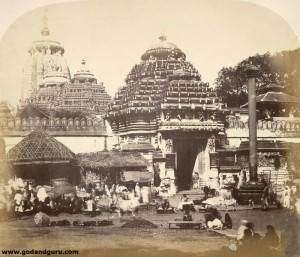
Bhaktivinod Thakur

Sri Jagannath Temple, Puri.

   Near the Jagannatha-vallabha gardens, in a large house adjacent the Narayana Chata Matha, on the 5th day of the dark fornight of Magha in the year 1874, the 4th son of Bhaktivinoda Thakura took birth. He was named Bimala Prasada (later known as Om Visnupada Paramahamsa Sri Srimad Bhaktisiddhanta Saraswati Prabhupada).

   As a householder Bhaktivinoda (Kedarnatha Datta) had two wives and no less than 10 children, of which the great Vaishnava scholar Sri Srimad Bhaktisiddhanta Saraswati (Siddhanta Saraswati Thakura) was one. Bimala Prasad (Bhaktisiddhanta Saraswati) was born in Sri Purusottama Kshetra (Jagannatha Puri) on 6th February 1874 AD, answering the prayer of Bhaktivinoda for the Lord "to send a Ray of Visnu" to preach the message of Sri Caitanya Mahaprabhu all over the world. He was given the name Bimal Prasad.

   When the child was six months old, Lord Jagannatha's cart stopped in front of Srila Bhaktivinoda Thakura's house in Puri for three days during the procession. Bhaktivinoda told his wife, Bhagavati Devi, to bring out the child for 'darsan' of Lord Jagannatha. As she placed the child before the Lord, a garland from the Lord encircled the baby boy, and the first grain ceremony ('anaprasna') was performed at that time with Jagannatha 'prasad'.  Bimala Prasada stayed in Puri for ten months after his birth and then went to Bengal by palanquin on his mother's lap, his infancy was spent at Nadia District's Ranaghat hearing topics of Sri Hari from his mother.
Bhaktivinod Thakur

Bhaktisiddhanta Saraswati Thakur-son of Bhaktivinod Thakur.

    Srila Bhaktivinoda and his wife were orthodox and virtuous; they never allowed their children to eat anything other than 'prasada', nor to associate with bad company. One day, when Bimala Prasada was still a small child of no more than four years, his father mildly rebuked him for eating a mango not yet duly offered to Lord krishna. Bimala Prasada, although only a child, considered himself an offender to the Lord and vowed never to eat mangoes again. (This was a vow that he would follow throughout this life.) By the time Bimala Prasada was seven years old, he had memorized the entire Bhagavad Gita and could even explain its verses giving wonderful purports. His father then began training him in proof reading and printing, in conjunction with the publishing of the Vaisnava magazine Sajjana tosani.Two years earlier, Kamala Prasada, the 3rd son of Srila Bhaktivinoda Thakura, had taken birth.

   In 1874 Bhaktivinoda Thakura discovered the Raja of Puri had misappropriated Rs. 80 thousand for sense gratification. This money belonged to the temple, so Bhativinoda Thakura forced the Raja to give Lord Jagannatha 'bhoga' 52 times daily. This diminished the money quickly; the 'raja' was angry at Bhaktivinoda Thakura and began, with the help of 50 'pandits', a 'Maran-karmani tantric yajna' meant for killing Bhaktivinoda Thakura which went on for 30 days; when the last oblations were poured, it was the kings son and not the pure hearted Srila Bhaktivinoda Thakura who died.

   He left Puri on special business; returned to Bengal and saw Navadwip, Santipura and Kalana.  He was put in charge of the subdivision Mahisarekha in Haora. After that he was transferred to Bhadraka. In August 1878 he was made head of the subdivision Naraila in the Yashohan district.

   While in Naraila his two famous books Sri Krishna-samhita and Krishna-kalpataru were published. In a letter dated April 16th., 1880, Dr. Reinhold Rost wrote to Srila Bhaktivinoda Thakura: "By representing Krishna's character and his worship in a more sublime and transcendental light than has hitherto been the custom to regard him, you have rendered an essential service to your co-religionists, and no one would have taken more delight in your work than my departed friend Goldstuecker, the sincerest and most zealous advocate the Hindus ever had in Europe." These two works brought the devotional attention of many of India's pandits and educated men. In 1877 Varada Prasada was born, Srila Bhaktivinoda Thakura's fifth son; in 1878, Viraja Prasada was born, the sixth son: both appeared at Rana Ghata.

   Srila Bhaktivinoda Thakura took 'pancaratrika diksa' initiation from Bipin Bihari Goswami, descended from the Jahnava family of Baghnapara. At the same time, his seventh son, Lalita Prasada, appeared at Rana Ghata.

   Many people had adopted Vaishnavism at Haraila, but they could not tell who was a Vaishnava and who not; Srila Bhaktivinoda Thakura gave them shelter and instructed them on this  matter most exactingly.

   Once Srila Bhaktivinoda Thakura and his son-cum-assistant went to see Bhaktivinoda's 'guru', Vipin Bihari Goswami (Bipin Behari Goswami).

   Vipin Bihari Goswami was coming in the disciplic succession from Sri Gadadhar Pandit the plenary portion of Srimati Radharani. The followers of this line are generally Raganuga Bhaktas, worhipping Sri Gaura Gadahara in a loving spontaneous mood of 'bhava'. This mode of worship is not for those who are materially confined by the dictates of the body and senses, but for those who are already experiencing their eternal loving relationship with the Divine couple Sri Radha Krishna.

   There is an interesting little story which captures the mood of Bhaktivinoda and that of his son, then named Siddhanta Saraswati. In their 'siddha deha' as pure 'nitya siddha', eternal associates of Lord Krishna, Bhaktivinoda Thakura is Kamala Manjari, one of the maid servants of the 'gopis', and Siddhanta Saraswati is her assistant Nayana Manjari. Srila Bhaktivinoda Thakura's dealings with his 'diksa guru' were always exemplary, even though Vipin Bihari Goswami was not very advanced, being a 'kanistha adhikari guru', whereas the Thakura was an 'uttama adhikari', 'paramahamsa' of the highest order. Still Bhaktivinoda always played the humble disciple. On one such occasion in the presence of young Siddhanta Saraswati, Bhaktivinoda Thakura paid his respectful obeisances to his 'guru'. Vipin Bihari Goswami replied by placing his feet on the Thakura's head. For the young fiery Siddhanta Saraswati this was too much! It was one thing that his father had accepted him as his formal initiating spiritual master, but this was going too far. Srila Siddhanta Saraswati was only seven years old at the time, but when Bhaktivinoda Thakura left the room leaving the two of them alone, Siddhanta Saraswati decided to set things straight.

 "You are acting like a big, big 'guru' and you place your feet on the heads of those who you don't know. If you knew who the Thakura is you would not do it. But you do not know! My father is a great exalted 'nitya siddha', eternal associate of Sri Radha and Krishna who has come here to fulfil Their mission. Do you think that you are so advanced that you can place your feet on the head of such a person? I think not. You have proven yourself to be a 'kanistha adhikari' (neophyte) by not being able to distinguish between those who are advanced and those  who are less advanced, therefore I suggest that you desist from this practice any further." Srila Bhaktivinoda Thakura then re-entered the room and the conversation changed. Later that day Vipin Bihari Goswami mentioned to Bhaktivinoda, "Your son is bold to the point of being rude." Later Thakura Bhaktivinoda found out about the conversation and used to jokingly glorify his exalted son to his friends, saying how he is fearless, that he even chastised my 'guru' Vipin Bihari Goswami.

   Reflecting on this incident we can see that even if one's spiritual master is not an 'uttama adhikari', 'mahabhagavat' Devotee of the Lord still one should be satisfied, and serve him anyway. Bhaktivinoda Thakura, who himself was certainly a 'mahabhagavat', set the example how to serve and show respects. On the other side of the transcendental coin, Srila Bhaktisiddhanta Saraswati showed a nnbsp;Sri Kedaranatha Datta – In the post of Deputy Magistrate. In the year 1866 Kedaranatha Datta took the positon of Deputy Register with the power of a Deputy Collector and Deputy Magistrate in the district of Chapara. He also was known to have became quite fluent in Persian and Urdu.In a placed called Saran in Chapara, a clique of tea planters made unjust demands of him; he successfully opposed them. And while at Saran he visited the Gautamashrama at Godana; desiring to establish a school for teaching nbsp;Many people had adopted Vaishnavism at Haraila, but they could not tell who was a Vaishnava and who not; Srila Bhaktivinoda Thakura gave them shelter #39;Hare Krishna Mahamantraand instructed them on thisice lesson to us. We should not show ourselves to be more advanced than we really are, lest we commit offences against those who are actually advanced.

   In 1881 Bhaktivinoda Thakura began publishing 'Sajjanatosani', his Vaisnava journal.

   Srila Bhaktivinoda Thakura had previously pilgrimaged to Kasi, Prayaga, Mathura and Vrindavana ('Vraja Mandal') in 1866. At the close of his stay in Naraila he desired to again see the land of Vraja. He took three months for this purpose. At this time he met Srila Jagannatha dasa Babaji there, who had a program by which he moved every six months between Navadwipa and Vrindavana. Meetinbsp; ng him, Srila Bhaktivinoda Thakura accepted him as his eternally worshippable 'siksa' (instructing) 'guru'.

   During his pilgrimage at this time he dealt with a gang of 'dacoits' known as the Kanjharas who robbed and killed pilgrims; he gave evidence to the government and a commision was formed to wipe out this scourge.

   From Vrindavana he came to Calcutta and bought a house at 181, Maniktala Street, now called Ramasha Datta Street, near Bidana. When he was 11 years old, his father passed away. He started daily worship of Sri Giridhari (the transcendental form of Krishna who appeared in the form of Govardhan Hill) and called the house Bhakti-bhavan.  He was appointed head of the subdivision of Barasa.

   In 1881, in the course of excavating for the construction of the 'Bhakti bhavana' at Rambagan in Calcutta, a Deity of Kurmadeva was unearthed. After initiating his seven year old son, Bhaktivinoda entrusted Bimala with the service of the Deity of Kurmadeva.

   The well known novelist Bankim Candra met Srila Bhaktivinoda Thakura at Barasa. Srila Bhaktivinoda Thakura had written a book about Krishna and showed it to Bhaktivinoda Thakura, who preached to Bankim Candra for four days, taking little food and hardly any sleep; the result was Bankim Candra changed his ideas (which were mundane speculations about Krishna) and his book to conform with the teachings of Sri Chaitanya Mahaprabhu. Srila Bhaktivinoda Thakura used to say, "knowledge is power".

   On April 1, 1884, Srila Bhaktivinoda Thakura was appointed the senior Deputy Magistrate of Serampore, where he admitted Bimala in the Serampore High School. When Bimala was a mere student in class five, he invented a new method of writing named Bicanto. During this period he took lessons in mathematics and astrology from Pandita Mahesacandra Cudamoni.  However, he preferred to read devotional books rather than the school texts.

   During the last year of his stay at Barasat (1886), Srila Bhaktivinoda Thakura published an edition of  the Bhagavad Gita with the Sanskrit commentary of Srila Vishvanatha Cakravarti Thakur, which he translated into Bengali (the "Rasika-ranjana" translation). Srila Bhaktivinoda Thakura had undertaken this task at the request of Babu Sarada Carana Mitra, exjudge of the Calcutta High Commission. Sriman Bankima Candra wrote the preface, acknowledging his own indebtedness to Srila Bhaktivinoda Thakura; he noted that all Bengali readers would be indebted to Srila Bhaktivinoda Thakura for his saintly work.

   From Barasat, Srila Bhaktivinoda Thakura was transferred to Sriramapur.  He visited the residence of Uddharana Datta Thakur, a great associate of Lord Nityananda, at Saptagram. At Khanakula he visited the place of Abhirama Thakur, and saw the place of another great devotee of Sri Caitanya Mahaprabhu, Vasu Ramananda, at Kulinagrama.

   At Sriramapura he composed and published his masterly writing, Sri Chaitanya Shiksamrta, and also the Vaishnava-siddhanta-mala, Prema-pradipa and Manah-siksa. He was also publishing Sajjanatosani on a regular basis. In Calcutta he set up the Sri Chaitanya Yantra, a printing press at the 'Bhakti Bhavana', upon which he printed Maladhara's Sri Krishna-vijaya and his own Amnaya-sutra and the Caitanyopanisad of the Atharva Veda.

   Finding the Chaitania upanisada was a difficult task. Hardly anyone in Bengal had heard of it. Consequently Srila Bhaktivinoda Thakura had to travel to many places in Bengal looking for it; finally, one devoted Vaishnava pandita named Madhusudana dasa (sometimes found listed in the 'Guru-parampara' listings) sent an old copy he'd been keeping with him at Sambalapura for Bhaktivinoda Thakura; Bhaktivinoda Thakura wrote a 'Sanksrit' commentary on the book and called it Sri Chaitanya Charanamrta. Madhusudana dasa Mahasaya translated the verses into Bengali; this translation was called Amrta-bindhu. It was a sellout when published.

   In Calcutta Srila Bhaktivinoda Thakura started the Sri Visva-Vaishnava Sabha, dedicated to the preaching of pure bhakti as taught by Lord Chaitanya. To publicize the work of the society, Srila Bhaktivinoda Thakura published a small booklet entitled Vishva-Vaishnava-kalpavi.

   Also he published his own edition of the Sri Chaitanya Charitamrta, with his Amrta-prabhava Bhasya commentary. And he introduced the Chaitanyabda or Chaitanya-era calendar, and gave assistence to the propagation of the Chaitanya Panjika, which established the feast day of Gaura Purnima.

   He lectured and gave readings on books like the Bhakti Rasamrta Sindhu (of Srila Rupa Goswami) in various Vaishnava societies; he published in the Hindu Herald, an English periodical, a detailed account of Sri Chaitanya's life. It was at this time that the learned Vaishnavas recognized Kedaranatha Datta and given the honourary titile as Bhakti Vinoda Thakura.

   In the year 1887 Srila Bhaktivinoda Thakura resolved to quit government service and go to Vrindavana with Bhaktibhringa Mahasaya for the rest of his life. One night in Tarakeswara, while on government service, he had a dream in which Sri Chaitanya Mahaprabhu appeared to him and spoke, "You will certainly go to Vrindavana, but first there is some service you must perform in Navadwipa, so what will you do about that?" When the Lord disappeared, Bhaktivinoda Thakura awoke. Srila Bhakti Bhrinha Mahasaya, hearing of this dream, told Bhaktivinoda Thakura to apply for a transfer to Krishnanagara; he did, even turning down offers of personal assistanceship to the chief Commissioner of Assam and the seat of the Minister of Tripura State. He even tried to retire at this time, but his application was not accepted. Finally, in December of 1887 he arranged for a mutual exchange of personell: himself for Babu Radha Madhava Vasu, Deputy Magistrate of Krishnanagara.

   During his stay at Krishnanagara, Bhaktivinoda Thakura used to go to Navadwipa and search for the birthsite of Sri Chaitanya Mahaprabhu. One night he was sitting on the roof of the Rani Dharmasala in Navadwipa chanting on his 'Japa-beads', when he spotted a very tall Tala tree with some very strange substance attached to it; near the tree was a small building that gave off a remarkable effulgence. Soon afterwards, he went to the Krishnanagara Collectory where he began to study some very old manuscripts of Chaitanya Bhagavat and Navadwipa Dhama Parikrama by Narahari Sarkar, and some old maps of Nadia. He went to the village of Ballaladibhi and spoke with many elderly people there, and uncovered facts about the modern-day Navadwipa; in the year 1887 he discovered that the place he'd seen from the dharmasalla rooftop was in fact the birthplace of Mahaprabhu. This was confirmed by Srila Jaganatha dasa Babaji, the head of the Gaudiya Vaisnava community in Nadia. 
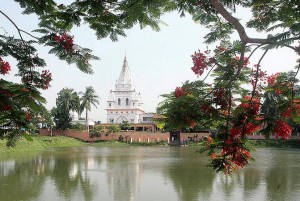
Bhaktivinod Thakur

Yoga Pitha-Birthsite of Lord Chaitania.

   A great festival was held there. Srila Bhaktivinoda Thakura published the Navadwipa Dhama Mahatmya.

   Also in 1887, Srila Bhaktivinoda Thakura renovated the house of Srila Jagannatha dasa Babaji at Ravasghata.  He took leave from office for two years and acquired a plot of land at Sri Godadrumadwipa, or Svarupaganga. He built a retirement house there for his 'bhajana', and called it Surabhi Kunja; in 1890 he established the 'Nama Hatta' there.  Sometimes Jagannatha dasa Babaji would come there and have'kirtana'. Lord Nityananda had established His Nama Hatta at the same place; Bhaktivinoda Thakura considered himself the street sweeper of the 'Nama Hatta' of Nitai. 
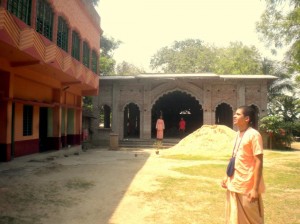
Bhaktivinod Thakur

Surabhi Kunj, Navadwip Dham.

   Once whilst stationed in Krishanaga, every second spare was spent in Mayapur. As mentioned in the story of Jagannatha dasa Babaji, Thakura Bhaktivinoda, along with Babaji Maharaja found Lord Chaitanya's birthplace in the year 1887.

   When the birthplace was uncovered, Srila Bhaktivinoda Thakura and Srila Jagannatha dasa Babaji would worship Lord Chaitanya there (this episode was told in regard to Srila Jagannatha dasa Babaji's Life.)

   Once one of Srila Bhaktivinoda Thakura's sons contracted a skin disease; Jaganntha dasa Babaji told the boy to lie down at the birthsite of Lord Caitanya for the night – he did so, and the next morning he was cured.

   In 1888 he took charge of the village of Netrakona in the district of Mayamanasimha, because he could not keep good health in Krishnanagara and had requested transfer to a more healthful region. From Netrakona he came to Tangaila and from there he was transferred to the district of Vardhamana. There he would have 'kirtana' with the devotees from a place called Amalajora, headed by Kshetra Babu and Vipina Babu; they would sing poems like Soka-satana written by him.

   He was put in charge of the Kalara subdivision in 1890, and from there would often visit such holy places as Godadrumadwipa, Navadwipa, Capahati, Samudragana, Cupi, Kasthasali, Idrakapura, Baghanapara, Piyariganga (the place of Nakula Brahmacari) and the place of vrindavana dasa Thakur at Denura.

   Soon Bhaktivinoda Thakura was transferred for a few days to Ranighata, from where he came to Dinajapura again. Sailaja Prasada was born there, his youngest son. In Dinajapura Srila Bhaktivinoda Thakura wrote his Vidva-ranjana commentary and translation of the Bhagavad Gita; it was published in 1891 with the commentary of Baladeva.

   1891 was the year Bhaktivinoda Thakura took leave from the government service for two years. He desired to preach 'Sri Hari-Nama'. His base was at Godadrumadwipa; from there he used to visit such places as Ghatala and Ramajivana to lecture in clubs, societies and organizations. This he'd also often do in Krishnanagara.

   He travelled and preached in March of 1892 in the Basirahata District together with some other Vaishnavas. All the while he was writing also. He opened many branches of 'Nama Hatta' in different districts of Bengal. The 'Nama Hatta' became a self-sustaining success which continued to spread even after his return to government service.

   Also from Basirahata he set out on his third trip to vrindavana; he stopped off at Amalajora to celebrate the Ekadasi day with Srial Jagannatha dasa Babaji. In Vraja, he visited all the forests and places of pastimes; he continued to give lectures and readings on Hari Nama in various places in Bengal when he returned to Calcutta.

   In February 1891 he gave a lecture on his investigation into the whereabouts of the actual birthsite of Sri Chaitanya; his audience included highly learned men from all over Bengal, who became very enthusiastic at the news.  Out of this gathering the Sri Navadwipa Dhama Pracarini Sabha was formed for spreading the glories of Navadvipa-Mayapura. All the learned pandits, having deliberated fully on Srila Bhaktivinoda Thakura's evidence, agreed that the Yogapitha was the true birthsite of Mahaprabhu. That year, on Gaura Purnima, a big festival was held that witness the installation of Gaura-Visnupriya Dieties at the Yogapitha.

   Srila Bhaktivinoda Thakura personally, in a spirit of pure humility, went door to door collecting to raise funds to build a temple on the very site. In the Amrta Bazaar Patrika, December 1894, an article appeared: "Babu Kedarnatha Datta, the distinguished magistrate who has just retired from service, is one of the most active members. Indeed, Babu Kedarnatha Datta has been deputed by his committee to raise subscriptions in Calcutta and elsewhere and is determined to go from house to house if necessary and beg a rupee from each Hindu gentleman for noble purpose. If Babu Kedarnatha Datta sticks to his resolution of going around with bag in hand, we hope that no Hindu gentleman whose house may be honoured by the presence of such a devout bhakta as Babu Kedarnatha, will send him away without contributing his mite, however humble it may be, to the Gaura-Visnupriya Temple Fund." His venture was highly successful and the temple was built. 

   In October 1894, at age 56, he retired from his post as Deputy Magistrate, though this move was opposed by his family and the government authorities. He stayed at Surabhi Kunja and preached, as well as revised his old writings. Sometimes he went to Calcutta; there he begged door to door for building the Yogapitha temple.

   In July 1896 Srila Bhaktivinoda Thakura went to Tripura at the request of the the king, who was a Vaishnava.  He stayed in the capital for four days and preached the glories of Sri Hari-Nama.

   His lecture on the first day amazed all the local 'panditas'; on the next two days the local Royal family and general public thrilled to his talks on the pastimes of Mahaprabhu.

   His mercy far outreaches the geographical boundaries of India or even Asia, taking krishna consciousness to the West.

   Back in Godruma, Srila Bhaktivinoda Thakura sent out a small booklet, written in Sanskrit, to Sri Gauranga-lila-smarana-mangala-stotram, with a commentary by Srila Sitikantha Vacaspati of Nadia. The intro, "Chaitanya Manaprabhu, His life and precepts", was in English (Which we have included in this book in the section on Sri Chaitanya Mahaprabhu) This book found its way into the library of the Royal Asiatic Society in London, the library of McGill University in Canada (the year is 1896) and other respectable institutions. It was reviewed in the Journal of the Royal Asiatic Society by Mr. F.W. Fraser, an erudite European scholar.

   In the rainy season of 1896, requested by the Maharaja of Tripura, Srila Bhaktivinoda Thakura went to Darjeeling and Karsiyam. In 1897 he went to many villages such as Medinipura and Sauri to preach.

   Sri Sisira Kunara Ghosa was the founder of the Amrta Bazaar Patrika and the author of the Sri Amiya Nimai-carita. He had great respect for Srila Bhaktivinoda Thakura; he also took up the preaching of the holy name throughout Calcutta and in many villages in Bengal. He published the 'Sri Visnu Priya O Ananda Bazar Patrika' under the editorship of Srila Bhaktivinoda Thakura. In one of his letters to Srila Bhaktivinoda Thakura he wrote, "I have not seen the six Goswamis of vrindavana, but I consider you to be the seventh Goswami."

   Srila Bhaktivinoda Thakura's son Bimala Prasad (latter Srila Bhaktisiddhanta Saraswati) had been residing at Puri as a 'naisthika brahmacari' (celebate student) and was engaged in bhajan at the Gandharvika Giridhari Matha, one of seven 'mathas' near the 'samadhi' tomb of Haridasa Thakur on the sea-shore. Srila Bhaktivinoda Thakura, desiring to help his son, had the monastery cleaned and repaired when he came to Puri himself at the beginning of the 20th century. After the young (Bhakti) Siddhanta Saraswati left Puri for Sri Navadwipa Mayapur, Srila Bhaktivinoda Thakura  constructed his own place of 'bhajana' on the beach, calling it Bhakti Kuti; one Sri Krishnadasa Babaji, Srila Bhaktivinoda Thakura's devoted assistant  and disciple, joined him there at this time, and he became very dear to Srila Bhaktivinoda Thakura and was his constant attendant up to the end of Srila Bhaktivinoda Thakura's life.

   He began solitary 'bhajan' (worship and devotional meditation) at this time; he had many visitors at this place, and some of them simply wanted to disturb him, whereas others were sincere and benefitted greatly from his spiritual inspiration.

   In 1908, three months before he took 'sannyasa', a son of Srila Bhaktivinoda Thakura who was working in the writers building in Calcutta, came home to inform Bhaktivinoda Thakura that Sir William Duke, cheif secretary to the government, was in Calcutta; formerly Srila Bhaktivinoda Thakura had served under him as a magistrate. Srila Bhaktivinoda Thakura made an appointment to meet him the next day at the writers building. Sir William Duke met with Srila Bhaktivinoda Thakura on the street outside the building and personally escorted him in to his office. With folded hands, he asked forgiveness for having once planned to remove Srila Bhaktivinoda Thakura from office of district magistrate; this was because he thought that if such qualified Indians take up such posts, the British would not last much longer in India. 
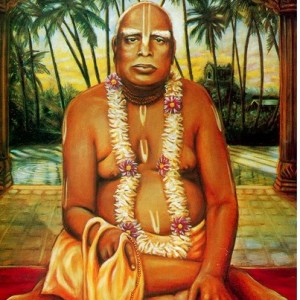
Bhaktivinod Thakur

In the year 1908 Srila Bhaktivinoda Thakura took the external 'vesa' dress of a 'babaji'.

   In those days, while studying Bhaktivinoda Thakura's activities (then Kedarnatha Datta), he'd come to his house and would be fed 'puri', 'luchi' and sweets by the Thakura's wife. But now he was begging forgiveness as he was getting on in life; Srila Bhaktivinoda Thakura answered, "I consider you to be a good friend and a well wisher all along." Srila Bhaktivinoda Thakura was pleased with him and gave him his blessings. Later Srila Bhaktivinoda Thakura admitted he was astonished that Sir William Duke wanted to harm him in some way. 

   In the year 1908 Srila Bhaktivinoda Thakura took the external 'vesa' dress of a 'babaji' at Satasana in Puri technically which is called his accepting 'paramahamsa-sannyasa', among the 'Gaudiya sampradaya'; until 1910 he would move between Calcutta and Puri, and was still writing books; but during that year he shut himself up and entered 'samadhi','claiming paralysis'.

   It was on June 23rd., 1914, just before noon at Jagannatha Puri, that Srila Bhaktivinoda Thakura Prabhupada left his body; on the Gaudiya Panjika this day was also the disappearance day of Sri Gadadhara Pandita. But from Orissa his bodily remains were taken back to his beloved Godruma, in the land of Nadia. Amidst 'sankirtana' his remains were interred in Godruma after the next solstice; the summer solstice had just begun when Srila Bhaktivinoda Thakura Prabhupada had left his body.
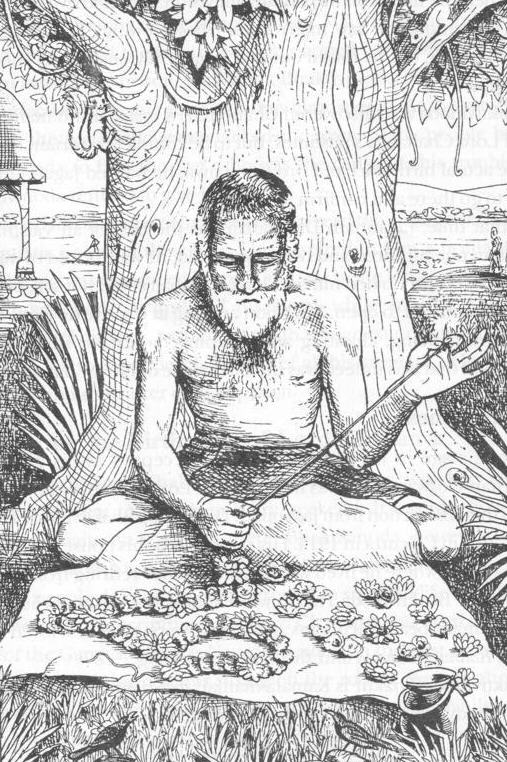
 

Srila Jagannatha Dasa Babaji – Biography

Jagannatha Dasa Babaji

Shrila Jagannatha dasa Babaji Maharaja.

   Shrila Jagannatha dasa Babaji Maharaja was respected by all the Vaishnava community and was thus known as Vaishnava Sarvabhauma, or chief amongst the Vaishnavas. There are some nice stories connecting him with the finding of Shri Chaitanya Mahaprabhu's birthplace recorded in Shri Navadwipa Dhama Mahatmya.

   Shrila Jagannatha dasa Babaji Maharaja was born around the year 1800 AD. He spent many years in Vrindavana where he became famous as a perfect Devotee, though more than this is not known of his early years and pastimes. What we do know, however, is that he was particularly enthusiastic in serving the Lord's Devotees and performing 'kirtan'. In later life his servant, Bihari Lal, used to carry him on his shoulders in a basket, though when  he would hear a 'kirtan' or himself be engaged in 'kirtan', his body would extend itself out of the basket like a beautiful banyan tree and he would loudly shout, "Nitai ki nam eneche re!  Nitai, ki nam diteche re!"  "Oh Lord Nityananda, what a wonderful name you have brought! Oh Nitai, what a wonderful name you have given!"

   The stories which I will now relate are at the time when he was more than 120 years old. Living in a tent at Shri Navadwipa with Bihari Lal, his servant, he would eat 'Prasadam' from a large brass plate which someone had given as a donation. A litter of puppies which had taken birth nearby began to come and eat off Jagannatha dasa Babaji Maharaja's plate, but he did not object. After a few days however, Bihari Lal saw what was happening, and disgusted to see the dogs eat from his 'gurus' plate, he drove them away. Jagannatha dasa Babaji chastised Bihari Lal angrily saying, "If the dogs can't eat I won't eat!" His servant had to search out and bring back the puppies, and as they joined Babaji Maharaja again over his plate he exclaimed, "All glories to the 'dhama' dogs!" Thus he always displayed his great respect for all the residents of the holy 'dhamas'. On another occasion he had his servant purchase two hundred rupees worth of 'rasagulas' and instructed him, "Feed them to all the 'dhamas' cows, but don't give one to those rascal 'sahajiya babajis' (pretenders)." 

Jagannatha Dasa Babaji

Due to his old age, Shrila Jagannatha dasa Babaji couldn't open his eyes, but had to forcibly open them with his fingers, what to speak of walk. If he went anywhere he was carried in his basket by Bihari Lal, but upon arriving at the transcendental site, he leapt out of the basket and danced in ecstasy shouting, "Haribol!" and "Gauranga!", definitely establishing it to be the very same birthplace of Lord Chaitanya. (In the image: Yoga Pitha-birthplace of Lord Chaitanya).

   Shrila Jagannath dasa Babaji Maharaj was such a great Devotee that the famous Bhaktivinoda Thakura (Kedarnath Datta) called him the commanding chief of the Devotees. When Shrila Bhaktivinoda was looking for the actual place where Shri Chaitanya Mahaprabhu's birthplace was, he asked Jagannatha dasa Babaji Maharaja to go with him. During the many changes in the course of flow of the mighty Ganges River, some parts of the sacred 'dhama' of Navadwipa (nine islands) had changed. The Ganges had revealed old and lost places and reclaimed new ones. To his surprise Bhaktivinoda Thakura discovered that the modern day city called Navadwipa was not more than 100 years old and therefore wasn't the Navadwipa of Shri Chaitanya. Some said the birth site was on a place now in the Ganges, while some said it was in the city of Navadwipa. Dissatisfied, Bhaktivinoda pushed on looking. He found some antiquarian maps and government records, and authentic books written at the time of Lord Chaitanya, all of which agreed that Mayapur Navadwipa Dhama is situated on the east bank of the Ganges. To Bhaktivinoda's amazement he found several large mounds covered with sacred Tulasi plants on land owned by Mohammedans. It was shrouded with local rumours of strange lights and sounds, so the owner, believing it to be haunted, would not go there. Many old babajis of the time, however, believed this to be the actual birthplace of Shri Chaitanya Mahaprabhu. Convinced it was true, Bhaktivinoda, inspired by Jagannatha dasa Babaji, went there to the spot, with Jagannatha dasa Babaji being carried in his basket.

   Due to his old age, Shrila Jagannatha dasa Babaji couldn't open his eyes, but had to forcibly open them with his fingers, what to speak of walk. If he went anywhere he was carried in his basket by Bihari Lal, but upon arriving at the transcendental site, he leapt out of the basket and danced in ecstasy shouting, "Haribol!" and "Gauranga!", definitely establishing it to be the very same birthplace of Lord Chaitanya.

gauravirbhava bhumes twam nirdesta sajjana priyah
 vaisnava sarvabhauma sri jagannathaya te namah

   "I offer my respectful obeisances unto Shri Jagannatha dasa Babaji Maharaja, who is respected by the entire Vaishnava community and who discovered the place where Lord Chaitanya appeared."

Shrila Jagannatha dasa Babaji Maharaja had a disciple named Bhagavat dasa Babaji Maharaja, and Gaura Kishora dasa Babaji was his disciple. However at this time there was another great exponent of Vaishnava teachings that, on passing, we have already mentioned. His name is Shrila Bhaktivinoda Thakura.  And so the line again divides like this:
 

                        JAGANNATHA DASA BABAJI MAHARAJA
                        I                                                                I
          BHAGAVAT DASA BABAJI                     SHRILA BHAKTIVINODA THAKURA
         GAURA KISHORA DASA BABAJI 

Jagannatha Dasa Babaji

"Nitai ki nam eneche re! Nitai, ki nam diteche re!" "Oh Lord Nityananda, what a wonderful name you have brought! Oh Nitai, what a wonderful name you have given!" (In the image: His Holiness Indradyumna Swami and other Devotees, Ukraine).

Srila Baladeva Vidyabhushana – Biography

Baladeva Vidyabhusana

Baladeva Vidyabhusana.

   Srila Baladeva Vidyabhushana was born in the early part of the 18th century (1720-1790) in a village near Remuna, Balasore District of Orissa. Even though he was the son of a 'vaisHya' (farmer), in his youth he received a very thorough education in 'Sanskrit', rhetoric, logic and VaisHnava scripture. He accepted 'sannyasa' into the 'Madhwa-sampradaya' at a very young age, and stayed at Jagannatha Puri. He became a renowned scholar and travelled around India to all the holy places. During his travels Baladeva came to Puri in Orissa (Utkala), and met with one disciple of the famous Rasikananda Prabhu of the name Sri Radha Damodara Deva Goswami (1710-1760 A.D.). It was to the surprise of everyone that Baladeva was converted to Gaudiya VaisHnavism by Radha Damodara Deva Goswami, who first explained the philosophy of Sri Chaitanya Mahaprabhu, in accordance with the tenants of Vedanta Sutra and Srimad Bhagavatam, then initiated him as his formal disciple. Under his direction he studied Jiva Goswami's Sat-Sandarbha, and he quickly became prominent in all intellectual circles.

   This Radha Damodar Deva Goswami, although not promenent as a member of the 'parampara' he wrote Vedanta Syamantaka in six chapters dealing with the 'Pramanas' to be accepted, the five 'Prameyas' viz. Gos, Jivas, Prakrti, Time and Karma, and quotes Madhvacharya prolifically (Brahama Sutra Bhasya, page 14.), and pleads vigoursly for the distinction of the Jivas and 'Brahman' and repudiates the doctrine of 'Avacyatva' of 'Brahman' (page 21.). (B.N.K. Sharma. History of the Dvaita School of Vedanta. page 528.)

   There is an interesting story which shows the surrendered mood of Baladeva and his sincere desire to please his spiritual masters.Once, when Vishvanatha Chakravati was too old to travel, he sent Baladeva to a conference to represent Gaudiya Vaishnavism. Baladeva was required to prove the validity of Gaudiya Vaishnavism to the rest of the Vaishnava community from a scriptural point of view, and thus become duly authorized to speak on matters pertaining to rituals ('puja') and Vaishnava religion. Though he was preaching furiously no-one was prepared to accept his statements according to Gaudiya Vaishnava philosophy, although sufficient evidence was there. The reason others would not accept his statements was because there was no established commentary of Brahma Sutra or Vedanta Sutra to support Gaudiya Vaishnavism at that time. Some were saying that in every other 'sampradaya' the founding or reforming 'acarya' had made some form of commentary on Vedanta Sutra – Sankara, Ramanuja, Madhwa, Vallabha, etc. Even though Lord Chaitanya explained Vedanta Sutra (Chaitanya Charitamrta, Adi Lila, 7:138-146.) touching the main subject matter, nothing was written.

   Some members of the Sri Sampradaya (the 'Ramanandis') began to raise this argument in the court of the King at Jaipur. They complained that as the Gaudiya Vaishnavas had no commentary on the Vedanta Sutra, they were not qualified to worship the Deity, and therefore all of the worship should be turned over to the Sri Sampradaya. They also objected to the worship of Srimati Radharani along with Sri Govinda and Sri Gopinatha as not being authorised anywhere in the shastras.

   The king, Sadachari Raja, was initiated within the 'Gaudiya-Sampradaya'. Thus he quietly sent word to Vrindavan, informing the Devotees there of what had happened. At the same time the king was obliged to remove Radharani temporarily from the Deity room, as well as to suspend the Bengali Gaudiya Vaishnava pujaris from partaking in the Deity worship. 

Baladeva Vidyabhusana

"May He Who so mercifully and munificently was kind towards me, and bestowed His favour by ordering me in a dream to write down His own commentary, which He would compose, and which attained such renown amongst the learned circles that they bestowed upon me the title 'Vidyabhusana'; may that dear Friend of Srimati Radharani, who holds Him dearer than Her own life, be glorified. May that Sri Govinda be glorified." (in the image: Sri Govindaji, beloved Deity of Srila Rupa Goswami).

   As we have just stated, at that time Srila Visvanatha Cakravartipada was very aged, so it was not possible for him to make the arduous journey to Jaipur. In his place he sent his student, Sri Baladeva, who was fully conversant with the 'shastras' and thus able to competently face the challenge. In a great assembly he posed such forceful arguments to the followers of Ramanuja (the Ramanandis) that they could not reply to them. He further explained to them, "The originator of the Gaudiya Vaishnava 'sampradaya', Sri Chaitanya Mahaprabhu, has accepted Srimad Bhagavatam as the natural commentary on the Vedanta Sutra, as composed by Srila Vyasadeva Himself. This is proven in the Sat-sandarbha."  Srila A.C.Bhaktivedanta Swami has commented on this point saying that, "The reason that Sri Chaitanya Mahaprabhu didn't make a commentary on the Vedanta Sutra was because they came in the line through Vyasa to Madhwa, who had already made their commentaries, so why should they make theirs. Sri Chaitanya Mahaprabhu and the Goswamis were quite happy to follow in the footsteps of the previous Acaryas." (A.C.Bhaktivedanta Swami Prabhupada. NY Jan 67 San Francisco, C.C. Madhya Lila 22:21/28.)

   The scholars in the assembly however refused to accept anything other than a direct commentary on the Vedanta sutra. Having no other recourse, Baladeva promised to present them with one. They gave Baladeva eighteen days to have his commentary ready for discussion. The mood of the Ramanandis was quite aggressive, much like "Put up or shut up," which made Baladeva transcendentally anxious.

   Feeling very aggrieved in this manner, Sri Baladeva took shelter of the Lord and came to Sri Govindaji's Temple in Jaipur. After offering his prostrated obeisances, he informed Sri Govinda of everything that had happened. That night a wonderful thing happened, the Lord appeared to him in a dream and instructed him to write a commentary on the Vedanta sutra. The Lord said, "You just write, and I will dictate to you what to write, and therefore no one will be able to refuse to accept it."

   Having seen such a wonderful dream, Srila Baladeva was totally enlivened and felt renewed strength flow into his heart. Thus he began to write, and within a few days completed the commentary which was titled 'Sri Govinda Bhasya'.

vidya rupam bhusanam me pradaya kyatim nitya tena yo mamudarah
sri govinda svapna nirdista bhaso radha bandhubandhurangah sa jiyat

   "May He Who so mercifully and munificently was kind towards me, and bestowed His favour by ordering me in a dream to write down His own commentary, which He would compose, and which attained such renown amongst the learned circles that they bestowed upon me the title 'Vidyabhusana'; may that dear Friend of Srimati Radharani, who holds Him dearer than Her own life, be glorified. May that Sri Govinda be glorified."

   Bringing the commentary with him, Srila Baladeva again came to the assembly of the Ramanandi scholars. After reading the commentary they were simply speechless. Thus the victory of the 'Gaudiya-sampradaya' was announced far and wide, and the king, as well as the other Devotees, began to float in the ocean of bliss. This assembly took place in the year 1628 Sakabda, at Golta near the present city of Jaipur.

   Srila Baladeva Vidyabhushana installed the Deity of Vijaya Gopala there at Golta Temple, but the whereabouts of this Deity are at present not known. From this day on, the Maharaja of Jaipur announced, "Sri Govinda's 'arati' would be performed first, and then the other Temples could perform their 'aratis'. It is always we have found, best to keep one's words sweet. As you never know when you will have to swallow them! Thus after accepting defeat, the Ramanandi scholars expressed their desire to accept initiation from Sri Baladeva Vidyabhushana. However he declined their request by stating that amongst the four authorized 'sampradayas', the 'Sri Sampradaya' was highly respectable and the foremost adherent of 'dasya-bhakti' (devotional service in the mood of servitorship). If there was any cause of loss of respect to the sampradaya this might be considered an offence. In this way he would not initiate them.

Baladeva Vidyabhusana

According to the opinion of some Devotees, the Deities of Shyamananda Prabhu, Sri Sri Radha - Shyamasundara, were installed by Sri Baladeva Vidybhushana.

   Returning from Jaipur to Vrindavan, Sri Baladeva presented the certificate of victory to Srila Vishvanatha Chakravarti Thakura and narrated all of the events that had transpired. All the Devotees were in great ecstasy to receive this news and Chakravarti bestowed his full blessings on Sri Baladeva. At this time, Sri Baladeva Vidyabhushana began to write a commentary on Srila Jiva Goswami's Sat Sandarbha.

   The Deities of Sri Jaya and Sri Vijaya Govinda, residing at Gokulananda Mandira in Vrindavan, were worshiped by Baladeva Vidyabhushana personally. According to the opinion of some Devotees, the Deities of Shyamananda Prabhu, Sri Sri Radha – Shyamasundara, were installed by  Sri Baladeva Vidybhushana.

   After Sri Vishvanatha Chakravarti Thakura finished his pastimes in this world, Sri Baladeva Vidyabhushana became the next 'acarya' of the 'Gaudiya Vaishnava sampradaya'. At the end of Radha Damodar Deva's Vedanta Shyamantaka Sri Baladeva Vidyabhushana acknowledges his spiritual master thusly: "I have been sent here to Vrindavan by one 'brahmana guru', Sri Radha-Damodara Deva, to present a composition named Vedanta Shyamantaka, composed by his mercy for the pleasure of Srimati Radharani."

   Srila Baladeva Vidybhushana became known later as Sri Govinda dasa. He had two well known disciples – Sri Vidya dasa and Sri Nandan Mishra, but many others also. Baladeva Vidyabhushana lived by the meaning of the following verse, knowing everything that had come to him was only the Lord's mercy, and all that he had achieved was by that same grace.

vedais ca sarvair aham eva vedyo
vedanta-krd veda-vid eva caham

 "By all the Vedas I am to be known, indeed I am the compiler of the Vedanta, and I am the knower of the Vedas."(Bhagavad Gita 15:15.)

   Some of Baladeva Vidyabhusana's most important works are:

1. Govinda-Bhasya, which is Vedanta Sutra commentary (and three other works dealing with the Brahma sutras of Vyasa.
2. Siddhanta-Ratna,
3. Vedanta-Syamantaka
4. Prameya Ratnavali
5. Siddhanta-Darpana (Siddhantaratna was to reinforce Govinda Bhasya.)
6. Aisvarya Kadambini
7. Samhitya Kaumudi
8. Chandah-Kaustubha
9. Kavya Kaustubha
10. Bhagavad Gita Bhasya
11. Vaisnavanandini Tika (commentary on Srimad Bhagavatam)
12. The Ten Upanishads, commentaries on each.

   He also wrote commentaries on previous 'acarya's' works which are:

12. Tattva Sandarbha
13. Stana Mala
14. Gopala Tapani
15. Visnu Sahasra Nama
16. Laghu Bhagavatamrta
17. Nataka Candrika
18. Syamananda Sataka

   In each of his works he bows to first to Sri Rupa and Sanatan calling them "veritable clouds in dispelling the dustorms of 'mayavad' (B.N.K. Sharma. 1986. History of the Dvaita School of Vedanta. page 530.)

   In Baladeva's writings, his mood or 'rasa' is a mixture of 'sakhya' (friendship), 'dasya' (servitorship) and 'vatsalya' (parental love of Godhead), showing his roots in the Madhva line. In his works he not only quotes the Goswami literature of the Guadiya line, but prolofically cites the works of Madhva (Brahma Sutra iii:2:28; iv:4:19.) and Vyasa Tirtha, taking his presentation of 'Visesha' from Vyasa Tirtha's Nyayamrta (Dr. Nandi.; B.N.K. Sharma. History of the Dvaita School of Vedanta. page 530-531.), despite B.N.K. Sharma's squirming, and despirate refusal to accept that Baladeva had accepted the Madhva line, or philosophy (B.N.K. Sharma. History of the Dvaita school of Vedanta. page 531.)

   There is still a small Temple of Baladeva Vidyabhushana just outside the pink city of Jaipur in Rajasthan. At that place called Galta he has his Deities, and about one hundred amazing Shaligram Shilas. It was here that he firmly established Gaudiya Vaishnavism by defeating all the attacks on Gaudiya philosophy through his presentation of Govinda Bhasya. This is the incredible place where nearby the Ganges river miraculously appears from a rock in the form of a waterfall. Srila Baladeva Vidyabhushana lived his life from this time on respected greatly for his learned understanding of the conclusions of Sri Chaitanya Mahaprabhu. In later life he retired to Sri Vrindavana Dhama where he stayed to a ripe old age.

   As we have mentioned here, there are some followers of Madhvacharya who say that Baladeva Vidyabhushana had no connection with Madhva previously, yet he himself claims differently. In his "Premeya Ratnavali" (para 3.), he says, "Let that ascetic be ever victorious, whose name is Ananda Tirtha, who is the abode of joy, who is the ship to cross the ocean of transmigratory existence, and whom the wise ever praise in this world." In Para 4, he aligns himself to that lineage. "Those Devotees who are free from all faults should constantly meditate on the faultless disciplic succession of teachers and disciples, because by such meditation one's single pointedness of devotion is obtained, by which one receives the mercy of the Lord through the 'parampara'." Then at the end of Prameya Ratnavali, in his epilogue, he states how these principles were those of Sripad Madhvacharya and not his own, and in the final verse he says, "This Prameya Ratnavali should be kept in their hearts by the wise, as it contains the nine gems ('ratnas') of propositions well proven ('prameya'), as they were composed by Ananda Tirtha (Sripad Madhvacharya)."

   Next comes Uddhava dasa Babaji the disciple of Baladeva Vidyabhushana. Uddhava dasa Babaji Maharaja's disciple was Madhusudana dasa Babaji, that much we know, and his disciple was Vaishnava Sarvabhauma Jagannatha dasa.

Visvanatha Cakravarti Thakura – Biography

Srila Visvanatha Cakravarti Thakura took birth approximately in the year 1586 Sakabda, within the district of Nadia in the village of Deva-gram. His parents were Rarhi Sreni (?) brahmanas. He also had two brothers named Rambhadra and Raghunatha.

His initiating guru was Sriyuta krishnacarana Cakravarti of Saiya-dabad, Murshidabad, who was fourth in the line from Srila Narottama dasa Thakura, Sri Cakravarti Thakura resided with his guru for many years and composed many books during that time. In the last verse of Alankara-kaustubha he has written:

saidabadnivasi sri visvanatha sarmmana
cakravatiti namneyam krta tika subodhini

His studies of grammar, poetry and rhetoric were completed while he still lived at Nadia. There is a story that he defeated one conquering pandit while he himself was still only a student. From his childhood he was completely indifferent to household life. In order to keep him at home, his father had him married at a very young age. However, he finally renounced family life and came to live at Sri Vrindavana. His family members tried to bring him back but were unsuccessful.

Sri Cakravarti Thakura took up residence with Sri Mukunda das, who lived in krishna dasa Kaviraja Goswami's bhajana kutir at Radha-kunda. There he very  intently studied the books and letters of the Goswamis and composed many commentaries on their writings.

He used to worship a Deity named Golokananda. Another name of Visvanatha Cakravarti Thakura was Sri Harivallabha dasa.

He composed the following books: Srimad-bhagavata-sarartha- darsini-tika, Srimad-Bhagavad-gita-savartha-varsini-tika, Alankara-kaustubha-subodhini-tika, Ananda-Vrindavana-sukhvarthini tika, Vidagdha-madhava-nataker-tika, Sri-krishna-bhavanamrta-maha- kavya, Swapna-vilasamrta-kavya, Madhurya-kadambini, Aiswarya- kadambini; Stavamrta-lahiri, Camatkara-candrika, Gauranga- lilamrta, Ujjvala-nilamani-tika, Gopala-tapani-tika, Sri -Caitan-ya-candramrta-tika, Ksanda-gita-cintamani. (There's more, too: Ragavartma-candrika, Stavamrta-lahari, Smarana-mangala, etc).

His disappearance is on the Vasanta-pancami in the month of Magha.

Krishnadasa Kaviraja Goswami – Biography

Krishnadasa Kaviraja Goswami

Krishnadasa Kaviraja Goswami.

   Shri Krishna dasa Kaviraja Goswami was born in a Nadiya family of physicians at the village of Jhamatpur, within the district of Barddhaman, near Naihati. His father was Shri Bhagiratha, and his mother was Shri Sunanda. He had a younger brother named Shyama das. The Deity of Gaura-Nityananda installed by Shri Kaviraja Goswami is still being worshiped there. It appears that his family line is no more. More information about the early life of Shri Kaviraja is available in a book called Ananda-ratnavali. In Chaitanya charitamrta, Adi-lila chapter five, Shri Kaviraja relates the cause of his leaving family life:

   Lord Nityananda Prabhu had a servant named Shri Minaketana Ramadasa, who was a reservoir of love. At my house there was sankirtana day and night, and therefore he visited there, having been invited. Absorbed in emotional love, he sat in my courtyard, and all the Vaishnavas bowed down at his feet. In a joyful mood of love of God he sometimes climbed upon the shoulder of someone offering obeisances, and sometimes he struck others with his flute or mildly slapped them. When someone saw the eyes of Minaketana Ramadasa, tears would automatically flow from his own eyes, for a constant shower of tears flowed from the eyes of Minaketana Ramadasa. Sometimes there were eruptions of ecstacy like kadamba flowers on some parts of his body, and sometimes one limb would be stunned while another would be trembling. Whenever he shouted aloud the name Nityananda, the people around him were filed with great wonder and astonishment.

   "One respectable brahmana named Shri Gunarnava Mishra was serving the Deity. When Minaketana was seated in the yard, this brahmana did not offer him respect. Seeing this, Shri Ramadasa became angry and spoke. "'Here I find the second Romaharshana suta, who did not stand to show honor when he saw Lord Balarama.' "After saying this, he danced and sang to his heart's content, but the brahmana did not become angry, for he was then serving Lord Krishna. At the end of the festival Minaketana Ramadasa went away, offering his blessings to everyone. At that time he had some controversy with my brother. My brother had firm faith in Lord Chaitanya but only a dim glimmer of faith in Lord Nityananda. Knowing this, Shri Ramadasa felt unhappy in his mind. I then rebuked my brother. "These two brothers,' I told him, 'are like one body; They are identical manifestations. If you do not believe in Lord Nityananda, you will fall down. If you have faith in one but disrespect the other, your logic is like the logic of accepting half a hen. It would be better to be an atheist by slighting both brothers than a hypocrite by believing in one and slighting the other."

   "Thus Shri Ramadasa broke his flute in anger and went away, and at that time my brother fell down. "That night, because He was pleased with the chastisement that Krishnadasa gave his brother for offending His dear Devotee Mineketana Ramadasa, Lord Nityananda appeared in his dreams and declared: Are are krishnadasa, na karaha bhaya, vrndavana yaha, tanha sarva larya haya "O my dear Krishnadasa, do not be afraid. Go to Vrindavana, for there you will attain all things." [C.C. Adi 5.195] Thus receiving the mercy of Lord Nityananda in his dream, he started for Vrindavana with a joyful mind. The lotus feet of the spiritual master of Shri Kaviraja are none other than those of Lord Nityananda Himself. He accepted the Goswamis Shri Rupa, Shri Sanatana, Shri Jiva, Shri Raghunatha, Shri Raghunatha Bhatta and Shri Gopala Bhatta as his instructing spiritual masters. From Shri Lokanatha Goswami and Shri Raghunatha Bhatta Goswami he begged permission to write Shri Chaitanya charitamrta. Lokanatha directed Shri Kaviraja that he desired to be unmentioned in his book; that is why, in Shri Chaitanya charitamrta, hardly a reference about Lokanatha Goswami is to be found. Shri Krishnadasa Kaviraja Goswami compiled the following books still extant: Shri Govinda lilamrta, Krishna karnamrta commentary (Saran­gaurangada [kangada?] tika) and of course, Shri Chaitanya charit­amrta.

   "The author of Shri Chaitanya-charitamrita, Shrila Krishnadasa Kaviraja Goswami, stands as the direct disciple of Shrila Rupa Goswami and Shrila Raghunatha dasa Goswami.The direct disciple of Shrila Krishnadasa Kaviraja Goswami was Shrila Narottama dasa Thakura, who accepted Shrila Vishvanatha Chakravarti as his servitor. Shrila Vishvanatha Chakravarti Thakura accepted Shrila Jagannatha dasa Babaji, the spiritual master of Shrila Bhaktivinoda Thakura, who in turn accepted Shrila Gaurakishora dasa Babaji, the spiritual master of Om Vishnupada Shrila Bhaktisiddhanta Saraswati Goswami Maharaja, the divine master of our humble self." (A.C. Bhaktivedanta Swami Prabhupada. Shri Chaitanya Charitamrita chapter 1. "The Spiritual Masters".)
 
   Born:1496 (Christian) Diappearence: 12th day bright fortnight month of Ashwin. 

Krishnadasa Kaviraja Goswami

Lord Nityananda appeared in his dreams and declared: Are are krishnadasa, na karaha bhaya, vrndavana yaha, tanha sarva larya haya "O my dear Krishnadasa, do not be afraid. Go to Vrindavana, for there you will attain all things." (C.C. Adi 5.195) Thus receiving the mercy of Lord Nityananda in his dream, he started for Vrindavana with a joyful mind. (In the wallpaper: Krishnadasa Kaviraja Goswami's dream, backgraound image is Vrindavan dham).

Purushottama Dasa – Biography

Purushottama Dasa Thakura

Purushottama dasa was Stoka Krishna, the cowherd boy in Krishna lila. (In the image: Stoka Krishna).

   Purushottama Dasa was the son of Sadashiva Kaviraja, a great Devotee of Lord Chaitanya Mahaprabhu.
 
   Purushottama dasa was  Stoka Krishna, the cowherd boy in Krishna lila.
 
   From the time he was a small boy, Purushottama dasa Thakura was dedicated to constantly meditating on the lotus feet of Shri Nityananda Prabhu. 
 
   CC Adi 11.38: The twenty-third and twenty-fourth prominent Devotees of Nityananda Prabhu were Sadashiva Kaviraja and his son Purushottama dasa, who was the tenth gopala.
   CC Adi 11.39: From birth, Purushottama dasa was merged in the service of the lotus feet of Lord Nityananda Prabhu, and he always engaged in childish play with Lord Krishna.
   CC Adi 11.40: Shri Kanu Thakura, a very respectable gentleman, was the son of Purushottama dasa Thakura. He was such a great Devotee that Lord Krishna always lived in his body.
 
   C.B. Antya 5 Text 742: External consciousness was never present in Purushottama dasa's body. In his heart Lord Nityananda always enjoyed pastimes.
 
   Shri Bhaktivedanta Swami writes: "Sadashiva Kaviraja and Nagara Purushottama, who were father and son, are described in the Chaitanya-Bhagavata as maha-bhagyavan, greatly fortunate. They belonged to the vaidya caste of physicians."
 
   Shri Purushottama Thakura had three main disciples: Shri Madhavacharya, Shri Yadavacharya and Devakinandana dasa, who were born in Kulina brahmana families. Madhavacharya married Nityananda Prabhu's daughter, Ganga-devi. Devakinandana was the author of the book Vaishnav-vandane. 
 
   Purushottama Thakura's Shripat was previously at Sukhasagara. When Sukhasagar sank into the Ganges, Kanu Thakura carried the Deity of Pranavallabha and brought his father to Bodhakhana.  The Deity was served at Bodhakhana till 1950 A.D. when political upheaval in Pakistan resulted in the shifting of the Deity to Jadavpur Ghospada in the district twenty-four Parganas at the house of Gaurahari Goswami, a descendant of Kanu Thakura.
 
   Purushottama dasa Thakura's wife's name was Jahnava. She passed away just after bearing Purushottama dasa Thakura's son Kanu. Hearing this news, Nityananda Prabhu went to the house of Purushottama dasa Thakura and took his son Kanu with him to his own village of Khandaha.