Category Archives: Gaudiya Vaishnav Biographies

Narahari Chakravarti Thakura

Narahari Chakravarti Thakura

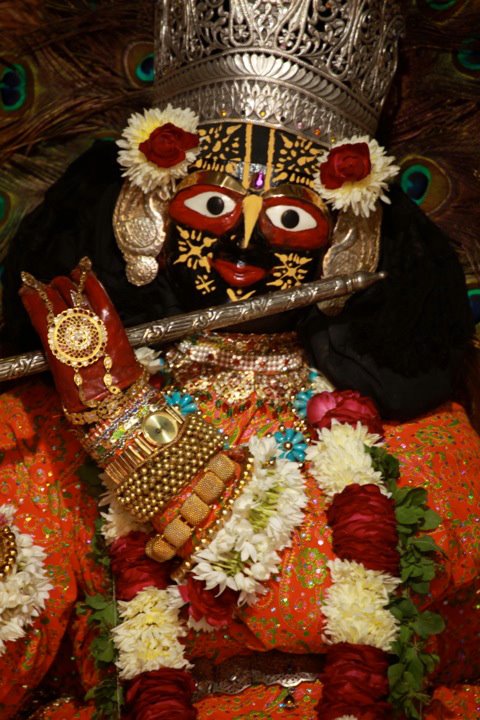
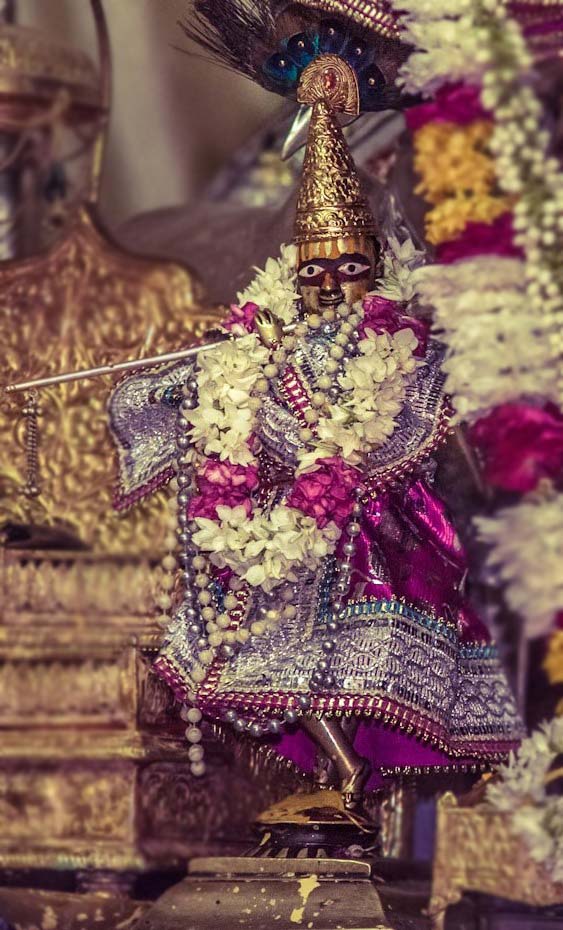
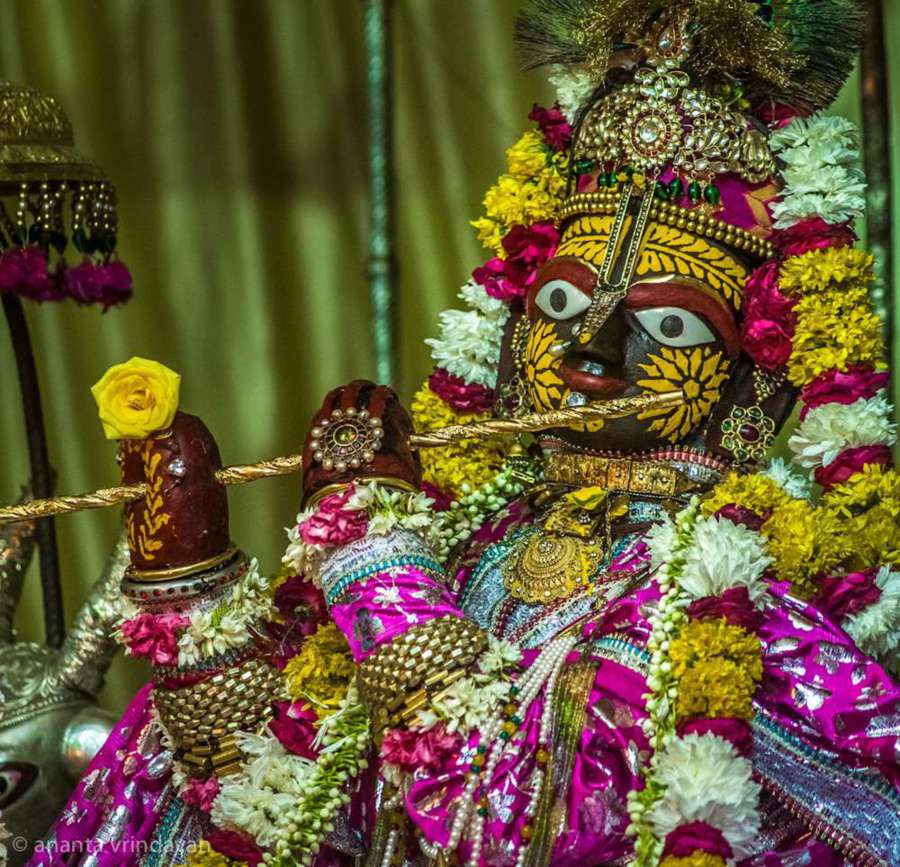
Being personally chosen by the Lord, Narahari became Radha-Govindaji's favorite cook in Vrindavana. He was known as rasuya pujari (the expert cook-priest) for mastering the art of making palatable dishes for the Lord. Wherever he traveld he established real religious principles. The Vaisnavas always received him with great respect. (In the image: Shri Govindaji, Jaipur).

   Shri Narahari Chakravarti Thakura appeared in the late 1600's in West Bengal in a brahmana family. Jagannatha Vipra, his father, was a famous disciple of Shripad Vishvanatha Chakravarti Thakura. Narahari (Ghanashyama Dasa) was a disciple of Narasimha Chakravarti in the line of Shrinvasa Acharya.
 
   From youth Narahari observed a vow of celibacy. All his activities were pure and saintly. He was always meek and humble, thinking himself a mischievous rascal. He used to say, "I am unfit for serving the Lord. I have no qualifications at all." Yet he was extremely learned in the arts of dancing, singing, playing musical instruments. He knew the intricate science of using the musial arts to praise the Lord and His associates.
 
   He was well-versed in the bhakti-shastras and in performing various kinds of devotional service. Being personally chosen by the Lord, Narahari became Radha-Govindaji's favorite cook in Vrindavana. He was known as rasuya pujari (the expert cook-priest) for mastering the art of making palatable dishes for the Lord. Wherever he traveld he established real religious principles. The Vaisnavas always received him with great respect.
     .
   Fulfilling the desire of his father and the Supreme Lord, Narahari spent most of his life in the humble service of Govindaji. He ground sandalwood pulp, collected fire wood, cleaned the Temple courtyard, picked Tulasi leaves and manjaris, fanned Lord Govindaji from outside by pulling a rope. 

   Out of genuine humility he always kept himself at a distance. He did the service of ten men. The Temple pujaris would plead with him not to do such lowly service. Insisting, Narahari said, "I am most fallen. I have no right. It is really merciful of you all to let me render whatever service I can." Narahari passed his days deeply absorbed in devotional service. He would always show respect to everyone he met. Seeing Narahari's behavior, the Vrajavasis always spoke about his good qualities.

   Narahari Chakravarti Thakura was always satisfied to remain in the humble service of Govindaji. He cooked for the Lord well into his seventies. He simultaneously wrote many books about the Goswamis and the lives of the Gaudiya Acharyas such as Narottama-vilasa, Namamrta-samudra, Shrinivasa-charita, Sanghita-sara-sangraha, Bhakti-ratnakar, Gaura-charitra-samudra. 
Narahari Chakravarti Thakura

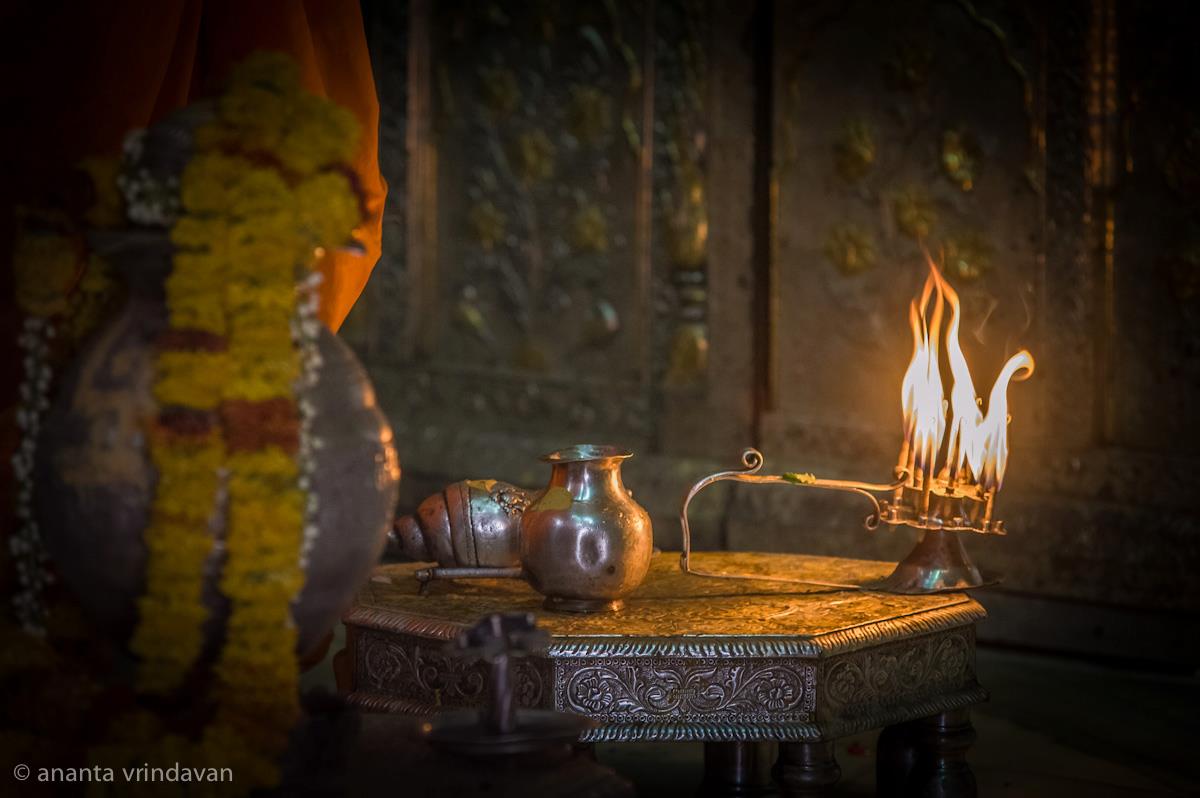
Fulfilling the desire of his father and the Supreme Lord, Narahari spent most of his life in the humble service of Govindaji. He ground sandalwood pulp, collected fire wood, cleaned the Temple courtyard, picked Tulasi leaves and manjaris, fanned Lord Govindaji from outside by pulling a rope. (In the image: Paraphenalias for offering to a Deity).
Murari Gupta

Murari Gupta

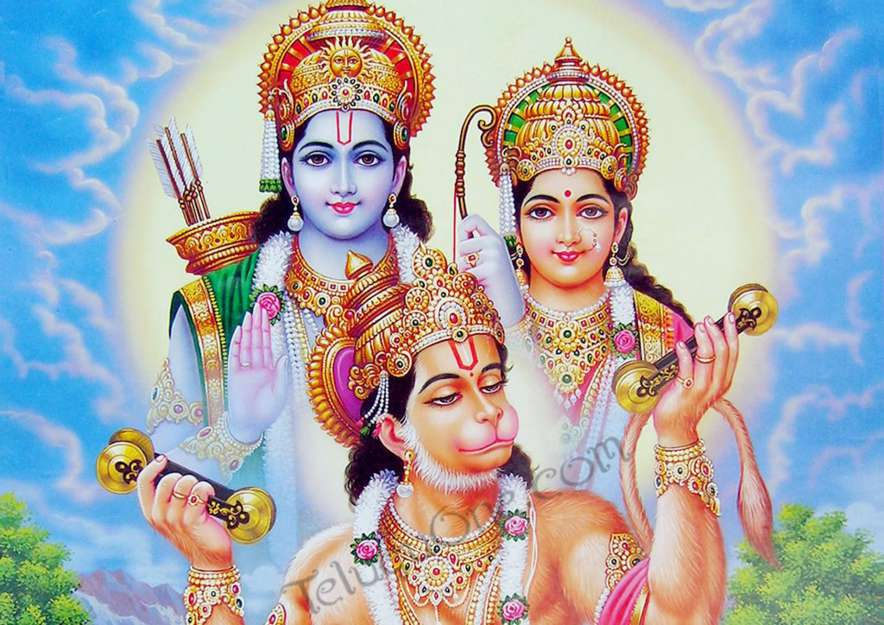
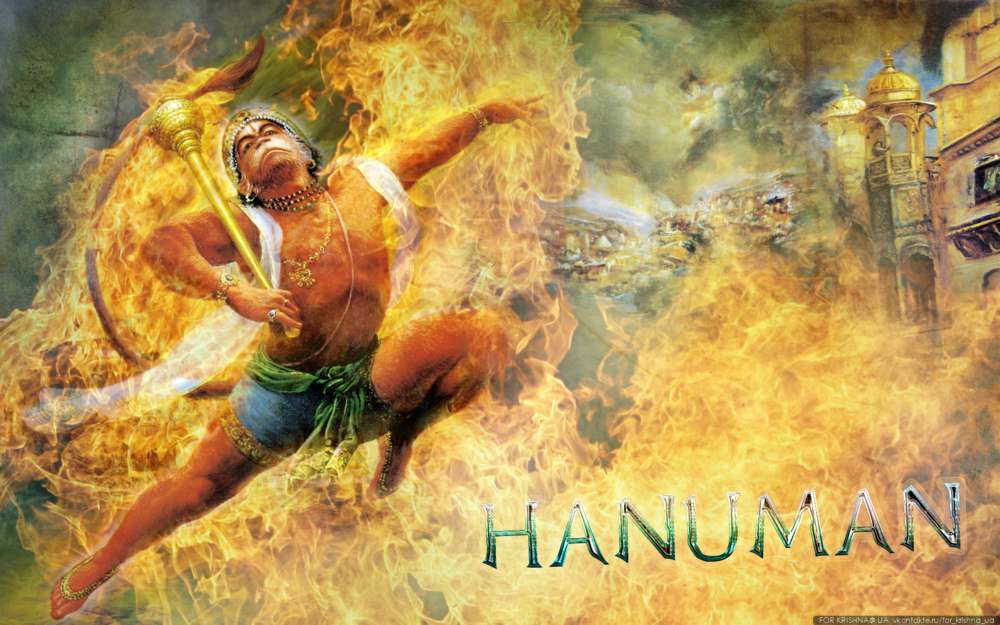
Congratulating Murari Gupta, the Lord continued, "You are the incarnation of Hanuman, the eternal servant of Lord Rama. Therefore, why should you give up your worship of Lord Rama?" (In the image: Hanuman).

   Shri Murari Gupta, a disciple of Shri Chandrashekhara Acharya, possessed extraordinary humility. He had an intimate lifelong relationship with Lord Chaitanya. Although senior in class, Murari would always lose in debates with Shri Nimai Pandit. During one heated argument they began pushing each other. The scuffle continued into the Ganges. They stirred up so much mud that ladies couldn't fill their pots and brahmanas couldn't bathe properly.
 
   At the nightly kirtan in Shrivasa Angam Murari Gupta pleased Gaurahari with melodious chanting of the Bhagavata. He would also sing and dance expertly. Murari Gupta served Shri Chaitanya in all His Nadia lilas.
 
   Lord Chaitanya once tested Murari Gupta's attachment to his worshipable Lord Ramachandra. Lord Gaurasundara preached to Murari about the supreme sweetness and position of Vrajendrakumara (Krishna): "Murari, just worship Krishna and take shelter of Him. Nothing but His service can satisfy the mind." Although Murari Gupta became somewhat inclined toward Shri Krishna, the thought of losing Lord Ramachandra's association devastated him. That night he prayed to Lord Rama to take his life. He asked for this because he couldn't stop serving Rama, nor could he defy Shri Chaitanya's request.
 
Murari Gupta

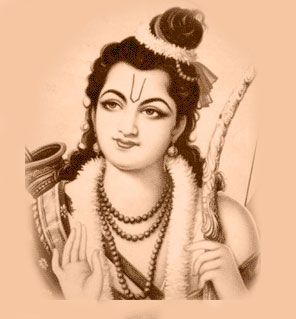
"What should I do? I've sold my head to the lotus feet of Lord Ramachandra. But if I break Your order to worship Lord Shri Krishna, then what can I do?" (In the image: Lord Shri Ramachandra).

   After crying all night Murari approached Lord Chaitanya and said: "What should I do? I've sold my head to the lotus feet of Lord Ramachandra. But if I break Your order to worship Lord Shri Krishna, then what can I do?"
 
   Smiling, Shri Gaura Raya replied, "All glories to Murari Gupta! You're so fixed in your worship that even My request couldn't turn your mind. This is exactly the type of love and affection the servitor must have for the lotus feet of the Lord. Even if the Lord wants separation, a Devotee cannot abandon the shelter of His lotus feet. Just to test your firm faith in your Lord I repeatedly asked you to change your worship from Lord Rama to Lord Krishna."
 
   Congratulating Murari Gupta, the Lord continued, "You are the incarnation of Hanuman, the eternal servant of Lord Rama. Therefore, why should you give up your worship of Lord Rama?"
 
   At another time, Lord Chaitanya showed His form as Lord Ramachandra with Janaki, Lakshmana, and a host of monkeys reciting hymns and prayers. Seeing himself amongst those monkeys in his original form as Hanuman, Murari Gupta fainted. In Katva, when Lord Chaitanya took sannyasa Murari stood by weeping like a child. And when Shriman Mahaprabhu moved to Jagannatha Puri, Murari and his wife would come every year to relish the Lord's company.
 
   Since he was born in a dynasty of Ayur Vedic doctors Murari Gupta practiced medicine. But his practice was unique in that he cured his patient's physical ailments and also freed them from the disease of material existence. He wrote the first biography of Shri Chaitanya Mahaprabhu, an important Sanskrit work entitled Shri Chaitanya Charita Mahakavya. His samadhi is in the 64 Samadhis Area. 
Murari Gupta

At another time, Lord Chaitanya showed His form as Lord Ramachandra with Janaki, Lakshmana, and a host of monkeys reciting hymns and prayers. Seeing himself amongst those monkeys in his original form as Hanuman, Murari Gupta fainted. (In the image: Shri Shri Sita Rama and Hanuman).

Mukunda Datta

Mukunda Datta

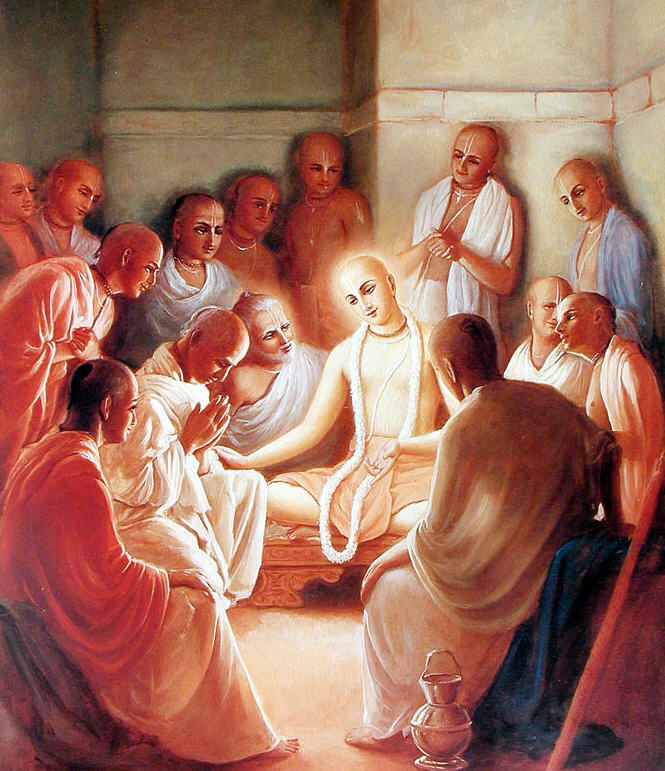
Lord Chaitanya's heart melted upon seeing Mukunda's devotion and determination. The Lord blessed and accepted Mukunda, "By your faith and conviction in My words all your offenses have been immeditately destroyed." (In the image: Lord Chaitanya and His associates).

   Shri Mukunda Datta was Shri Nimai Pandit's classmate at Ganga's Dasa's tol (school). Mukunda had a melodious voice and he knew the intricacies of musical meters and ragas. His sweet kirtana would please all the Vaishnavas at Navadwipa.Tuning in to Lord Gaura's heart, he would sing songs matching Lord Gauranga's feelings. Lord Chaitanya took sannyasa amidst Mukunda's kirtana. He served Shri Chaitanya in Puri as one of the Lord's humblest followers.
 
   Once at the house of Shrivasa Pandit Lord Chaitanya blessed all the Devotees except Mukunda. Mahaprabhu overlooked him because he had offended Bhakti Devi (who gives devotional service). Mukunda placed her on an equal level with karma, jnana, or even Mayavada philosophy whenever he talked to followers of those paths. Acting like a chameleon, Mukunda would glorify bhakti to bhaktas, and then debate useless mundane topics with karmis (nondevotees). And with Mayavadis he discussed impersonalism.

   Mukunda chose suicide as atonement for his serious offense to Bhakti Devi. He asked Lord Chaitanya if he would again receive His mercy in a future life. "You will receive My mercy," said Lord Chaitanya, "after passing one million births."

   Happy to know he would someday get Mahaprabhu's mercy, Mukunda jumped up and down shouting, "Only a million births, only a million births!"

   Lord Chaitanya's heart melted upon seeing Mukunda's devotion and determination. The Lord blessed and accepted Mukunda, "By your faith and conviction in My words all your offenses have been immeditately destroyed."

   In Krishna lila he is Madhukantha, a person with a honey sweet throat, a sweet singer. His samadhi is located within the 64 Samadhis Area.

Mukunda Dasa

Mukunda Dasa

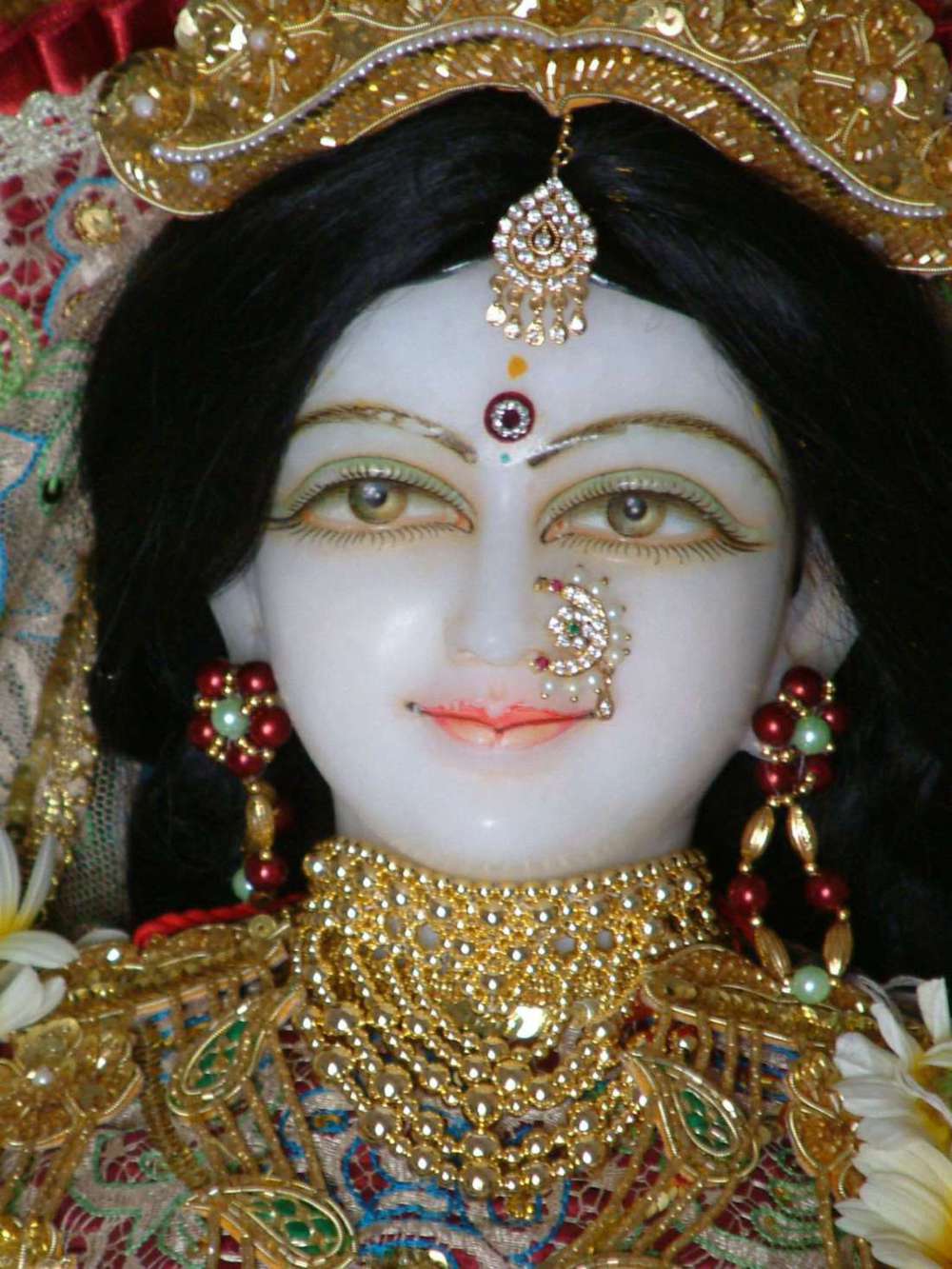
Mukunda Dasa serves Radha-Murlimanohara as Vrinda-devi in Vraja Gokula. (In the image: Shrimati Vrinda Devi, Vrindavan).

   Shri Mukunda acted as the royal physician to Emperor Hussain Shah. Upon seeing a shimmering peacock fan waving before the king, he fell down in ecstasy. Seeing the peacock feathers flooded the pure heart of Mukunda with overwhelming memories of Lord Shri Krishna.

   Shri Chaitanya once jokingly asked Mukunda, "Who is thy father and who is the son?" Mukunda replied, "My son, Raghunandana, is actually the father because through him I have understood Krishna consciousnes. Therefore, he is my real father."
 
   Lord Chaitanya confirmed his realization, "Yes, whoever give us Krishna-bhakti is our guru and our real father."
     
   To expand the preaching in Shri Khanda, Shri Chaitanya Mahaprabhu assigned different duties to the Sarakara family. Mukunda Sarakara, working as a doctor already, was told to make money, follow the regulative principles, and increase his spiritual wealth. Narahari Sarakara Thakura was ordered to stay with the Lord's Devotees and preach Krishna consciousness. Raghunandana, Mukunda's son, was asked to worship the family Deity of Shri Caitanya Deva. By this pastime Lord Gaurasundara teaches that by different activities everyone 'can engage in the service of Lord Krishna.

   Mukunda Dasa serves Radha-Murlimanohara as Vrinda-devi in Vraja Gokula. 

Madhu Pandit Goswami

Madhu Pandit Goswami

Vrajanabha, Lord Krishna's great-grandson, installed the original Gopinatha Deity in Vrindavana over five-thousand years ago. (In the image: Shri Gopinath, Jaipur).

   Vrajanabha, Lord Krishna's great-grandson, installed the original Gopinatha Deity in Vrindavana over five-thousand years ago. About five-hundred years ago, Paramananda Bhattacharya discovered the Deity in the earth at Vamshivata on the banks of the Yamuna. Madhu Pandit Goswami, a disciple of Shri Gadadhara Pandit, worshiped the Gopinatha Deity.

   Bhakti-ratnakar says that Shri Gopinathaji, who is an ocean of mercy, forever sports along the enchanting banks of the Yamuna at Vamshivata. His bodily luster steals the mind of whoever sees Him. When the soothing sweetness of Gopinathaji's charming form enters the heart it immeditately extinguishes the burning fire of material existence. Now the original Gopinatha Deity stays in Jaipur, Rajasthan.

   Madhu Pandit Goswami blessed Shrinivasa Acharya with Gopinatha's garland before Shrinivasa, Narottama, and Shyamananda took the bullock cart of Goswami granthas from Vrindavana. In Goloka Vrindavana, Madhu Pandit Goswami serves as Mandali-sakhi in the group of Champakalata-sakhi. The samadhi of Madhu Pandit Goswami is on the right side of the entrance within the compound of the Radha-Gopinatha Temple in Vrindavana. 


Madhu Pandit Goswami

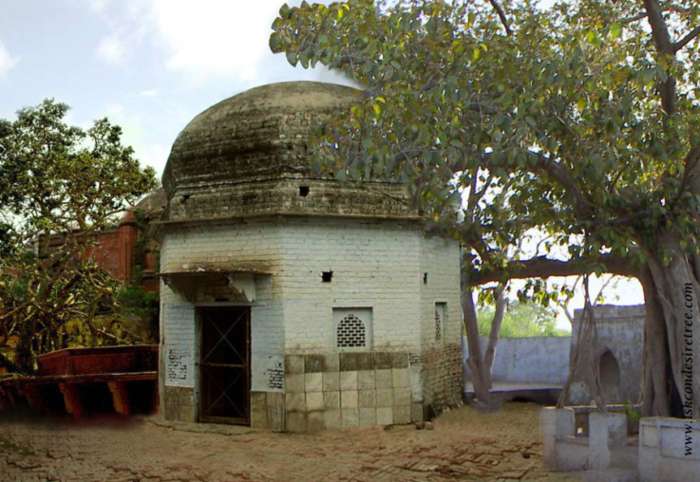
The samadhi of Madhu Pandit Goswami is on the right side of the entrance within the compound of the Radha-Gopinatha Temple in Vrindavana. (In the image: The samadhi of Madhu Pandit Goswami).

Lokanatha Goswami

Lokanatha Goswami

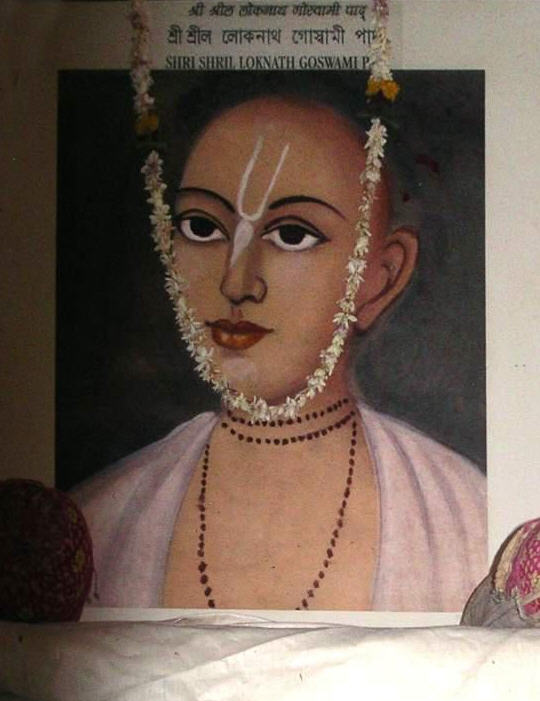
His body and mind were completely attached to Vrindavanadhama. The divine Was of Radha-Vinoda played in his heart. His ears existed only to hear the Shrimad Bhagavatam. "Anyone who reads the Shrimad Bhagavatam," said Lokanatha Goswami, "he is my friend." (In the images: Shrila Lokanatha Goswami).

   A personal associate of Lord Gauranga, fully absorbed in pure love, Shri Lokanatha Goswami was the eldest of the Goswamis living in Vraja-bhumi. He shunned name and fame so much that he asked Krishna Dasa Kaviraja to keep his name out of Chaitanya-charitamrta.
 
   His body and mind were completely attached to Vrindavanadhama. The divine Was of Radha-Vinoda played in his heart. His ears existed only to hear the Shrimad Bhagavatam. "Anyone who reads the Shrimad Bhagavatam," said Lokanatha Goswami, "he is my friend."
    .
   Once Shri Krishna Himself appeared and gave Lokanatha a Deity of Radha-Vinoda. Lokanatha Goswami carried his Deity all over Vraja in a cloth bag hung around his neck.
 
   Although first rejecting, Lokanatha Goswami finally accepted Narottama Dasa for initiation as his only disciple. He appreciated his genuine humility and determination to serve. Every night for one year Narottama Dasa secretly served his guru by carefully cleaning the field where Lokanatha Goswami passed stool.

   Lokanatha Goswamis original Deities of Radha-Vinoda are now worshiped in Jaipur, Rajasthan. A prati-bhu murti (expanded form of the original Deity) of Radha-Vinoda adorns the altar at the Radha-Gokulananda Temple in Vrindavana. The samadhi of Lokanatha Goswami is the largest one in the Temple courtyard. He serves Shrimati Radharani as Manjuali-manjari in nitya Vrindavana lila.

srimad radha vinodaika, seva sampat samanvitam
padmanabh atma jam srimal, lokanatha prabhu bhaje

   "I worship the lotus feet of Shri Lokanatha Goswami Prabhu, the son of Shri Padmanabha. He is a storehouse of single-minded service to the lotus feet of Radha-Vinode." (Narottama Dasa Thakura) 

Lokanatha Goswami 2

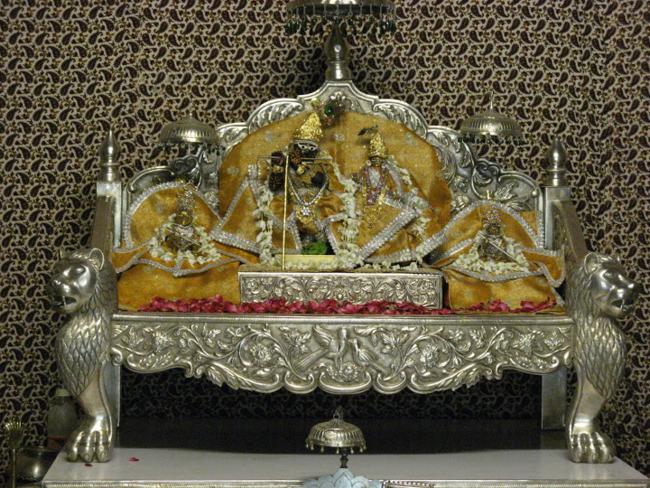
Once Shri Krishna Himself appeared and gave Lokanatha a Deity of Radha-Vinoda. Lokanatha Goswami carried his Deity all over Vraja in a cloth bag hung around his neck. (In the image: Original Radha Vinoda Deities, Jaipur).

Kholavecha Shridhara

Kholavecha Shridhara

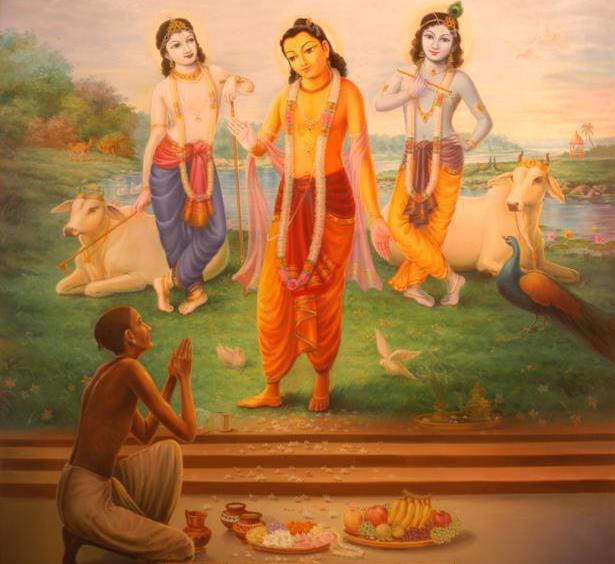
Kholavecha Shridhara serves Krishna-Balarama in Vraja dhama as Kusumasava sakha. (In the image: Lord Chaitanya revealing His Krishna-Balarama form to Kolavecha Shridhar).

   Although poor, living in a broken down hut with holes in the roof, and drinking water from a cracked iron pot, Shridhar a Pandit (Kholavecha Shridhara) had the fortune of Mahaprabhu's affection. He would stay up at night chanting Hare Krishna. The neighbors thought because of poverty he had hunger pains and couldn't sleep. Everyday Nimai Pandit would buy banana-fruits, roots, stalks, flowers; gourds, and pumpkins from Kholavecha Shridhara. A sweet love quarrel would ensue because Nimai paid only half the quoted price.
 
   "If You don't like my prices," said Shridhara, "then please buy Your banana flowers somewhere else." Then taking the banana flowers, Mahaprabhu would just walk away without paying a paisa.
 
   Shridhara would snatch them back and chide the Lord, "I'm just a poor old brahmana. And whatever little profit comes we use to worship Ganga Devi." Finally, Shridhara agreed to give Nimai Pandit some banana flowers everyday without charge.
 
   Kholavecha Shridhara serves Krishna-Balarama in Vraja dhama as Kusumasava sakha. His samadhi is located in the 64 Samadhis Area.

Kavi Karnapura Goswami

   Shivananda Sena had three sons (Chaitanya Dasa, Shri Rama Dasa, Kavi Karnapura) Before Kavi Karnapura appeared, Lord Chaitanya gave him the name "Puri Dasa." Shivananda Sena brought Puri Dasa to meet Lord Chaitanya in Jagannatha Puri. Shivananda induced his infant son to offer dandavats to the Lord. Suddenly, in great ecstasy, the baby grabbed Gauranga's foot and sucked the Lord's lotus petal toe. Voicing their approval, the assembled Devotees chanted Hari! Hari!

   At age seven, Kavi Karnapura received nama mantra directly from Shri Chaitanya Mahaprabhu. Ordered and empowered by the Lord, the boy instantly composed a wonderfully sweet, poetic Sanskrit verse. Everyone present felt deeply moved and satisfied with his recitation.

   Understanding that the boy had received Lord Chaitanya's mercy, Shri Svarupa Damodara said: "Since this boy's poetry pleases the heart, and completely fills the ears with nectar, his name will be "Kavi Karnapura." (kavi means poetry; karna-ear; pura-full).

   At the age of sixteen, Kavi Karnapura started his prolific writing career by producing Chaitanya-carita-mahakavya, a master-piece of transcendental srngara rasa poetry. Kavi Karnapura defines rasa: "That dearmost sentiment which is tasted in a purified heart, absolutely purged of all worldiness by contacting suddha-sattva (pure transcendental goodness). That which is the fountainhead of that striking, varied, charming sweetness, and is way beyond the realm of thought is rasa."

   He also wrote Chaitanya-cahndrodaya-nataka, Gaura and Radha Krishna gannodesh dipikas, Alankara Kaustubha, Ananda Vrindavana Champu. His samadhi is in the 64 Sam ad his Area. 

Kavi Karnapura Goswami

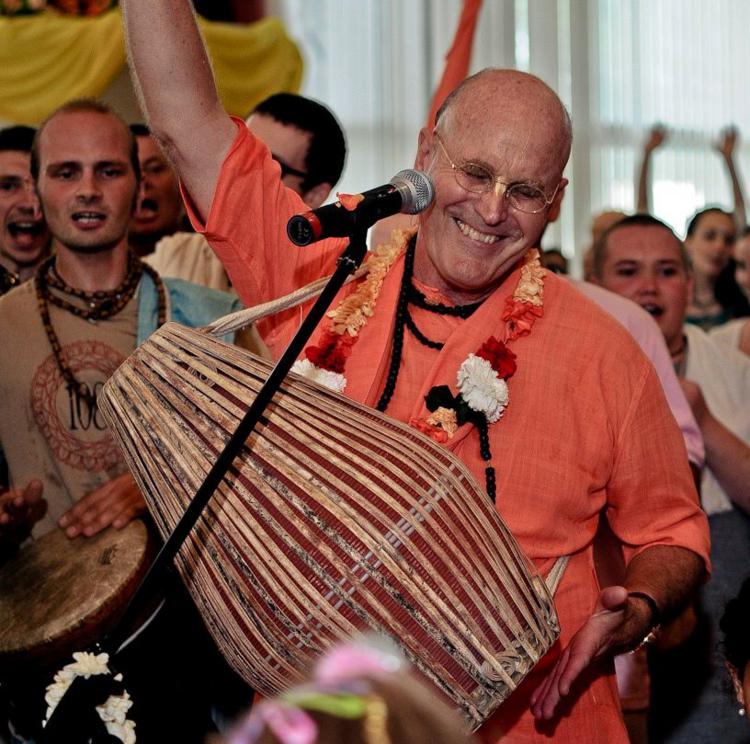
"That dearmost sentiment which is tasted in a purified heart, absolutely purged of all worldiness by contacting suddha-sattva (pure transcendental goodness). That which is the fountainhead of that striking, varied, charming sweetness, and is way beyond the realm of thought is rasa." (In the image: His Holiness Indradyumna Swami Maharaj).

Kashishvara Pandit

Kashishvara Pandit

Shri Sadhana Dipika says, "I worship Shri Kashishvara Pandit whose power of love and devotion brought Shri Chaitanya to Western India as a Deity." Today the original Deities of Gaura-Govinda and Govindaji are lovingly adored by thousands of Devotees in Jaipur, Rajasthan. (In the image: Shri Gaura Govinda, Jaipur, Rajastan).

   Shri Ishvara Puri sent his disciples, Govinda and Kashishvara Pandit, to Jagannatha Puri to humbly serve Lord Chaitanya. Reluctant to accept service from His Godbrothers, Shri Chaitanya finally agreed since it was His guru's wish. Named Kalavati and Sasirekha in Vraja lila, Govinda and Kashishvara bring Yamuna water to Lord Shri Krishna. Kashishvara Pandit, who was strong and powerfully built, used to walk before Lord Chaitanya keeping the crowds from touching Him. And after kirtans he would serve Prasadam to all the Devotees.

   Shri Gaurasundara asked Kashishvara to move to Vrindavana for worshiping Shri Rupa Gosvami's Deity of Govindaji. Fearing separation from Lord Chaitanya, Kashishvara said, "My Lord, if I must give up Your association my heart will split in two." Out of compassion for His Devotee Lord Gaurachandra gave him a Deity of Himself that was so perfectly formed it exactly resembled the Lord. "Gaura-Govinda," the Deity's name, is a golden form of Krishna playing flute. Then Kashishvara Pandit happily went to Vrindavana to serve Gaura-Govinda and Govindaji.

   Shri Sadhana Dipika says, "I worship Shri Kashishvara Pandit whose power of love and devotion brought Shri Chaitanya to Western India as a Deity." Today the original Deities of Gaura-Govinda and Govindaji are lovingly adored by thousands of Devotees in Jaipur, Rajasthan.
 
   Kashishvara Pandit's original samadhi is in 64 Samadhis Area.


Kamalakara Pippalai

   "Kamalakara Pippalai, one of the dvadasha gopalas, was known to the world as a miracle of love of God. Appreciating his enthusiasm for preaching, Lord Nityananda made him the "sankirtana leader" of the Saptagrama preaching center." (Chaitanya-charitamrta) He is Mahabala sakha in Krishna-Balarama's Vrindavana pastimes. His samadhi is in the 64 Samadhis Area.