Category Archives: More About Gaudiya Saints

Krishnadasa Kaviraja Goswami – Biography

Krishnadasa Kaviraja Goswami

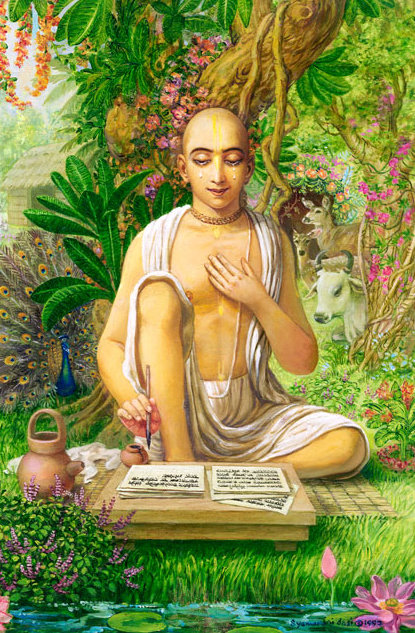
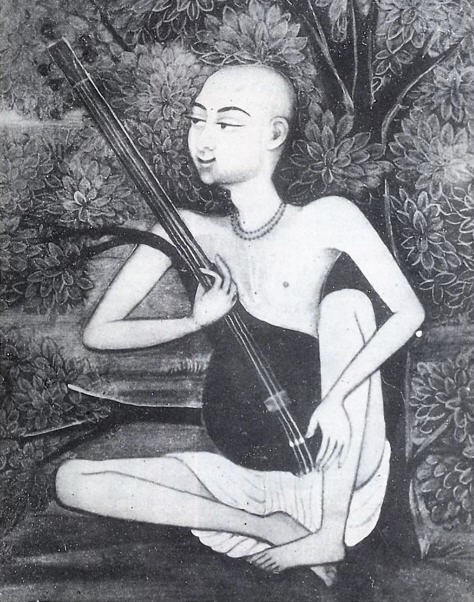
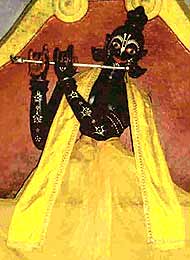
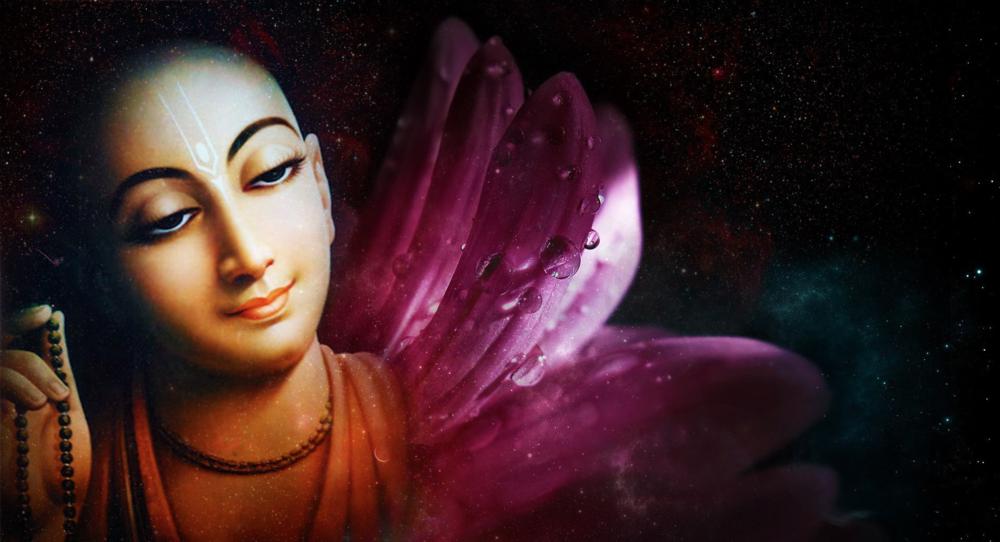
All scriptures state that a Vaishnava is still the best of humankind. It it does not matter in which caste he takes birth. That most sinful person who judges a Vaishnava in terms of his race or his caste will repeatedly be born in the lowest forms of life. (Chaitanya Bhagavat 2.10.100-2) (In the image: Krishnadasa Kaviraja Goswami).

   Krishnadas Kaviraj Goswami is the author of the Chaitanya Charitamrita, but has given us very little autobiographical information there. In his introduction to the Gaudiya Math’s edition of Chaitanya Charitamrita, Shrila Bhaktisiddhanta Saraswati Goswami Thakur has written the following about Krishnadas’s antecedents: “We do not know the names of Krishnadas’s parents. Recently their names have been discovered, [FN: According to Ashutosh Deb’s Bengali Dictionary and Haridas Das’s Gaudiya Vaishnava Abhidhana, Krishnadas’s parents’ names were as Bhagiratha and Sunanda.] but no concrete evidence can be found to substantiate these claims. Krishnadas is his spiritual, not his family, name. He has given some autobiographical information in the fifth chapter of the Adi-lila, from which we learn that he was born in Jhamatpura, near the Salara railway station. Jhamatpura lies four miles west of Naihati in the Katwa block of Burdwan district. To this day, Krishnadas’s Gaura-Nitai Deities are still worshiped in his home town, but there do not seem to be any descendants of his family still living there. He was ordered by Nityananda Prabhu in a dream to go to Vrindavan which is where he spent the remainder of his life. His samadhi tomb is on the grounds of the Radha-Damodar Temple.” (Bhumika, ii.)
 
   Nityananda Prabhu appeared to me in a dream in Jhamatpur, near Naihati. (1.5.181).
 
   Shrila Prabhupada Saraswati Goswami has established Krishnadas’s dates by collating information from several sources. He concludes that he was probably born in about 1520 AD and died in about 1616 or 1617. Vrindavan Das Thakur appeared sometime after 1510 AD. Krishnadas’s magnificent biography of Chaitanya Mahaprabhu was meant to serve as an appendix to his work.
 
Krishnadas’s Varnashrama Status
 
   There is some difference of opinion about Krishnadas’s caste. Once again, Shrila Prabhupada, Bhaktisiddhanta Saraswati Thakur has discussed this point: “Supporters of different ideas claim that Krishnadas was born in one of the three upper castes (Brahmin, kayastha or vaidya). Kaviraj is a title given to those who have proven themselves by composing literary works which have achieved renown for their quality in learned circles. Since this title is also given to Ayurvedic physicians, some people hold that Krishnadas was a vaidya. It is difficult to contradict those who claim that he is a Brahmin on the basis of his extraordinary mastery of the scriptures and other branches of learning, of which Chaitanya Charitamrita is an eloquent testimonial. Nor is the view that he was a kayastha altogether illogical, as he reveals a soft spot for that caste when he praises its intelligence and managerial talents in the chapters about Raghunath Das Goswami’s early life.” (Bhumika, iii.)
 
   From this above discussion, we can see that Krishnadas may have been born in any of these three castes. Whatever the case, a Vaishnava is a superior human being no matter in what caste he takes his birth. 
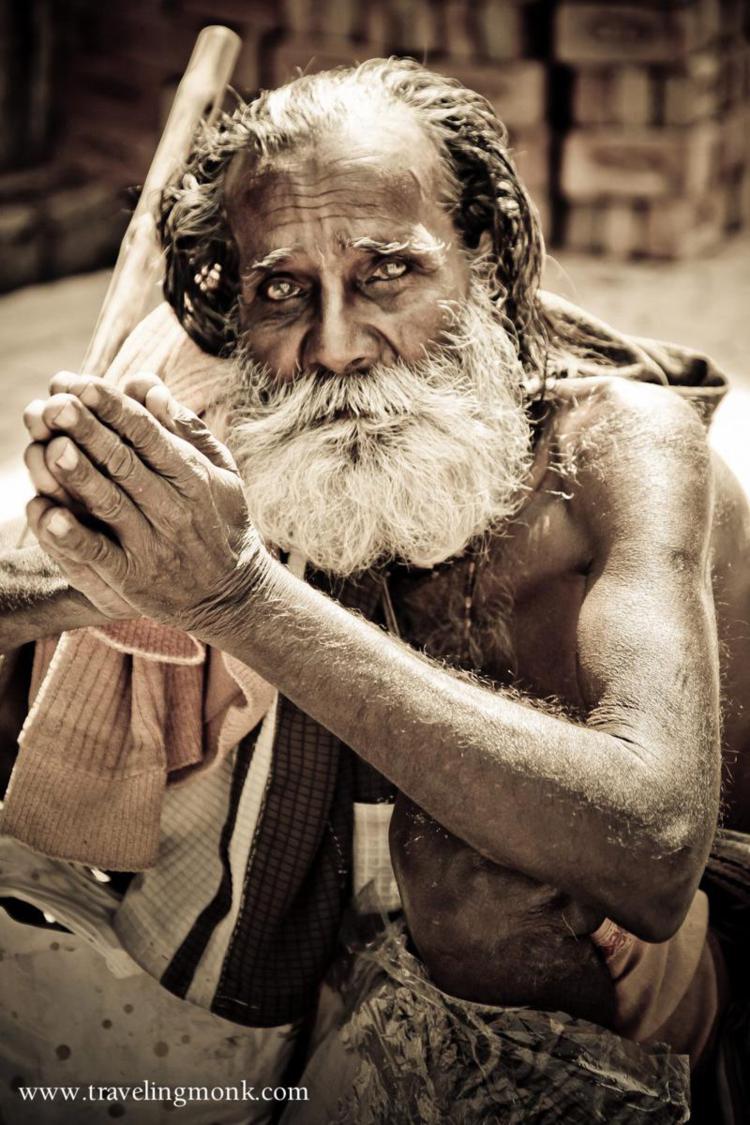
Krishnadasa Kaviraja Goswami

“After arriving in Vrindavan, Krishnadas became indifferent to talk about his previous family life and totally absorbed in Hari-katha. This behavior is appropriate for someone in the third or fourth station and completely committed to the devotional life. The Chaitanya Charitamrita is the composition of someone who has reached the status of a paramahamsa and is completely beyond the four ashramas." (In the image: Braja basi, Radha Kund).

 
   All scriptures state that a Vaishnava is still the best of humankind. It it does not matter in which caste he takes birth. That most sinful person who judges a Vaishnava in terms of his race or his caste will repeatedly be born in the lowest forms of life. (Chaitanya Bhagavat 2.10.100-2) 
 
   There is no unanimous opinion about Krishnadas’s marital status, either. Some say that he was a lifelong brahmachari when he went to Vrindavan, for if he had left a wife and family he would likely have mentioned it when telling of his renunciation. Shrila Prabhupada writes in this connection, “After arriving in Vrindavan, Krishnadas became indifferent to talk about his previous family life and totally absorbed in Hari-katha. This behavior is appropriate for someone in the third or fourth station and completely committed to the devotional life. The Chaitanya Charitamrita is the composition of someone who has reached the status of a paramahamsa and is completely beyond the four ashramas." He was known as Kaviraj Goswami to his spiritual family. His spiritual identity in Vraja lila is Ratnarekha Manjari, or Kasturi Manjari according to others.
 
   From Krishnadas’s statements in the Chaitanya Charitamrita, we also learn that he had a brother. Krishnadas does not give his name, but Hari Das writes in the Gaudiya Vaishnava Abhidhana that he was called Shyama Das Kaviraj.
 
Krishnadas’s Vision of Nityananda Prabhu
 
   In the course of his glorification of Nityananda Prabhu in the Chaitanya Charitamrita, Krishnadas Kaviraj Goswami describes the crucial event in his life. Krishnadas had organized a 24-hour kirtan at his house and amongst those invited was Lord Nityananda’s dear associate, Minaketan Rama Das, who also lived in Jhamatpura.
 
   Minaketan was a great Vaishnava who was in a constant state of devotional trance as he chanted the name of Nityananda Prabhu. In his ecstatic mood, he would sometimes hit people with his flute and sometimes slap them. In general, his ecstatic behavior was the cause of some astonishment amongst Krishnadas’s guests and most came to pay their obeisances and offer him their respects. Only Gunarnava Mishra, who had been engaged at the festival as a pujari, did not demonstrate a respectful attitude. This behavior was an indication that Gunarnava Mishra had no faith in Nityananda Prabhu. Rama Das became angry and criticized Mishra, saying,
 
   ”Just look! A second Romaharshana Suta who did not come forward to show respect when he saw Balaram!” (Chaitanya Charitamrita 1.5.170)
 
   Gunarnava Mishra was pleased to have been chastised by Rama Das and simply continued in the performance of his service to the Deity. At the end of the kirtan festival, when Gunarnava Mishra had left, however, Krishnadas Kaviraj’s brother got into an argument with Minaketan Rama Das about what had happened. Krishnadas’s brother had strong faith in Chaitanya Mahaprabhu, but lacked similar faith in Nityananda. Upon hearing this, Rama Das was deeply wounded and he became so angry that he broke his flute and left. The result of this curse was that Krishnadas’s brother was doomed to completely losing any devotional attitude whatsoever. Krishnadas Kaviraj, however, took the side of Nityananda Prabhu’s associate and rebuked his brother:
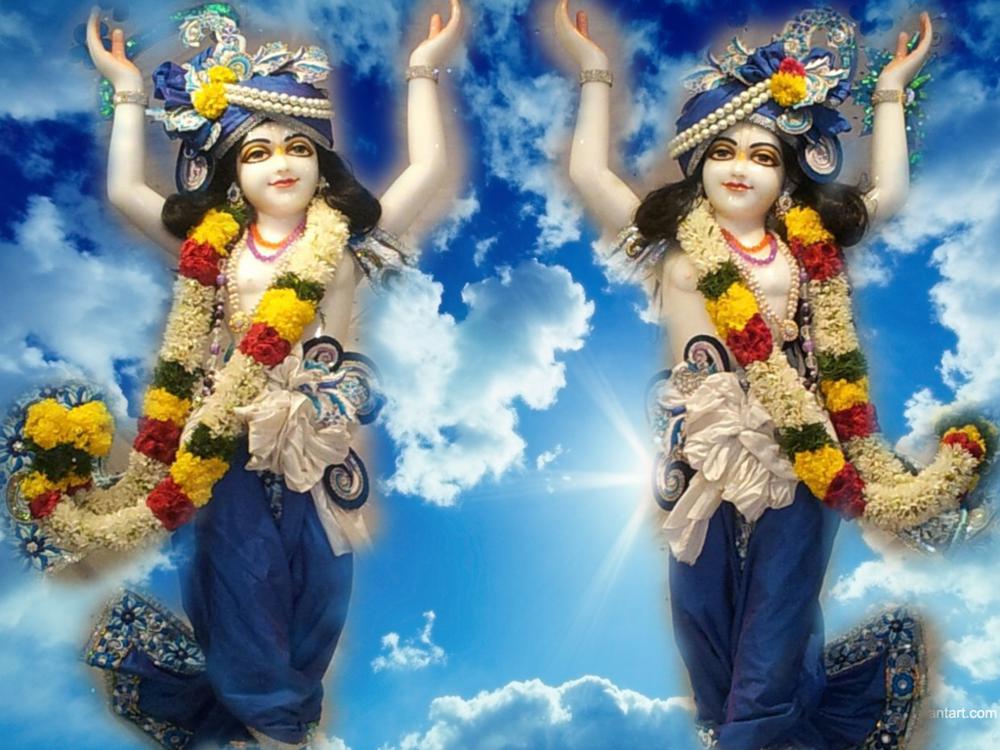
Krishnadasa Kaviraja Goswami 8

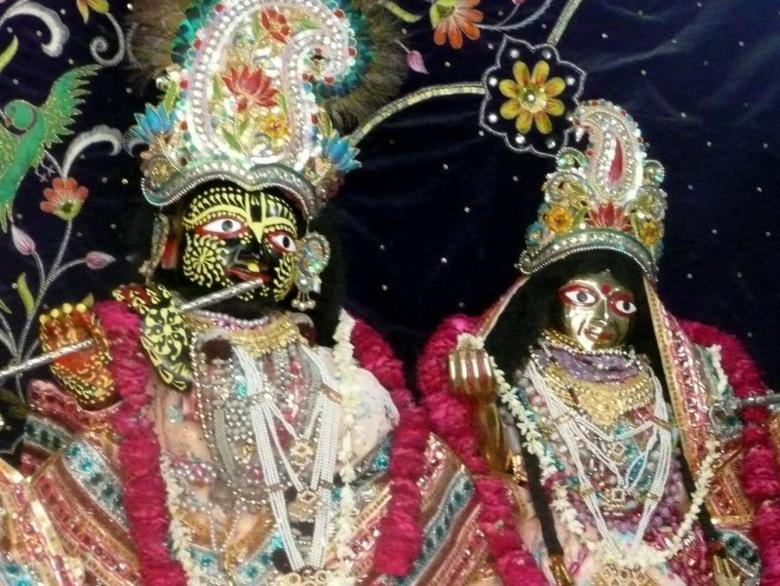
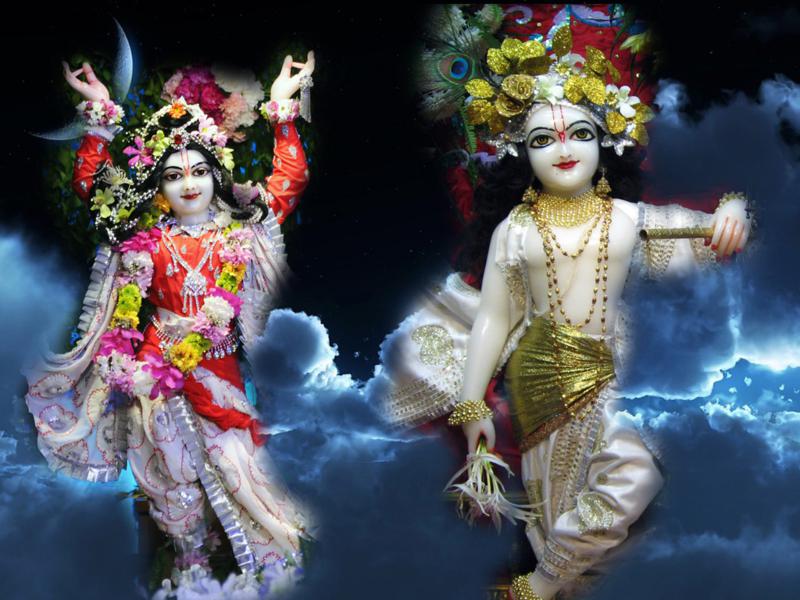
”These two brothers (Chaitanya Mahaprabhu and Nityananda Prabhu) are like one body; they are equal in their spiritual manifestation. If you do not accept the divinity of Lord Nityananda, you will fall down. To have faith in one but to disrespect the other is as logical as accepting half a hen. Better you should be an atheist by denying the divinity of both than a hypocrite who believes in one and not the other.” (Chaitanya Charitamrita 1.5.175-7) (In the image: Shri Shri Gaura Nitay, ISKCON Chennai, Tamil Nadu).

   ”These two brothers [Chaitanya Mahaprabhu and Nityananda Prabhu] are like one body; they are equal in their spiritual manifestation. If you do not accept the divinity of Lord Nityananda, you will fall down. To have faith in one but to disrespect the other is as logical as accepting half a hen. Better you should be an atheist by denying the divinity of both than a hypocrite who believes in one and not the other.” (Chaitanya Charitamrita 1.5.175-7)
 
   The Lord is influenced by His Devotees and He gives great importance to even the slightest display of attachment, bestowing upon them all that they desire. Krishnadas Kaviraj Goswami writes that by taking the part of Nityananda Prabhu’s associate and chastizing his brother, he won the blessings of Nityananda Prabhu himself. Nitai came to him in a dream and ordered him to go to Vrindavan.
 
   ”O Krishnadas! Have no fear. Go to Vrindavan, for there you will attain all things.” After saying this, He indicated the way to Vrindavan by waving His hand and then disappeared with His associates. (Chaitanya Charitamrita 1.5.195-6)
 
   By way of contrast, a person who holds Devotees in contempt, though he show all the customary virtues is eternally deprived of the Lord’s blessings. The example is the zamindar Ramachandra Khan, who committed offenses to Hari Das Thakur, as a result of which he incurred Nityananda Prabhu’s displeasure. Not only did he lose everything, but his house was razed completely, leaving no remnants. Only a foolish person who lacks discrimination would be so bold as to behave unjustly toward a saintly person.
 
   With words of profound humility, Krishnadas Kaviraj Goswami proclaims the glories of Nityananda Prabhu:
 
   I am more sinful than Jagai and Madhai and lower than a maggot in stool. Whoever hears my name loses the results of his virtuous deeds, and whoever utters my name commits a sin. Other than Nityananda, could anyone in this world show mercy to one as abominable as me? Nityananda is the incarnation of mercy; He is so intoxicated by ecstatic love that He does not discriminate between the good and the bad. He delivers anyone who fall down before Him. Therefore He has delivered such a sinful and fallen person as me. (Chaitanya Charitamrita 1.5.205-9)
 
Krishnadas Writes the Final Pastimes of the Lord
 
   Without the mercy of Vishnu and the Vaishnavas, it is impossible to describe their glories. It is for this reason that Krishnadas Kaviraj Goswami begins each chapter of the Chaitanya Charitamrita with invocations to Mahaprabhu and His associates like Nityananda Prabhu, Advaita Acharya, and concludes each chapter with a prayer for the service to the feet of Rupa and Raghunath Goswamis. He thus showed how important it is to avoid any disrespect or offense to the Vaishnavas.
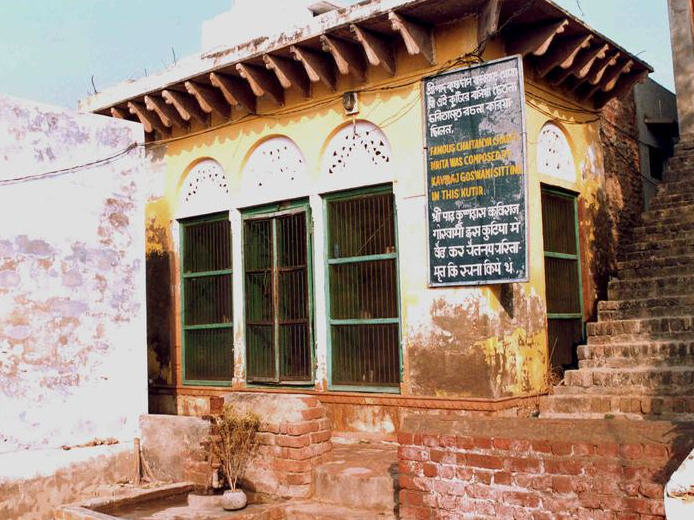
 
Krishnadasa Kaviraja Goswami

Without the mercy of Vishnu and the Vaishnavas, it is impossible to describe their glories. It is for this reason that Krishnadas Kaviraj Goswami begins each chapter of the Chaitanya Charitamrita with invocations to Mahaprabhu and His associates like Nityananda Prabhu, Advaita Acharya, and concludes each chapter with a prayer for the service to the feet of Rupa and Raghunath Goswamis. He thus showed how important it is to avoid any disrespect or offense to the Vaishnavas. (In the image: Place where Krishnadas Kaviraj Goswami wrote Shri Chaitanya Charitaamrita).

   The activities of Shri Chaitanya Mahaprabhu are by nature wonderful and sweet. When described by Vrindavan Das Thakur, they become a shower of nectar. To describe them again would not only be repetition, but a display of arrogance, for I do not possess his powers. I shall thus only present a synopsis of those events already described fully by Vrindavan Das in his Chaitanya Mangala. I shall do my best to fully describe in this book only those incidents mentioned in his outline which he did not develop. I therefore offer respectful obeisances unto the lotus feet of Vrindavan Das Thakur, praying that I will not offend his lotus feet by my action. (Chaitanya Charitamrita 2.4.5-9)
 
   Just as Vyasadeva compiled Lord Krishna’s pastimes in Shrimad Bhagavatam, Thakur Vrindavan Das depicted Lord Chaitanya’s pastimes…. I offer millions of obeisances unto the lotus feet of Vrindavan Das Thakur who has delivered the entire universe through his book. (Chaitanya Charitamrita 1.8.35,40)
 
   Vrindavan Das the authorized biographer of Shri Chaitanya Mahaprabhu and equal to Shrila Vyasadeva. He has described the Lord’s pastimes in such a way as to make them sweeter and sweeter. I shall try as far as possible to fill in descriptions he left out due to his fear of his book’s becoming too voluminous. (Chaitanya Charitamrita 1.13.48-9)
 
   In his foreword to the edition of the Chaitanya Charitamrita published by the Shri Chaitanya Gaudiya Math, the president of the editorial board of Chaitanya Vani magazine, H. H. Bhakti Pramoda Puri Goswami Maharaj, has written: “Vrindavan Das Thakur wrote an elaborate outline of Mahaprabhu’s lila at the beginning of the Chaitanya Bhagavat, but as he became absorbed in describing Nityananda’s activities, many events mentioned in the outline were left out of the final version of the book. Mahaprabhu’s Vrindavan Devotees approached Krishnadas Kaviraj, asking him to write down a full version of these pastimes, for if it were not done, they would be forgotten. Krishnadas then went to the Deity of Madana Mohana and asked Him for permission to do as he had been asked. In front of all the prominent contemporary members of the Gaudiya community in Vrindavan, the garland fell from Madana Mohana’s neck. This was taken by all who were present as a sign of the Lord’s approval and they let out a joyous cheer. Madana Mohana’s pujari picked up the garland and placed it on Krishnadas’s chest. Joyfully taking the garland as a symbol of the Deity’s wishes, Krishnadas began to write his biography of the Lord. Thus he has written in great humility. 
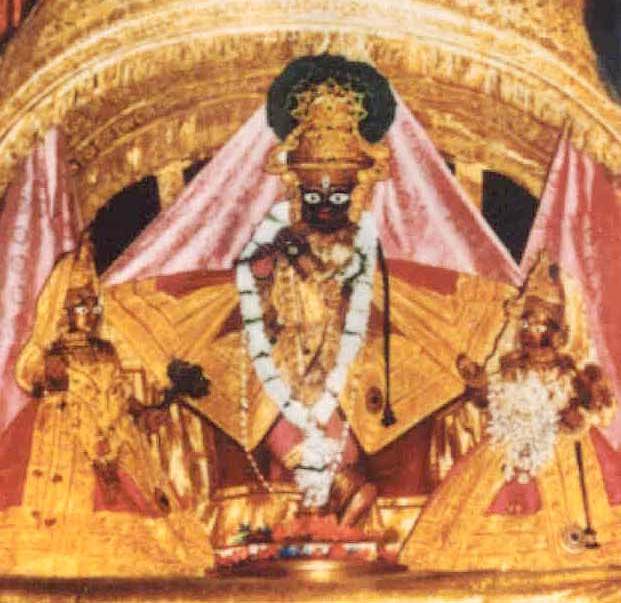
Krishnadasa Kaviraja Goswami

Krishnadas then went to the Deity of Madana Mohana and asked Him for permission to do as he had been asked. In front of all the prominent contemporary members of the Gaudiya community in Vrindavan, the garland fell from Madana Mohana’s neck. This was taken by all who were present as a sign of the Lord’s approval and they let out a joyous cheer. Madana Mohana’s pujari picked up the garland and placed it on Krishnadas’s chest. Joyfully taking the garland as a symbol of the Deity’s wishes, Krishnadas began to write his biography of the Lord. Thus he has written in great humility. (Madan Mohan, Karoli).

 
   Chaitanya Charitamrita is being dictated to me by Madana Mohana. My writing is like the repetition of a parrot. I write as Madana Gopal orders me, just as a wooden marionette is made to dance by a puppeteer. (Chaitanya Charitamrita 1.8.78-9)
 
   In writing Chaitanya Charitamrita, Krishnadas made use of Svarupa Damodar’s notes, which Raghunath Das Goswami had memorized. Shrila Bhaktivinoda Thakur has described this as follows: “Shri Svarupa Damodar Goswami wrote an outline in Sanskrit (karica) of Mahaprabhu’s later activities. He had Raghunath memorize these verses and told him to preach them throughout the world. These verses were not written down anywhere else, however. The Chaitanya Charitamrita is the gist of Svarupa Damodar’s karica.
 
   Though I am an insignificant living being, through the blessings of Shri Chaitanya Mahaprabhu I have summarized in writing everything that Svarupa Damodar recorded in his notes about the Lord’s pastimes, as well as everything that I heard from the mouth of Raghunath Das. (Chaitanya Charitamrita 3.3.269-70)
 
   Lord Chaitanya Mahaprabhu’s glorious name, form, qualities and activities all manifest in Krishnadas Kaviraj’s heart, which he then published in the Chaitanya Charitamrita. He himself stated this fact in various places throughout the book:
 
   I am now an old man and an invalid. My hand trembles as I write and my memory fails me. I am going blind and deaf, but still I manage to write and this is a great wonder. (Chaitanya Charitamrita 2.2.90)
 
   While Shrila Bhaktisiddhanta Saraswati Goswami Thakur was once glorifying the superlative character of Chaitanya Charitamrita to his disciples, he instructed them as follows: “If it were to happen that all the books in the world were destroyed, leaving only Shrimad Bhagavatam and Chaitanya Charitamrita, then the people of this world would still be able to achieve the ultimate goal in life. Even if the Shrimad Bhagavatam were lost, leaving only the Chaitanya Charitamrita, there would be no loss to humanity, for that which has not been revealed in the Bhagavat is found in Chaitanya Charitamrita. The Supreme Absolute Truth is Shri Chaitanya Mahaprabhu, the combined form of Radha and Krishna. The Chaitanya Charitamrita is His sound incarnation. The divine mystery of Radharani’s divine status and glories are found therein. Can there be any doubt, therefore, of the supreme status of this piece of transcendental literature?” 
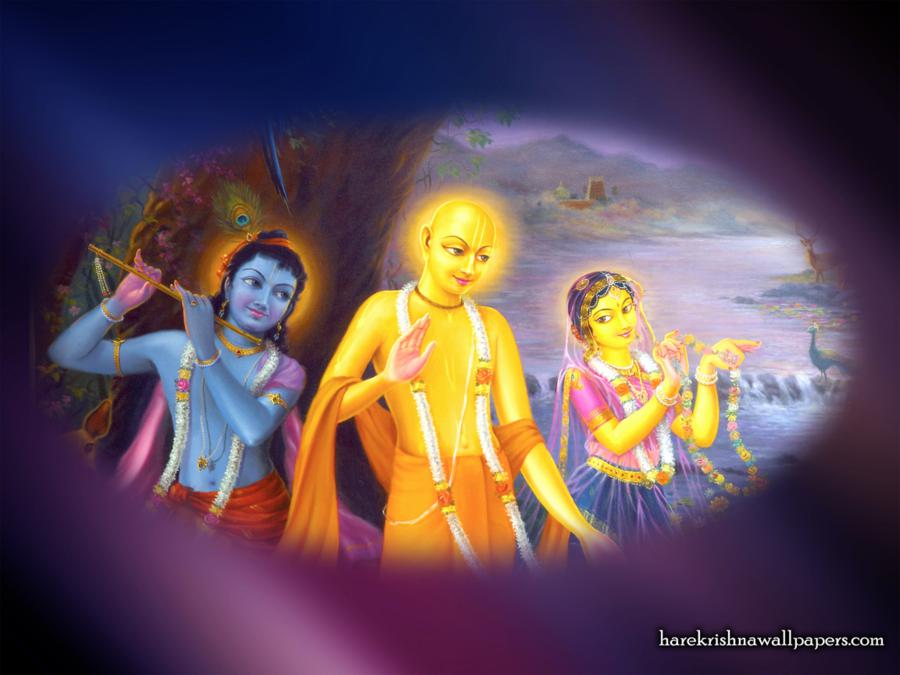
Krishnadasa Kaviraja Goswami

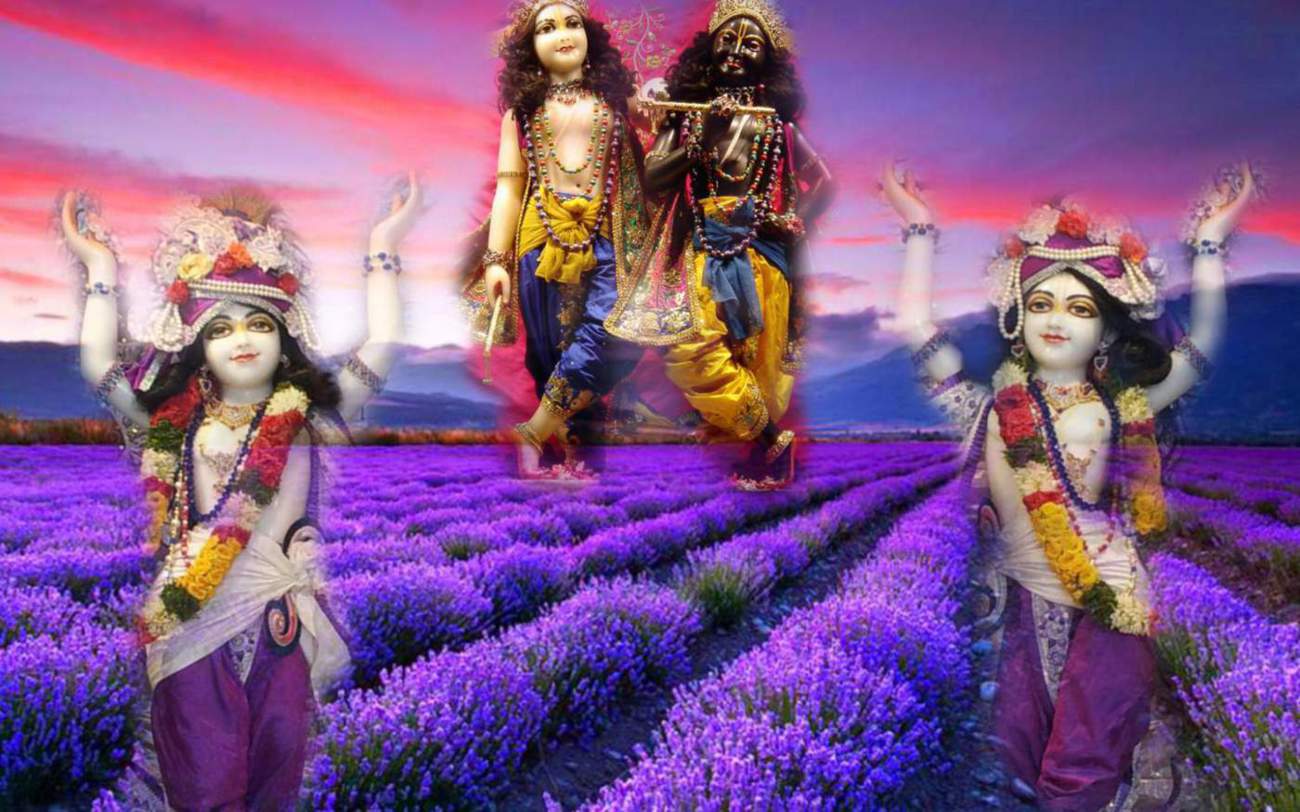
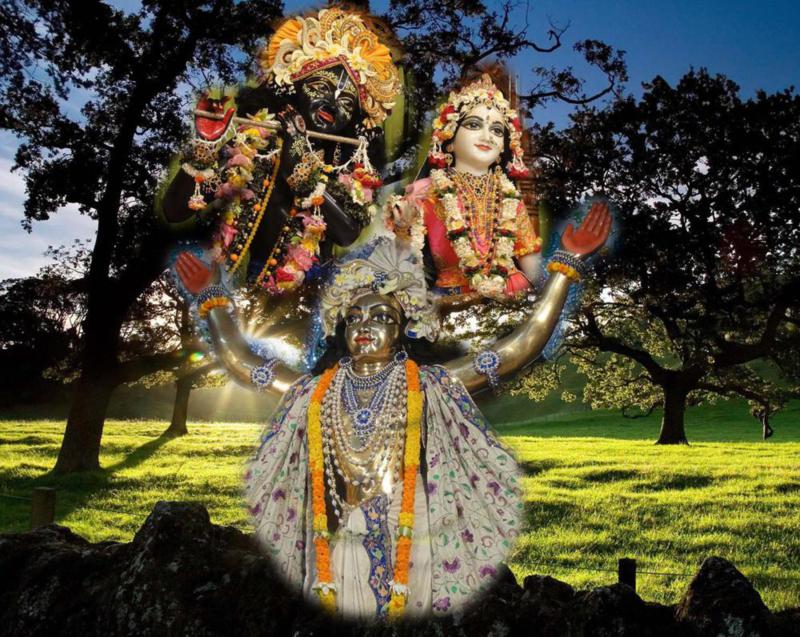
"...Even if the Shrimad Bhagavatam were lost, leaving only the Chaitanya Charitamrita, there would be no loss to humanity, for that which has not been revealed in the Bhagavat is found in Chaitanya Charitamrita. The Supreme Absolute Truth is Shri Chaitanya Mahaprabhu, the combined form of Radha and Krishna. The Chaitanya Charitamrita is His sound incarnation. The divine mystery of Radharani’s divine status and glories are found therein. Can there be any doubt, therefore, of the supreme status of this piece of transcendental literature?” (In the image: Lord Chaitanya in the middle is the combined form or Shri Shri Radha and Krishna).

 
   This statement underscores the supremely special status of Krishnadas Kaviraj Goswami himself. His three books, Chaitanya Charitamrita, Govinda-lilamrita and a commentary on Krishna-karnamrita, are all priceless works. Govinda-lilamrita describes in detail Lord Krishna’s activities over a twenty-four-hour period. Narottama Das Thakur has therefore stated:
 
krishnadasa kaviraja, rasika bhakata majh
jenho kaila caitanya-carita
gaura-govinda-lila, shunite galaye shila
tahate na haila mora cita
 
   Krishnadas Kaviraj Goswami stands out amongst the devotional literati, for he is the author of the biography of Chaitanya Mahaprabhu. He described both Gaura and Govinda’s lila, hearing which even a stone would melt. Alas, even so, my mind has not been attracted by these works. (Prema-bhakti-candrika)
 
   Krishnadas was honored with the title kaviraja (“king of poets”) for his Govinda-lilamrita. He is also respected in the Vaishnava world as the best amongst the followers of Rupa Goswami.
 
The Authoritativeness of the Chaitanya Charitamrita
 
   From the illustrious commentator Vishvanath Chakravarti’s tika to the Chaitanya Charitamrita, we can understand a little better just how dear Krishnadas Kaviraj Goswami was to Radharani, and by the same token, how the deepest and most esoteric truths of the Divinity were revealed to him, showing that every word he wrote is to be taken as the supreme spiritual truth. H. H. Bhakti Pramoda Puri Maharaj has recounted the following anecdote in his foreward to the Chaitanya Gaudiya Math edition of the Chaitanya Charitamrita: “While Vishvanath Chakravarti was writing his commentary on the Chaitanya Charitamrita, Madhya-lila 21.125, he was unable to understand why Kaviraj Goswami had written that the kama-gayatri mantra consists of 24 syllables rather than 25. He became so distraught by his inability to comprehend that he finally took a vow to starve to death by the banks of Radha Kund. As he dozed off in the middle of the night, the daughter of Vrishabhanu appeared to him in a dream and said to him, ‘O Vishvanath! Get up. Krishnadas has indeed written correctly. He is My dear girlfriend, who brings Me much pleasure. I have blessed him so that he can understand the most intimate truths about Myself. Do not doubt anything he has written. In the book named Varnagama-bhasvat, it is written that whenever the syllable ya is followed by the syllable vi, it is considered to be only half a syllable.”
 
   In the Bhakti-ratnakara it is mentioned that Shrinivas Acharya met Krishnadas Kaviraj, Raghunath Das Goswami and Shri Raghava when he arrived in Vrindavan (Bhakti-ratnakara 4.392).
 
   On the grounds of Krishnadas Kaviraj’s home in Jhamatpura is a small Temple containing Nityananda’s footprints. Local legend has it that Krishna-Das received Nityananda’s mercy, i.e., initiation into the mantra, at this very spot. According to the Prema-vilasa, however, Krishnadas took initiation from Raghunath Das Goswami. In the Temple there is a wooden sandal which is said to have been Krishnadas’s. His cottage and samadhi tomb are in Radha Kund. His disappearance took place after that of Raghunath Das Goswami, on the Shukla Dvadashi tithi of the month of Ashvina.
 
   Footnotes:
 
   [1] Saptagram was made up of seven villages: Saptagram, Vamsibati, Shivapura, Vasudevapura, Nityanandapura and Saìkhanagara. It was the main trade center on the Ganges in Bengal in the 15th and 16th centuries. The modern town of Triveni grew out of Saptagram.
 
   [2] Shrila Prabhupada A. C. Bhaktivedanta Swami writes: “When a man takes a dead body to the crematorium, he sometimes thinks, "This is the final end of the body. Why am I working so hard day and night?" Such sentiments naturally arise in the mind of any man who goes to a crematorial ghaöa. However, as soon as he returns from the cremation grounds, he again engages in material activity for sense enjoyment. This is called smasana-vairagya, or markaöa-vairagya.”
 
   [Excerpted from “Shri Chaitanya: His Life & Associates” by Shrila Bhakti Ballabh Tirtha Maharaj] 
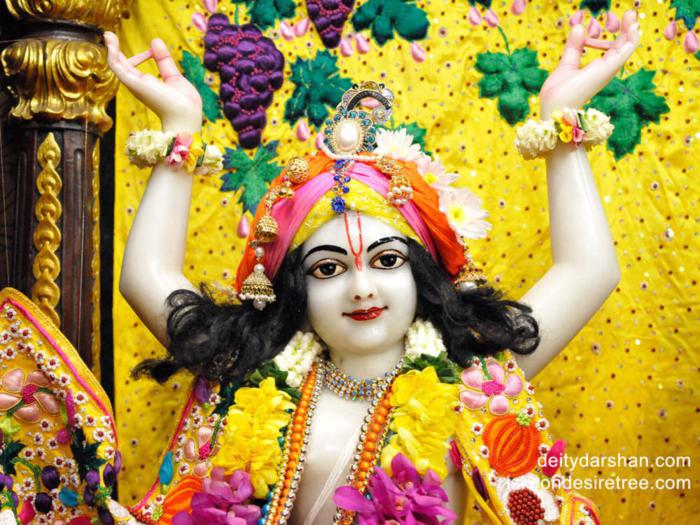
Krishnadasa Kaviraja Goswami

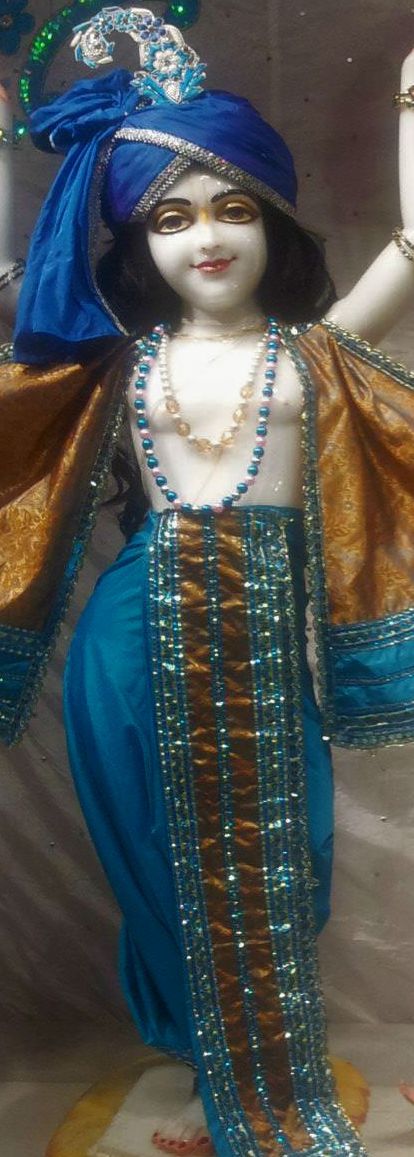
I am more sinful than Jagai and Madhai and lower than a maggot in stool. Whoever hears my name loses the results of his virtuous deeds, and whoever utters my name commits a sin. Other than Nityananda, could anyone in this world show mercy to one as abominable as me? Nityananda is the incarnation of mercy; He is so intoxicated by ecstatic love that He does not discriminate between the good and the bad. He delivers anyone who fall down before Him. Therefore He has delivered such a sinful and fallen person as me. (Chaitanya Charitamrita 1.5.205-9) (In the image: Shri Nityananda Prabhu, ISKCON Chowpatty, Mumbai).
Kasisvara Pandit – Biography

pura vrindavane cetau sthitau bhringara-bhangurau
shri-kashishvara-govindau tau jatau prabhu-sevakau
 
   Shrila Kashishvara Pandit (also Brahmachari or Goswami) was Krishna’s servant Bhringara and Govinda was Bhangura. They became Mahaprabhu’s servants in Gaura-lila. Some Kashishvara was the sakhi Sasirekha. (Gaura-ganoddesha-dipika 137)
 
   Kashishvara Pandit’s home was in the village of Catara in the district of Hooghly, about one mile from the present day Serampore (Shriramapura) railway station. His father was Vasudeva Bhattacharya, a Brahmin of the Vatsya gotra in the li ne of Kanva. He also had the title Chaudhuri. The Temple which belonged to Kashishvara Pandit is situated in the neighborhood of Catara village is known as Chaudhuri Paria. He established Deities of Gauranga and Shri Radha Govinda. There is an annual festival there on Òola Purnima. Kashishvara Pandit was very powerful physically. Rudra Pandit of Ballabhapura was his nephew.
 
Kashishvara Was Ishvara Puri’s Disciple
 
Kashishvara Pandit

Kashishvara Pandit was a disciple of Ishvara Puri who had received much mercy from him. (In the image: Shri Ishvara Puri).

   Kashishvara Pandit was a disciple of Ishvara Puri who had received much mercy from him. For this reason he is counted as one of Chaitanya Mahaprabhu’s branches. Shri Govinda was also Ishvara Puri’s disciple. Both of them devotedly served their spiritual master as long as he was present in this world. Just before he disappeared, he instructed them both to go engage in Mahaprabhu’s service.  Govinda was the first to come to Puri to serve the Lord after the disappearance of their guru; Kashishvara travelled throughout India on a pilgrimage before finally coming to Mahaprabhu’s lotus feet.
 
   I am a servant of Ishvara Puripada, my name is Govinda. On his order I have come to You. At the time of his departure, my master ordered me: Go to Shri Krishna Chaitanya and serve Him. Kashishvara will also come after he has seen the pilgrimage sites. I have come directly to You. (Chaitanya Charitamrita 2.10.132-4)
 
   On another day, Kashishvara Gosani arrived; the Lord greeted him respectfully and gave him a place to stay with Him.
   (Chaitanya Charitamrita 2.10.185)
 
   The Lord turned to Sarvabhauma Bhattacharya, Sarvabhauma answered that He should most certainly obey the instruction of His spiritual master and so the Lord did as His guru had ordered Him and accepted Govinda and Kashishvara Pandit as His personal servants.
 
sa shushruvan matari bhargavena
pitur niyogat prahritam dvishadvat
pratyagrahid agraja-shasanam tad-
ajïa gurunam hy avicaraniya
(Raghuvamsha, 14.46)
 
   On the order of his father, Parashurama killed his own mother as though she were an enemy. When he heard this, Lakshmana accepted the order of his elder brother Rama, for the orders of a guru are not to be debated.
 
nirvikaram guror ajïa maya karya mahatmanah
shreyo hy evam bhavatyash ca mama caiva visheshatah
(Ramayana Ayodhya-khanda, 22.9)
 
   I must follow the order of My guru because he is a great soul. You will certainly benefit from this, but even more so will I.
 
Kashishvara’s Service to Mahaprabhu
 
Kashishvara Pandit

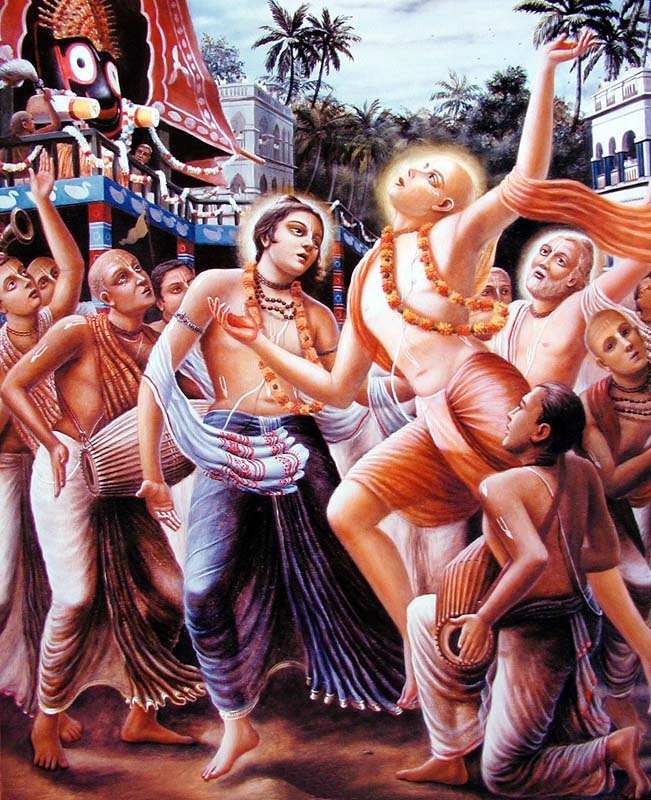
In Puri, the abode of the Supreme Person (Purushottam-dham), when the Lord was dancing in front of Jagannath’s Rathayatra cart, three rings of people would be formed around the Lord in order to hold the people back. The innermost ring consisted of Nityananda Prabhu and other Devotees, the second of Kashishvara, Mukunda and others, and the third of King Prataparudra and his bodyguards. (In the image: Ratha Yatra, Puri).

   Whenever Mahaprabhu went to see Jagannath, Kashishvara would use his physical strength to hold back the crowds, allowing the Lord to pass without being touched by anyone.
 
   Ishvara Puri’s disciples were Kashishvara Brahmachari and Govinda. At the time of his departure from this world, he instructed them both to come to Nilachala and to engage in Mahaprabhu’s personal service. The Lord considered them both to be his superiors because they had personally served his spiritual master, but he nevertheless accepted their service because it was his guru’s order. Govinda would engage in personal, bodily service, while Kashishvara would go before him when he went to see Jagannath. He would push people aside to make a path for the Lord so that he could go through the crowd without being touched. (Chaitanya Charitamrita 1.10.138-142)
 
   Mahaprabhu joyfully took the Devotees to the Temple to see Jagannath. Kashishvara led the way, clearing the path, while Govinda followed carrying the Lord’s waterpot. (Chaitanya Charitamrita Madbhya 12.206-7)
 
   In Puri, the abode of the Supreme Person (Purushottam-dham), when the Lord was dancing in front of Jagannath’s Rathayatra cart, three rings of people would be formed around the Lord in order to hold the people back. The innermost ring consisted of Nityananda Prabhu and other Devotees, the second of Kashishvara, Mukunda and others, and the third of King Prataparudra and his bodyguards.
 
   Kashishvara, Mukunda and many other Devotees held hand to form a second protective circle. (Chaitanya Charitamrita 2.13.89)
 
   Kashishvara was one of the seven persons who would serve Maha Prasad to the Devotees after the kirtan at the Rathayatra. The others were Svarupa Damodar, Jagadananda, Damodar, Gopinath, Vaninatha and Shankara.
 
   Kashishvara also participated in some of the Lord’s lilas in Navadwip, such as the kirtans at Shrivasa Angan and bathing in the Ganges. He was also present when the Lord went with kirtan to the house of Shridhara and drank from his iron pot. He, along with the other Devotees present, cried to see the Lord’s mercy on that occasion. Govinda, Govindananda, Shrigarbha, Shriman, Jagadananda and Rama were others present on that occasion. (Chaitanya Bhagavat 2.23.451)
 
   Vrindavan Das Thakur tells just how dear Kashishvara was to the Lord, calling Mahaprabhu Kashishvara’s heart on one occasion (Chaitanya Bhagavat 2.1.6) and the wealth of Kashishvara’s life (Kashishvara-prana-dhana) on another. (Chaitanya Bhagavat 2.24.3)
 
   He was also present when Mahaprabhu went to greet Advaita and the other Devotees when they arrived from Bengal. His disappearance day is on the fourteenth day of the waxing moon in the month of Karttik. According to another opinion, it is on the full moon day of the month of Ashvina, when the Rasapurnima of Radha Krishna is also celebrated.
 
   [Excerpted from “Shri Chaitanya: His Life & Associates” by Shrila Bhakti Ballabh Tirtha Maharaj] 
Kashishvara Pandit

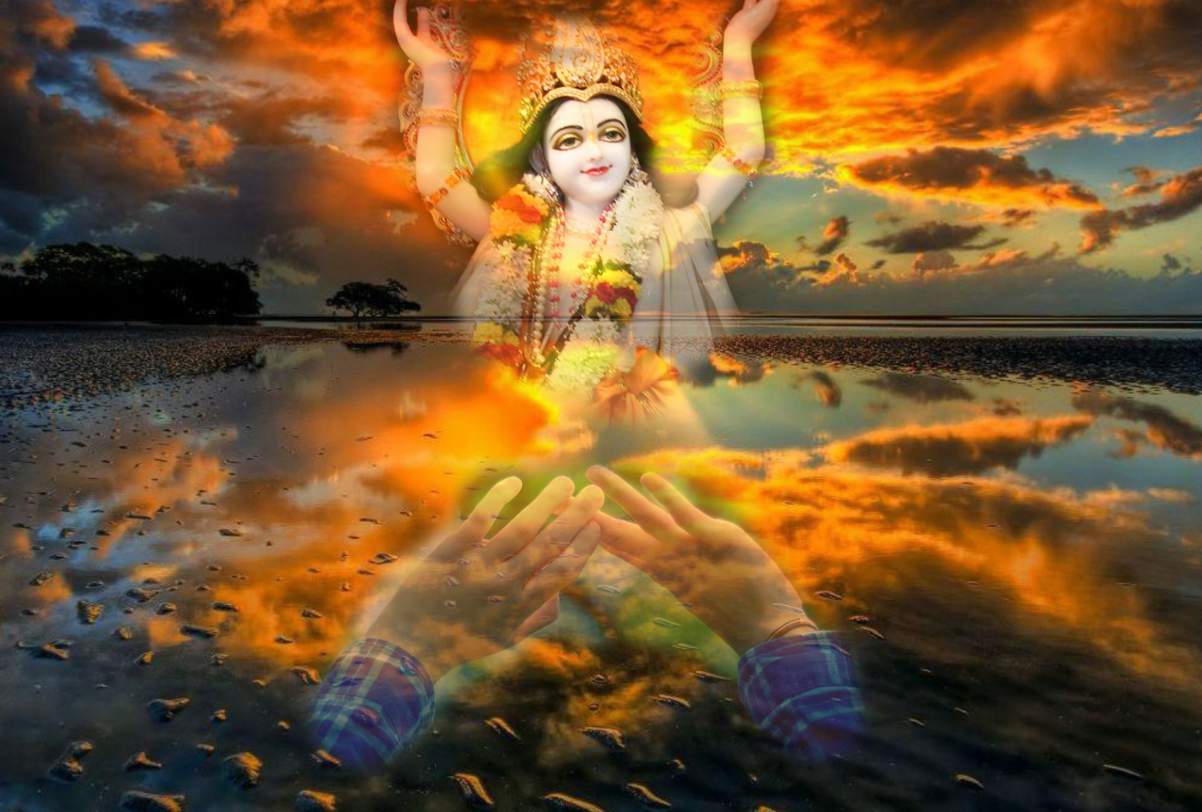
I must follow the order of My guru because he is a great soul. You will certainly benefit from this, but even more so will I. (In the wallpaper: Shri Krishna Chaitanya).

Srila Prabhupada’s lecture on Advaita Acarya


Srila Prabhupada:

advaitam harinadvaitad
acaryam bhakti-samsanat
bhaktavataram isam tam
advaitacaryam asraye

So gradually the author is offering respect, sri-krsna-caitanya prabhu-nityananda sri-advaita. He has already offered respect to Lord Caitanya and Lord Nityananda. Now it is the turn for Sri Advaitacarya. So advaitam, nondifferent, expansion of Mahavisnu. Therefore He is Visnu-tattva. He is not jiva-tattva. Therefore, he is Advaita.

Advaita acyuta anadi ananta-rupam. Krsna has got unlimited number of expansions, expansion, expansion of the expansion, then expansion of the expansion, in this way. So Advaitacarya is expansion of Krsna, it is already explained. Therefore He is called advaitam, and acaryam bhakti-samsanat. This is the business of acarya, to spread bhakti cult. Acaryam mam vijaniyat navamanyeta karhicit. It is said by the Lord that “You should accept the acarya…” Acarya means one who transmits bhakti cult. Bhakti-samsanat, spreading, gosthy-anandi.

One who is not spreading  he is cultivating Krsna consciousness for his personal benefit in a secluded place, sitting and chanting  that is also nice, but he’s not acarya. Acarya means he must spread, Gosthy-anandi.
Bhajananandi, gosthy-anandi. So generally, gosthy-anandi means one who wants to increase the number of devotees. He’s called gosthy-anandi. And one who is self-satisfied, that “Let me do my own duty”, he is called bhajananandi. So my Guru Maharaja, Bhaktisiddhanta Sarasvati Thakura, he was gosthy-anandi; he wanted to increase the number of devotees. And the more you increase the number of devotees, the more you become very much recognized by Krsna. It is Krsna’s business. Krsna personally comes as He is, Krsna, to spread this bhakti cult. Man-mana bhava mad-bhakto mad-yaji mam namaskuru. Sarva-dharman parityajya mam ekam saranam vraja. He’s canvassing personally. Paritranaya sadhunam vinasaya ca duskrtam, dharmasamstha-panarthaya sambhavami yuge yuge. So same thing entrusted to another devotee, and who spreads, he’s acarya. So Krsna says, the acarya. Here it is said, that advaita harina advaitad. So, of course Advaita Acarya is expansion of Visnu-tattva, but any acarya, he is to be considered identical with the Lord. The Lord says that, that acaryam mam vijaniyat. “One should understand the acarya.” Acarya bhakti-samsanat. Acarya means who is spreading pure bhakti cult. “That acarya”, Krsna says, “you should consider such acarya as Myself”.

Acaryam mam vijaniyat navamanyeta karhicit, that… You cannot consider, “Yes, he’s acarya, but not as good as Krsna”. No. Na avamanyeta. Don’t deride in that way. Then there will be falldown. Acaryam mam vijaniyat navamanyeta karhicit. And in the Vedas also it is said, yasya deve para bhaktir yatha deve tatha gurau: “Anyone who has got unflinching faith in the Supreme Personality and the similar faith in guru.” Yasya deve para bhaktir yatha deve tatha gurau, tasyaite kathita hy arthah: “All the Vedic literature”, prakasante, “becomes revealed simply by these two principle”.

Guru krsna krpapaya bhakti lata bija. We should not jump over Krsna without the help of guru. That is not possible. You must go through. Because Krsna says, acaryam mam vijani. Tasmad gurum prapadyeta jijnasuh sreya uttamam: “Actually one who is serious to understand higher transcendental subject matter, he must approach guru.” Tasmad gurum, prapadyeta. These are Vedic injunctions. Caksudana dilo yei, janme janme pita sei. So anyone who opens… Guru means who opens the eyes of the ignorant person. Ajnana-timirandhasya jnananjana-salakaya. Opening the eyes by giving real knowledge.Guru krsna krpapaya bhakti lata bija. So bhakti-lata, the devotional service, the seed of devotional service, can be received by the parampara system through bona fide spiritual master. And if we abide by the orders of spiritual master faithfully, then Krsna becomes pleased. That is stated by Visvanatha Cakravarti Thakura, yasya prasadad bhagavat-prasadah. Ara na koriya mane asa. Narottama dasa. All the acaryas they say like that.

Acaryam mam vijaniyat. Acaryavan puruso veda: “One who has accepted acarya, he knows things are they are.” Others, they do not know. It is not possible. So Advaita Acarya is the typical example, how to become acarya. All are our acaryas, sri-krsna-caitanya prabhu nityananda, sri-advaita gadadhara srivasadi-gaura-bhakta-vrnda. All of them are acaryas because they are following the acarya, Supreme Acarya, Caitanya Mahaprabhu. Therefore they are acarya. evam parampara-praptam imam rajarsayo viduh. So we have to follow the acarya. Then, when we are completely, cent per cent follower of acarya, then you can also act as acarya. This is the process. Don’t become premature acarya. First of all follow the orders of acarya, and you become mature. Then it is better to become acarya. Because we are interested in preparing acarya, but the etiquette is, at least for the period the guru is present, one should not become acarya.

Even if he is complete, he should not, because the etiquette is, if somebody comes for becoming initiated, it is the duty of such person to bring that prospective candidate to his acarya, not that “Now people are coming to me, so I can become acarya”. That is avamanya. Navamanyeta karhicit. Don’t transgress this etiquette. Navamanyeta. That will be fall down. Just like during the lifetime of our Guru Maharaja, all our godbrothers now who are acting as acarya, they did not do so. That is not etiquette. Acaryam mam vijaniyat na avaman… That is insult. So if you insult your acarya, then you are finished. Yasya prasadad bhagavat-prasado yasya aprasadat na gatih kuto ‘pi finished. If you displease your acarya, then you are finished. Therefore it is said, Caitanya Mahaprabhu says to all the acaryas. Nityananda Prabhu, Advaita Prabhu and Srivasadi-gaur-bhakta-vrnda, they are all carriers of orders of Sri Caitanya Mahaprabhu.

So try to follow the path of acarya process. Then life will be successful. And to become acarya is not very difficult. First of all, to become very faithful servant of your acarya, follow strictly what he says, try to please him and spread Krsna consciousness. That’s all. It is not at all difficult. Try to follow the instruction of your guru maharaja and spread Krsna consciousness. That is the order of Lord Caitanya. Amara ajnaya guru hana tara ei desa, yare dekha tare kaha krsna-upadesa: “By following My order, you become guru.” And if we strictly follow the acarya system and try our best to spread the instruction of Krsna. Yare dekha tare kaha krsna-upadesa. There are two kinds of krsna-upadesa. Upadesa means instruction. Instruction given by Krsna, that is also krsna-upadesa, and instruction received about Krsna, that is also krsna-upadesa. Krsnasya upadesa iti krsna upadesa. Samasa, sasti-tat-purusa-samasa. And Krsna visaya upadesa, that is also Krsna upadesa. Bahu-vrihi-samasa.

This is the way of analyzing Sanskrit grammar. So Krsna’s upadesa is Bhagavad-gita. He’s directly giving instruction. So one who is spreading Krsna-upadesa, simply repeat what is said by Krsna. Then you become acarya. Not difficult at all. Everything is stated there. We have to simply repeat like parrot. Not exactly parrot. Parrot does not understand the meaning; he simply vibrates. But you should understand the meaning also. Otherwise how you can explain. So, so we want to spread Krsna consciousness. Simply prepare yourself how to repeat Krsna’s instructions very nicely, without any malinterpretation. Then, in future… Suppose you have got now ten thousand. We shall expand to hundred thousand. That is required. Then hundred thousand to million, and million to ten million.

Devotees: Jaya!

Prabhupada: So there will be no scarcity of acarya, and people will understand Krsna consciousness very easily. So make that organization. Don’t be falsely puffed up. Follow the acarya instruction and try to make yourself perfect, mature. Then it will be very easy to fight out maya. Yes. Acaryas, they declare war against maya’s activities, that maya instructing that “here is wine, here is cigarette, here is tha”t, in your country these advertisements are very prominent, holding both ways, wine advertisement, cigarette advertisement, naked woman advertisements, and sometimes gambling also, advertisement. What is that? Congo?

Devotees: Bingo.

Prabhupada: Bingo. (laughter) Yes. So this is maya. And our declaration of war with maya no intoxication, no meat-eating, no bingo (laughter) these are our declaration of war. So we have to fight in that way because nobody can understand Krsna without being free from all sinful activities. These are sinful activities.

Therefore it is acarya’s business to stop these nonsense activities. Otherwise they’ll not be able to understand, especially the meat-eaters. They cannot understand. Nivrtta-tarsair upagiyamanad bhavausadhi chrotra-mano ‘bhiramat, ka uttamasloka-gunanuvadat puman virajyeta vina pasughnat. Unless one is very expert in killing animals, he’s not bereft from Krsna consciousness. That means one who is very expert in killing, he cannot understand. Therefore Christ also said, “Thou shall not kill”, the first business. Nobody will be able if one is a killer of animal, small or big, ultimately killer of his own children, killer of his own self. The killing process is so nice that it goes up to the point of killing one’s children. That is now happening. Killing business has so expanded that they are killing their own children. Just see the influence of Kali-yuga. The children, they take shelter of the father and mother, thinking very safe. Now, in this Kali-yuga, even there is no safety under the care of father and mother. Just see how this material civilization is progressing. Very, very dangerous. Kalau nasta-drsam. Therefore that Bhagavata verse is there, krsnesvadhamopagate dharma-jnanadibhih, kalau nasta-drsam puranarko ‘dhunoditam. Very, very abominable condition in this age of Kali, very, very. It is the beginning of Kali. Now we have to pass through 427,000’s of years. Kali-yuga will make progress in that way. And people are now practicing eating their children, and at the end of Kali there will be no food available.

They’ll… They have to eat the children just like the snakes do. The snake eat their own children. There are many animals; they eat their own children. So don’t try to repeat your birth again and again in this Kali-yuga. It will be not very happy life. Better sacrifice everything in this life and be fully Krsna conscious and go back to home, back to Godhead. Don’t wait for the next life. This is very seriously repeated, that “This life I shall finish my Krsna consciousness business”, and, as it is stated in the Bhagavad-gita, that Krsna consciousness business means to understand Krsna rightly. And He’s explaining Himself rightly. Where is the difficulty to finish the Krsna consciousness business? If Krsna is explaining Himself, what He is, then where is your difficulty? Krsna is explaining Himself in the Bhagavad-gita, Krsna is sending His representative acarya to teach you and Krsna is within yourself trying to teach you if you are actually serious. Then where is the difficulty? Inside, outside, always, books, knowledge.He is prepared.

So where is the difficulty to make yourself perfect in Krsna consciousness? There is no difficulty at all. Provided you are serious, you can become fully Krsna conscious in this very life. You are all young men. You are not old man like me. I have no opportunity.


Advaita Tattva – The Sixth Jewel


Advaita-tattva – The Advaita Principle

6.1
mahavisnur-jagat-karta mayaya yam srjaty adam
tasyavatara evayam advaitacarya isvaram

Lord Advaita Acraya is the incarnation of Mahavisnu, whose main function is to create the cosmic world through the actions of maya. (Caitanya-Caritamrta Adi 6.4)

6.2
advaitam harinadvaitacayam bhakti-samsanat
bhaktavataramism tam advaitacaryam asraye

Because He is nondifferent from Hari, the Supreme Lord, He is called Advaita, and because He propagates the cult of devotion, He is called Acaya. He is the Lord and the incarnation of the Lord’s devotee. Therefore I take shelter of Him. (Caitanya-Caritamrta Adi 1.12 – 13)

Mahavisnu, the Supersoul of material nature, is the efficent cause [nimitta] and Sri Advaita is the material cause [upadana] of the material creation.

6.3
apane purusa visvera “nimitta – karana
advaita-rupa “upadana” ha’na narayana
“nimittamse” kare ti ho mayate iksana
“upadana” sri advaita karena brahmanda-srjana

Lord Visnu Himself is the efficient [nimitta] cause of the material world, and Narayana in the form of Sri Advaita, is the material cause [upadana]. Lord Visn, in His efficient aspect, glances over the material energy, and Sri Advaita as the material cause, creates the material world. (Caitanya-Caritamrta Adi 6.16 – 7)

Advaita is Sadasiva

6.4
He who was Sri Sadasva is the bhakta-avatara, Sri Advaita Prabhu. (Gaura-Ganoddesa Dipika, 11)

The meaning of the name Advaita

6.5
mahavisnura amsa – advaita gunadhama
isvare abheda, tei “advaita” purna nama

Sri Advaita, who is a reservoir of virtues, is the main limb of Mahavisnu. His full name is Advaita, for He is identical in all respects with the Lord. (Caitanya-Caritamrta Adi 6.25)

Advaita Acarya is a preacher of krsna-bhakti

6.7
jiva nistarila krsna-bhakti kari’ dana
gita-bhagavate kaila bhaktira vyakhyana

He delivered all living beings by offering the gift of krsna-bhakti. He explained Bhagavad-gita and Srimad-Bhagavatam in the light of devotional service. (Caitanya-Caritamrta Adi 6.27)

He is the avatara of Mahavisnu of and is the servant of Sri Caitanya.

6.8
advaitanacaya gosai saksat-isvara
prabhu, guru kari’ mane ti ho ta’ kinkara

Lord Advaita Acarya is directly the Supreme Personality of Godhead. Although Lord Caitanya accepts Him as His preceptor, Advaita Acarya is a servant of the Lord. (Caitanya-Caritamrta Adi5.147)

Advaita and Nityananda are servants of Sri Caitanya.

6.9
eka “mahaprabhu,” ara “prabhu” duijana
dui prabhu seve maharabhu carana

There is one “Mahaprabhu” [Sri Caitanya Mahaprabhu] and two “Prabhus” [Advaita Prabhu and Nityananda Prabhu]. The two Prabhus serve the lotus feet of Maharabhu. (Caitanya-Caritamrta Adi 7.14)

The twofold branches among the followers of Advaita: saragrahi (those who accept the essence) and asaravahi (those useless persons who accept the nonessential).

6.10
advaitanghryu-abhabhrngamstan sarasarabhrto ‘khilan
hitvasaran sarabhuto naumi caitanya jivanan

The followers of Sri Advaita were of two kinds. Some were real followers (saragrahi) and the others were false (sara-grahi). Rejecting the false followers, I offere my respectful obeisances to the real followers of Sri Advaita Acaya whose life and soul was Sri Caitanya Maharabhu. (Caitanya-Caritamrta Adi 12.1)

The Saragrahi followers of Advaita are devotees of Gauranga:
the asara-grahi (useless) are those who act independently and reject Gauranga.

6.11
prathame ta’ ekamata acaryera gana
pache dui mata haila daivera karana
keha ta’ acaryera ajnaya, keha ta’ svatantra
svamata kalpana kare daiva paratantra
acaryera mata yei, sei mata sara
tara ajna langi’ cale sei ta’ asara

At first all the followers of Advaita Acaya shared a single opinion. but later they followed two different opinions as ordained by providence. Some of the disciples strictly accepted the orders of the acarya, and others deviated, independently concocting their own opinions under the spell of daivi maya. The opinion of the acarya is essential. Anyone who disregards his order is useless (asara-grahi) (Caitanya-Caritamrta Adi 12.8.10).

The useless followers of Advaita Acarya acted contrary to the principles of Sri Caitanya and thus became cut off from his mercy.

6.12
ihara madhye mali-pache kona saha-gana
na mane caitanya-mali durdaiva-karana
srjaila, jiyaila ta’re na manila
krtaghna haila, ta’re skandha ta’re jala na sa care
jalabhave krsa-sakha sukhaiya mare

After the disappearance of Sri Caitanya Mahaprabhu, who was the gardener of the tree of love of Godhead, some of the sub-branches of the Advaita branch, for unfortunate reasons, deviated from His path. Some branches did not accept the original trunk that vitalized and maintained the entire tree. When they thus became ungrateful, the original trunk was angry at them. Thus Lord Caitanya did not sprinkly upon them the water of his mercy, and they gradually withered and died.


Shripada Lakshmipati Tirtha And Lord Nityananda Story:

   The following is a story in connection with the disciple of Shripad Vyasa Tirtha who was given the name Lakshmipati Tirtha, and who became the next to be recognised as the 'acharya' in the line in which we follow.

   Once Lord Balarama (Krishna's elder brother) appeared to Lakshmipati Tirtha to break the ground for a change in the regular line of the Madhva Sampradaya. Big changes were to take place that would eventuate in a revolution in thought and deed. Lord Shri Krishna and His brother Lord Balarama were about to appear in the dress of Devotees within the Madhwa 'sampradaya'.

                              brajendra nandana jei-saci-suta hoilo sei
                                      balarama hoilo nitai

Nityananda Prabhu

Lord Krishna, the son of Nanda Maharaja, the King of Vraja, became the son of Sachi (Lord Chaitanya) and Balarama became Nitai (Nityananda)... (In the image: Up in the middle Shri Shri Krishna Balarama, ISKCON Vrindavan, down in sides Shri Shri Goura Nitay, ISKCON Chennai).

   Shrila Narottama dasa Thakura sings in his "Ishta Deve Vijnapti", in simple Bengali language that "Lord Krishna, the son of Nanda Maharaja, the King of Vraja, became the son of Sachi (Lord Chaitanya) and Balarama became Nitai (Nityananda). We have discussed in brief some of the situations that arose around this time that warranted these changes. We have also introduced some of the Vaishnavas who performed this task for the Lord. The change itself to many meant seeing heart rendering devotion to the Lord, which was in many cases unable to be contained because of its intensity. Some objected to this as being mere sentimentalism, some even suggested that though the external sentiments were seen, other things were in the heart. From here on we deal with some of those feelings and emotions through the ahcaryas who experienced them. There are potential dangers to this, but I am prepared to take the chance that the readers will appreciate and aspire for such deep feelings and not fall subject to imitating them.

   There is sometimes a lot missed by those who try to merely rationalise everything, those who are logicians, or academics. Often showing that they cannot see 'outside of their paradigm, or square'. 'Sravana', study or scrutiny of 'shastra' may be necessary to give one the basis for discrimination between 'Para' and 'Aparatattwas', and reflection helps us to fix our minds on the import at hand. However the persons who we are relating to here are already fixed in their conclusion of 'shastra', the need for logical arguementation, discussion, or rhetorical persuasion may even impare one's vision rather than enhance it.

   We have found this especially to be relevent to those who have come from certain ethnic cultures which are very strong and may we say dominant.

   Often it is easier to accept things as they are if one doesn't know anything in the first place. Sometimes the example of the two youths who comes to the music teacher to learn to play an instrument is cited. The first youth was asked, "….do you know how to play the piano?" "No," was his reply. "Your fee will be $400." said the teacher. The second student was asked if he knew how to play. "Yes, I taught myself a few pieces!" was the reply. "Oh then your fee will be $800., for first we have to un-train you, before we can train you!"

   "Sometimes 'manana' is portrayed as only being the systematic employment of the canons of textual interpretation and logical examination with a view to arriving at a firm conviction that he final interpetation of the 'shastras' thus arrived at is alone the correct and unimpeachable one."(B.N.K. Sharma. 1986. Philosophy of Shri Madhvacharya. page 377.) And this is so true, when dealing with what you know and have. But to understand anything outside of that realm, another's perpective, or devotional vision, open minded reflection, manana which removes doubts ('samshaya'), and former misapprehension ('viparyaya') are prerequisits.

Nityananda Prabhu

After a short time Lakshmipati saw the 'avadhuta Brahmin' and his mind became full with anxious anticipation. When they met, Lakshmipati couldn't take his eyes off the beautiful form of the Lord, His aura and His Moonlike face and unblinking eyes. Hearing the sweet words of Lord Nityananda, Lakshmipati's eyes brimmed over with swelling tears. (In the image: Shri Nityananda Prabhu, ISKCON Chennai).

   As you will read shortly, these are insights to the personal relationships between the Lord and His pure Devotees. "Steadiness of attention and exclusive contemplation of the Supreme can only be achieved through deep rooted love of God."(B.N.K. Sharma. 1986. Philosophy of Shri Madhvacharya. page 377.) This is not a cheap or an ordinary thing, but by these personal and intimate dealings based on love is specifically how the Madhva 'sampradaya' has come to be known all over the universe, by the desire and preaching of it's members.

   One story of this nature, which is quite heart rendering is the following story of Lakshmipati Tirtha, the best of the 'sannyasis', who, on one occasion, was sitting in a solitary place performing his 'bhajan' throughout the night singing the glories of Lord Balarama. His unalloyed devotion was so intense he would sometimes cry or call out, "O Baladeva, kindly show me Your favour. I am so fallen and wicked." Tears would come from his eyes and he lost all patience and composure due to his old age and intense desire to see the Lord. He would sometimes collapse on the floor, stunned. This day, due to the devotional traumas he had undergone, he slept.

   It is described that Lord Nityananda, in His usual prankish mood, appeared to Lakshmipati in His original form as Lord Balarama, Krishna's brother. How he appeared to Lakshmipati was in a dream, telling him that a wandering Brahmin, in the form of an 'avadhuta', madman had arrived in town. "He will come to you. Initiate him into the Vaishnava 'diksha mantras' and accept him as your disciple." Then Lord Balarama spoke the 'mantra' into Lakshmipati's right ear and Lakshmipati awoke. After a short time Lakshmipati saw the 'avadhuta Brahmin' and his mind became full with anxious anticipation. When they met, Lakshmipati couldn't take his eyes off the beautiful form of the Lord, His aura and His Moonlike face and unblinking eyes. Hearing the sweet words of Lord Nityananda, Lakshmipati's eyes brimmed over with swelling tears. That very day Lakshmipati fulfilled the order of Lord Balarama, and Nityananda became the favourite of Lakshmipati.


nityananda prabhu vande
srimad laxmipati priyam
sri madhwa-sampradaya
vardhanam bhakta vatsalam


   "Respectful obeisances unto You, Nityananda Prabhu, the dear favourite of Lakshmipati Tirtha. He (Nityananda) increases the bliss of the entire Madhva 'sampradaya' and He has the innermost needs of the Devotees foremost at hand."

   Shripad Lakshmipati Tirtha couldn't understand his intense attraction for Nityananda or the bliss he felt just being near Him. On Lord Nityananda's absence from his sight for a moment, intense separation came over him. Lakshmipati stayed awake that night pondering over things. He had dozed off slightly, when again in a dream the Lord appeared. He was whitish in complexion, dressed in a blue dhoti. It was Nityananda in his dream, but then Nityananda transformed into Lord Balarama. Lakshmipati was amazed and he bathed the Lord's feet with ecstatic tears from his eyes. He prayed to the Lord, "Surely You have made a fool of me and put this fallen wretch into much distress. Please show me Your mercy. You are my Lord. I take shelter at Your lotus feet." That same Shri Nityananda Rama (Balarama) fulfilled all of Lakshmipati's cherished longings, though He forbade him from telling a soul of His identity, and then disappeared from sight.

   When Lakshxmipati awoke in lamentation upon the Lord's disappearance, he saw that night had become the morning. Shripad Lakshmipati Tirtha had noticably changed from this day on. He didn't speak ever again, as his mind was always absorbed elsewhere. From an external perspective he looked terrible, and his disciples became full of anxiety. Within a short while, without any warning, Shripad Lakshmipati left this world. Who can understand properly the character and pastimes of the Lord and His pure Devotee Lakshmipati Tirtha? Just see the purity of Shripad Lakshmipati Tirtha, that the Lord appears directly to play with him.

   Usually it is accredited to Shripad Madhavendra Puri Goswami, the disciple of Shripad Lakshmipati Tirtha, as being the spiritual master of Lord Nityananda Prabhu, but here it is mentioned otherwise.

   We are not trying to create any controversy so let us substantiate some of this story a little. In the Chaitanya Charitamrta Shrila A.C. Bhaktivedanta Swami writes: "In Khadadaha, sometimes people misunderstood Nityananda Prabhu to belong to the 'shakta-sampradayam' whose philosophy is 'antah saktah bahih saivah sabhayam vaisnavo matah'. According to the 'shakta sampradaya', a person called 'kaulavadhuta' thinks materially while externally appearing to be a great Devotee of Lord Shiva. When such a person is in an assembly of Vaishnavas, he appears like a Vaishnava. Nityananda Prabhu did not belong to such a community. Nityananda Prabhu was always a 'brahmachari' of a 'sannyasi' of the 'Vaidika' ('Vedic') order. Actually He was a 'paramahamsa'. Sometimes He is accepted to be a disciple of Lakshmipati Tirtha. If He is so accepted, Nityananda Prabhu belonged to the Madhwa-sampradaya. He did not belong to the Tantrika-sampradaya of Bengal." (Shri Chaitanya Charitamrta, Madhya lila 1:3:85. purport.). However in Chaitanya Charitamrta, Madhya lila (3:8:128) purport, Shrila Prabhupada says: "Shri Nityananda Prabhu was initiated by Madhavendra Puri, a 'sannyasi'. According to others, however, He was initiated by Lakshmipati Tirtha."

   In a conversation I had with the elderly H.H. Bhakti Hridoy Mangal Maharaja, Secretary General of the Shri Chaitanya Gaudiya Math, when he visited Australia 1989-90, he mentioned that he remembered hearing personally an instance that was related by Shrila Bhaktisiddhanta Saraswati Goswami Maharaja Prabhupada (sometime in the late 1920's during a class), wherein Shrila Bhaktisiddhanta Saraswati Thakura told how Lord Nityananda walked off with a 'sannyasi' who came to beg alms at His parent's house (as mentioned in Chaitanya Bhagavata.) The 'sannyasi' asked Hadai Pandit, the father of Lord Nityananda, as is traditional, for some alms and so Hadai Pandit as a dutiful householder agreed. But when the 'sannyasi' asked him to give him the boy (Nityananda) as alms, Hadai Pandit, nearly died. Considering his life useless without the boy and a bad example to the boy if he didn't fulfill the desires of his saintly guest. So to fulfill 'dharma' he gave the boy to the 'sannyasi' as his assistant – this 'sannyasi' was Shripad Lakshmipati Tirtha. It is interesting to note that the boy Nityananda simply walked off with the 'sannyasi' without even so much as looking back, just as Lord Rama left His father, Dasharatha, to go to the forest. Though different circumstances, both Maharaja Dasharatha and Hadai Pandit died within a very short time due to intense separation. Hadai Pandit and his wife's faces turned black, and never ate again. 

Nityananda Prabhu

"Surely You have made a fool of me and put this fallen wretch into much distress. Please show me Your mercy. You are my Lord. I take shelter at Your lotus feet." (In the wallpaper: Shri Nityananda Prabhu, ISKCON Chennai).

Jiva Goswami – Biography

Jiva Goswami

Shrila Jiva Goswami.

   Shrila Jiva Gosvami made his appearance in 1455, Sakabdha (1533 A.D.), on the 12th day of the bright fortnight in the month of Bhadra. He disappeared from view at the age of 85 in 1540 A.D., (Sakabdha, 3rd day of bright fortnight, Pausa).
 
   As a child, Shri Jiva took up the worship of Shri-Shri Rama-Krishna Deities. Carefully decorating Them, and offering bhoga and arati, he served Them attentively. Even when playing, Jivas games were often connected with Lord Krishna's pastimes.
 
   Shri Jiva studied under the local pandits, becoming proficient in grammar, poetry and rhetoric. Watching the expression of his great intellect, his teachers predicted that he would be a very saintly person. Later in his life, he composed a grammar in Sanskrit for the pleasure of the Lord. This composition described the rules of grammar, which was explained with examples that used the Holy Names of the Lord. Known as Hari-namamrta-vyakarana, this grammar is still current and is prescribed in the syllabus of schools in Bengal.
 
   Once in a dream, Shri Jiva saw that Shri Rama-Krishna had taken the forms of Nitai-Gauranga, and they were dancing. Giving him the dust of Their lotus feet, the Two Lords then disappeared. This wonderful dream greatly consoled Shri Jiva, who was anxious to leave behind his family life and become absorbed full time in serving Nitai-Gauranga. But, being the only son of the family, and in the absence of his father, Jiva was responsible for the care of his mother. When he learned that his father had left his body on the banks of the Ganges, Shri Jiva became extremely saddened. Friends suggested that he go to Navadwipa to bathe himself in the coolness emanating from the lotus feet of Lord Nityananda Prabhu, so that burning grief in his mind and body might be refreshed. As Shri Jiva headed for Navadwipa with a group of pilgrims, Nityananda Prabhu also set out for Navadwipa, from Khardaha. Arriving in Navadwipa, at the home of Shrivasa Pandita, Shri Jiva met and fell down at the feet of Nityananada Prabhu.
 
   Shri Jiva enjoyed various pastimes with Nityananda Prabhu, touring the nine islands of Navadwipa and taking darshana of the holy places of the Lord's pastimes. Jiva then traveled to Kashi (Varanasi), where he studied Vedanta under the instruction of Shri Madhusudana Vachaspati, a disciple of Sarvabhauma Bhattacharya. The conclusions of Vedanta contained in Shrimad-Bhagavatam, as they were given by Shri Chaitanya Mahaprabhu to Sarvabhauma Bhattacharya in Puri, had in turn been taught by the Bhattacharya to Madhusudana Vachaspati. Shri Jiva mastered these same conclusions from him.
 
   Shri Jiva later traveled to Vrindavana, where he joined the company of his two uncles, Shri Rupa and Shri Sanatana. Jiva stayed with Shri Rupa, who taught him Shrimad Bhagavatam and gave him mantra initiation. Shri Jiva quickly become conversant with the conclusion of Shrimad Bhagavatam, so Shri Rupa engaged him in proof-reading his Bhakti-rasamrta-sindhu. Shri Jiva compiled a commentary on Bhakti-rasamrta-sindhu called Durgama sangamani. Later, in 1476 (Sakabda), Shri Sanatana Gosvami compiled Shri Vaishnava tosani, a commentary on the tenth canto of Shrimad-Bhagavatam, which Jiva also proofread. Following Sanatana's instruction, in 1500 (Sakabda) Shri Jiva compiled a commentary on the Bhagavatam called Laghu Vaishnava tosani.
 
   While in Vrindavana, Shri Rupa took up the service of Shri Shri Radha-Damodara. According to the Sadhana dipika, this Deity of Damodara was fashioned by Rupa Gosvami's own hand for his dear disciple, Shri Jiva. Today, Shri Shri Radha-Damodara are being worshipped in Jaipur, Rajasthan.
 
   Shrila Jiva Gosvami composed many literatures during his lifetime, including:
 
  • Hari-namamrta-vyakarana
  • Sutra-malika
  • Rasamrta-sesa
  • Gopala-virudavali
  • Sri-Madhava-mahotsava
  • Sri-Sankalpa-kalpavrksa
  • Brahma-Samhita-tika
  • Bhakti-rasamrta-sindhu-tika (Durgama-sangamani)
  • Ujjvala-nilamani-tika (Locana-rocani)
  • Gopala-campu
  • Sat-sandharbha (Tattva-sandarbha, Bhagavata-sandarbha, Paramatma sandarbha, Krsna-sandarbha, Bhakti-sandharbha, Priti-sandarbha)
  • Srimad-Bhagavata-tika (Krama-sandarbha)
  • Laghu-vaisnava-tosani (Tenth Canto Bhagavatam commentary)
  • Sarva-sambadina (commentary on Sat-sandarbha)
  • Gopala-tapani-tika (Sri-Suhkha-bodhini)
  • Padma-puranastha-yogasara-stotra-tika
  • Gayatri-vyakhya-vivrti (A commentary on the Gayatri mantra as described in the Agni Purana, chapters 216-217)
  • Radha-Krsnarcana-candrika
  • Dhatu-sangraha
  • Bhavartha-sucaka-campu
 
    [Excerpted from “Sri Chaitanya: His Life & Associates” by Srila Bhakti Ballabh Tirtha Maharaj] 
Jiva Goswami

Shri Jiva enjoyed various pastimes with Nityananda Prabhu, touring the nine islands of Navadwipa and taking darshana of the holy places of the Lord's pastimes. (In the image: From right to left Nityananda Prabhu and Jiva Goswami).

Jayadeva Goswami – Biography

Jayadeva Goswami

...Lakshman Sen was delighted when he heard Jayadeva's hymn to the ten incarnations, the Dasavatara-stotra. When Govardhan Acharya notified the king that it was Jayadeva who had composed the hymn, he became desirous to meet the poet. He went incognito to Jayadeva's house and when he saw him, he noticed that Jayadeva possessed all the characteristics of a great and powerful spiritual personality. Deeply impressed and attracted to Jayadeva, the king revealed his identity to him and invited him to come and live in the royal palace. Jayadeva was leading a very renounced life and was therefore unwilling to live in the opulent environment of the palace. He told the king that he preferred to live in Jagannath Puri. (In the image: Jayadeva Goswami).

   Shri Jayadeva Goswami appeared in either the eleventh or twelfth century of the Shaka era. There is a difference of opinion about his place of birth. The majority opinion holds that he ailed from the village of Kendubilva, presently in the district of Birbhum. Others claim that he was born in either Orissa or South India.
 
   Kendubilva is situated about twenty miles south of Siuri on the banks of the Ajaya River. In the Gaudiya Vaishnava Abhidhana, it is stated that Jayadeva found his Radha Madhava Deities in this river's waters. It is also stated there that he used to rest and worship at the Temple of Shiva known as Kusheshwar, which is also on the banks of the Ajaya River. Jayadeva's father was named Bhojadeva and his mother, Vama Devi.
 
Jayadeva's Life in Navadwip
 
   Jayadeva lived for a long time in Navadwip during the reign of the king of Bengal, Lakshman Sen, making his home not far from the king's palace. At that time, the king's chief scholar was Govardhan Acharya. According to Ashutosh Deb's Bengali dictionary, Jayadeva was Lakshman Sen's court poet.
 
   Shrila Bhaktivinoda Thakur writes in his Navadvipa-dhama-mahatmya that Lakshman Sen was delighted when he heard Jayadeva's hymn to the ten incarnations, the Dasavatara-stotra. When Govardhan Acharya notified the king that it was Jayadeva who had composed the hymn, he became desirous to meet the poet. He went incognito to Jayadeva's house and when he saw him, he noticed that Jayadeva possessed all the characteristics of a great and powerful spiritual personality. Deeply impressed and attracted to Jayadeva, the king revealed his identity to him and invited him to come and live in the royal palace. Jayadeva was leading a very renounced life and was therefore unwilling to live in the opulent environment of the palace. He told the king that he preferred to live in Jagannath Puri.
 
   Lakshman Sen was disappointed by Jayadeva's intentions. He quickly suggested that he take up residence in the village of Champa Hati, saying that it was a place suitable for a person who wished to lead a meditative life. He also promised him that he would never come to disturb him again. When Jayadeva agreed, Lakshman Sen had a cottage built for him in the village that was formerly known as Champaka-hatta, named after the beautiful garden of champa trees and the village market where Mahaprabhu's associate Dvija Baninath received a vision of Him in the Satya Yuga, seeing Him in the form of a Brahmin whose skin was the color of champa flower. Similarly, Jayadeva had a vision here, first of Radha-Madhava, then of Their combined form as the golden champa-colored Gauranga Mahaprabhu. 
Jayadeva Goswami

Lakshman Sen was disappointed by Jayadeva's intentions. He quickly suggested that he take up residence in the village of Champa Hati, saying that it was a place suitable for a person who wished to lead a meditative life. He also promised him that he would never come to disturb him again. When Jayadeva agreed, Lakshman Sen had a cottage built for him in the village that was formerly known as Champaka-hatta, named after the beautiful garden of champa trees and the village market where Mahaprabhu's associate Dvija Baninath received a vision of Him in the Satya Yuga, seeing Him in the form of a Brahmin whose skin was the color of champa flower. Similarly, Jayadeva had a vision here, first of Radha-Madhava, then of Their combined form as the golden champa-colored Gauranga Mahaprabhu. (In the wallpaper: Shri Shri Radha Madhav and Lord Shri Chaitanya Mahaprabhu, Mayapur).

 
   After the Lord gave Jayadeva this vision, He told him to go to Jagannath Puri. Although Jayadeva was sad to leave the future abode of his Lord, he obeyed the Lord's command and made his way to Puri, where it is said that he was engaged as the king of Orissa's court poet. He spent the remainder of his life in the abode of Lord Jagannath, where he wrote the transcendental poem based on the sentiment of love in separation known as Gita-govinda or Astapadi. Indeed, Mahaprabhu told Jayadeva while giving him the vision of Navadwip that after appearing there, He would take sannyas and go to Jagannath Puri where He would relish the Gita-Govinda.
 
   Further information about the life of Jayadeva is found in the preface to the Calcutta Basumari Sahitya Mandir edition of Gita-Govinda: "sometime prior to the Muslim conquest of Delhi, King Manikya Chandra ordered the writing of the book Alankara-sekhara, in which Jayadeva is mentioned as the court poet of the king of Orissa. Shridhar Das, the son of one of the chief courtiers of Lakshman Sen, included many of Jayadeva's verses in his anthology, Sad-ukti-karnamrta, citing a work named Amiyabha-kavya. The colophon to one ancient manuscript of the Gita-Govinda states, "Jayadeva had a great reputation as a poet during the time of Lakshman Sen."
 
Jayadeva's Marriage to Padmavati
 
Jayadeva Goswami

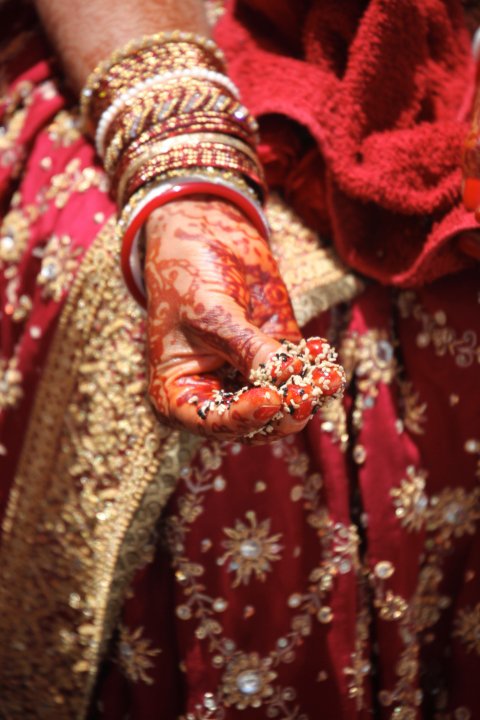
"My father brought me here to marry you on Jagannath Deva's order. You are my husband, my all in all. If you do not accept me, then I will fall down at your feet and die right here. You are my only hope, my Lord." (In the image: Devotees' marriage, Carpinteria).

   According to legend, Jagannath Himself ordered Jayadeva to marry his wife, Padmavati. The story is told in the Visvakosa as follows: there once was a Brahmin who was without offspring despite having worshiped Jagannath for many years in the hope of having a son. Finally, he and his wife had a daughter and they named her Padmavati. When she came of marriageable age, the Brahmin brought her to Lord Jagannath to offer her to his lotus feet. When He saw them, Jagannath said to the Brahmin, "I have a servant whose name is Jayadeva. He has given up family life and has dedicated himself to chanting My names. Give your daughter to him in marriage."
 
   The Brahmin took his daughter to Jayadeva and asked him to marry his daughter. However, since Jayadeva had no desire to get married, he refused to agree to any such arrangement. The Brahmin then told him that it was Jagannath Himself who had arranged this marriage; and without another word, he left, leaving his daughter behind. Jayadeva found himself totally unprepared for this situation and told the girl, "Tell me where you want to go and I will take you and leave you there. You cannot stay here."
 
   Padmavati started to cry and said, "My father brought me here to marry you on Jagannath Deva's order. You are my husband, my all in all. If you do not accept me, then I will fall down at your feet and die right here. You are my only hope, my Lord." The poet and scholar Jayadev could not abandon her after such a heartfelt plea. So he became a householder.
 
Jayadeva Goes to Vrindavan
 
   [Later], Jayadeva took his Deities Radha and Madhava with him, and set off on the long journey. Once in Vrindavan, he began to serve his Deities in an area near Keshi Ghat. When the residents of the Dham heard Jayadeva sing the Gita-Govinda in his sweet voice, they were entranced. One merchant built a large Temple for the Deities on that site.
 
   It is said that Jayadeva returned to his birthplace in Kendubilva after living in Vrindavan for many years. He spent the rest of his life there, worshipping his Deities and performing his bhajan. He would make the long walk to the Ganges every day to take his bath there. One day, for some reason or another, he was unable to make it. Ganga Devi was so kind to him that she came personally to the village of Kendubilva so that he would bathe in her holy waters. It is said that Jayadeva died in Kendubilva and every year on the first day of the month a Magh, a large festival, is held there in his memory.
 
   There is, however, a difference of opinion about where Jayadeva finished his life. Though some say he returned to Kendubilva, others claim it was Puri, and still others say that he went to Vrindavan. Shrila Bhaktisiddhanta Saraswati Goswami Thakur has stated his opinion that Jayadeva left this world from Jagannath Puri. Though some people say that Jayadeva returned to Kendubilva to spend his last days, there is no indication anywhere that he brought his Radha-Madhava Deities with him. In fact, these Deities were taken by the king of Jaipur to a place named Ghati sometime after Jayadeva's passing away and they are still being served in the Jaipur area.
 
   Jayadeva's disappearance day is on the sixth day of the waning moon of the month of Paush.
 
   [Excerpted from “Shri Chaitanya: His Life & Associates” by Shrila Bhakti Ballabh Tirtha Maharaj]
Jayadeva Goswami

Though some people say that Jayadeva returned to Kendubilva to spend his last days, there is no indication anywhere that he brought his Radha-Madhava Deities with him. In fact, these Deities were taken by the king of Jaipur to a place named Ghati sometime after Jayadeva's passing away and they are still being served in the Jaipur area. (In the image: Shri Shri Radha Madhav, Jaipur).

Jahnava Mata – Biography

Jahnava Mata

Balaram’s wives Varuni and Revati became Vasudha and Jahnavi, the two wives of Nityananda Prabhu, in Chaitanya-lila. Both of them were the daughters of Surya Das, who was as effulgent as the sun. He was Kakudman, the father of Revati, in his previous birth. According to another opinion, Jahnava was the incarnation of Ananga Manjari. Both these opinions are possible, as we have shown that more than one identity can be joined in associates of Chaitanya Mahaprabhu. (Gaura-ganoddesha-dipika 65-6) (In the image: Lord Balaram with His wives).

   shri-varuni-revata-vamsha-sambhave
tasya priye dve vasudha ca jahnavi
shri-surya-dasasya mahatmanah sute
kakudma-rupasya ca surya-tejasah
 
ananga-manjarim kecij jahnavam ca pracakshate ubhayam tu samicinam purva-nyayat satam matam
 
   Balaram’s wives Varuni and Revati became Vasudha and Jahnavi, the two wives of Nityananda Prabhu, in Chaitanya-lila. Both of them were the daughters of Surya Das, who was as effulgent as the sun. He was Kakudman, the father of Revati, in his previous birth. According to another opinion, Jahnava was the incarnation of Ananga Manjari. Both these opinions are possible, as we have shown that more than one identity can be joined in associates of Chaitanya Mahaprabhu.
   (Gaura-ganoddesha-dipika 65-6)
 
   Jahnava’s father was Surya Das Sarakhela. According to the Gaudiya Vaishnava Abhidhana, her mother’s name was Bhadravati. Surya Das’s Shripata is in the village of Shaligrama, which is not far from Navadwip, situated close to the Muragacha station on the Eastern Railway. Surya Das was the third son of Kamsari Mishra. His older brothers were Damodar and Jagannath, his younger brothers, Gauri Das, Krishna Das Sarakhela and Nrisingha Chaitanya.
 
   Shaligrama is not far from Navadwip. Surya Das Pandit made his home there. He held an important post in the service of the king of Gauda, as a result of which he was given the title Sarakhela (‘commander’) and earned a large amount of money. Surya Das and his brothers were all very pure in their character and they had a spotless reputation. His virtues are innumerable. His daughters were Vasudha and Jahnava.
   (Bhakti-ratnakara 12.3875-8)
 
   Surya Das Sarakhela and Krishna Das were brothers who both had great faith in Nityananda and were filled with love for Krishna. (Chaitanya Charitamrita 1.11.25)
 
   Surya Das Sarakhela was a magnanimous Devotee whose brother was Gauri Das Pandit. Gauri Das took his permission to come and live in Ambika on the banks of the Ganges.
   (Bhakti-ratnakara 7.330-1)
 
   Nityananda Prabhu’s Wedding
 
   Narahari Chakravarti Thakur has written about Jahnava Devi’s holy life at length in his Bhakti-ratnakara. Every manifestation of Vishnu-tattva has three energies which are known as Shri, Bhu, and Nila or Lila. Nityananda Prabhu is also Vishnu-tattva and possesses these three energies. In the 12th Taranga of the Bhakti-ratnakara, Lord Nityananda’s wedding is described as taking place according to human custom. The essence of that description is as follows. 
 
   A certain kayastha named Krishna Das, the son of Harihoria of Bariagachi, a village near Shaligrama, took the responsibility of seeking a wife for Nityananda Prabhu. A certain elderly Brahmin from Shaligrama saw that Surya Das was worried about finding a suitable husband for his two daughters and made the following suggestion: “In the village of Ekachakra in Radhadesha are a couple named Hariai Pandit and Padmavati Devi. They were Vasudeva and Rohini in their previous lives in Krishna-lila. Balaram has become incarnate as their son, Nityananda. Nitai traveled to all the places of pilgrimage and performed many austerities and became a great scholar before coming to Navadwip and becoming Chaitanya Mahaprabhu’s dearest associate. He is the eternal husband of your two daughters.” 
Jahnava Mata

“In the village of Ekachakra in Radhadesha are a couple named Hariai Pandit and Padmavati Devi. They were Vasudeva and Rohini in their previous lives in Krishna-lila. Balaram has become incarnate as their son, Nityananda. Nitai traveled to all the places of pilgrimage and performed many austerities and became a great scholar before coming to Navadwip and becoming Chaitanya Mahaprabhu’s dearest associate. He is the eternal husband of your two daughters.” (In the wallpaper: from left to right Shri Balaram, ISKCON Punjabi Bagh,Delhi; Shri Nityananda Prabhu, ISKCON Chowpatty, Mumbai).
 
   In a dream, Surya Das also had a vision of Nityananda as Balaram with Vasudha and Jahnava standing to his left and right in their forms as Revati and Varuni. When Surya Das took the Brahmin’s advice seriously and offered the two girls to Nityananda’s lotus feet, Nityananda Prabhu mercifully gave him the same vision directly. Surya Das fainted in ecstasy.
 
   He saw Vasudha and Jahnava as Varuni and Revati, whose forms were more effulgent than mountains of gold and kunkum. Standing to the left and right of Balaram, they were decorated in magnificent jewelry and bedecked in fine, colorful clothes. Nityananda revealed this magnificence to his Devotee in order to give him joy, and Surya Das completely forgot himself in his ecstasy.
   (Bhakti-ratnakara 12.3908-10)
 
   The adhivasa rituals on the eve of the wedding were conducted in the house of Krishna Das Sarakhela in Shaligrama. All the Brahmins of Bariagachi and Shaligrama were present there.
 
   The fortunate Surya Das Sarakhela gave his two daughters away to Nityananda Prabhu according to the religious rites and popular custom.
   (Bhakti-ratnakara 12.3983) 
Jahnava Mata

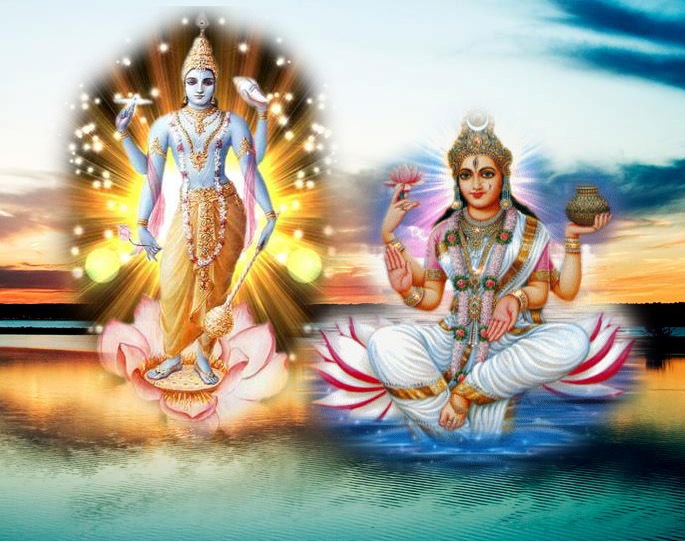
Jahnava Devi herself had no sons, but Nityananda’s Shakti Vasudha Devi gave birth to Virabhadra (or Virachandra) Goswami and Ganga Devi, who are the incarnations of Kshirodakashayi Vishnu and the river Ganges, respectively. (In the wallpaper: Kshirodakashayi Vishnu, Ganga Mata).

 
   At Sachi Mata’s request, Nityananda Prabhu stayed for some time after his wedding in Shantipur before moving to Saptagram, where he stayed with Uddharan Datta, and then establishing a permanent residence at Khardaha on the banks of the Ganges. 
 
   Jahnava Devi herself had no sons, but Nityananda’s Shakti Vasudha Devi gave birth to Virabhadra (or Virachandra) Goswami and Ganga Devi, who are the incarnations of Kshirodakashayi Vishnu and the river Ganges, respectively. According to the Gaura-ganoddesha-dipika (69), Ganga Devi’s husband Madhavacharya is an incarnation of King Shantanu.
 
Jahnava Devi’s Glories
 
   Virabhadra Goswami was inundated with Jahnava Mata’s mercy, becoming her direct initiated disciple. Nityananda Das writes in his Prema-vilasa that when Virabhadra saw Jahnava in a four-armed form that his mind was changed and he decided to accept her as his diksha guru.
 
   Without the mercy of Nityananda Prabhu’s energy Jahnava Devi, no one is able to cross over the ocean of material life, nor can one obtain the service of Nityananda Prabhu and enter into the loving service of his worshipable Gaurahari and Radha Krishna. Bhaktivinoda Thakur has written in his Kalyana-kalpa-taru:
 
   O Jahnava Devi! Be merciful to this servant today. Deliver me from my pain and give me a place in the boat of your lotus feet so that I can be sure to cross over the ocean of birth and death. You are Nityananda’s energy, you are devotion to Krishna and my guru. Please give this servant the desire tree of your lotus feet. How numerous are the fallen souls that you have saved, so this fallen beggar seeks a place at your feet.
 
   The mahajana Krishna Das, in his song which begins jaya Radhe jaya Krishna jaya Vrindavan, has prayed for Jahnava Devi’s mercy after glorifying Krishna’s name, abode and associates. “Remembering Jahnava Devi’s lotus feet, the lowly Krishna Das sings the names of the Lord.”
 
Jahnava Devi’s Travels
 
   Jahnava was present when Narottama Das Thakur put on a great festival at Kheturi village to install the Deities on Chaitanya Mahaprabhu’s appearance day. Indeed, the installation of the Deities took place under her direction. She also supervised and personally participated in the cooking of the first offering and made the first offering to the Deities. She served the Prasad to the assembled mahantas.
 
   Jahnava Ishvari rose early that morning in great delight and took her bath and did her mantra meditation. Then she began to cook innumerable vegetable preparations with great enthusiasm.
   (Bhakti-ratnakara 10.686-7)
 
Jahnava Mata

The ghat where Jahnava bathed and had this vision is today known as Shri Jahnava Ghat. (In the image: Place where Jahnava Mata sat, Radha Kund, Vrindavan).

   All of Chaitanya Mahaprabhu’s personal associates from Bengal were very happy to see Narottama Das. Jahnava Devi, the daughter of Surya Pandit and wife of Nityananda Prabhu, worshiped by the entire universe, expert in the distribution of the pearl of prema, was delighted to hear his name. Her joy increased when she observed his uncommon love for Krishna and his renunciation. Out of her mercy, she came to Kheturi, satisfying everyone by being present there and giving her darshan to all. How can a fallen person like myself fully describe the compassionate nature of Shrimati Jahnava Devi.
   (Bhakti-ratnakara 1.429-34)
 
   Jahnava Devi’s travels are described in the eleventh Taranga of Bhakti-ratnakara. On the road from Kheturi to Braj she stopped in a prosperous village where she delivered some atheistic unbelievers and criminals and bestowed Krishna-prema upon them. When she arrived in Vrindavan, she saw the samadhi of Gauri Das Pandit which moved her to tears. When in Vrindavan, the leaders of the Vaishnava community such as Jiva Goswami, Gopal Bhatta Goswami, Lokanatha Gosvami, Bhugarbha Goswami, Madhu Pandit, etc., all came to offer her their respectful greetings. Taking these leaders with her, she visited the principle Temples of Vrindavan — Madana Mohana, Govinda and Gopinath — before going to Radha Kund. There she met Raghunath Das Goswami, who was engaged in constant chanting of the Holy Names, and whose body was emaciated by his austerities. 
Jahnava Mata

O Jahnava Devi! Be merciful to this servant today. Deliver me from my pain and give me a place in the boat of your lotus feet so that I can be sure to cross over the ocean of birth and death. You are Nityananda’s energy, you are devotion to Krishna and my guru. Please give this servant the desire tree of your lotus feet. How numerous are the fallen souls that you have saved, so this fallen beggar seeks a place at your feet. (In the image: Vrajabasi, Radha Kund, Vrindavan).

 
   Jahnava remained in Radha Kund for three days engaged in bhajana. She heard the sound of Krishna’s flute while sitting on the banks of the tank and had a vision of Shri Krishna which overwhelmed her with waves of divine love. The ghat where Jahnava bathed and had this vision is today known as Shri Jahnava Ghat. She then took the company of Vaishnavas on a parikrama of Vraja-mandala. During this parikrama she heard Jiva Goswami discourse on Brihad-Bhagavatamrita.
 
   After her visit to Braj, Jahnava returned to Gauda-desha where she visited numerous villages. She spent three or four days in Kheturi (Narottama Das’s home), some time in Budhuri (the home of Ramachandra Kaviraj in Murshidabad district), the place of Nityananda’s birth in Ekachakra (Birbhum), Katwa (where Mahaprabhu took sannyasa and where she met Yadunandana Acharya), Jajigrama (Shrinivas Acharya’s home village), Shrikhanda (the home of Raghunandan Thakur, son of Narahari Sarkara Thakur), Navadwip, Ambika, Saptagram (where she visited Uddharan Datta’s house) before finally returning to Khardaha. There she recounted the story of her entire voyage to Vasudha and Virabhadra Goswami.
 
   By Jahnava Devi’s mercy, Nityananda’s dear associate Parameshvari Das Thakur was fortunate enough to see Gopinath united with Radharani in Vrindavan. When he returned to Khardaha and told what he had seen to Jahnava and Vasudha, Jahnava was overwhelmed with loving ecstasies. She instructed him to immediately go to the village of Satpur and to install Deities of Radha and Gopinath there.
 
   Jahnava Devi arranged for Virabhadra’s marriage to Yadunandana Acharya’s two daughters, Shrimati and Narayani, both of whom became disciples of Jahnava.
 
   Nityananda’s shakti, Shrimati Jahnava Devi disappeared on the shukla navami tithi of Vaishakh.
 
   [Excerpted from “Shri Chaitanya: His Life & Associates” by Shrila Bhakti Ballabh Tirtha Maharaj] 

Gadadhara Pandit – Biography

Gadadhara Pandit

Sri Gadadhara Pandit, Mayapur Chandradoya Mandir.

    Gadadara Pandit was a childhood friend of Nimai and both were students in the same ‘Tol’ or school. Gadadhar’s parents Madhav Mishra and Ratnawati were natives of Chattagram district but later on moved to Navadwip. Gadadhar Pandit was born in Navadwip.

   In the Gaura-ganodesa-dipika, verses 147 through 153, it is stated: "The pleasure potency of Sri Krishna formely known as Vrindavaneshvari Srimati Radharani is now personified in the form of Sri Gadadhara Pandit in the pastimes of Lord Chaitanya Mahaprabhu.

   Sri Swarupa Damodara Goswami has pointed out that in the shape of Lakshmi, the pleasure potency of Krishna, she was formely very dear to the Lord as Shyamasundara-vallabha. The same Shyamasundara-vallabha is now present as Gadadhara Pandit".

   From his early childhood, Gadadhara was very serene, patient, calm, quiet, fond of solitude and very renounced. Nimai Pandit during the time of His precocious youth would ask his fellow students meaningless, fallacious questions in logic. Gadadhara however, was not especially fond of this pastime, and therefore he sometimes used to remain at some distance from Nimai.

   On the way to their school, Nimai would catch hold of Gadadhara and chide him, “What do you think of yourself – you think you are a really great pandit? Tell me, what are the symptoms of a liberated soul?”

   Gadadhara would give his explanation based on the scriptures. Nimai would then tell him that it was the absolutely wrong answer. “The display of acute misery and suffering is actually the symptom of a truly liberated soul” said Nimai. Gadadhara tried to argue further on the point. With a wave of his hand, Nimai dismissed all his logic and told him that he (Gadadhara) would understand the answer later on when he got home. 

Gadadhara Pandit

Nimai Pandit teaching His students.

   Gadadhara wondered why Advaita Acharya looked up to Nimai with such intense faith and devotion. Even Ishwara Puri seemed respectful of him. While there was no doubt that Nimai Pandit was exceedingly clever and intelligent, it seemed that Advaita Acharya glimpsed something beyond the mere intellectual prowess of the young man and beheld something at another level, which he could not understand or reach to.

   Once while Gadadhara was plucking flowers at the home of Srivas Pandit, Srivas came up to Gadadhara with a basket for the flowers, beaming with joy. Gadadhara asked “What makes you so happy?” Srivas replied, “Nimai has returned from Gaya just yesterday. It is unbelievable that the cheeky and arrogant boy has changed so completely. He has turned into a compassionate, humble and meek person. Continuously shedding tears, he writhes in agony and cries pitieously, ‘Krishna, Krishna…’ He does not even look like a normal human being anymore – rather like someone from another realm.”

   Srivas Pandit continued, “Our desire seems to be on the verge of fulfilment. He has called up to congregate at the house of Shuklambar Brahmachari. Perhaps he will share the reasons of his pain and suffering with us.” 

Gadadhara Pandit

Lord Chaitania after returning from Gaya.

   Gadadhara instinctively exclaimed, “Even though I am not invited, I will also go. I also want to know the reason behind the incredible change in Nimai.” So he went but hid himself from the rest, as he was not invited to the secret congregation scheduled to take place in Shuklambar’s courtyard.

   The beautiful, golden and effulgent Nimai stood in the middle of the courtyard, and passed his large lotus eyes over the gathering before Him. Losing control of Himself, he burst into tears and sobbed loudly, crying “Where is my Lord Sri Krishna? He was here just now, where has he disappeared, where has he hidden himself from me?

   The heart wrenching sincerity and desperation of His cry stunned everyone present. Nimai then fell down unconscious with a great crash. When he regained consciousness, He could hear someone sobbing very loudly. The sound seemed to be coming from inside the house. He went into the house and asked who was it that was crying so pathetically. Shuklambar told him, “It is your Gadadhar.”

   From his very childhood, Gadadhara had followed behind Nimai as if he were his shadow. Gadadhara was quite detached from the world, his only object of attachment was Nimai. Nimai called Gadadhara and told him, “My dear Gadadhara, since your early childhood, you have always been devoted to Lord Krishna. But I have simply wasted my time in false pursuits and achieved nothing.

   At one time I too was close to Sri Krishna, but due to my own fault I have now lost this invaluable treasure. Please tell me, how can I find him again?” He wept inconsolably and lost consciousness again.

   After some time, seeing Gadadhara alone, Nimai asked him again, “Where is my Lord Krishna? Please tell me.” Gadadhara answered, “Your Krishna is hidden within your heart.” At this, Nimai started digging into his chest with his nails. Gadadhara leapt forward and held Nimai’s hands tightly.

   Mother Sachi happened to witness this incident and ran up to them and told Gadadhara, “You have just saved my Nimai.” She blessed him and said, “Stay with Nimai for your entire life so that my son may be protected.”

   Sri Gadadhara Pandita was very affectionate towards Mukunda datta. Whenever any Vaisnava saint came to Navadwip, Mukunda would inform Gadadhara and they would both go to have darsana. One time Pundarika Vidyanidhi came from Chattagram to Navadwipa and Mukunda invited Gadadhara to come along and meet him. Gadadhara was very excited to meet a exalted Vaisnava and the two of them happily set out together to have darshan of the famous Pundarika Vidyanidhi.

   However, Gadadhara was not prepared for the sight that met his eyes. He saw that Pundarika Vidyanidhi was dressed in fine silk, his lips red with the juice of betel-leaf and was reclining on a fine couch resting against velvet cushions. His servants were fanning him and spraying scented oil all around the room. Gadadhara Pandit was not impressed. How could this apparently sensual person be called a ‘great Vaishnava’ he wondered. He was disappointed and wanted to leave immediately. 

Tota Gopinath Temple.

Tota Gopinath Temple.

   However, Mukunda knew the real character of Pundarika Vidyanidhi, and he could also sense the doubts in the mind of Gadadhara Pandita. Thus he recited some slokas from the Srimad Bhagavatam in a very sweet voice. When Pundarika Vidyanidhi heard his beautiful recitation of these slokas, in a fit of ecstasy he began to cry while calling, "Krishna, Krishna", and rolled about on the bed, his clothes falling into disarray. Soon he fainted dead away on the floor. [Chaitanya Bhagavat. Madhylila 7.78-79].

   Gadadhara now felt very remorseful in his mind. He thought to himself, "Because I have ignorantly considered this highly advanced soul to be an ordinary materialist, what an offense I have committed! In order that I might be saved from the reaction of this offense, I think the only solution is to accept initiation from him."

   Gadadhara Pandita submitted his proposal to Mukunda, who presented it to Pundarika Vidyanidhi with a full account of the pandita's high qualifications. "Hearing this proposal, Pundarik became very happy. 'Providence has bestowed upon me a great jewel; certainly I will accept him. You shouldn't have any doubt about that. It is the result of many lifetimes of good fortune that one gets a disciple like this.'" On an auspicious day, Sri Gadadhara Pandita received the divine mantra from Pundarika Vidyanidhi.

   Prior to taking initiation, Gadadhara Pandit discussed the matter with Nimai, asking if his offence would be forgiven by taking diksha from Pundarik Vidyanidhi. Nimai told him not to delay a single moment and take initiation as soon as possible. 

Gadadhara Pandit

Tota Gopinath. Deity of Gadadhara Pandit.

 
   When Nimai was to leave for Puri after his sannyas, Gadadhara put up a lot of arguments against his leaving home. Gadadhara told Nimai that one could practice any sort of spiritual sadhana even while staying at home. But Nimai told him that what He (Mahaprabhu) had come to say would be better accepted by the masses if He became a sannyasi rather than a grihasta. Gadadhara finally gave in.

   Gadadhara then tried to persuade Mahaprabhu to take him also to Puri. But Nimai did not agree, despite all his cries and pleas. Gadadhara was left behind burning in the fire of separation. He wondered how he would survive without seeing the dear face of his beloved Gauranga.

   After some time, Gadadhara accompanied some devotees from Navadwip to visit Mahaprabhu in Puri. He stayed on in Puri, not returning to Navadwip. Gadadhara started living in Jameshwar’s Tota (garden). Everyday, Gadadhara would read out aloud from the Srimad Bhagavatam for the pleasure of Mahaprabhu. 

   Once while sitting on the beach, discussing some topics on Krishna, Nimai decided to bestow his special grace on Gadadhara. He told Gadadhara to dig in a particular spot. After digging for sometime, Gadadhara discovered the beautiful deity of Sri Gopinath. The deity was established in a temple in the garden and came to be known as Tota Gopinath. 

Gadadhara Pandit

Gadadhara Pandit copied all the verses of the Bhagavad-gita in Bengali.

   Mahaprabhu asked Sri Gadadhara Pandit to do three activities on His behalf:

1. Be the authoritative teacher of Srimad-Bhagavatam;

2. Give diksha (formal initiation) on behalf of Mahaprabhu to the true seekers on the path of pure Vraja-bhakti;

3. Worship the Deity of Sri Gopinath along with His eternal consort, Sri Radha; 

   Soon after, Gadadhara took a vow of “Kshetra Sanyas” (limiting oneself to one particular place only), so as to do uninterrupted seva of Lord Sri Gopinath.

   When Mahaprabhu started on his pilgrimage to Sri Vrindavan, Gadadhara said he would accompany him. Mahaprabhu reminded him about his vow. Gadadhara replied that Mahaprabhu was his “Sri Kshetra” and his Gopinath as well. Mahaprabhu was not happy. “This is not proper” he said. 

   Gadadhara nearly fainted due to the sorrow of separation. Mahaprabhu told Sarvabhauma Bhattacharya to take him back to Sri Kshetra. He would not let him break his vow. On that particular occasion, Mahaprabhu’s Vrindavan trip was cancelled. Mahaprabhu told everyone that he felt his Vrindavan visit was cancelled because he had made Gadadhara unhappy. 

   Once Gadadhara asked Mahaprabhu for a mantra. He wanted to be re-initiated. He said that he had disclosed his mantra to some one and it seemed to have lost is efficacy. Mahaprabhu told him to ask Pundarik Vidhyanithi for a mantra once again. He also said that Pundarik would be arriving in Nilachal very soon. Sure enough, Pundarik came and Gadadhara was re-initiated. 

Gadadhara Pandit

Original hand writing of Gadadhara Pandit.

http://www.srigaurangashram.in

Vamsi Das Babaji Maharaj – Biography

Vamsidas Babaji was a Gaudiya Vaishnav sadhu who lived at Swarupa Gunj, Navadwip during the time of Srila Bhaktisiddhanta Saraswati Thakur. He was respected by Srila Bhaktisiddhanta, and he used to see to it that Vamsidas Babaji was provided with grains and so on by Gaudiya Matha brahmacharis.
 
Srila Vamsidas Babaji appeared in the village of Majidpur in the Jamalpur district of Bangladesh. Before the partition of India, this city was formerly in the district of Mymensing. His father’s name was Sanatana Malobrahma and he was previously known as Bhairava. Babaji Maharaj came to Nabadwip from East Bengal. 
 
He lived as a total recluse, far away from the hubbub of the town in a solitary place on the bank of Ganga near Baral Ghata in Navadvipa, as if he was a mad or crazy person. His only possessions were an old kaupina, karanga and kantha. 
 
Vamsidasa Babaji lived in a world of his own. His world centered round his deities-Gaura-Gadadhara, Nitai, Radha-Krishna and Gopala. For the service of his deities he had two brass pots, some earthen pots, one plate, one glass, some small cups, pancapatra, bell and conch-shell and nothing else.
 
Baba passed day and night in the service of the deities and in sweet talks with Them. Early in the morning he went out from his kuti to collect flowers. Then he went for bhiksa. He returned to his kutiya about noon and made garlands from the flowers for each of the six deities.
 
After that he would cut the vegetables. He washed each vegetable a number of times. Then he cleaned rice. He examined each grain of rice. If he found any grain from which the husk was not removed, he removed it with his own hand.
 
He did everything slowly, contemplating all the time the lila of Radha-Krishna or Gaura-Nitai, and singing or talking to Them. It was only late in the evening that he could cook and offer bhoga to the deities. He had no consciousness of time. Morning and evening, day and night had no meaning for him. Almost the whole night he kept awake, talking and singing.
 
One day, a lady selling fish approached V.B., offering him some choice type of catch.  Somehow or other, the Babaji's mind became attracted to tasting the fish.  But he immediately rebuked himself and became very angry. 
 
He first of all shouted at the woman to go away. Then he shouted at his deities, "How could this happen?  How could this happen?  I've surrendered my life to Radha Krishna, I'm under They're protection, and still this happens!  Why are You not protecting me?"
 
He went storming into his bhajan kutir.  People gathered while he fussed and fumed at his Deities inside.  Then he came out, bringing the Deities tied by rope, and threw Them into the Ganga.  He kept the end of the rope under his foot.  When one man inquired why he was doing this, the Baba threw a stone at him.
When this news reached the Gaudiya Matha, Srila Bhaktisiddhanta Thakur called his brahmacharis together and forbade them from visiting the baba again, save for one who would just deliver supplies. 
 
After a few days, he again called them together and said, "Some of you think I've stopped you from visiting babaji maharaja because he is in maya.  That is not so.  I’ve prevented you because  you will not be able to understand this bhava and will only commit offences.  So better you stay away."
 
Later, when that one brahmachari visited, Vamsidas babaji maharaj threw a stone at him and told, "If you want to please me, then never return here again!"
 
Babaji never locked the door of his kutir when he went out for bhiksa or to bathe in the Gariga. When asked why he did not lock the kutir, he said, "If the owner of the house Himself does not keep a watch then what is the use of locking the house? I do not even keep the keys of the lock with me. The lock has three keys. All the three are with the three boys. One is with Gaura, one with Nitai and one with Gadadhara."
 
After entrusting the lock and the keys to the three “boys”, Baba used to be free from anxiety. If while he was out a cow entered the kutir and ransacked everything, he would be angry with the boys. If someone stole something from the kutir he would say, "Gaura has a soft corner for Nadiyavasis, the residents of His own Dhama. Therefore He gives things away to them. I am after all an outsider." Once a gold necklace, given by someone to Sri Gaura, was stolen, when he had gone out for bhiksa.
 
On returning to the kutir he kept on scolding Gaura and asking Him whom He had given away the necklace to, for about two hours. Towards the evening he got a hint. He then went to the house of the thief and asked him for the necklace. The thief pushed him down the verandah of his house. He was hurt. But he did not say anything. But how could Gaura tolerate this? The thief soon died as well as all the other members of his family.
 
Once Baba had to punish Gaura-Nitai for Their connivance in a theft. The two brass-pots, in which Baba' used to cook for Gaura-Nitai were stolen. How could this happen without the connivance of Gaura-Nitai? So They were punished.
 
Baba scolded Them and did not give Them anything to eat that day. The punishment had its effect. The next day someone came quietly and delivered one of those pots.
 
Baba said, "This small pot is Nitai's. He will be fed today. If Gaura wants to eat, He must also bring His pot." Baba always did what he said. He cooked and offered bhoga to Nitai. Gaura drew a long face as He kept looking at Nitai eating.
 
In the meantime another man came and delivered the other pot. Baba then cooked in that pot and offered bhoga to Gaura. When Gaura also had eaten, he said with tears in his eyes, "Do I ever want to punish You? But both of You are so naughty that You always harass me. Don’t you know that I have now become old and cannot bear it all. What can I do?"
 
Babaji Maharaj did not stay exclusively in the Navadwip area, but also travelled to many holy places where he practiced the spiritual disciplines of bhakti-yoga.
 
Whenever he saw a peepal tree, he would sit under it, taking it to be the Vamsi-vata under which Krishna played his flute to attract the gopis. Once he had installed himself there, it would be difficult to get him to move.
 
In February 1941, Vamsi Dasji left Navadwip and headed for Vrindavan. He sometimes walked, sometimes travelled by ox-cart and sometimes by rail.
 
He first went to Katwa where he stayed for two days under a vata tree near the railway station. Then he took the train to Bhagalpur where he stayed for a day under again under a vata tree near the station and for four days by the Ganges. Then he travelled on to Gaya where he remained on the banks of the Phalgu River for three days.
 
He also stayed on a boat in the Ganges near Dashashvamedha Ghat in Benares for three days, spent another three days in Ayodhya by the Sarayu including three hours under a vata tree, at the Triveni confluence at Prayag for ten days, two days at the Vishram Ghat in Mathura, eight days at the Vamshivata in Vrindavan, at the Madhya-curia on the banks of the Yamuna, the Govindevji temple, Kaliya-daha, near a tamala tree on the east bank of Surya Kund at Nandagrama, two days at Pavana-sarovara and then nine days at Vamshivata Ghat in Vrindavan.
 
Everywhere that he went, he remained absorbed in chanting the Holy Names and meditating on Krishna’s form and pastimes. After three months, he returned to Navadwip Dhama, in the month of Jyestha. 
Those who travelled with him recounted that when wandering through Vraja Mandala, he would sometimes sing songs about Krishna’s lila, sometimes glorify Navadwip Dhama, sometimes laugh madly. Sometimes, he would babble incoherently, and oftentimes he would remain completely silent.
 
When visiting a temple, he was often seen muttering confidentially to the deities, disclosing some personal sentiment to them. All in all, his companions were charmed by his devotional absorption.
In an old Gaudiya Math weekly magazine, further accounts of Babaji Maharaj’s travels are given. It is stated there in the four years from March 1943, he travelled to Ambika Kalna, Kharagpur, Baleshvara (Balasore), Soro, Bhadrak, Khurda Road and Purushottam.
 
During these travels the sadhus of the Gaudiya Matha rendered great service to him.
Nothing is known about Baba's life as a householder, except that he was married at an early age and his son Haricandra was nine or ten years old when he renounced the world. He went to Navadvipa around 1906.
 
There was a person from Navadvipa-dhama who used to come to Babaji Maharaja. One day, he thought, "I have the desire to obtain the Supreme Lord. How can I get Bhagavan?"  This person came back repeatedly to see Babaji Maharaja. Finally, one day, he approached Maharaja directly.
 
"What do you want?" Babaji Maharaja asked him.
"I want to see Bhagavan," the man said.
Babaji Maharaja replied with only one word: " Then weep for Him!"
 
Babaji Maharaj’s disappearance day is on the Shukla Caturthi of Shravan.
 
 
http://www.srigaurangashram.in