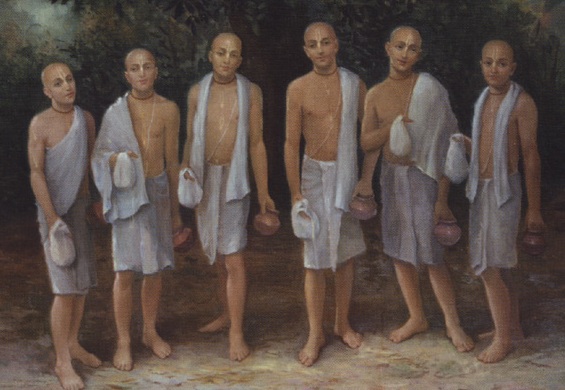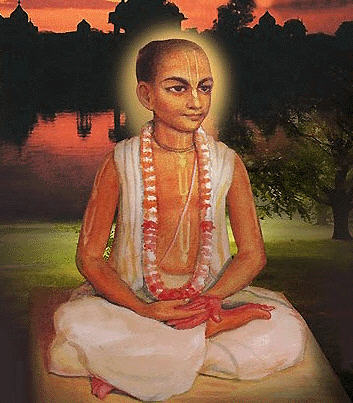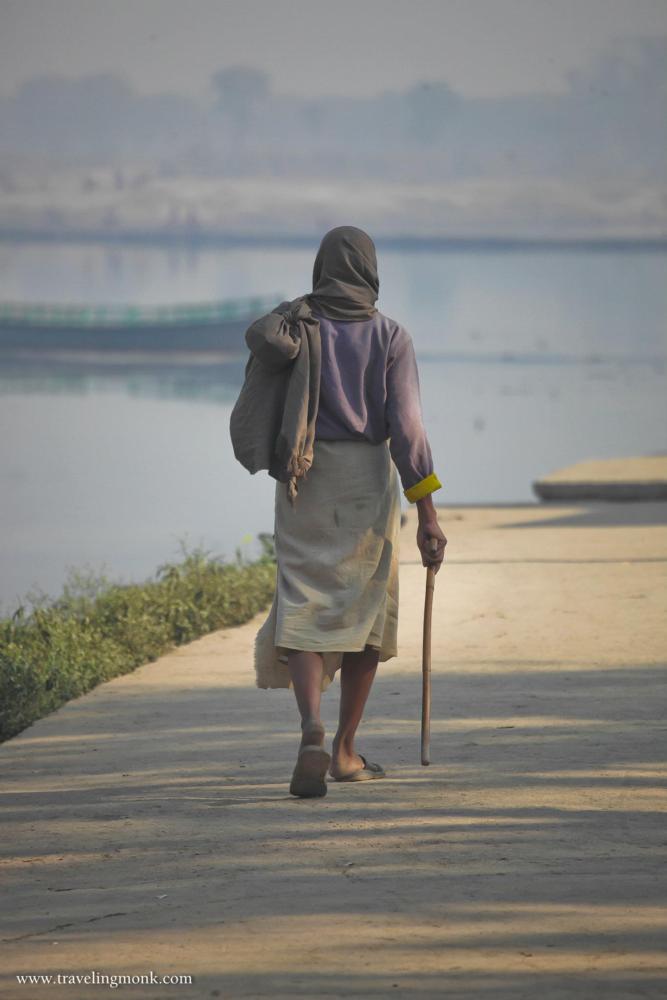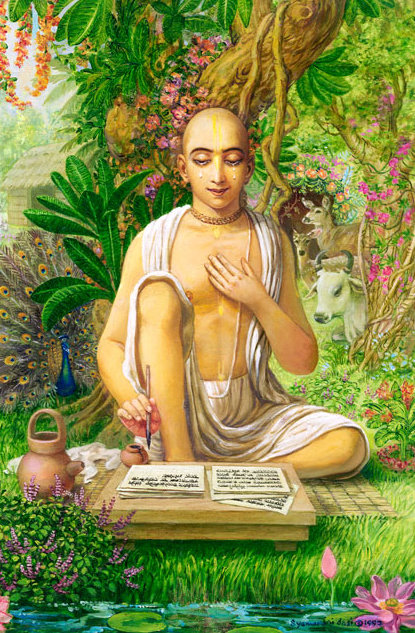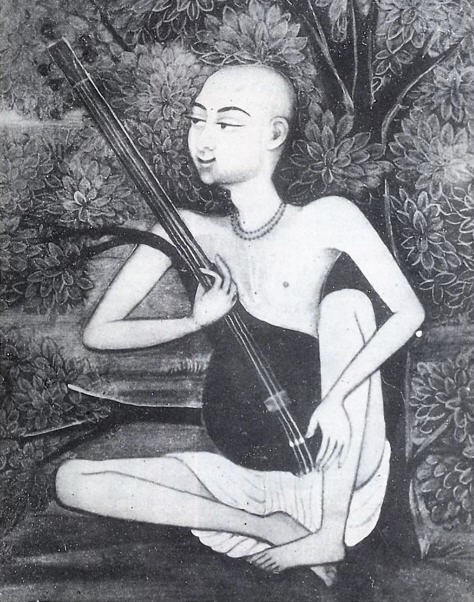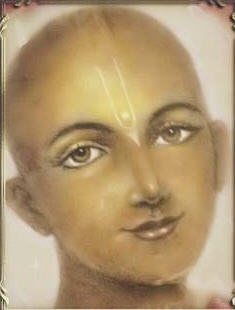
All scriptures state that a Vaishnava is still the best of humankind. It it does not matter in which caste he takes birth. That most sinful person who judges a Vaishnava in terms of his race or his caste will repeatedly be born in the lowest forms of life. (Chaitanya Bhagavat 2.10.100-2) (In the image: Krishnadasa Kaviraja Goswami).
Krishnadas Kaviraj Goswami is the author of the Chaitanya Charitamrita, but has given us very little autobiographical information there. In his introduction to the Gaudiya Math’s edition of Chaitanya Charitamrita, Shrila Bhaktisiddhanta Saraswati Goswami Thakur has written the following about Krishnadas’s antecedents: “We do not know the names of Krishnadas’s parents. Recently their names have been discovered, [FN: According to Ashutosh Deb’s Bengali Dictionary and Haridas Das’s Gaudiya Vaishnava Abhidhana, Krishnadas’s parents’ names were as Bhagiratha and Sunanda.] but no concrete evidence can be found to substantiate these claims. Krishnadas is his spiritual, not his family, name. He has given some autobiographical information in the fifth chapter of the Adi-lila, from which we learn that he was born in Jhamatpura, near the Salara railway station. Jhamatpura lies four miles west of Naihati in the Katwa block of Burdwan district. To this day, Krishnadas’s Gaura-Nitai Deities are still worshiped in his home town, but there do not seem to be any descendants of his family still living there. He was ordered by Nityananda Prabhu in a dream to go to Vrindavan which is where he spent the remainder of his life. His samadhi tomb is on the grounds of the Radha-Damodar Temple.” (Bhumika, ii.)
Nityananda Prabhu appeared to me in a dream in Jhamatpur, near Naihati. (1.5.181).
Shrila Prabhupada Saraswati Goswami has established Krishnadas’s dates by collating information from several sources. He concludes that he was probably born in about 1520 AD and died in about 1616 or 1617. Vrindavan Das Thakur appeared sometime after 1510 AD. Krishnadas’s magnificent biography of Chaitanya Mahaprabhu was meant to serve as an appendix to his work.
Krishnadas’s Varnashrama Status
There is some difference of opinion about Krishnadas’s caste. Once again, Shrila Prabhupada, Bhaktisiddhanta Saraswati Thakur has discussed this point: “Supporters of different ideas claim that Krishnadas was born in one of the three upper castes (Brahmin, kayastha or vaidya). Kaviraj is a title given to those who have proven themselves by composing literary works which have achieved renown for their quality in learned circles. Since this title is also given to Ayurvedic physicians, some people hold that Krishnadas was a vaidya. It is difficult to contradict those who claim that he is a Brahmin on the basis of his extraordinary mastery of the scriptures and other branches of learning, of which Chaitanya Charitamrita is an eloquent testimonial. Nor is the view that he was a kayastha altogether illogical, as he reveals a soft spot for that caste when he praises its intelligence and managerial talents in the chapters about Raghunath Das Goswami’s early life.” (Bhumika, iii.)
From this above discussion, we can see that Krishnadas may have been born in any of these three castes. Whatever the case, a Vaishnava is a superior human being no matter in what caste he takes his birth.
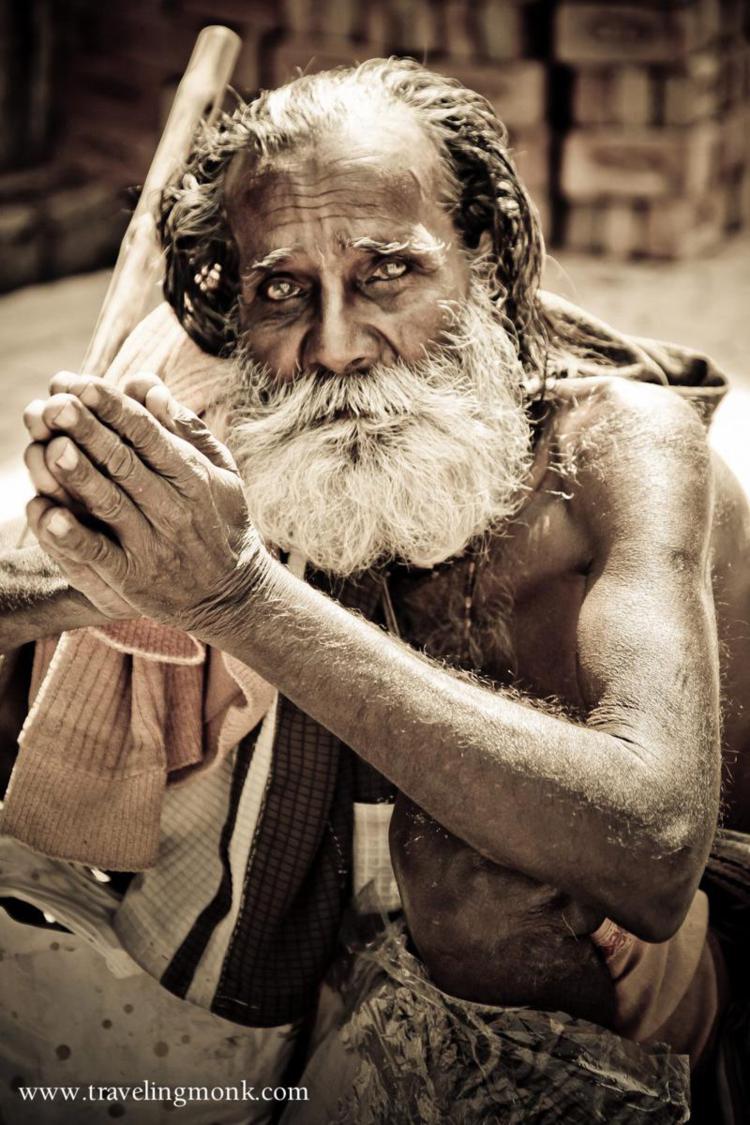
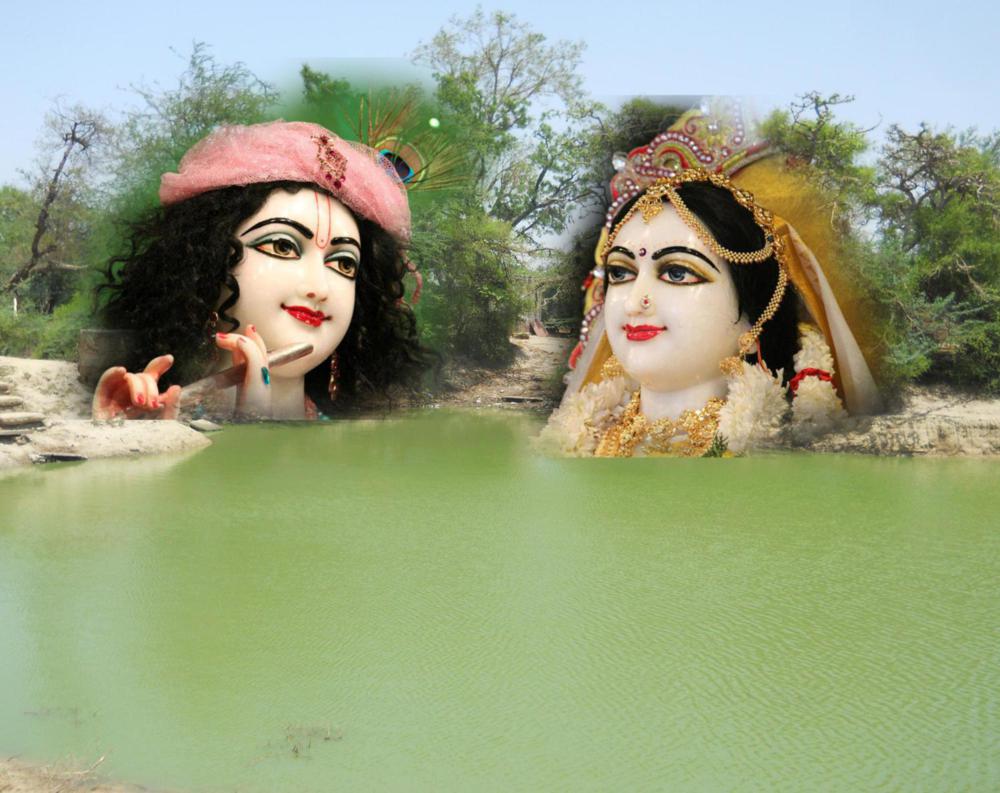
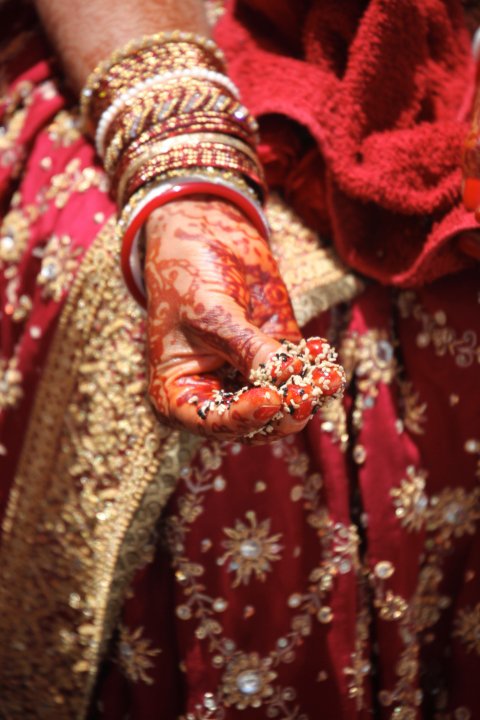
“After arriving in Vrindavan, Krishnadas became indifferent to talk about his previous family life and totally absorbed in Hari-katha. This behavior is appropriate for someone in the third or fourth station and completely committed to the devotional life. The Chaitanya Charitamrita is the composition of someone who has reached the status of a paramahamsa and is completely beyond the four ashramas." (In the image: Braja basi, Radha Kund).
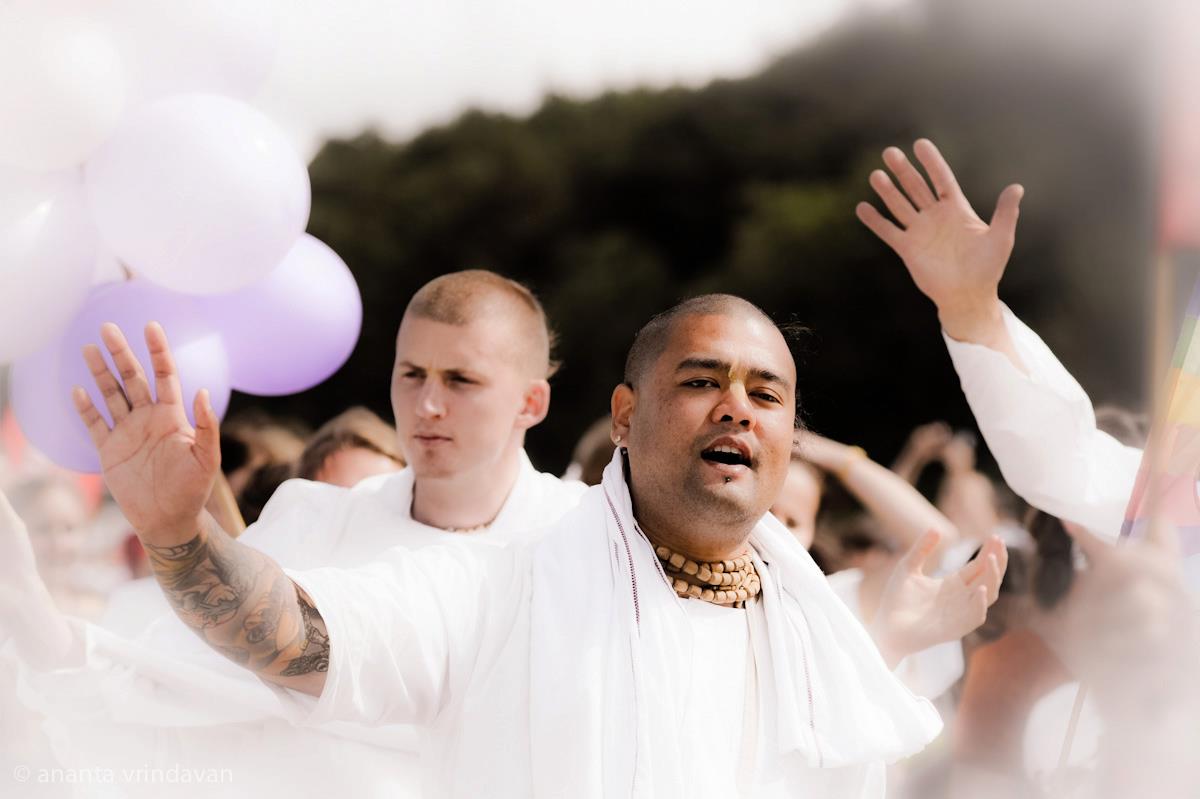
All scriptures state that a Vaishnava is still the best of humankind. It it does not matter in which caste he takes birth. That most sinful person who judges a Vaishnava in terms of his race or his caste will repeatedly be born in the lowest forms of life. (Chaitanya Bhagavat 2.10.100-2)
There is no unanimous opinion about Krishnadas’s marital status, either. Some say that he was a lifelong brahmachari when he went to Vrindavan, for if he had left a wife and family he would likely have mentioned it when telling of his renunciation. Shrila Prabhupada writes in this connection, “After arriving in Vrindavan, Krishnadas became indifferent to talk about his previous family life and totally absorbed in Hari-katha. This behavior is appropriate for someone in the third or fourth station and completely committed to the devotional life. The Chaitanya Charitamrita is the composition of someone who has reached the status of a paramahamsa and is completely beyond the four ashramas." He was known as Kaviraj Goswami to his spiritual family. His spiritual identity in Vraja lila is Ratnarekha Manjari, or Kasturi Manjari according to others.
From Krishnadas’s statements in the Chaitanya Charitamrita, we also learn that he had a brother. Krishnadas does not give his name, but Hari Das writes in the Gaudiya Vaishnava Abhidhana that he was called Shyama Das Kaviraj.
Krishnadas’s Vision of Nityananda Prabhu
In the course of his glorification of Nityananda Prabhu in the Chaitanya Charitamrita, Krishnadas Kaviraj Goswami describes the crucial event in his life. Krishnadas had organized a 24-hour kirtan at his house and amongst those invited was Lord Nityananda’s dear associate, Minaketan Rama Das, who also lived in Jhamatpura.
Minaketan was a great Vaishnava who was in a constant state of devotional trance as he chanted the name of Nityananda Prabhu. In his ecstatic mood, he would sometimes hit people with his flute and sometimes slap them. In general, his ecstatic behavior was the cause of some astonishment amongst Krishnadas’s guests and most came to pay their obeisances and offer him their respects. Only Gunarnava Mishra, who had been engaged at the festival as a pujari, did not demonstrate a respectful attitude. This behavior was an indication that Gunarnava Mishra had no faith in Nityananda Prabhu. Rama Das became angry and criticized Mishra, saying,
”Just look! A second Romaharshana Suta who did not come forward to show respect when he saw Balaram!” (Chaitanya Charitamrita 1.5.170)
Gunarnava Mishra was pleased to have been chastised by Rama Das and simply continued in the performance of his service to the Deity. At the end of the kirtan festival, when Gunarnava Mishra had left, however, Krishnadas Kaviraj’s brother got into an argument with Minaketan Rama Das about what had happened. Krishnadas’s brother had strong faith in Chaitanya Mahaprabhu, but lacked similar faith in Nityananda. Upon hearing this, Rama Das was deeply wounded and he became so angry that he broke his flute and left. The result of this curse was that Krishnadas’s brother was doomed to completely losing any devotional attitude whatsoever. Krishnadas Kaviraj, however, took the side of Nityananda Prabhu’s associate and rebuked his brother:
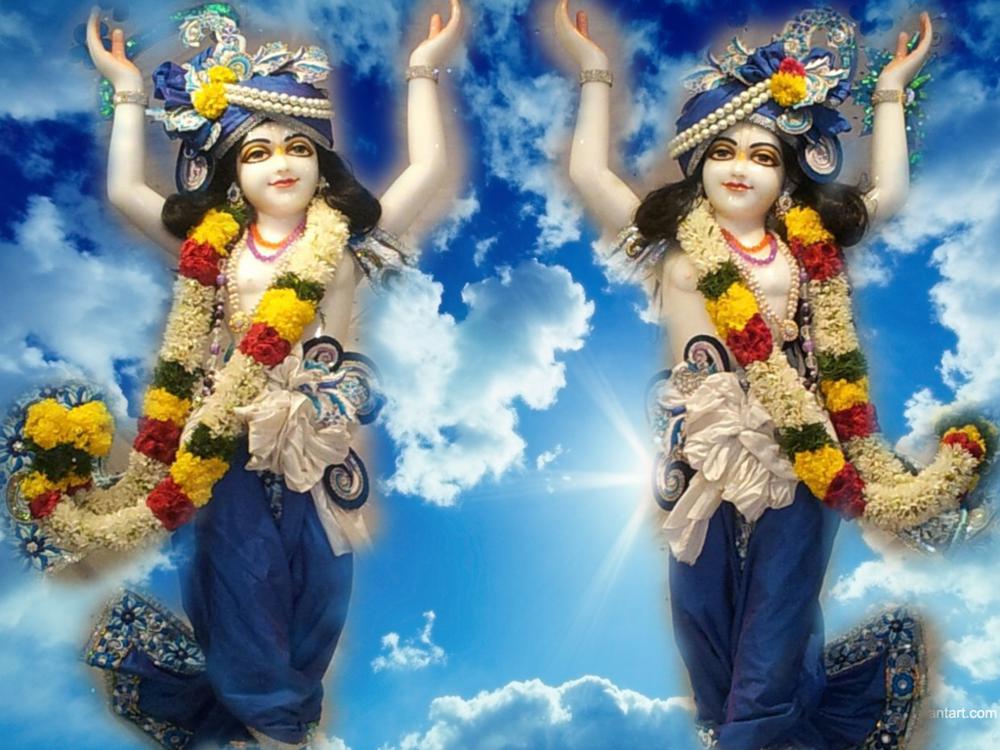
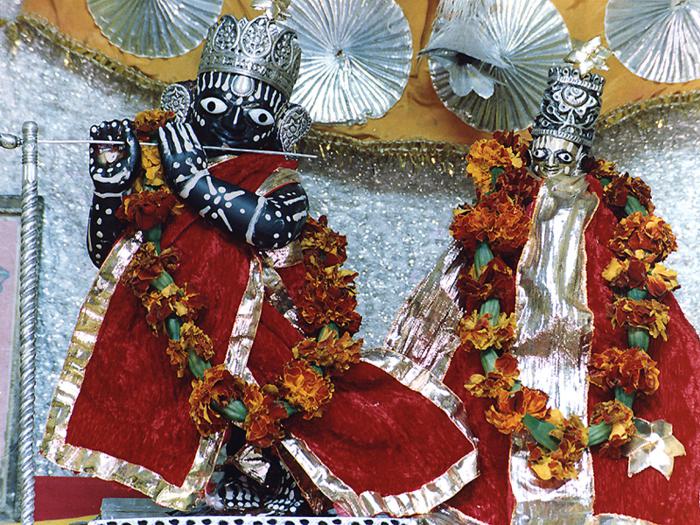
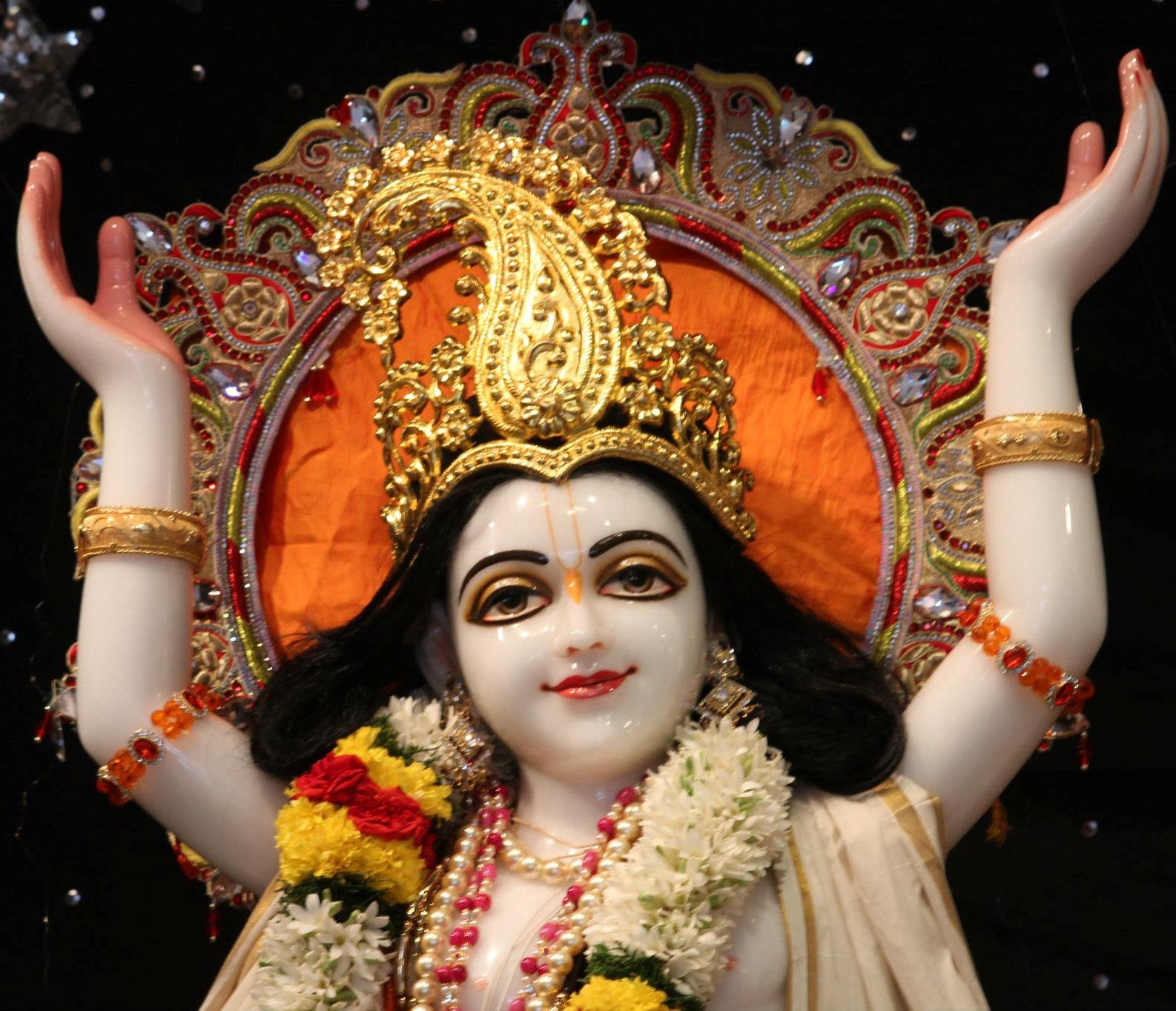
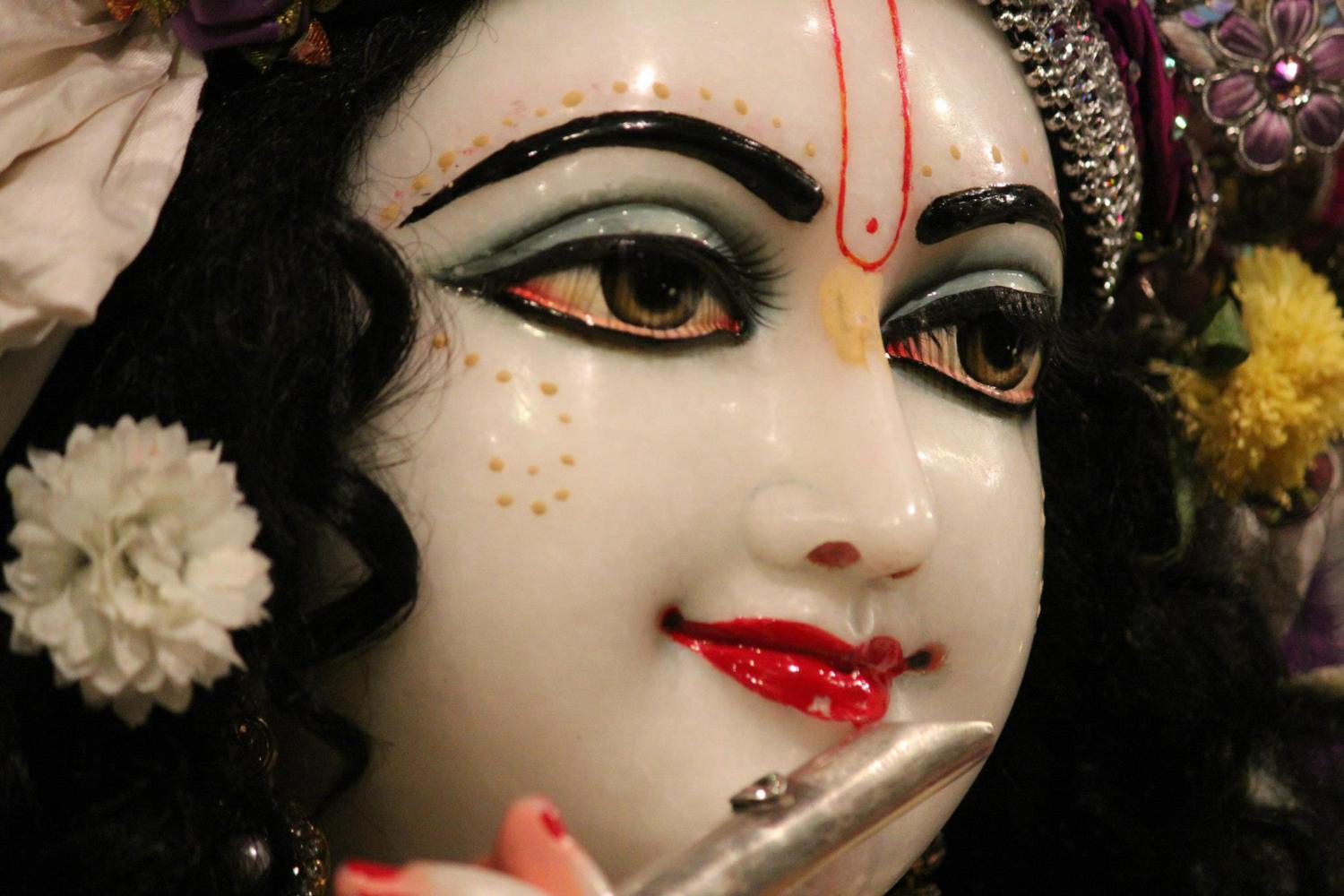
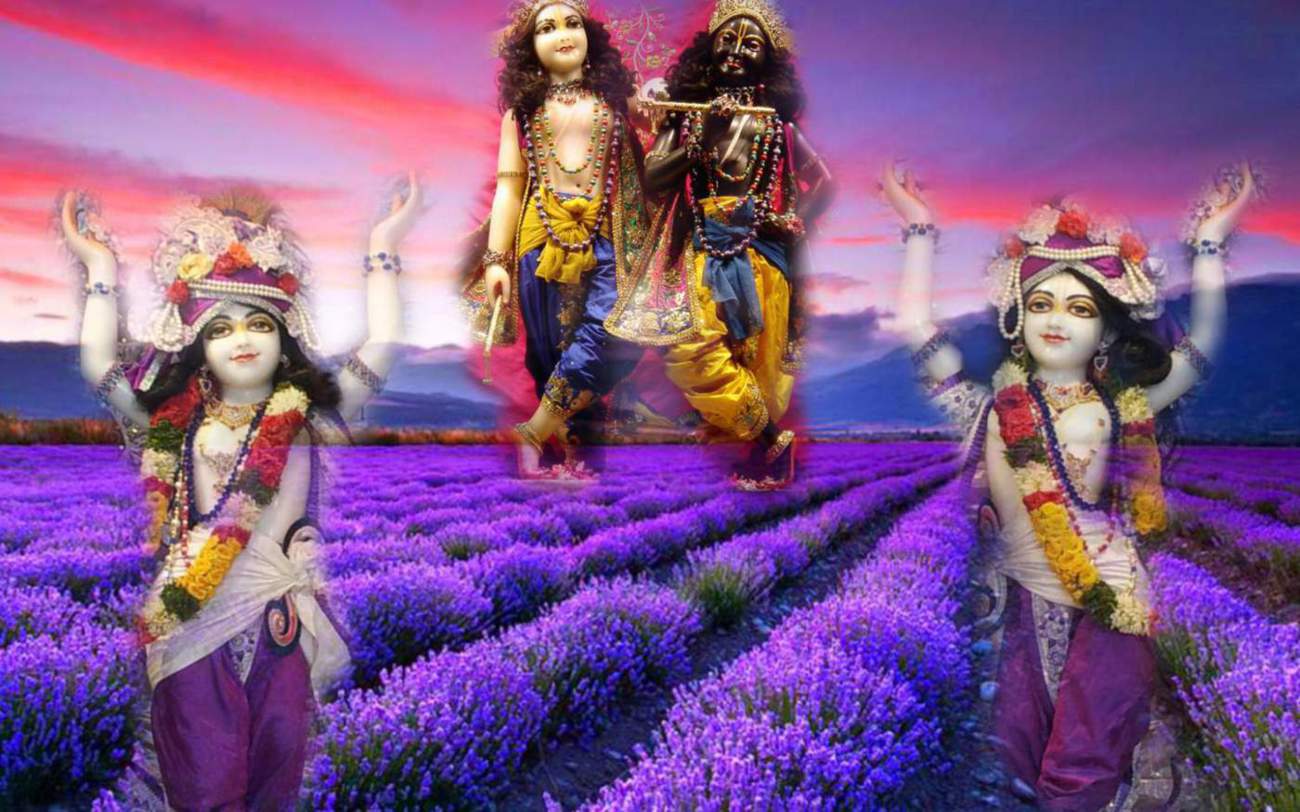
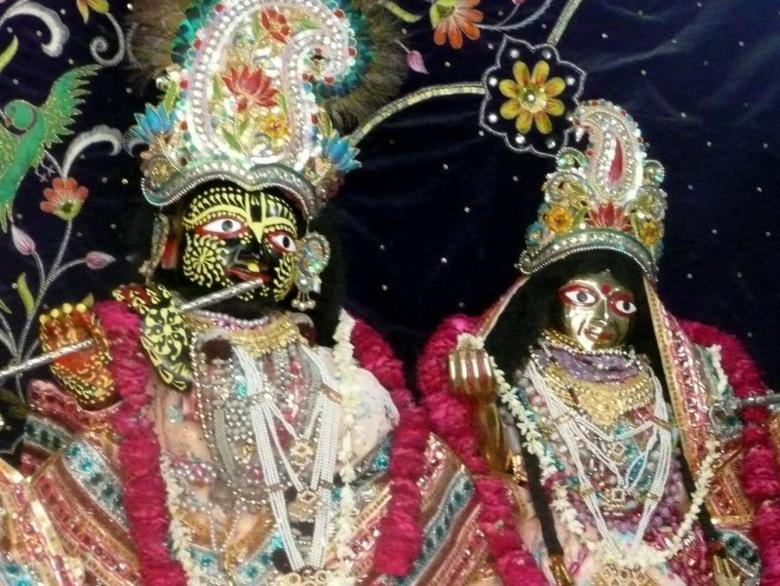
”These two brothers (Chaitanya Mahaprabhu and Nityananda Prabhu) are like one body; they are equal in their spiritual manifestation. If you do not accept the divinity of Lord Nityananda, you will fall down. To have faith in one but to disrespect the other is as logical as accepting half a hen. Better you should be an atheist by denying the divinity of both than a hypocrite who believes in one and not the other.” (Chaitanya Charitamrita 1.5.175-7) (In the image: Shri Shri Gaura Nitay, ISKCON Chennai, Tamil Nadu).
”These two brothers [Chaitanya Mahaprabhu and Nityananda Prabhu] are like one body; they are equal in their spiritual manifestation. If you do not accept the divinity of Lord Nityananda, you will fall down. To have faith in one but to disrespect the other is as logical as accepting half a hen. Better you should be an atheist by denying the divinity of both than a hypocrite who believes in one and not the other.” (Chaitanya Charitamrita 1.5.175-7)
The Lord is influenced by His Devotees and He gives great importance to even the slightest display of attachment, bestowing upon them all that they desire. Krishnadas Kaviraj Goswami writes that by taking the part of Nityananda Prabhu’s associate and chastizing his brother, he won the blessings of Nityananda Prabhu himself. Nitai came to him in a dream and ordered him to go to Vrindavan.
”O Krishnadas! Have no fear. Go to Vrindavan, for there you will attain all things.” After saying this, He indicated the way to Vrindavan by waving His hand and then disappeared with His associates. (Chaitanya Charitamrita 1.5.195-6)
By way of contrast, a person who holds Devotees in contempt, though he show all the customary virtues is eternally deprived of the Lord’s blessings. The example is the zamindar Ramachandra Khan, who committed offenses to Hari Das Thakur, as a result of which he incurred Nityananda Prabhu’s displeasure. Not only did he lose everything, but his house was razed completely, leaving no remnants. Only a foolish person who lacks discrimination would be so bold as to behave unjustly toward a saintly person.
With words of profound humility, Krishnadas Kaviraj Goswami proclaims the glories of Nityananda Prabhu:
I am more sinful than Jagai and Madhai and lower than a maggot in stool. Whoever hears my name loses the results of his virtuous deeds, and whoever utters my name commits a sin. Other than Nityananda, could anyone in this world show mercy to one as abominable as me? Nityananda is the incarnation of mercy; He is so intoxicated by ecstatic love that He does not discriminate between the good and the bad. He delivers anyone who fall down before Him. Therefore He has delivered such a sinful and fallen person as me. (Chaitanya Charitamrita 1.5.205-9)
Krishnadas Writes the Final Pastimes of the Lord
Without the mercy of Vishnu and the Vaishnavas, it is impossible to describe their glories. It is for this reason that Krishnadas Kaviraj Goswami begins each chapter of the Chaitanya Charitamrita with invocations to Mahaprabhu and His associates like Nityananda Prabhu, Advaita Acharya, and concludes each chapter with a prayer for the service to the feet of Rupa and Raghunath Goswamis. He thus showed how important it is to avoid any disrespect or offense to the Vaishnavas.
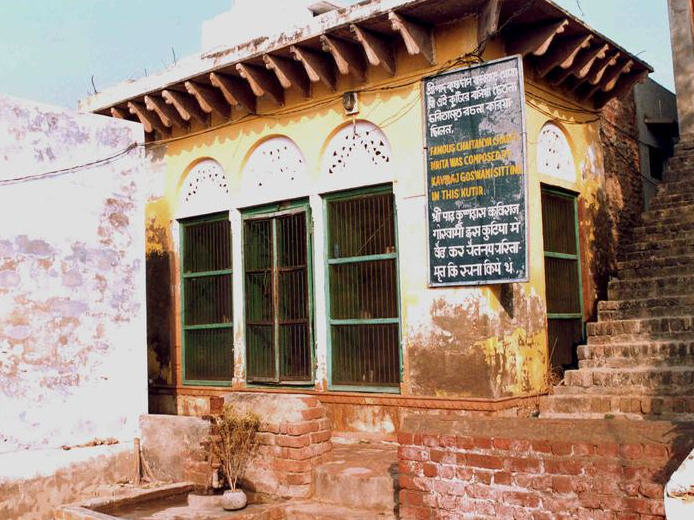
Without the mercy of Vishnu and the Vaishnavas, it is impossible to describe their glories. It is for this reason that Krishnadas Kaviraj Goswami begins each chapter of the Chaitanya Charitamrita with invocations to Mahaprabhu and His associates like Nityananda Prabhu, Advaita Acharya, and concludes each chapter with a prayer for the service to the feet of Rupa and Raghunath Goswamis. He thus showed how important it is to avoid any disrespect or offense to the Vaishnavas. (In the image: Place where Krishnadas Kaviraj Goswami wrote Shri Chaitanya Charitaamrita).
The activities of Shri Chaitanya Mahaprabhu are by nature wonderful and sweet. When described by Vrindavan Das Thakur, they become a shower of nectar. To describe them again would not only be repetition, but a display of arrogance, for I do not possess his powers. I shall thus only present a synopsis of those events already described fully by Vrindavan Das in his Chaitanya Mangala. I shall do my best to fully describe in this book only those incidents mentioned in his outline which he did not develop. I therefore offer respectful obeisances unto the lotus feet of Vrindavan Das Thakur, praying that I will not offend his lotus feet by my action. (Chaitanya Charitamrita 2.4.5-9)
Just as Vyasadeva compiled Lord Krishna’s pastimes in Shrimad Bhagavatam, Thakur Vrindavan Das depicted Lord Chaitanya’s pastimes…. I offer millions of obeisances unto the lotus feet of Vrindavan Das Thakur who has delivered the entire universe through his book. (Chaitanya Charitamrita 1.8.35,40)
Vrindavan Das the authorized biographer of Shri Chaitanya Mahaprabhu and equal to Shrila Vyasadeva. He has described the Lord’s pastimes in such a way as to make them sweeter and sweeter. I shall try as far as possible to fill in descriptions he left out due to his fear of his book’s becoming too voluminous. (Chaitanya Charitamrita 1.13.48-9)
In his foreword to the edition of the Chaitanya Charitamrita published by the Shri Chaitanya Gaudiya Math, the president of the editorial board of Chaitanya Vani magazine, H. H. Bhakti Pramoda Puri Goswami Maharaj, has written: “Vrindavan Das Thakur wrote an elaborate outline of Mahaprabhu’s lila at the beginning of the Chaitanya Bhagavat, but as he became absorbed in describing Nityananda’s activities, many events mentioned in the outline were left out of the final version of the book. Mahaprabhu’s Vrindavan Devotees approached Krishnadas Kaviraj, asking him to write down a full version of these pastimes, for if it were not done, they would be forgotten. Krishnadas then went to the Deity of Madana Mohana and asked Him for permission to do as he had been asked. In front of all the prominent contemporary members of the Gaudiya community in Vrindavan, the garland fell from Madana Mohana’s neck. This was taken by all who were present as a sign of the Lord’s approval and they let out a joyous cheer. Madana Mohana’s pujari picked up the garland and placed it on Krishnadas’s chest. Joyfully taking the garland as a symbol of the Deity’s wishes, Krishnadas began to write his biography of the Lord. Thus he has written in great humility.
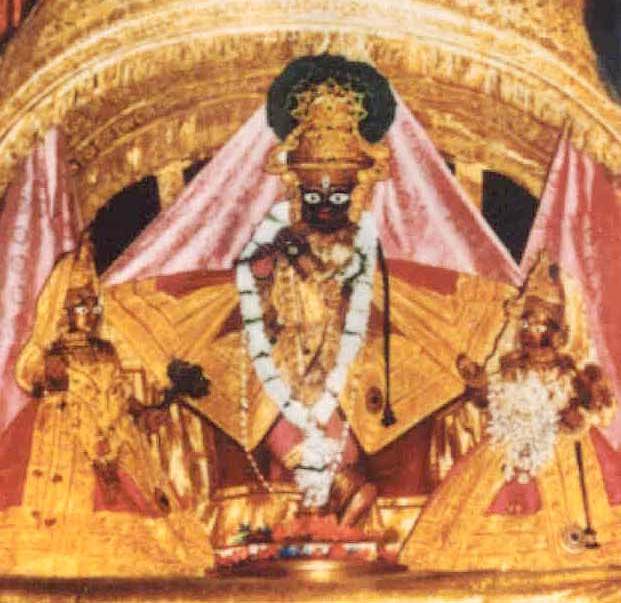
Krishnadas then went to the Deity of Madana Mohana and asked Him for permission to do as he had been asked. In front of all the prominent contemporary members of the Gaudiya community in Vrindavan, the garland fell from Madana Mohana’s neck. This was taken by all who were present as a sign of the Lord’s approval and they let out a joyous cheer. Madana Mohana’s pujari picked up the garland and placed it on Krishnadas’s chest. Joyfully taking the garland as a symbol of the Deity’s wishes, Krishnadas began to write his biography of the Lord. Thus he has written in great humility. (Madan Mohan, Karoli).
Chaitanya Charitamrita is being dictated to me by Madana Mohana. My writing is like the repetition of a parrot. I write as Madana Gopal orders me, just as a wooden marionette is made to dance by a puppeteer. (Chaitanya Charitamrita 1.8.78-9)
In writing Chaitanya Charitamrita, Krishnadas made use of Svarupa Damodar’s notes, which Raghunath Das Goswami had memorized. Shrila Bhaktivinoda Thakur has described this as follows: “Shri Svarupa Damodar Goswami wrote an outline in Sanskrit (karica) of Mahaprabhu’s later activities. He had Raghunath memorize these verses and told him to preach them throughout the world. These verses were not written down anywhere else, however. The Chaitanya Charitamrita is the gist of Svarupa Damodar’s karica.
Though I am an insignificant living being, through the blessings of Shri Chaitanya Mahaprabhu I have summarized in writing everything that Svarupa Damodar recorded in his notes about the Lord’s pastimes, as well as everything that I heard from the mouth of Raghunath Das. (Chaitanya Charitamrita 3.3.269-70)
Lord Chaitanya Mahaprabhu’s glorious name, form, qualities and activities all manifest in Krishnadas Kaviraj’s heart, which he then published in the Chaitanya Charitamrita. He himself stated this fact in various places throughout the book:
I am now an old man and an invalid. My hand trembles as I write and my memory fails me. I am going blind and deaf, but still I manage to write and this is a great wonder. (Chaitanya Charitamrita 2.2.90)
While Shrila Bhaktisiddhanta Saraswati Goswami Thakur was once glorifying the superlative character of Chaitanya Charitamrita to his disciples, he instructed them as follows: “If it were to happen that all the books in the world were destroyed, leaving only Shrimad Bhagavatam and Chaitanya Charitamrita, then the people of this world would still be able to achieve the ultimate goal in life. Even if the Shrimad Bhagavatam were lost, leaving only the Chaitanya Charitamrita, there would be no loss to humanity, for that which has not been revealed in the Bhagavat is found in Chaitanya Charitamrita. The Supreme Absolute Truth is Shri Chaitanya Mahaprabhu, the combined form of Radha and Krishna. The Chaitanya Charitamrita is His sound incarnation. The divine mystery of Radharani’s divine status and glories are found therein. Can there be any doubt, therefore, of the supreme status of this piece of transcendental literature?”
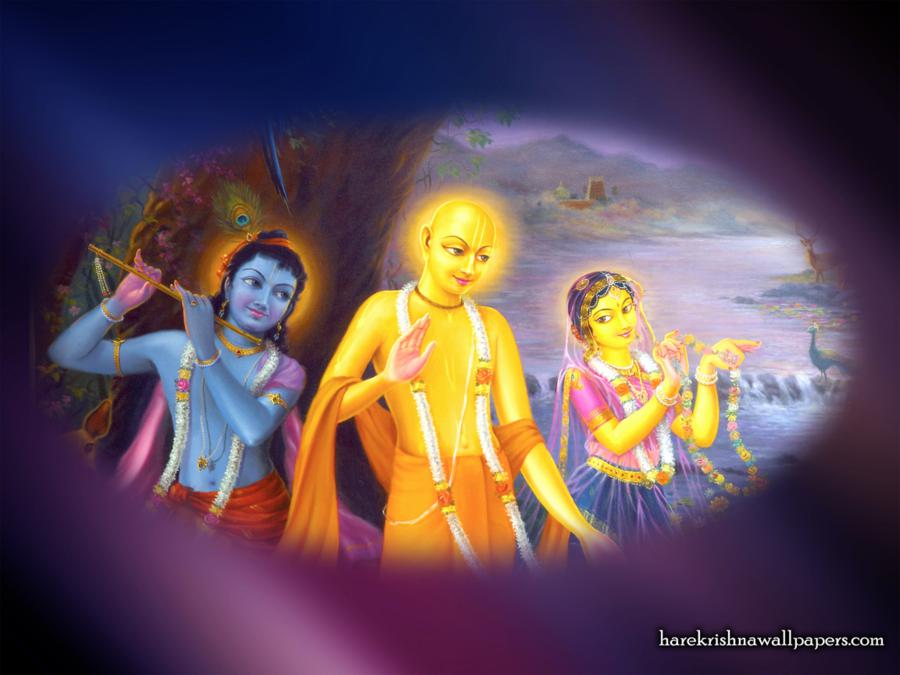
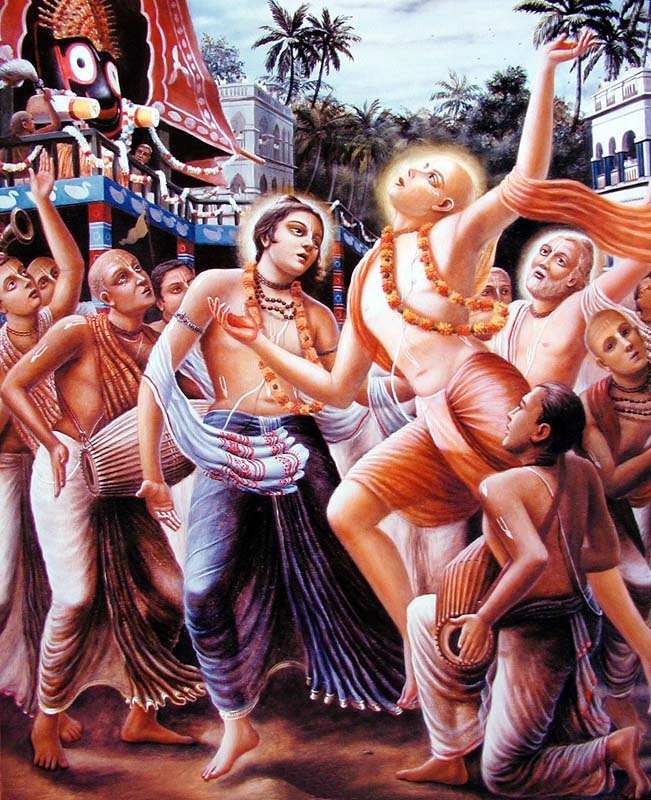
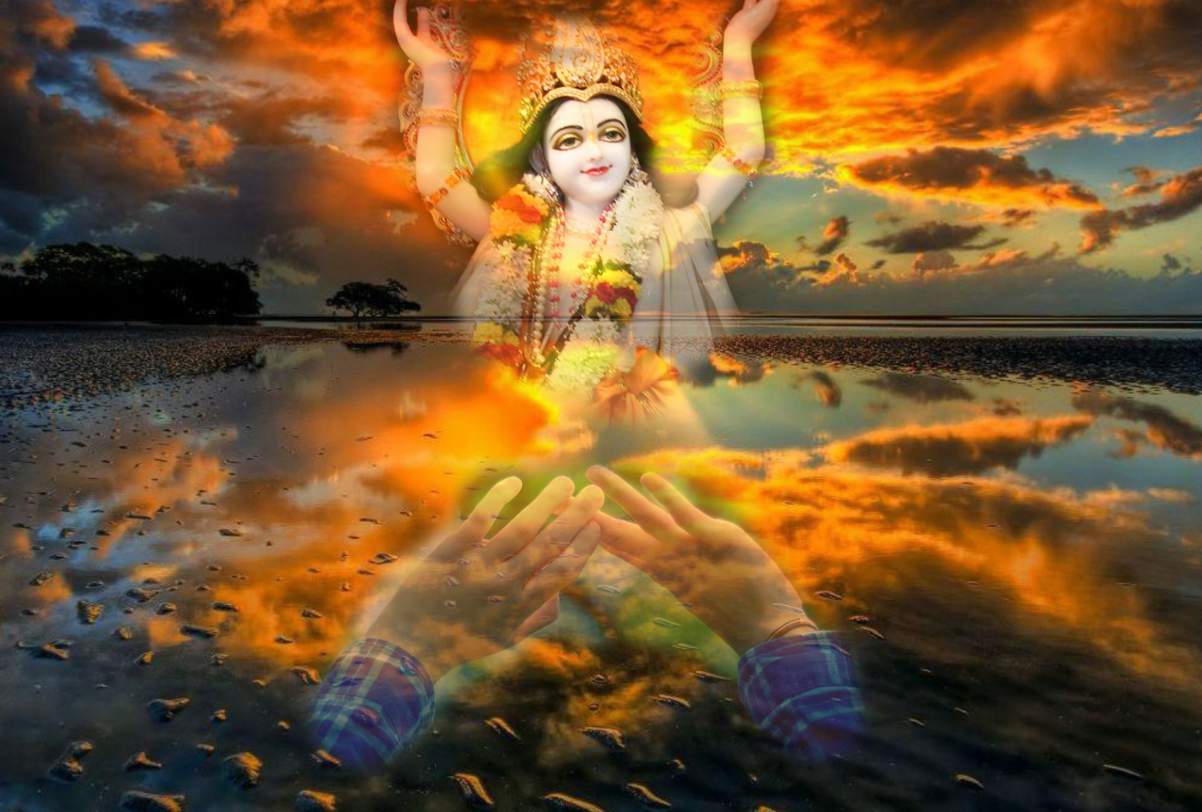
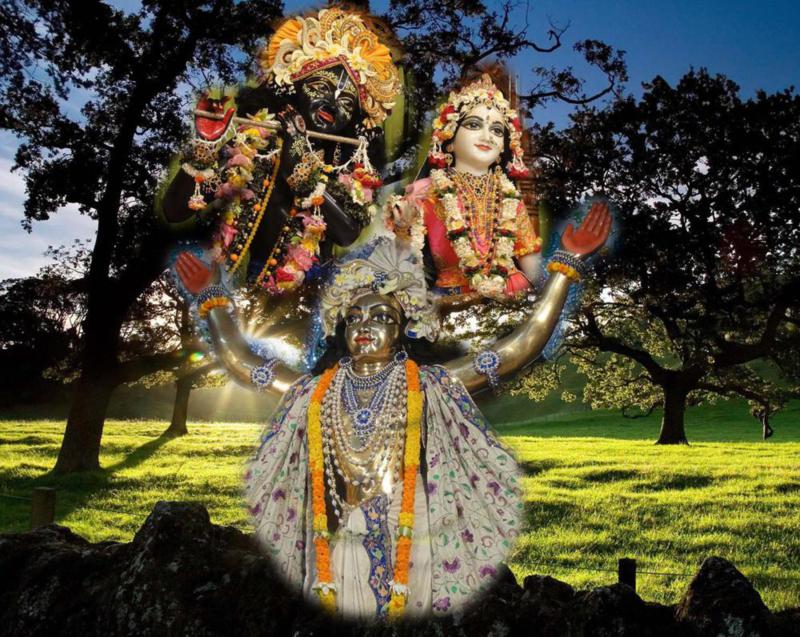
"...Even if the Shrimad Bhagavatam were lost, leaving only the Chaitanya Charitamrita, there would be no loss to humanity, for that which has not been revealed in the Bhagavat is found in Chaitanya Charitamrita. The Supreme Absolute Truth is Shri Chaitanya Mahaprabhu, the combined form of Radha and Krishna. The Chaitanya Charitamrita is His sound incarnation. The divine mystery of Radharani’s divine status and glories are found therein. Can there be any doubt, therefore, of the supreme status of this piece of transcendental literature?” (In the image: Lord Chaitanya in the middle is the combined form or Shri Shri Radha and Krishna).
This statement underscores the supremely special status of Krishnadas Kaviraj Goswami himself. His three books, Chaitanya Charitamrita, Govinda-lilamrita and a commentary on Krishna-karnamrita, are all priceless works. Govinda-lilamrita describes in detail Lord Krishna’s activities over a twenty-four-hour period. Narottama Das Thakur has therefore stated:
krishnadasa kaviraja, rasika bhakata majh
jenho kaila caitanya-carita
gaura-govinda-lila, shunite galaye shila
tahate na haila mora cita
Krishnadas Kaviraj Goswami stands out amongst the devotional literati, for he is the author of the biography of Chaitanya Mahaprabhu. He described both Gaura and Govinda’s lila, hearing which even a stone would melt. Alas, even so, my mind has not been attracted by these works. (Prema-bhakti-candrika)
Krishnadas was honored with the title kaviraja (“king of poets”) for his Govinda-lilamrita. He is also respected in the Vaishnava world as the best amongst the followers of Rupa Goswami.
The Authoritativeness of the Chaitanya Charitamrita
From the illustrious commentator Vishvanath Chakravarti’s tika to the Chaitanya Charitamrita, we can understand a little better just how dear Krishnadas Kaviraj Goswami was to Radharani, and by the same token, how the deepest and most esoteric truths of the Divinity were revealed to him, showing that every word he wrote is to be taken as the supreme spiritual truth. H. H. Bhakti Pramoda Puri Maharaj has recounted the following anecdote in his foreward to the Chaitanya Gaudiya Math edition of the Chaitanya Charitamrita: “While Vishvanath Chakravarti was writing his commentary on the Chaitanya Charitamrita, Madhya-lila 21.125, he was unable to understand why Kaviraj Goswami had written that the kama-gayatri mantra consists of 24 syllables rather than 25. He became so distraught by his inability to comprehend that he finally took a vow to starve to death by the banks of Radha Kund. As he dozed off in the middle of the night, the daughter of Vrishabhanu appeared to him in a dream and said to him, ‘O Vishvanath! Get up. Krishnadas has indeed written correctly. He is My dear girlfriend, who brings Me much pleasure. I have blessed him so that he can understand the most intimate truths about Myself. Do not doubt anything he has written. In the book named Varnagama-bhasvat, it is written that whenever the syllable ya is followed by the syllable vi, it is considered to be only half a syllable.”
In the Bhakti-ratnakara it is mentioned that Shrinivas Acharya met Krishnadas Kaviraj, Raghunath Das Goswami and Shri Raghava when he arrived in Vrindavan (Bhakti-ratnakara 4.392).
On the grounds of Krishnadas Kaviraj’s home in Jhamatpura is a small Temple containing Nityananda’s footprints. Local legend has it that Krishna-Das received Nityananda’s mercy, i.e., initiation into the mantra, at this very spot. According to the Prema-vilasa, however, Krishnadas took initiation from Raghunath Das Goswami. In the Temple there is a wooden sandal which is said to have been Krishnadas’s. His cottage and samadhi tomb are in Radha Kund. His disappearance took place after that of Raghunath Das Goswami, on the Shukla Dvadashi tithi of the month of Ashvina.
Footnotes:
[1] Saptagram was made up of seven villages: Saptagram, Vamsibati, Shivapura, Vasudevapura, Nityanandapura and Saìkhanagara. It was the main trade center on the Ganges in Bengal in the 15th and 16th centuries. The modern town of Triveni grew out of Saptagram.
[2] Shrila Prabhupada A. C. Bhaktivedanta Swami writes: “When a man takes a dead body to the crematorium, he sometimes thinks, "This is the final end of the body. Why am I working so hard day and night?" Such sentiments naturally arise in the mind of any man who goes to a crematorial ghaöa. However, as soon as he returns from the cremation grounds, he again engages in material activity for sense enjoyment. This is called smasana-vairagya, or markaöa-vairagya.”
[Excerpted from “Shri Chaitanya: His Life & Associates” by Shrila Bhakti Ballabh Tirtha Maharaj]
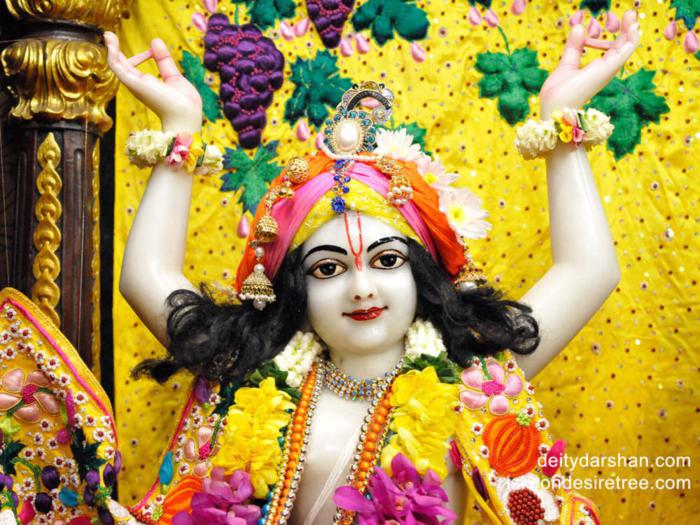
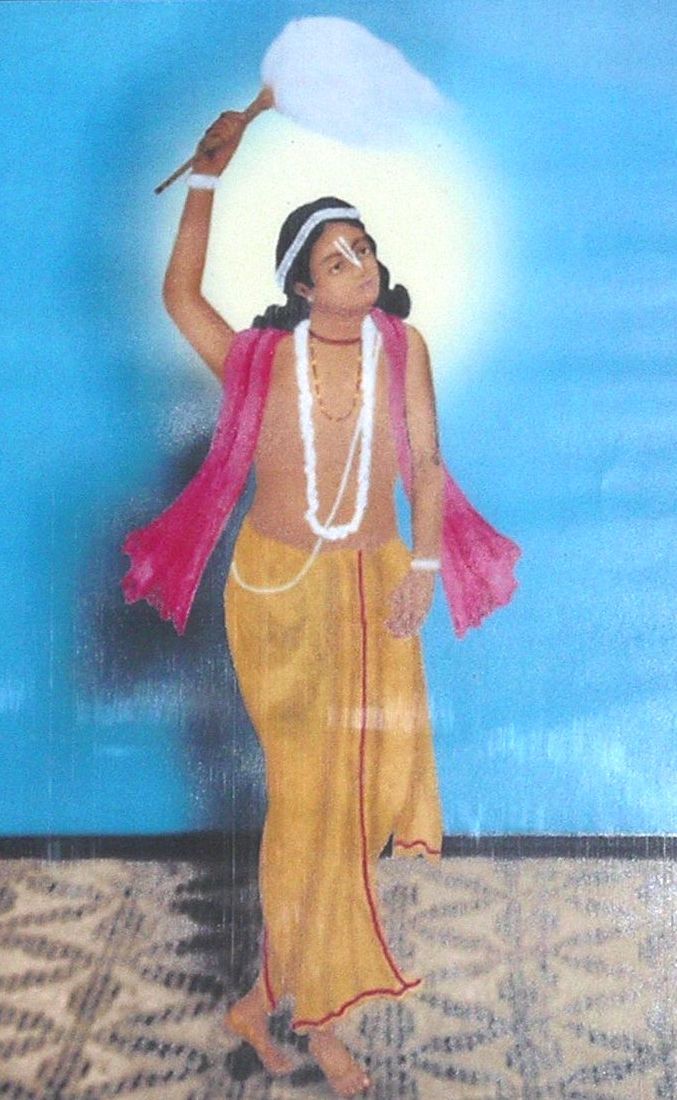
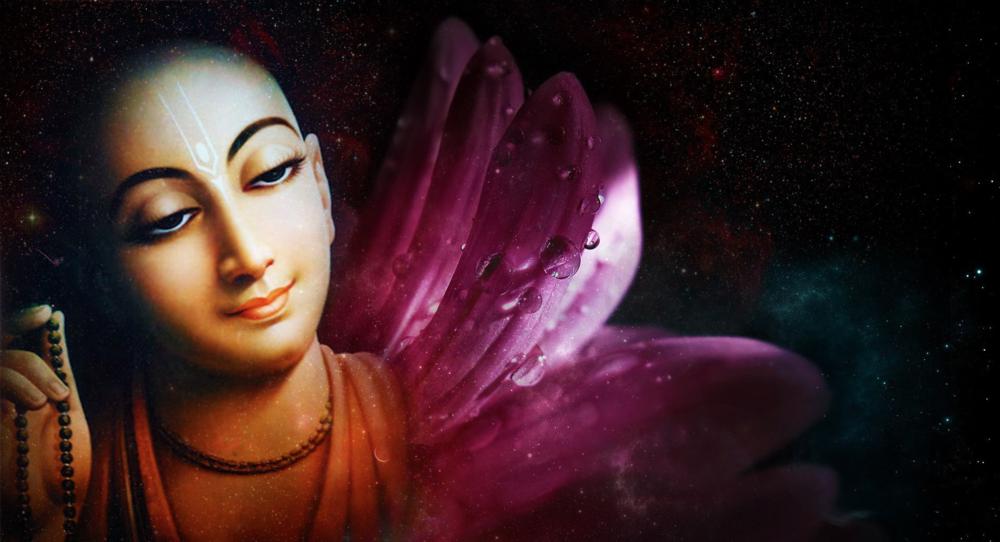
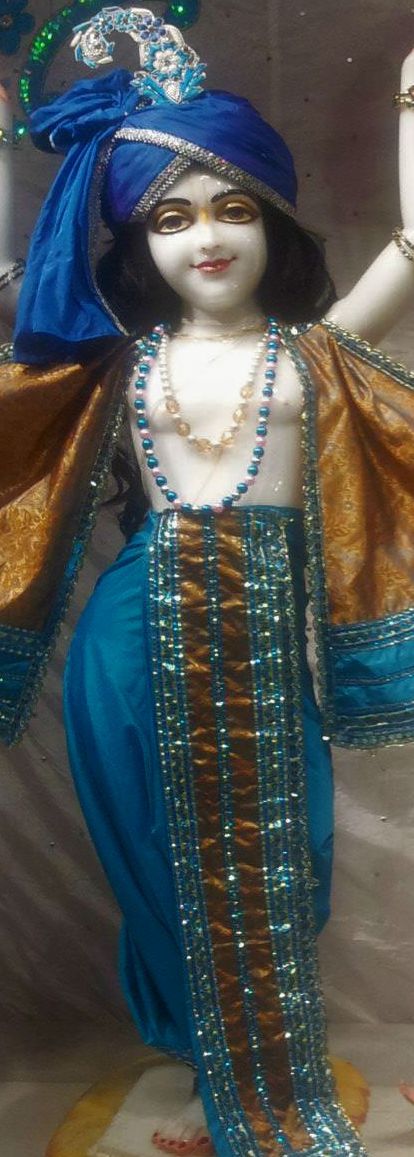
I am more sinful than Jagai and Madhai and lower than a maggot in stool. Whoever hears my name loses the results of his virtuous deeds, and whoever utters my name commits a sin. Other than Nityananda, could anyone in this world show mercy to one as abominable as me? Nityananda is the incarnation of mercy; He is so intoxicated by ecstatic love that He does not discriminate between the good and the bad. He delivers anyone who fall down before Him. Therefore He has delivered such a sinful and fallen person as me. (Chaitanya Charitamrita 1.5.205-9) (In the image: Shri Nityananda Prabhu, ISKCON Chowpatty, Mumbai).